Planning a road trip in a Tesla requires understanding real-world range, Supercharger speeds, and how weather and driving style affect efficiency. Tesla's built-in Trip Planner is one of the most sophisticated route-optimization tools in any EV, but it works best when you know what numbers to expect beyond the EPA sticker. This guide breaks down exact range, charging, and efficiency data across the 2026 Tesla lineup so you can plan trips with confidence—not guesswork.
Tesla Trip Planner: How It Works and Why Real-World Data Matters
Tesla's in-dash navigation system automatically factors in elevation changes, current speed, wind, temperature, and traffic when estimating your state of charge (SoC) at each waypoint and Supercharger stop. Unlike third-party tools, it reads live vehicle telemetry—battery temperature, energy consumption over the last several miles, and HVAC load—to continuously update arrival estimates.
The Trip Planner (accessible through the navigation app on your Tesla's touchscreen) will:
- Route you through Supercharger stations when your destination exceeds current range
- Precondition the battery as you approach a Supercharger for maximum charge speed
- Recommend charge duration at each stop (e.g., "Charge for 18 minutes to reach 72%")
- Recalculate if you change speed, climate settings, or route mid-trip
But the planner's accuracy depends on how well its assumptions match your driving. If you typically drive 80 mph with the heat blasting in January, the EPA range it references will overestimate your actual distance. Understanding the real-world deltas across Tesla's 2026 fleet is essential.
2026 Tesla Fleet: Range, Battery, and Efficiency Breakdown
Tesla's current lineup spans four consumer models with distinct battery chemistries, range profiles, and use cases. Here are the exact numbers you need for trip planning.
| Model / Trim | EPA Range | Battery (kWh) | Chemistry | MPGe (Combined) | kWh/100mi | 0-60 mph | Drivetrain |
|---|---|---|---|---|---|---|---|
| Model 3 RWD | 341 mi | 60 kWh (usable) | LFP | 132 MPGe | 25 | 5.8s | RWD |
| Model 3 Long Range AWD | 363 mi | 79 kWh (usable) | NMC | 134 MPGe | 25 | 4.2s | Dual Motor AWD |
| Model 3 Performance | 315 mi | 79 kWh (usable) | NMC | 115 MPGe | 29 | 2.9s | Dual Motor AWD |
| Model Y Long Range AWD | 320 mi | 79 kWh (usable) | NMC | 122 MPGe | 28 | 4.8s | Dual Motor AWD |
| Model Y Performance | 285 mi | 79 kWh (usable) | NMC | 111 MPGe | 30 | 3.5s | Dual Motor AWD |
| Model S Long Range | 402 mi | 100 kWh (usable) | NMC | 124 MPGe | 27 | 3.1s | Dual Motor AWD |
| Model S Plaid | 359 mi | 100 kWh (usable) | NMC | 116 MPGe | 29 | 1.99s | Tri Motor AWD |
| Model X Long Range | 348 mi | 100 kWh (usable) | NMC | 110 MPGe | 30 | 3.8s | Dual Motor AWD |
Sources: EPA / fueleconomy.gov, Tesla Specifications. 2026 model year data. Specs subject to change by production batch.
Real-World Range: What You'll Actually Get on the Road
- Highway driving (70-80 mph): Expect 10-15% less than EPA. A Model 3 Long Range rated at 363 mi EPA will deliver roughly 305-325 mi on a flat interstate at 75 mph.
- Cold weather (below 32°F / 0°C): Expect 20-30% range loss due to battery resistance and cabin heating. The same Model 3 LR drops to ~250-270 mi in 20°F conditions.
- Mountain/elevation gain: Uphill segments consume significantly more energy, though regenerative braking recovers some on descents. Net loss varies by route—Tesla's Trip Planner accounts for this automatically.
- City driving with regen: Often matches or slightly exceeds EPA, especially in moderate temperatures with one-pedal driving.
For practical trip planning, I recommend budgeting 80% of EPA range as your "safe" planning number in temperate conditions, and 65-70% in winter. The Trip Planner tends to be slightly optimistic at highway speeds, so arriving at a Supercharger with a 10-15% buffer is wise rather than trusting a projected 2% arrival SoC.
Charging Speeds: Supercharger Network and Home Charging
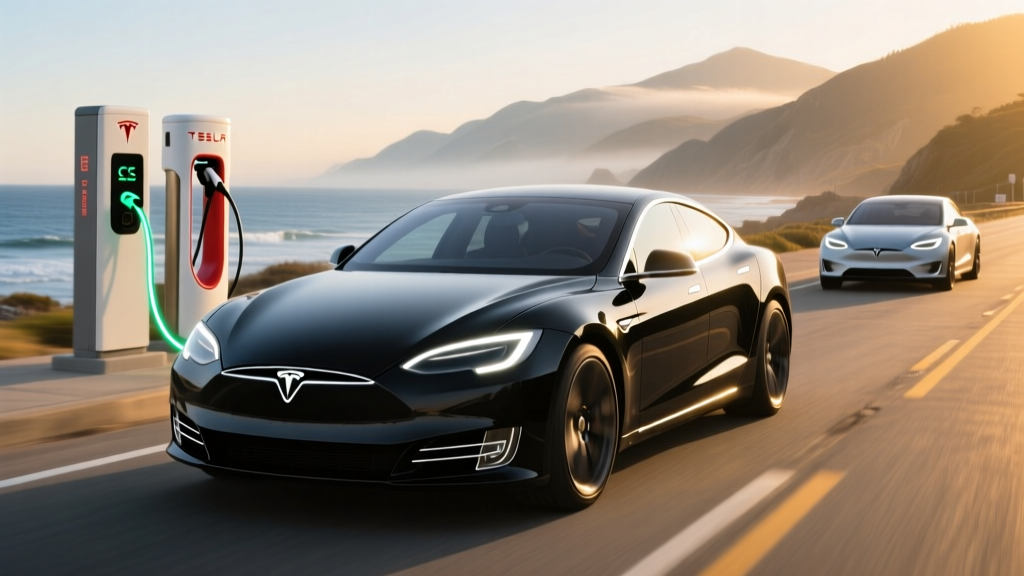
Tesla's Supercharger network remains the most reliable DC fast-charging ecosystem in North America, with V3 stalls delivering up to 250 kW and V4 stalls (expanding through 2026) capable of up to 350 kW for compatible vehicles. But peak kW is not sustained kW—understanding the charge curve is critical for trip timing.
| Model | Max DC Fast Charge | 10-80% Time (V3 250kW) | Level 2 Home (11.5 kW / 48A) | Level 2 Miles/Hr (approx.) |
|---|---|---|---|---|
| Model 3 RWD (LFP) | 170 kW | ~30 min | 11.5 kW | ~36 mi/hr |
| Model 3 Long Range | 250 kW | ~25 min | 11.5 kW | ~38 mi/hr |
| Model 3 Performance | 250 kW | ~25 min | 11.5 kW | ~34 mi/hr |
| Model Y Long Range | 250 kW | ~27 min | 11.5 kW | ~33 mi/hr |
| Model Y Performance | 250 kW | ~27 min | 11.5 kW | ~31 mi/hr |
| Model S Long Range | 250 kW | ~30 min | 11.5 kW | ~35 mi/hr |
| Model S Plaid | 250 kW | ~30 min | 11.5 kW | ~33 mi/hr |
| Model X Long Range | 250 kW | ~32 min | 11.5 kW | ~30 mi/hr |
Charge curve reality: Teslas peak at their maximum kW only between roughly 10-30% SoC. From 30-60%, speeds taper moderately; from 60-80%, they taper significantly. Charging from 80-100% on DC is extremely slow and not recommended for road trips. The Trip Planner correctly targets 10-80% stops for time efficiency.
Preconditioning matters: When you navigate to a Supercharger, the car automatically warms the battery to optimal temperature (~95°F). This can shave 5-10 minutes off your charge time in cold weather. Always enter the Supercharger as a navigation destination rather than driving there manually to trigger preconditioning.
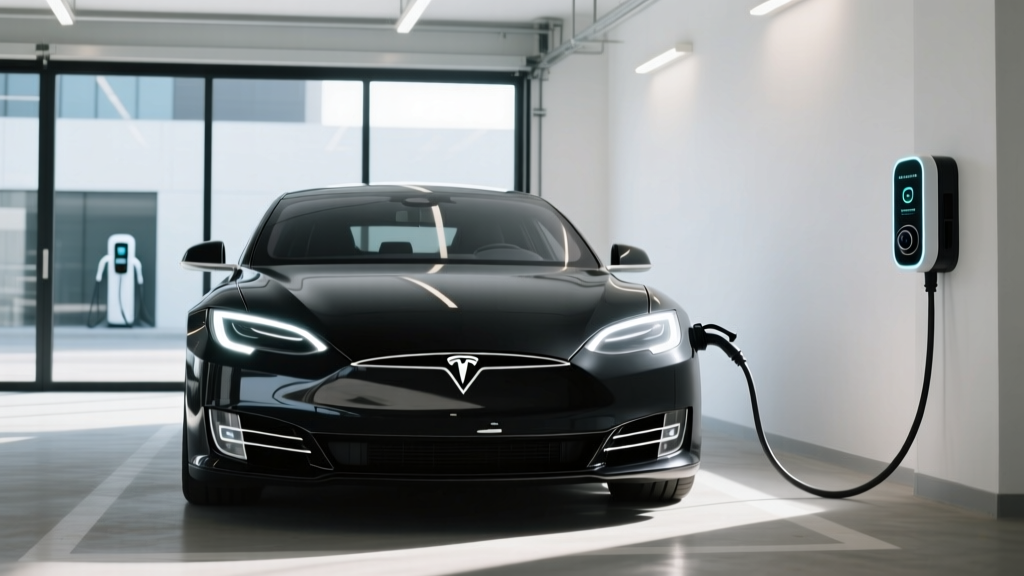
Home charging: A Tesla Wall Connector on a 60A circuit (48A continuous) delivers 11.5 kW, adding 30-38 miles of range per hour depending on the model. Overnight charging from 20-80% takes roughly 5-6 hours for most models. Installation typically costs $500-$2,000 depending on panel proximity and local permitting.
Tesla Trip Planning Tools: In-Dash vs. Third-Party Apps
Tesla's native Trip Planner is integrated directly into the vehicle's navigation and is the default choice for most owners. However, several third-party tools offer complementary features:
- Tesla In-Dash Navigation: Real-time SoC prediction, Supercharger routing, battery preconditioning. Best for hands-free route planning while driving.
- ABRP (A Better Route Planner): Allows detailed customization—trailer towing, roof cargo boxes, specific tire types, custom consumption models. Excellent for pre-trip planning on a computer or phone before you leave.
- PlugShare / ChargePoint: Useful for verifying Supercharger availability, reading recent user check-ins for broken stalls, and finding destination chargers at hotels.
For most road trips, Tesla's built-in planner is sufficient. For complex multi-day trips with towing, extreme cold, or unusual cargo, ABRP's granular settings provide a more conservative and customizable estimate.
Pricing, Trims, and Federal Tax Credit Eligibility (2026)
Tesla's pricing has stabilized after years of fluctuation. Here's where each model lands for 2026, including federal tax credit considerations under IRS §30D.
| Model / Trim | Base MSRP | §30D Credit Eligibility | Effective Price (with credit) |
|---|---|---|---|
| Model 3 RWD | $38,990 | Up to $7,500 (income/sourcing dependent) | ~$31,490 |
| Model 3 Long Range AWD | $45,490 | Up to $7,500 | ~$37,990 |
| Model 3 Performance | $52,990 | Up to $7,500 | ~$45,490 |
| Model Y Long Range AWD | $44,990 | Up to $7,500 | ~$37,490 |
| Model Y Performance | $48,990 | Up to $7,500 | ~$41,490 |
| Model S Long Range | $74,990 | Not eligible (MSRP exceeds $55,000 sedan cap) | $74,990 |
| Model S Plaid | $89,990 | Not eligible | $89,990 |
| Model X Long Range | $79,990 | Not eligible (MSRP exceeds $80,000 SUV cap) | $79,990 |
- MSRP caps: Sedans (Model 3) must be ≤$55,000; SUVs/trucks (Model Y) must be ≤$80,000.
- Income caps: Modified AGI ≤$150,000 (single), ≤$225,000 (head of household), ≤$300,000 (joint).
- Battery sourcing: Credit splits into two halves ($3,750 each): critical minerals and battery components must meet escalating domestic-sourcing thresholds. Tesla's Fremont and Austin-built vehicles have historically qualified for the full $7,500, but sourcing rules tighten annually. Verify current eligibility at IRS.gov before purchase.
- Point-of-sale transfer: Eligible buyers can transfer the credit to the dealer at purchase, reducing the purchase price directly rather than waiting for a tax refund.
Consult a tax professional for your specific eligibility. Rules subject to change.
Who Should Buy a Tesla for Road Trips? Use-Case Breakdown
Best for frequent road trippers: Model 3 Long Range AWD or Model S Long Range. The Model 3 LR offers the best efficiency-to-range ratio at 363 mi EPA, 134 MPGe, and a price that qualifies for the full tax credit. The Model S Long Range at 402 mi EPA is the range king but costs nearly double and doesn't qualify for §30D.
Best for families needing cargo space: Model Y Long Range AWD. With 76 cu ft of cargo volume (rear seats folded) and available 7-seat configuration, it's the practical family hauler. Range of 320 mi EPA is sufficient for most trips with one Supercharger stop every 3-4 hours.
Best for budget-conscious commuters who road trip occasionally: Model 3 RWD at $38,990 (potentially ~$31,490 after credit). The LFP battery can be charged to 100% daily without degradation concerns, and 341 mi EPA is generous for the price. Trade-off: slower DC charging (170 kW peak) and less winter range due to LFP's cold sensitivity.
Best for towing: Model X Long Range, rated for 5,000 lbs. Expect range to drop 30-40% when towing a trailer—plan Supercharger stops accordingly. The Trip Planner does not natively account for towing; use ABRP with a towing profile for more accurate estimates.
Warranty, Reliability, and Ownership Considerations
Tesla's warranty structure is straightforward:
- Basic Vehicle: 4 years / 50,000 miles
- Battery & Drive Unit (Model 3/Y RWD): 8 years / 100,000 miles
- Battery & Drive Unit (Model 3/Y AWD, Model S/X): 8 years / 120,000 miles
- Capacity retention guarantee: Tesla warrants that the battery will retain at least 70% of original capacity during the warranty period.
Real-world degradation data from owner fleets suggests Tesla's NMC batteries lose roughly 5-8% capacity in the first 50,000 miles, then degrade more slowly. LFP batteries (Model 3 RWD) show comparable or slightly better longevity, with the added benefit of tolerance for regular 100% charging.
Insurance costs remain a consideration—Teslas typically carry 15-25% higher premiums than comparable ICE vehicles due to repair costs and parts pricing. Tesla Insurance is available in select states and may offer competitive rates based on real-time driving data.
Pros and Cons of Tesla for Road Trip Planning
Pros
- Supercharger network: 6,000+ stalls in North America with industry-leading uptime and plug-and-charge simplicity
- Integrated Trip Planner with live SoC prediction and battery preconditioning
- Class-leading efficiency (kWh/100mi) across the lineup
- Over-the-air updates continuously improve navigation, charging, and efficiency
- Model 3/Y qualify for up to $7,500 federal tax credit (eligibility dependent)
- LFP battery option (Model 3 RWD) allows daily 100% charging without degradation worry
Cons
- No Apple CarPlay or Android Auto—Tesla's proprietary infotainment only
- FSD (Supervised) is SAE Level 2, not self-driving—driver must remain engaged at all times
- Model S and Model X do not qualify for §30D tax credit due to MSRP caps
- Build quality inconsistency reported by some owners (panel gaps, interior trim)
- LFP batteries (Model 3 RWD) more sensitive to cold-weather range loss
- Repair costs and insurance premiums higher than average
Frequently Asked Questions
What is the real-world range of a Tesla on a road trip?
For highway driving at 70-80 mph in moderate temperatures, expect 85-90% of EPA range. In cold weather (below freezing), expect 65-80% of EPA range. The Model 3 Long Range AWD (363 mi EPA) typically delivers 305-325 mi on a temperate highway run and 250-270 mi in winter conditions.
How fast does a Tesla charge at a Supercharger?
Most 2026 Tesla models peak at 250 kW on V3 Superchargers, achieving a 10-80% charge in approximately 25-32 minutes depending on the model. The Model 3 RWD with LFP chemistry peaks at 170 kW, taking about 30 minutes for 10-80%. Charge speed tapers significantly above 80% SoC.
How much does a Tesla cost after federal tax credits?
The Model 3 RWD starts at $38,990 and can drop to approximately $31,490 with the full $7,500 §30D credit, if you meet income caps (≤$150K single / ≤$300K joint) and the vehicle meets battery-sourcing requirements. Model Y Long Range at $44,990 can reach ~$37,490. Model S and X exceed MSRP caps and do not qualify.
Is a Tesla worth buying vs. competitors for road trips?
Tesla's Supercharger network remains the decisive advantage for road trippers. Competitors like the Hyundai Ioniq 5, Ford Mustang Mach-E, and BMW i4 offer comparable range and charging speeds, but rely on third-party networks (Electrify America, EVgo) that have lower uptime and more fragmented payment systems. If road-trip reliability is your top priority, Tesla's integrated ecosystem is difficult to match in 2026.
Does Tesla qualify for the federal EV tax credit?
Model 3 and Model Y trims under the MSRP caps ($55,000 sedans / $80,000 SUVs) are eligible for up to $7,500 under IRS §30D, subject to buyer income limits and battery-sourcing requirements. Eligibility can change as sourcing rules tighten annually. Verify current status at IRS.gov before purchasing.
How should I plan Supercharger stops for a long road trip?
Use the in-dash Trip Planner by entering your destination—the car will automatically route Supercharger stops and recommend charge times. For optimal trip speed, charge from 10-80% at each stop (roughly 25 minutes) rather than topping off to 100%. Arrive at each Supercharger with 10-15% SoC as a buffer against detours or occupied stalls.
Does cold weather affect Tesla Supercharger speeds?
Yes, but preconditioning mitigates most of the impact. When you navigate to a Supercharger, the car warms the battery en route. Without preconditioning, a cold battery may charge at 50-100 kW instead of 250 kW, doubling your stop time. Always navigate to the Supercharger rather than driving there without a route.
Tesla's trip planning ecosystem—combining the Supercharger network, in-dash navigation, and battery preconditioning—remains the gold standard for EV road trips in 2026. By understanding the real-world range adjustments, charge-curve behavior, and tax-credit eligibility for your specific model, you can plan trips that are efficient, predictable, and stress-free.