If you have spent any time in EV forums, YouTube comment sections, or tech rumor mills over the past few years, you have almost certainly encountered breathless speculation about a device called the Tesla Pi Phone (sometimes labeled "Model Pi"). Rendered images, fabricated spec sheets, and viral TikToks have painted a picture of a solar-charging, Starlink-connected, vehicle-integrated smartphone that would supposedly disrupt Apple and Samsung overnight.
But as we move through 2026, the question persists: is the Tesla Pi phone real or fake? The short answer is that no such device exists, has been announced by Tesla, or appears on any official product roadmap. The longer answer involves understanding why the rumor will not die, what Elon Musk has actually said on the subject, and what a theoretical Tesla phone would need to accomplish in the smartphone and EV ecosystem.
The Verdict: No, the Tesla Pi Phone Is Not Real
Let's be direct. Tesla has never announced, teased, filed FCC paperwork for, or manufactured a smartphone. There is no Tesla Pi Phone, no Tesla Model Pi, and no Tesla-branded mobile device of any kind beyond the accessories Tesla sells to mount and charge your existing iPhone or Android device inside their vehicles.
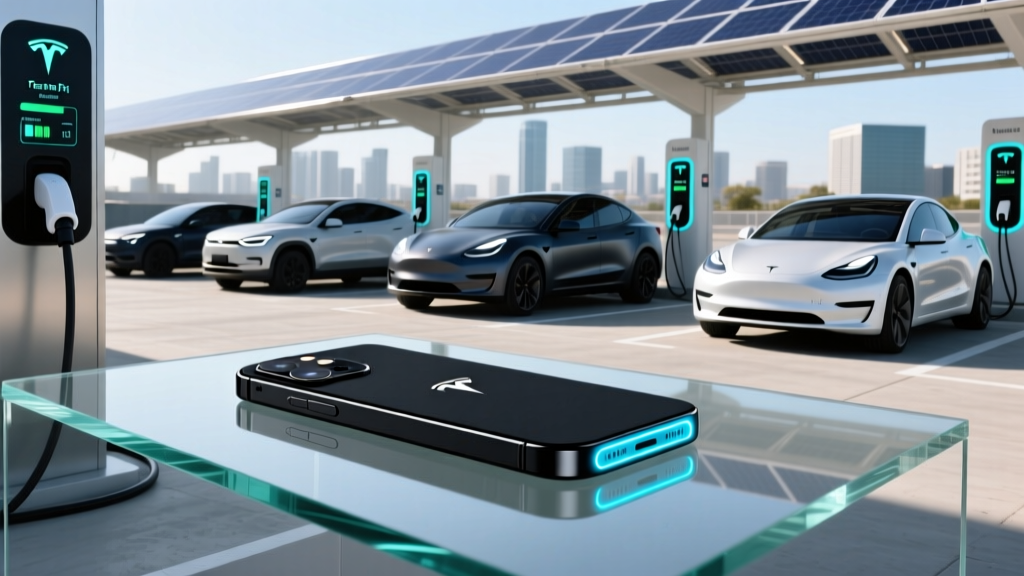
The renders you have seen — sleek glass slabs with Tesla logos, claims of neural-link integration, built-in Starlink satellite connectivity, and solar panels on the back — are fan-made concepts or outright fabrications. None have originated from Tesla's design studio, investor presentations, or Tesla's official blog.
Elon Musk himself addressed the rumor directly. In a 2022 interview on the Joe Rogan podcast, and in subsequent statements, Musk said Tesla would only consider making a phone if Apple and Google were to ban the Twitter/X app from their stores, framing it as a "last resort" alternative rather than a product Tesla actively wanted to build. As of 2026, no such ban has occurred, and Tesla's product focus remains squarely on vehicles, energy storage, robotics (Optimus), and the Cybercab robotaxi program.
Why the Tesla Pi Phone Rumor Will Not Die
The persistence of the Pi Phone myth comes down to a few converging factors:
- Tesla's brand halo. Tesla is associated with futuristic technology, so audiences are primed to believe the company could enter any hardware category.
- Starlink integration fantasy. SpaceX's Starlink satellite internet is real and expanding. People logically (but incorrectly) assume a Tesla phone would have native satellite connectivity.
- Vehicle integration desire. Tesla owners already use their phones as keys and for app-based climate preconditioning. A native Tesla phone with deeper vehicle integration is an appealing concept.
- Content farm economics. YouTube channels and clickbait sites generate enormous traffic from Pi Phone speculation, creating a self-reinforcing cycle of fabricated "leaks."
The rumor also resurfaces every time Tesla updates its mobile app or introduces a new vehicle feature that relies on phone connectivity, giving fresh fuel to speculation that a dedicated device must be coming.
What Tesla Actually Offers for Phone Integration
Rather than building its own phone, Tesla has invested heavily in making your existing smartphone work seamlessly with its vehicles. Here is what actually exists in Tesla's ecosystem as of the 2026 model year:
Phone-as-Key (Bluetooth Low Energy)
Every current Tesla vehicle (Model 3, Model Y, Model S, Model X, Cybertruck) supports Phone Key functionality. Your iPhone or Android device communicates via Bluetooth Low Energy (BLE) to unlock, start, and lock the car automatically as you approach and walk away. No need to open an app or press a button.
The Tesla Mobile App
Tesla's app provides remote climate control (preconditioning the battery and cabin before you enter), charging management, location tracking, Sentry Mode camera access, software update scheduling, and service requests. It is robust, regularly updated, and works on both iOS and Android.
Tesla Vehicle Infotainment
Tesla's 15.4-inch center touchscreen (standard across the current lineup) handles navigation, media, climate, and vehicle settings natively. It does not rely on Apple CarPlay or Android Auto — Tesla's own software stack replaces both. This is a deliberate choice: Tesla wants full control of the in-vehicle experience, which is also a reason the company has little incentive to manufacture a phone that would need to play nicely with competing ecosystems.
What a Real Tesla Phone Would Need to Compete
Let's entertain the hypothetical. If Tesla were to build a phone, what would it take to compete in a market dominated by Apple (roughly 55% US market share) and Samsung? The barriers are staggering:
| Category | Requirement | Challenge Level |
|---|---|---|
| App Ecosystem | Millions of third-party apps | Extremely High — building an OS and developer ecosystem from scratch takes years and billions of dollars |
| Cellular Hardware | 5G modems, antenna design, FCC certification | High — requires partnerships with Qualcomm/MediaTek and carrier testing |
| Camera System | Competitive computational photography | High — Apple and Google have decade-long advantages |
| Manufacturing Scale | Tens of millions of units annually | High — supply chain for smartphones is distinct from automotive |
| Software Support | 5+ years of OS and security updates | Medium — Tesla has software expertise but mobile OS maintenance is different |
Even Google — with its vast resources, Android ownership, and existing Pixel line — has struggled to capture significant US smartphone market share. The idea that Tesla, an automotive and energy company, could produce a competitive first-generation phone is not credible from an industry-analysis perspective.
The Starlink Smartphone Angle: What Actually Exists
The one kernel of truth in the Pi Phone myth is that Starlink is expanding into direct-to-device smartphone connectivity. SpaceX has launched satellites capable of communicating with unmodified smartphones for text and eventually voice/data in areas without cellular coverage. T-Mobile has partnered with SpaceX on this "Coverage Above and Beyond" initiative.
However, this technology works with existing phones — it does not require a Tesla-branded device. Starlink's direct-to-cell capability is a carrier-level service, not a hardware play. You will access it through your current T-Mobile (or partner carrier) phone, not through a hypothetical Pi Phone.
What Tesla Owners Should Actually Buy
If you are a Tesla owner or prospective buyer looking for the best phone to pair with your vehicle, the practical answer in 2026 is straightforward:
- iPhone 17 / 17 Pro series: Best Bluetooth LE reliability for Phone Key, excellent Tesla app performance, longest software support window (6+ years of iOS updates).
- Samsung Galaxy S26 series: Strong Android option with reliable Tesla app support and UWB (Ultra-Wideband) capability for future digital-key enhancements.
- Google Pixel 10 series: Clean Android experience, good Tesla app compatibility, competitive pricing.
Any modern flagship or mid-range smartphone from a major manufacturer will work reliably with Tesla's Phone Key and mobile app. There is no advantage to waiting for a Tesla-branded phone that is not in development.
Where Tesla's Actual Focus Lies in 2026
Tesla's current product roadmap, as outlined in earnings calls and investor updates, is concentrated on:
- Cybercab robotaxi: A dedicated Level 4 autonomous vehicle without a steering wheel, targeted for limited deployment.
- Optimus humanoid robot: Tesla's general-purpose robotics platform for factory and eventually consumer use.
- Next-generation vehicle platform: A more affordable EV built on a simplified manufacturing architecture.
- Full Self-Driving (Supervised) expansion: Continued iteration on Tesla's vision-based Level 2 driver-assistance system across its fleet.
- Energy storage (Megapack/Powerwall): Rapidly growing revenue segment supporting grid and home battery storage.
A smartphone does not appear anywhere on this roadmap, and diverting engineering resources to compete with Apple would be a strategically questionable move given Tesla's existing challenges in scaling vehicle production and advancing autonomy.
Frequently Asked Questions
Has Tesla ever officially announced the Pi Phone?
No. Tesla has never announced, teased, or filed regulatory paperwork for any smartphone. All "Tesla Pi Phone" renders and spec sheets are fan-made or fabricated.
Did Elon Musk say Tesla would make a phone?
Musk stated that Tesla would consider building an "alternative phone" only if Apple and Google banned the X (formerly Twitter) app from their stores. That scenario has not occurred, and no phone project has been initiated.
Will Starlink work on a Tesla phone?
There is no Tesla phone. Starlink's direct-to-cell satellite connectivity works with existing smartphones through carrier partnerships (e.g., T-Mobile), not through a proprietary Tesla device.
Does Tesla sell any phone accessories?
Yes. Tesla sells wireless charging pads, phone mounts, and MagSafe-compatible accessories designed for its vehicle interiors. These work with standard iPhones and Android devices.
Should I wait for a Tesla phone before buying a Tesla vehicle?
No. Tesla vehicles work with any modern smartphone via Bluetooth Phone Key and the Tesla mobile app. There is no Tesla phone in development, and waiting for one would mean waiting indefinitely.
Is the Tesla Pi phone real or fake?
Fake. The Tesla Pi Phone does not exist, has not been announced, and is not part of Tesla's product roadmap as of 2026. All online claims about release dates, pricing, and specifications for a "Tesla Pi Phone" are unsubstantiated rumors or deliberate fabrications.