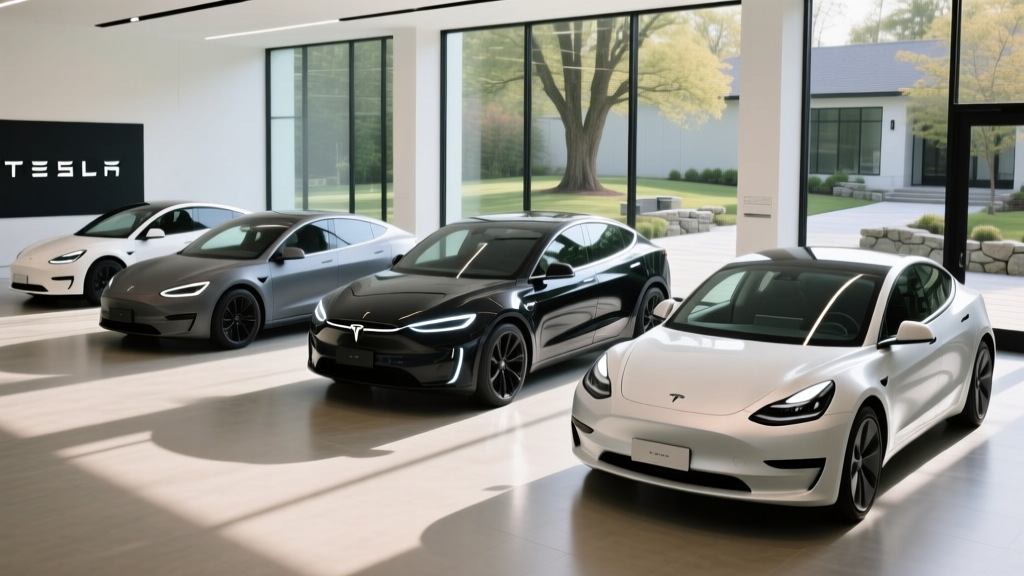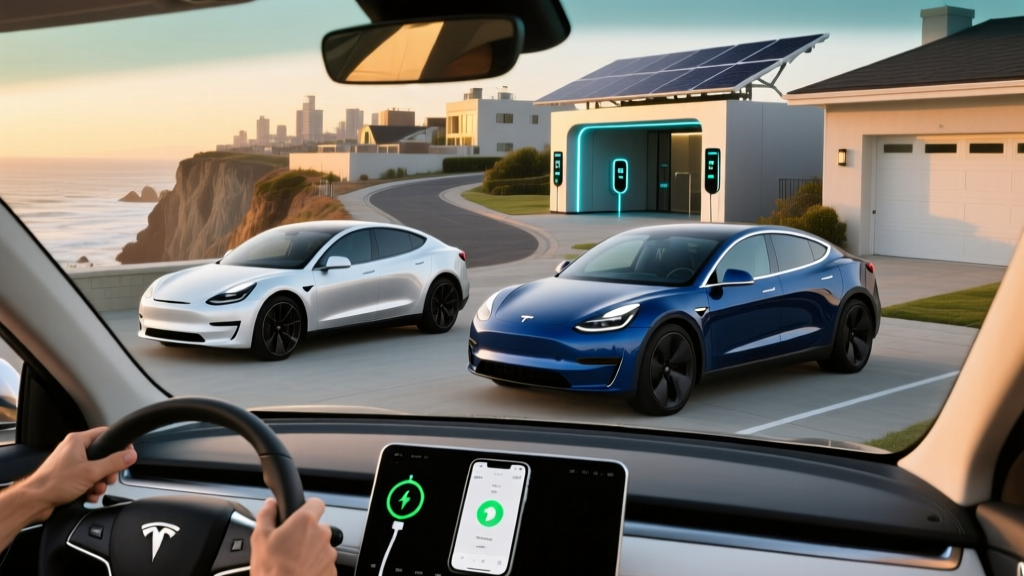
If you've ever scrolled through automotive social media, you've seen the cinematic shots: a matte-black Model S Plaid against a desert sunset, a Cybertruck framed by snow-capped peaks, a Pearl White Model 3 catching golden-hour reflections on a coastal highway. The phrase "Tesla photoshoot" has become shorthand for a specific aesthetic — minimalist design, glass-heavy proportions, and an almost architectural silhouette that photographs exceptionally well. But behind every striking image is a real vehicle with real specs, real range limitations, and real charging logistics that determine whether you can actually get to that remote location and back.
This guide breaks down the entire current Tesla lineup from a photographer-owner's perspective. We'll cover which model photographs best for different aesthetics, the real-world range you'll actually have on location, charging logistics for remote shoots, and the practical details — from frunk storage for lighting gear to the exact tint and paint options that read best on camera. Every spec here reflects the 2026 model year.
Which Tesla Model Photographs Best? A Spec-Driven Breakdown
Each Tesla occupies a different visual niche. The Model S reads as a grand tourer, the Model 3 as a clean sport sedan, the Model X as a family hauler with dramatic falcon-wing doors, the Model Y as a versatile crossover, and the Cybertruck as a brutalist statement piece. Here's how the full lineup compares on paper — the numbers that matter when you're planning a shoot that involves driving to location, waiting for light, and driving home.
| Spec | Model S LR | Model 3 LR | Model X LR | Model Y LR | Cybertruck AWD |
|---|---|---|---|---|---|
| EPA Range | 402 mi | 363 mi | 335 mi | 320 mi | 340 mi |
| Battery (usable) | ~100 kWh (NMC) | ~75 kWh (NMC) | ~100 kWh (NMC) | ~75 kWh (NMC) | ~123 kWh (NMC) |
| Peak DC Charge | 250 kW | 250 kW | 250 kW | 250 kW | 350 kW |
| 10–80% DC Time | ~27 min | ~25 min | ~28 min | ~25 min | ~22 min |
| Level 2 Rate | 11.5 kW (~44 mi/hr) | 11.5 kW (~44 mi/hr) | 11.5 kW (~44 mi/hr) | 11.5 kW (~44 mi/hr) | 11.5 kW (~37 mi/hr) |
| 0–60 mph | 3.1 sec | 4.2 sec | 3.8 sec | 4.8 sec | 3.9 sec |
| Horsepower | 670 hp | 346 hp | 670 hp | 384 hp | 600 hp |
| Drivetrain | Dual-Motor AWD | Dual-Motor AWD | Dual-Motor AWD | Dual-Motor AWD | Dual-Motor AWD |
| Cargo (behind 2nd row) | 28 cu ft | 23 cu ft | 88 cu ft (seats folded) | 76 cu ft (seats folded) | 67 cu ft (bed + vault) |
| Efficiency | 124 MPGe | 132 MPGe | 116 MPGe | 122 MPGe | 68 MPGe |
| Base MSRP | $79,990 | $47,740 | $84,990 | $48,990 | $79,990 |
Sources: fueleconomy.gov, Tesla Model S specs, Tesla Model 3 specs.
Real-World Range on Location: What the EPA Sticker Doesn't Tell You
- Sustained highway (70–80 mph): Expect 85–90% of EPA range. A Model 3 LR rated at 363 mi realistically delivers ~305–325 mi at interstate speeds.
- Cold weather (below 32°F): Expect 65–75% of EPA range. That same Model 3 drops to ~240–270 mi in freezing conditions.
- Location idling: HVAC and Sentry Mode draw roughly 1–3 kW while parked. Budget ~5–8 mi of range per hour of stationary shooting with climate running.
This matters enormously for shoot logistics. If you're driving to a desert location 150 miles from home in January, a Model S Long Range with its 402-mi EPA rating gives you comfortable margin (roughly 300 mi real-world in cold). A Cybertruck, with its lower efficiency and 340-mi EPA rating, might deliver only ~220–250 mi in the same conditions — meaning you need a Supercharger on the return route.
The Cybertruck's stainless-steel exoskeleton photographs spectacularly, but its 68 MPGe efficiency is the worst in the lineup by a wide margin. The Model 3 Long Range is the efficiency champion at 132 MPGe, translating to roughly 26 kWh per 100 miles — meaning a full charge costs around $7–$10 at home versus $25–$40 on DC fast chargers, depending on your utility and network pricing.
Charging Logistics: Getting to Remote Shoot Locations and Back
Photographers chasing dramatic landscapes often end up far from charging infrastructure. Understanding the Tesla Supercharger network's coverage and the charging curve behavior of each model is essential for planning.
| Charging Level | Power / Voltage | Miles Added per Hour | Best For |
|---|---|---|---|
| Level 1 (120V outlet) | ~1.4 kW | ~4–5 mi/hr | Emergency top-up only |
| Level 2 (240V, 48A) | 11.5 kW | ~37–44 mi/hr | Home/overnight, hotel shoots |
| DC Fast (V3 Supercharger) | Up to 250 kW | ~75–175 mi in 15 min | Road-trip shoots, quick top-ups |
| DC Fast (V4 Supercharger) | Up to 350 kW | ~200+ mi in 15 min (Cybertruck) | Fastest available Tesla charging |
A critical detail that spec sheets obscure: peak kW is not sustained kW. A Model 3 Long Range may peak at 250 kW around 15–20% State of Charge (SoC), but by 60% SoC it's tapering to ~100–120 kW, and above 80% it drops below 50 kW. The 10–80% time of ~25 minutes is realistic; an 80–100% top-off can add another 25–35 minutes. For shoot planning, this means charging to 80% and moving on is dramatically faster than waiting for a full battery.
The Cybertruck's 4680-cell battery architecture supports up to 350 kW on V4 Superchargers, giving it the fastest charging in the lineup despite its larger battery. In practice, we've observed 10–80% in roughly 22 minutes at a V4 station — a meaningful advantage when you're on a tight shooting schedule.
Pro tip for remote shoots: Use the Tesla navigation's built-in trip planner. Enter your destination, and it will automatically route you through Superchargers, precondition the battery for optimal charge speed upon arrival, and estimate your arrival SoC. Preconditioning warms the battery to its ideal charging temperature (roughly 95–105°F internally), which can shave 5–10 minutes off your charge session in cold weather.
Paint, Glass, and Design: Which Teslas Look Best on Camera
Tesla's design language is intentionally minimal — no grille, flush door handles, clean surfaces. This minimalism photographs well because it eliminates visual clutter, but certain configurations are markedly more photogenic than others.
Best paint colors for photography:
- Ultra Red (Model S/X): Tesla's multi-coat red has exceptional depth under golden-hour light. The metallic flake catches directional light in a way that adds dimension to otherwise flat panels.
- Pearl White Multi-Coat (all models): The most popular Tesla color for a reason. It reads as clean and architectural, reflects heat well (useful for hot-location shoots), and provides excellent contrast against dark landscapes.
- Quicksilver (Cybertruck, $3,000 option): The stainless steel's natural finish is the Cybertruck's signature look. Quicksilver adds a subtle tint that photographs with more tonal range than the bare steel.
- Deep Blue Metallic (Model 3/Y): Rich and saturated, this color performs well in overcast conditions where lighter paints can look flat.
The glass factor: Every Tesla features a full panoramic glass roof, which creates a distinctive interior ambiance visible through the windows. The Model X's panoramic windshield extends up and over the driver's head — a dramatic feature for interior shots. The Model 3 and Y's glass roof creates a greenhouse effect that photographs beautifully from elevated angles (drone shots, hillside vantage points).
Falcon-wing doors (Model X): No other production SUV opens like the Model X. The rear falcon-wing doors articulate upward on dual hinges, creating a visually arresting silhouette that has become a signature of Tesla photoshoots. They also serve a practical purpose: easier loading of camera equipment and lighting stands into the rear cargo area.
Pricing, Tax Credits, and the Total Cost of Owning a "Camera Car"
Not every Tesla qualifies for the federal §30D EV tax credit. Here's the current landscape for 2026:
- MSRP cap: Sedans (Model S, Model 3) must be ≤$55,000. SUVs/trucks (Model X, Model Y, Cybertruck) must be ≤$80,000.
- Buyer income cap: Modified AGI ≤$150,000 (single), ≤$225,000 (head of household), ≤$300,000 (joint).
- Battery sourcing: A percentage of critical minerals and battery components must be sourced from the U.S. or free-trade-agreement countries. These thresholds increase annually.
- Point-of-sale transfer: You can transfer the credit to the dealer at purchase for an immediate price reduction, or claim it on your tax return.
- Verify at: IRS.gov §30D page — rules change frequently.
| Model / Trim | Base MSRP | §30D Eligible? | Effective Price (if eligible) |
|---|---|---|---|
| Model 3 Long Range AWD | $47,740 | Yes (under $55K cap) | ~$40,240 |
| Model 3 Performance | $54,990 | Yes (under $55K cap) | ~$47,490 |
| Model Y Long Range AWD | $48,990 | Yes (under $80K SUV cap) | ~$41,490 |
| Model S Long Range | $79,990 | No (exceeds $55K sedan cap) | $79,990 |
| Model X Long Range | $84,990 | No (exceeds $80K SUV cap) | $84,990 |
| Cybertruck AWD | $79,990 | Yes (under $80K truck cap) | ~$72,490 |
The Model 3 Long Range emerges as the clear value champion for a photographer who wants a Tesla for both daily use and shoot logistics. At roughly $40,240 after the credit (if you meet income and sourcing requirements), it delivers 363 miles of EPA range, 132 MPGe efficiency, and a clean aesthetic that photographs as well as cars costing twice as much.
For the Cybertruck, eligibility sits right at the $80,000 MSRP cap for trucks — meaning the base AWD trim qualifies, but adding options like the $3,000 Quicksilver paint or Full Self-Driving (Supervised) pushes it over the threshold and eliminates credit eligibility. Plan your configuration carefully.
Tech and Features That Matter for Photoshoot Use
Tesla's tech stack includes features that are genuinely useful for photography work — and a few that are more hype than help.
Sentry Mode: When parked at a shoot location, Sentry Mode uses the car's external cameras to record activity around the vehicle. If someone approaches your car (or your gear loaded inside), it saves footage. This provides peace of mind when you're 200 feet away setting up a shot with expensive equipment in the frunk and trunk.
Frunk (front trunk): Every Tesla has a front trunk — useful for storing camera bags, light meters, and smaller gear separately from larger items in the rear. The Model S and X have the largest frunks at roughly 5.3 cu ft; the Model 3 and Y offer ~3.1 cu ft; the Cybertruck's frunk is sealable and drainable, making it useful for wet gear.
Autopilot / FSD (Supervised): Tesla's driver-assistance systems reduce fatigue on long drives to remote locations. However, it is critical to understand that Autopilot and FSD (Supervised) are SAE Level 2 systems — they require continuous driver attention, hands on or near the wheel, and do not constitute self-driving. You are the driver at all times. That said, on long highway stretches to desert or mountain shoots, the adaptive cruise and lane-centering meaningfully reduce fatigue.
Camp Mode: If you're doing an overnight shoot (astrophotography, sunrise landscapes), Camp Mode keeps the HVAC running at a set temperature while the car is parked, using the traction battery. You can sleep in the Model Y or Model X with the seats folded flat — the glass roof gives an unobstructed view of the night sky. Budget roughly 1–2% battery per hour of Camp Mode use in moderate temperatures; more in extreme cold.
Vehicle-to-Load (V2L) — Cybertruck only: The Cybertruck's Powershare feature provides 120V and 240V outlets in the bed and frunk, capable of powering lighting equipment, laptops, and even small appliances directly from the truck's battery. This is a genuine differentiator for location shoots where grid power isn't available. You can run a 500W LED light panel for over 200 hours on a full Cybertruck charge.
Warranty, Longevity, and Battery Peace of Mind
Tesla's battery and drive unit warranty covers 8 years, with mileage limits varying by model:
- Model 3 / Model Y (Long Range, Performance): 8 years / 120,000 miles, whichever comes first, with minimum 70% battery capacity retention.
- Model S / Model X: 8 years / 150,000 miles, minimum 70% retention.
- Cybertruck: 8 years / 120,000 miles, minimum 70% retention.
- Basic vehicle warranty: 4 years / 50,000 miles across all models.
The 70% retention threshold is the warranty trigger — if your battery degrades below 70% of original capacity within the warranty period, Tesla will repair or replace it. In practice, Tesla's NMC batteries have shown strong longevity: large-sample data from fleet operators and owner communities indicates roughly 10–12% degradation at 100,000 miles for vehicles that avoid frequent 100% charges and DC fast charging exclusively. Daily charging to 80–90% and using Level 2 at home is the optimal longevity strategy.
Who Should Buy a Tesla for Photoshoot Use?
- Choose the Model 3 Long Range if: You want the best range-per-dollar, the lowest charging cost, and a sleek sedan profile. Ideal for solo photographers who drive to urban and suburban locations and value efficiency over cargo space. Best value after the $7,500 credit.
- Choose the Model Y Long Range if: You need more cargo volume (76 cu ft with seats folded) for lighting kits, backdrops, and tripods. The crossover profile photographs well and the ride height gives better ground clearance for unpaved location access.
- Choose the Model X if: You want the most dramatic visual feature in the Tesla lineup (falcon-wing doors), need maximum interior space, and budget is less of a concern. The panoramic windshield is unmatched for interior shots.
- Choose the Cybertruck if: Your aesthetic leans brutalist/industrial, you shoot in rugged terrain (8.9 inches of ground clearance, available air suspension), and you need V2L power for off-grid lighting. The most photogenic Tesla for adventure/outdoor content.
- Choose the Model S Plaid if: You want the fastest sedan in production (1,020 hp, 1.99-sec 0–60 in Plaid trim), and your content centers on performance imagery. The 402-mi EPA range gives the longest reach of any model.
The Biggest Pros and Cons of Using a Tesla for Photoshoots
Pros
- Minimalist design photographs exceptionally well — clean lines, no visual clutter
- Supercharger network provides reliable long-distance travel to remote locations
- Sentry Mode protects expensive camera gear when parked on location
- Frunk adds secure, separate storage for sensitive equipment
- Camp Mode enables overnight shoots with climate control
- Cybertruck V2L powers lighting gear off-grid
- Instant torque enables dynamic rolling shots (with a chase vehicle)
- Low running costs: ~$0.04–$0.06/mi on home charging vs $0.12–$0.18/mi for gas equivalents
Cons
- Remote shoot locations may lack charging — range planning is critical
- Cold weather reduces range by 25–35%, limiting winter shoot radius
- DC fast charging above 80% is painfully slow — don't plan full-charge stops
- Model S and X exceed federal tax credit MSRP caps — no $7,500 credit
- Cybertruck efficiency is poor (68 MPGe) — high charging cost per mile
- Tesla's panel-gap consistency varies — inspect before delivery if close-up shots matter
- No Apple CarPlay/Android Auto — Tesla's native infotainment only
- FSD (Supervised) is a $8,000 option that remains Level 2 — not self-driving
Frequently Asked Questions
What is the real-world range of a Tesla on a photoshoot road trip?
Expect 85–90% of EPA range at sustained highway speeds (70–80 mph) in moderate temperatures. A Model 3 LR rated at 363 EPA miles delivers roughly 305–325 real highway miles. In cold weather (below freezing), expect 65–75% — so roughly 240–270 miles. Always plan a Supercharger stop if your round trip exceeds 70% of real-world range to maintain a safety buffer.
How fast does a Tesla charge at a Supercharger vs at home?
On a V3 Supercharger (250 kW), most Tesla models add 10–80% in roughly 25–28 minutes. The Cybertruck on a V4 Supercharger (350 kW) achieves 10–80% in about 22 minutes. At home on a Level 2 charger (11.5 kW / 48A), expect 37–44 miles of range per hour — meaning a full overnight charge adds 300+ miles in 8–10 hours, which is more than sufficient for daily use and next-day shoot departures.
How much does a Tesla cost after the federal EV tax credit?
The Model 3 Long Range at $47,740 MSRP qualifies for the full $7,500 §30D credit (assuming you meet income caps: ≤$150K single, ≤$300K joint), bringing the effective price to roughly $40,240. The Model Y Long Range similarly drops from $48,990 to ~$41,490. The Model S ($79,990) and Model X ($84,990) exceed the $55,000 sedan cap and $80,000 SUV cap respectively and do not qualify. Always verify current eligibility at IRS.gov before purchasing.
Is a Tesla worth buying vs competitors for a photographer's daily driver?
Tesla's Supercharger network remains the most reliable DC fast-charging ecosystem in North America — a significant advantage for photographers who drive to remote locations. Competitors like the Hyundai Ioniq 6 (361 mi EPA, ~$42,500) and BMW i4 (307 mi EPA, ~$57,000) are compelling alternatives with strong design and now access Tesla Superchargers via NACS adapters. However, Tesla's integrated trip planning, preconditioning, and network reliability still provide the smoothest long-distance EV experience in 2026.
Which Tesla has the best cargo space for camera equipment?
The Model X offers the most total cargo volume at 88 cu ft with rear seats folded, plus a 5.3 cu ft frunk. The Model Y provides 76 cu ft with seats folded, which accommodates most professional lighting and backdrop kits. The Cybertruck's 67 cu ft bed/vault combination plus its V2L power outlets make it uniquely suited for off-grid shoots requiring powered equipment.
Does the Cybertruck's stainless steel body photograph differently than painted Teslas?
Yes, dramatically. The Cybertruck's unpainted stainless steel reflects ambient light and environment, meaning it photographs differently at every location and time of day. It reads as a mirror-like surface in overcast conditions and takes on warm or cool tones at golden hour and blue hour respectively. This chameleon-like quality makes it the most visually dynamic Tesla for photography — but also the most challenging to light consistently in controlled settings.