The Quick Verdict: Tesla in the Philippines Is Possible — But Complicated
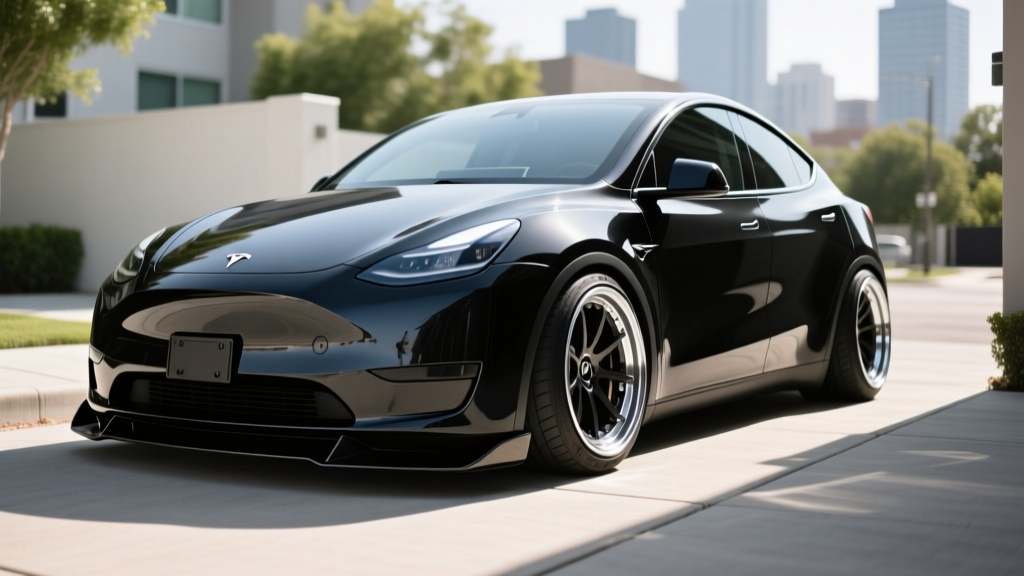
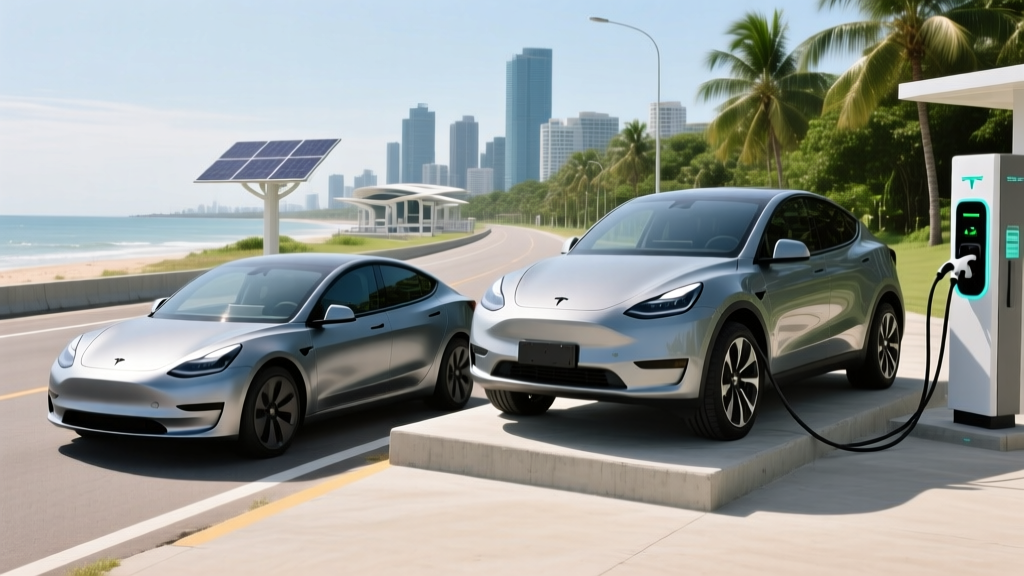
Tesla does not officially sell vehicles in the Philippines as of early 2026. There are no Tesla showrooms, no Supercharger stations, and no local service centers in Metro Manila, Cebu, or anywhere else in the country. Yet a small but growing number of Filipino enthusiasts and expats have imported Tesla vehicles — primarily the Model 3 and Model Y — through independent gray-market importers.
This guide is written for Filipino EV buyers (and US-based readers considering relocating with their Tesla) who want honest, data-driven answers about what owning a Tesla in the Philippines actually looks like. We'll cover real-world range in tropical heat, charging infrastructure gaps, import costs, and whether a Tesla makes sense compared to locally available EVs like the BYD Atto 3, Hyundai Ioniq 5, or Nissan Leaf.
Tesla Model 3 and Model Y: 2026 US Specs at a Glance
Since any Tesla arriving in the Philippines will likely be a US-spec import, here are the current 2026 model-year figures for the two most popular models. These are the vehicles you'd be sourcing through an importer.
| Spec | Model 3 RWD | Model 3 Long Range AWD | Model Y Long Range AWD |
|---|---|---|---|
| EPA Range | 272 mi | 341 mi | 310 mi |
| Battery (usable) | ~57.5 kWh (LFP) | ~75 kWh (NMC) | ~75 kWh (NMC) |
| Drivetrain | RWD, single motor | AWD, dual motor | AWD, dual motor |
| Horsepower | 271 hp | 384 hp | 384 hp |
| 0–60 mph | 5.8 sec | 4.2 sec | 4.8 sec |
| MPGe (combined) | 132 MPGe | 125 MPGe | 117 MPGe |
| Efficiency | 25 kWh/100 mi | 27 kWh/100 mi | 29 kWh/100 mi |
| Peak DC Charge | 170 kW | 250 kW | 250 kW |
| 10–80% DC Time | ~28 min | ~25 min | ~27 min |
| Level 2 Rate | 11.5 kW (~44 mi/hr) | 11.5 kW (~44 mi/hr) | 11.5 kW (~44 mi/hr) |
| US MSRP (base) | $38,990 | $47,740 | $48,990 |
| Cargo Volume | 23 cu ft | 23 cu ft | 76 cu ft (rear seats folded) |
| Battery Warranty | 8 yr / 100,000 mi | 8 yr / 120,000 mi | 8 yr / 120,000 mi |
Sources: EPA Fueleconomy.gov, Tesla.com Model 3, Tesla.com Model Y.
Real-World Range: What Tropical Heat Does to a Tesla Battery
The Philippines' tropical climate (average 28–34°C year-round) has a dual effect on EV range. The good news: you won't experience the 20–30% cold-weather range loss that North American and European owners face in winter. Lithium-ion batteries operate efficiently in warm temperatures.
The bad news: sustained high ambient temperatures accelerate battery degradation over time. The battery management system (BMS) in Teslas actively cools the pack, but this draws energy from the battery itself — adding parasitic load that reduces range by roughly 3–5% compared to temperate-climate driving. Running cabin A/C at full blast in Manila traffic adds another 1–2 kW of continuous draw.
LFP vs NMC in tropical heat: The base Model 3 RWD uses a lithium iron phosphate (LFP) battery, which is more thermally stable and degrades more slowly than the nickel-manganese-cobalt (NMC) chemistry in the Long Range variants. For Philippine buyers, LFP is arguably the better long-term choice — Tesla recommends charging LFP packs to 100% regularly, which also means you get the full rated capacity for daily use.
Charging a Tesla in the Philippines: The Infrastructure Reality
This is the single biggest challenge for anyone considering a Tesla in the Philippines. As of 2026, there are zero Tesla Supercharger stations in the country. Tesla's Southeast Asian Supercharger network covers Thailand, Malaysia, Singapore, and Indonesia — but has not expanded to the Philippines.
| Level | Power | Speed (mi/hr added) | Availability in PH |
|---|---|---|---|
| Level 1 (120V/240V household) | 1.4–2.4 kW | 3–8 mi/hr | Available everywhere (slow) |
| Level 2 (home wall connector) | 7–11.5 kW | 28–44 mi/hr | Self-installed; requires 240V/50A circuit |
| DC Fast Charge (CCS/NACS) | 50–250 kW | 150–1,000 mi/hr | Very limited; third-party CCS stations only with adapter |
Home charging is your primary strategy. Philippine residential electrical service is 230V/60Hz (single-phase), which is compatible with Tesla's Mobile Connector or a Wall Connector wired for 240V. A dedicated 50-amp circuit installed by a licensed Filipino electrician typically costs ₱30,000–₱80,000 ($530–$1,400 USD) depending on panel capacity and wiring distance. This delivers roughly 30–44 miles of range per hour of charging — enough to fully replenish a Model 3 overnight.
Public DC fast charging is extremely limited. A handful of CCS chargers exist at select malls and hotels (operated by companies like ABB partners and local EV advocacy groups), but they typically max out at 50–60 kW — far below the 250 kW peak a Tesla Long Range can accept. You'll also need a NACS-to-CCS adapter (approximately $200–$300 imported) since US-spec Teslas use the NACS connector. At a 50 kW CCS station, expect a 10–80% charge to take roughly 65–75 minutes rather than the 25 minutes possible on a Supercharger.
Import Costs: What a Tesla Actually Costs in Philippine Pesos
Because Tesla has no Philippine presence, every Tesla in the country arrives through independent importers. Here's a realistic cost breakdown for a 2026 Model 3 RWD imported from the US:
| Item | USD | PHP (est.) |
|---|---|---|
| Vehicle MSRP (base) | $38,990 | ₱2,222,430 |
| US inland transport to port | $1,200 | ₱68,400 |
| Ocean freight (US to Manila) | $2,500 | ₱142,500 |
| Philippine customs duty (30%) | $12,777 | ₱728,289 |
| VAT (12%) | $6,643 | ₱378,651 |
| Importer fees & documentation | $2,000 | ₱114,000 |
| LTO registration & local compliance | $800 | ₱45,600 |
| Estimated Total Landed Cost | ~$64,910 | ~₱3,699,870 |
Note: Philippine customs duty on imported vehicles is typically 30% of CIF value (Cost + Insurance + Freight). EV-specific tariff reductions under the CREATE Act or Executive Order No. 12 may reduce this, but rules are evolving. Consult a licensed customs broker for current rates. Exchange rate estimated at $1 = ₱57.
At roughly ₱3.7 million (~$65,000) landed, a base Model 3 RWD costs nearly as much as a BMW iX1 or significantly more than a BYD Atto 3 (₱1.59M) or Hyundai Ioniq 5 (₱2.79M) purchased locally with full dealer warranty and service support.
US Federal Tax Credit: Does It Apply If You're Importing?
If you're purchasing the Tesla in the US and immediately exporting it to the Philippines, you generally cannot claim the §30D federal tax credit. The IRS requires the vehicle to be "placed in service" in the United States — meaning registered, titled, and primarily used domestically. Exporting the vehicle immediately after purchase would likely disqualify you.
For US-based buyers who plan to use the Tesla domestically before eventually relocating, the credit eligibility for a 2026 Model 3 RWD is as follows:
- Vehicle MSRP cap: Must be ≤ $55,000 (sedans). Model 3 qualifies.
- Buyer income cap: Modified AGI ≤ $150,000 (single) / $300,000 (joint).
- Battery sourcing: Must meet critical minerals and battery component requirements per IRS §30D rules. The Model 3 RWD with LFP battery sourcing has historically qualified for partial or full credit depending on the manufacturing quarter — verify at the point of purchase.
- Point-of-sale transfer: Eligible buyers can transfer the credit to the dealer for an immediate price reduction.
For Filipino buyers purchasing directly through an importer, the tax credit is irrelevant — you're paying the full MSRP plus import costs.
Tech, Interior, and Daily Driving in Metro Manila
Tesla's tech stack remains class-leading. The 15.4-inch center touchscreen controls everything — no physical buttons, no instrument cluster. Navigation, media, climate, and vehicle settings all live on this single display. Over-the-air updates continue to add features post-purchase, though some US-specific features (like certain streaming services or Supercharger routing) won't function properly outside the US.
Autopilot and FSD (Supervised): Tesla's driver-assistance suite is SAE Level 2 — meaning the driver must remain fully engaged with hands on the wheel and eyes on the road. In the Philippines, Autopilot's lane-keeping and adaptive cruise control work reasonably well on well-marked highways like SLEX and Skyway, but struggle with the unpredictable lane markings, jeepneys, tricycles, and pedestrians common on Philippine roads. Full Self-Driving (Supervised) is not approved for use in the Philippines and should not be relied upon.
Interior and cargo: The refreshed Model 3 (Highland) features ventilated front seats — genuinely useful in Philippine heat. Rear legroom is 35.2 inches, adequate for adults. The 23 cu ft trunk (plus a small frunk) handles groceries and luggage well. The Model Y's 76 cu ft with seats folded is better for families needing SUV-level cargo space.
Ground clearance concern: The Model 3 sits at 5.5 inches of ground clearance. Philippine roads — particularly in flood-prone areas of Metro Manila during monsoon season — can present deep potholes, speed humps, and flooded streets that are more suited to crossovers. The Model Y's 6.6 inches of clearance is a practical advantage.
Service, Warranty, and the No-Service-Center Problem
Tesla's standard warranty covers the battery and drive unit for 8 years / 100,000 miles (RWD) or 8 years / 120,000 miles (AWD), with a minimum 70% capacity retention threshold. The limited vehicle warranty is 4 years / 50,000 miles.
However, Tesla does not honor warranty claims in countries where it has no official presence. If your imported Model 3 develops a battery fault or drive unit issue in Manila, you cannot drive it to a service center — because none exists. Your options are:
- Pay for independent EV repair (extremely limited expertise in the Philippines)
- Ship the vehicle back to a Tesla market (US, Thailand, Singapore) at your expense — potentially $5,000–$10,000 in freight alone
- Source parts through third-party channels at full retail cost
This is the most critical risk of Tesla ownership in the Philippines. A battery replacement out of warranty costs $12,000–$16,000 in the US; in the Philippines with no service infrastructure, it could be effectively impossible without international shipping.
Tesla vs. Locally Available EVs: What Should Filipino Buyers Actually Consider?
✓ Buy a Tesla (import) if:
- You have reliable home charging (240V/50A circuit)
- You accept no local warranty or service support
- You value Tesla's software, Supercharger ecosystem (when traveling abroad), and performance
- Your budget exceeds ₱3.5M and you want a premium EV
- You live in an area with decent road conditions and minimal flooding
✗ Choose a locally sold EV if:
- You want dealer warranty and local service centers
- Your budget is under ₱3M
- You need higher ground clearance for Philippine roads
- You want access to locally installed public chargers
- You prefer a hassle-free purchase without customs/import complexity
Locally available alternatives worth cross-shopping include the BYD Atto 3 (₱1.59M, 261 mi NEDC range, full local dealer support), the Hyundai Ioniq 5 (₱2.79M, 303 mi EPA range, 800V fast charging), and the GWM Ora 03 (₱1.29M, compact city EV). None match Tesla's software or performance, but all come with Philippine warranties and service networks.
Frequently Asked Questions
What is the real-world range of a Tesla Model 3 in the Philippines?
Expect 280–310 miles in mixed driving from the Long Range AWD variant, or about 220–250 miles from the RWD model with its smaller 57.5 kWh LFP battery. Metro Manila stop-and-go traffic with heavy A/C use reduces range by roughly 15–20% compared to highway driving on SLEX or TPLEX.
How fast does a Tesla charge on Philippine electrical infrastructure?
At home on a 240V/50A circuit, the Tesla Wall Connector delivers up to 11.5 kW — adding about 44 miles of range per hour, or a full charge overnight. Public DC fast charging is limited to third-party CCS stations (typically 50 kW), requiring a NACS-to-CCS adapter and taking roughly 65–75 minutes for a 10–80% charge.
Can I use Tesla Superchargers in the Philippines?
No. There are no Tesla Supercharger stations in the Philippines as of 2026. The nearest Supercharger networks are in Thailand, Malaysia, and Singapore.
Does a Tesla imported to the Philippines qualify for any tax incentives?
The US federal §30D tax credit does not apply if the vehicle is immediately exported. The Philippine government has explored reduced excise taxes on EVs under the EVIDA Law (Republic Act No. 11697), which exempts EVs from excise tax and provides reduced registration fees — but customs duty on imported vehicles may still apply at 30% depending on current BOC rulings. Consult a licensed customs broker for your specific situation.
Is it worth buying a Tesla vs. a BYD or Hyundai in the Philippines?
For most Filipino buyers, no. The import cost premium (nearly double the US MSRP), lack of service centers, absent Supercharger network, and voided warranty make Tesla a high-risk ownership proposition. A locally sold BYD Atto 3 or Hyundai Ioniq 5 offers comparable EV practicality with full dealer support at a lower total cost. Tesla only makes sense for buyers who specifically want the brand, software, and performance, and who can absorb the import premium and service risk.
What happens if my Tesla battery degrades or fails in the Philippines?
Without a local Tesla service center, a battery replacement would require either shipping the vehicle to a Tesla market (Thailand, Singapore, or the US) or sourcing a replacement pack through independent channels — both expensive and logistically complex. This is the single largest ownership risk.