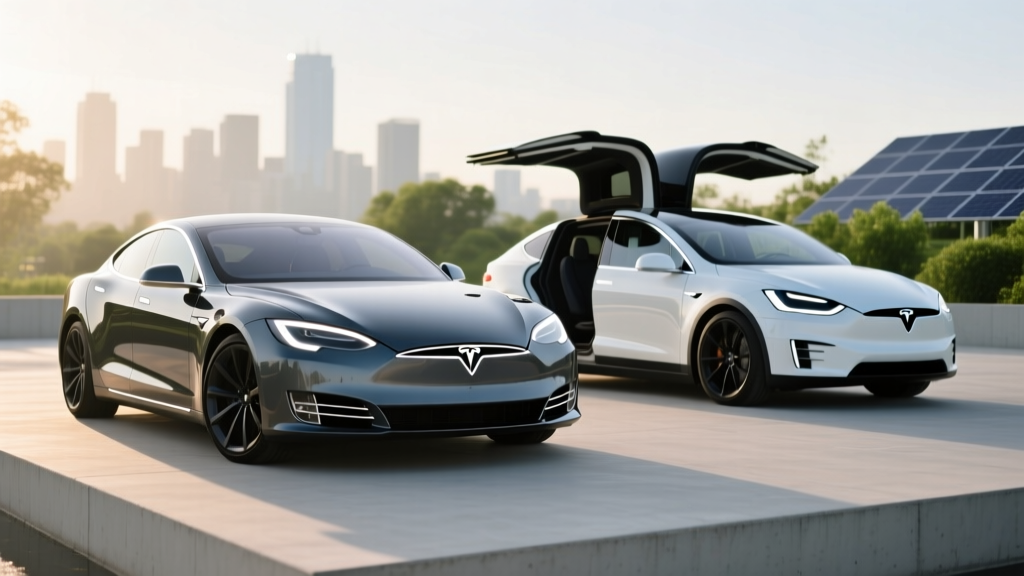
The question keeps surfacing in forums, investor calls, and EV subreddits: Is Tesla phasing out Model S and Model X? As of early 2026, both vehicles remain on sale and configurable on Tesla's website. But declining production volumes, the cancellation of the Plaid refresh timeline, and the company's pivot toward higher-volume platforms like the next-generation compact have fueled speculation that these legacy flagships are living on borrowed time.
Whether you're a current owner assessing long-term support, a luxury EV shopper weighing the Model S against the Lucid Air and BMW i7, or a family considering the Model X's falcon-wing utility, this guide gives you the exact 2026 specs, real-world ownership data, and honest assessment you need before committing $80,000+.
2026 Tesla Model S & Model X: At-a-Glance Specs
| Spec | Model S (Long Range) | Model S (Plaid) | Model X (Long Range) | Model X (Plaid) |
|---|---|---|---|---|
| EPA Range | 402 mi | 359 mi | 335 mi | 320 mi |
| Battery (usable) | ~95 kWh (NMC) | ~95 kWh (NMC) | ~95 kWh (NMC) | ~95 kWh (NMC) |
| Drivetrain | Dual-Motor AWD | Tri-Motor AWD | Dual-Motor AWD | Tri-Motor AWD |
| Horsepower | 670 hp | 1,020 hp | 670 hp | 1,020 hp |
| 0-60 mph | 3.1 sec | 1.99 sec | 3.8 sec | 2.5 sec |
| MPGe (combined) | 120 MPGe | 116 MPGe | 102 MPGe | 98 MPGe |
| Efficiency (kWh/100 mi) | 28 kWh | 29 kWh | 33 kWh | 34 kWh |
| Peak DC Charge Rate | 250 kW | 250 kW | 250 kW | 250 kW |
| 10-80% DCFC Time | ~27 min | ~27 min | ~31 min | ~31 min |
| Level 2 Home Charging | 11.5 kW / ~41 mi/hr | 11.5 kW / ~41 mi/hr | 11.5 kW / ~35 mi/hr | 11.5 kW / ~35 mi/hr |
| Cargo (behind 2nd row) | 26.3 cu ft + 5.3 frunk | 26.3 cu ft + 5.3 frunk | 83.1 cu ft (seats folded) + 6.6 frunk | 83.1 cu ft (seats folded) + 6.6 frunk |
| Towing Capacity | Not rated | Not rated | 5,000 lbs | 5,000 lbs |
| Base MSRP (2026) | $79,990 | $94,990 | $84,990 | $99,990 |
| Battery/Drive Unit Warranty | 8 yr / 150,000 mi | 8 yr / 150,000 mi | 8 yr / 150,000 mi | 8 yr / 150,000 mi |
Sources: EPA fueleconomy.gov, Tesla Model S specs, Tesla Model X specs
Real-World Range: What the EPA Sticker Doesn't Tell You
Model S Long Range: EPA 402 mi → Expect ~330-350 mi on highway trips at 70+ mph; ~260-290 mi in freezing weather with cabin heat.
Model X Long Range: EPA 335 mi → Expect ~270-290 mi highway; ~210-240 mi in freezing conditions. The boxier profile and heavier curb weight (~5,100 lbs) penalize highway efficiency more than the sedan.
Tesla's range estimates have historically been among the most optimistic in the industry. Independent testing by Edmunds and other outlets has consistently shown the Model S and X falling short of EPA projections in real-world highway driving, where aerodynamic drag and sustained speeds above 65 mph erode efficiency faster than the EPA's mixed-cycle test suggests.
The Model S Long Range's 28 kWh/100 mi combined rating is impressive for a full-size luxury sedan, but at 80 mph on a flat interstate in mild weather, expect consumption closer to 32-34 kWh/100 mi — which translates to roughly 280-300 miles from a full charge. Cold weather (below 32°F) compounds this: battery chemistry slows, cabin heating draws significant power, and regenerative braking is limited until the pack warms. Plan for 25-35% range reduction in winter conditions if you lack access to a preconditioning routine or garage parking.
The Model X faces a steeper penalty. Its tall, flat-fronted crossover body generates substantially more drag than the Model S sedan, and that 33 kWh/100 mi combined figure can balloon to 40+ kWh/100 mi at highway speeds in cold weather. For road-trippers who regularly cover 250+ miles in a single stretch, this means more Supercharger stops than the EPA number implies.
Charging Speed and Infrastructure Reality
| Level | Power / Rate | Miles Added per Hour | Typical Use Case |
|---|---|---|---|
| Level 1 (120V) | ~1.4 kW | ~3-4 mi/hr | Emergency / trickle only |
| Level 2 (240V, 48A) | 11.5 kW | ~35-41 mi/hr | Home daily charging (overnight) |
| DC Fast (Supercharger V3) | Peak 250 kW | ~170 mi in 15 min | Road trips, rapid top-ups |
Both the Model S and X peak at 250 kW on V3 Superchargers. This was class-leading in 2020, but in 2026 it trails competitors: the Lucid Air charges at up to 300 kW, the Hyundai Ioniq 5 at 240 kW (with an 800V architecture that sustains higher rates longer), and the Porsche Taycan at 270 kW.
The critical detail Tesla buyers often miss is charge-curve taper. The 250 kW peak only holds briefly, typically between 10-20% state of charge. Above 50% SoC, the rate drops substantially — often below 100 kW — and above 80% it slows to a trickle. A 10-80% session takes roughly 27 minutes for the Model S and 31 for the heavier Model X, which is adequate but no longer best-in-class.
Home charging at 11.5 kW (48 amps on a 60-amp circuit) is the practical sweet spot. You'll add roughly 35-41 miles of range per hour, meaning a full overnight session (8-10 hours) easily replenishes a daily commute's worth of driving. Installation of a Tesla Wall Connector or equivalent Level 2 unit typically runs $800-$2,000 including electrician labor, assuming your panel has capacity. Older homes may require a panel upgrade ($1,500-$3,500 additional).
Why People Are Asking About a Model S/X Phase-Out
Several converging factors have made "Tesla phasing out Model S X" a persistent search query:
- Production volume collapse: Tesla's Fremont factory has progressively reallocated lines toward Model 3 and Model Y output. Model S/X combined production has fallen to a small fraction of Tesla's total output — estimates place it below 5% of annual deliveries.
- Platform age: The Model S architecture debuted in 2012, with a major refresh in 2021 (new interior, yoke, Plaid powertrain). The Model X followed a similar timeline. Neither has received a significant update since, while competitors have launched entirely new platforms.
- Regulatory credits drying up: As legacy automakers electrify, Tesla's regulatory credit revenue — partly funded by competitors buying compliance — has declined. The business case for low-volume halo cars weakens.
- Next-gen platform priority: Tesla has publicly prioritized its next-generation vehicle platform targeting a sub-$30,000 price point. Engineering and capital resources are directed there, not toward a third refresh of a 2012 architecture.
However, Tesla has not announced any discontinuation date. Both vehicles remain configurable, and the company continues to sell them in all available markets. If a phase-out happens, it will likely be gradual — ending with the Model X (lower volume, more complex falcon-wing doors) before the Model S, which retains stronger brand cachet.
Pricing, Trims, and Federal Tax Credit Eligibility
The IRS §30D Clean Vehicle Credit offers up to $7,500, but eligibility for the Model S and X is restricted:
• MSRP cap: Sedans must be ≤$55,000; SUVs/vans/pickups ≤$80,000. The Model S (sedan, $79,990+) exceeds the sedan cap. The Model X (SUV, $84,990+) exceeds the SUV cap.
• Income cap: AGI ≤$150,000 (single) / ≤$300,000 (joint).
• Battery sourcing: Critical mineral and battery component requirements tighten annually.
Bottom line: Neither the Model S nor Model X qualifies for the new-vehicle §30D credit at current MSRP levels.
| Trim | Base MSRP | Federal Credit | Effective Price (before state incentives) |
|---|---|---|---|
| Model S Long Range | $79,990 | $0 (exceeds sedan MSRP cap) | $79,990 |
| Model S Plaid | $94,990 | $0 | $94,990 |
| Model X Long Range | $84,990 | $0 (exceeds SUV MSRP cap) | $84,990 |
| Model X Plaid | $99,990 | $0 | $99,990 |
This is a significant competitive disadvantage. The BMW i7 eDrive50 (starting around $105,700) also misses the cap, but the Lucid Air Pure ($69,900) falls under the $55,000 sedan cap only in its base configuration — though options quickly push it over. The practical takeaway: budget the full MSRP for a new Model S or X, and investigate your state's specific EV rebates separately, as some states offer point-of-sale incentives without MSRP restrictions.
Interior, Tech, and the Driver-Assist Question
The 2021-refreshed interior remains distinctive: minimalist dashboard, 17-inch landscape touchscreen, yoke steering (conventional wheel now optional at no cost), and a rear-seat entertainment screen. Build quality has improved since early Model S production, though panel gaps and trim alignment still lag Mercedes-Benz and BMW luxury standards.
Autopilot and FSD (Supervised): Tesla includes basic Autopilot (adaptive cruise + lane centering) standard. Full Self-Driving (Supervised) remains an optional upgrade ($8,000 one-time or $99/month as of 2026). This is an SAE Level 2 system — it requires continuous driver attention and hands-on or eyes-on supervision at all times. It is not autonomous driving. Tesla's FSD has shown measurable improvement in city-street navigation, but it still makes unpredictable decisions in construction zones, unprotected left turns, and adverse weather. The driver remains legally responsible.
Tesla Autopilot and FSD (Supervised) are SAE Level 2 driver-assistance systems. They do NOT make the vehicle self-driving. The driver must remain alert, keep hands on the wheel, and be prepared to take over instantly. Only Level 4 services like Waymo operate without a human driver, and those are geofenced to specific cities.
Notable tech strengths include Tesla's Supercharger network (the most reliable and extensive DC fast-charging network in North America, now opening to other brands via NACS adoption), over-the-air updates that add features post-purchase, and the Tesla app's remote monitoring and preconditioning capabilities.
Notable drawbacks: no Apple CarPlay or Android Auto (Tesla's native infotainment is the only option), no heads-up display, limited physical controls for climate and mirrors (all screen-based), and the yoke steering wheel remains controversial for daily driving despite being optional.
Pros, Cons, and Who Should Buy
✓ Pros
- Class-leading EPA range (402 mi on Model S LR)
- Access to Tesla Supercharger network (best-in-class reliability)
- Plaid performance is supercar-level at sedan/SUV pricing
- OTA updates keep software current years after purchase
- Model X offers unique falcon-wing rear doors for tight parking and easy child-seat access
- 8-year/150,000-mile battery warranty is above industry average
✗ Cons
- No federal tax credit eligibility (exceeds MSRP caps)
- 250 kW peak DCFC trails newer 800V competitors
- Real-world range falls notably short of EPA, especially in cold
- Interior quality doesn't match BMW/Mercedes at this price point
- No CarPlay, no HUD, minimal physical controls
- Platform is aging — last major refresh was 2021
- Phase-out risk may affect long-term parts/service support
Who Should Buy the Model S/X in 2026?
Model S is best for: Tech-forward sedan buyers who prioritize range and Supercharger access over traditional luxury materials, and who want Plaid-level performance without stepping into six-figure Porsche/Audi territory. Ideal if you road-trip frequently and value the Supercharger network.
Model X is best for: Families needing three-row seating with electric powertrain, who benefit from falcon-wing doors in tight urban parking, and who tow up to 5,000 lbs. It remains one of very few three-row electric SUVs available, though the Rivian R1S and Kia EV9 offer compelling alternatives.
Look elsewhere if: You want the latest platform technology, traditional luxury interior quality, the fastest available DC charging, or federal tax credit eligibility. Consider the Lucid Air, BMW i7, Mercedes EQS, or the refreshed Porsche Taycan.
Frequently Asked Questions
Has Tesla officially announced phasing out the Model S and Model X?
No. As of 2026, Tesla has not made any official announcement discontinuing the Model S or Model X. Both remain available for order. However, production volumes have declined substantially, and industry analysts widely expect Tesla to eventually sunset these models as it focuses on higher-volume, lower-cost platforms.
Does the Tesla Model S or X qualify for the $7,500 federal EV tax credit?
No. Under current IRS §30D rules, sedans must have an MSRP at or below $55,000, and SUVs at or below $80,000. The Model S starts at $79,990 (sedan classification) and the Model X at $84,990 (SUV classification), putting both above their respective caps. Buyers should consult a tax professional and check IRS guidelines for any rule changes.
What's the real-world highway range of the Model S Long Range?
Expect roughly 330-350 miles on a mixed highway trip at moderate speeds in mild weather, compared to the EPA's 402-mile rating. At sustained speeds above 75 mph or in cold weather, plan for 260-300 miles. Preconditioning the battery before departure and using seat heaters instead of cabin heat can recover some range.
How does Model S/X charging speed compare to competitors?
The 250 kW peak is adequate but no longer best-in-class. The Lucid Air charges at 300 kW, the Porsche Taycan at 270 kW, and Hyundai/Kia's E-GMP vehicles sustain higher rates longer thanks to 800V architecture. Tesla's advantage is the Supercharger network's reliability and coverage, not raw charge speed.
Should I worry about parts and service if Tesla discontinues these models?
Federal law requires automakers to supply parts for a minimum period after discontinuation, and Tesla's parts-sharing across models (many components are shared with Model 3/Y) provides some buffer. However, Model S/X-specific parts — especially the Model X's falcon-wing door mechanisms and air suspension — could become harder to source over a 10-15 year ownership horizon. This is a legitimate long-term consideration.
Is the Model X a practical family hauler vs. three-row alternatives?
The Model X offers genuine three-row seating and 5,000-lb towing, but third-row space is tight for adults. The falcon-wing doors are genuinely useful for loading children in narrow parking spots. Competitors like the Rivian R1S offer more rugged capability and better third-row space, while the Kia EV9 offers dramatically lower pricing. The Model X wins on Supercharger access and performance, but loses on value and interior versatility.