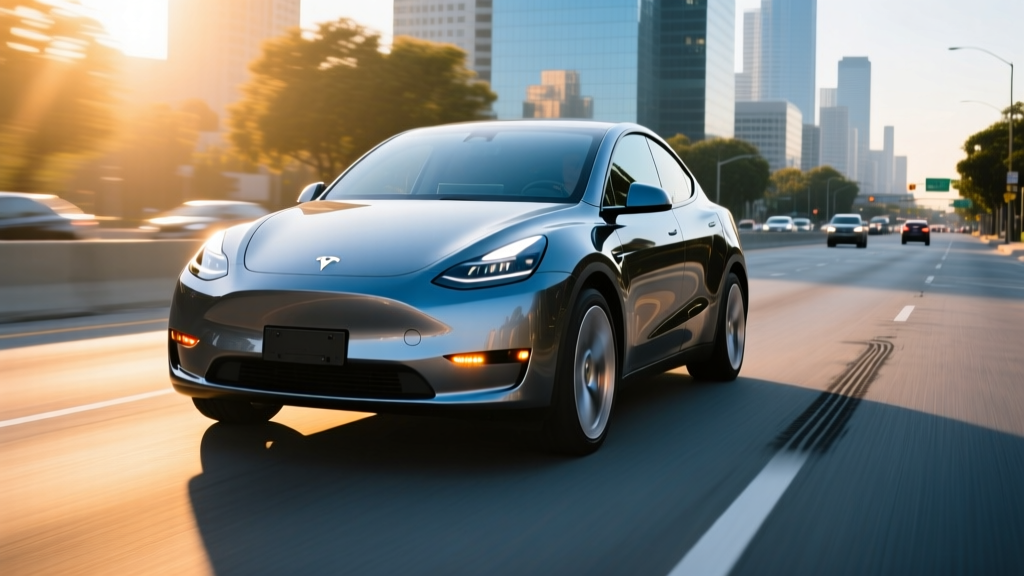
If you've driven a Tesla on Autopilot for any meaningful distance, you've likely experienced it: the car suddenly decelerates for no apparent reason, slowing from highway speed as if an invisible obstacle appeared ahead. This phenomenon, widely known as Tesla phantom braking, has frustrated owners, drawn National Highway Traffic Safety Administration (NHTSA) scrutiny, and remains one of the most discussed quirks of Tesla's driver-assistance systems heading into 2026.
Phantom braking isn't exclusive to Tesla — any vehicle using adaptive cruise control or automatic emergency braking can exhibit it — but Tesla's large fleet, camera-only vision approach, and highly engaged owner community have made it the focal point of the conversation. This guide breaks down exactly what phantom braking is, why it happens, what Tesla and regulators have done about it, and practical steps you can take as a driver.
What Is Tesla Phantom Braking?
Phantom braking occurs when a vehicle's driver-assistance or collision-avoidance system applies the brakes unexpectedly in the absence of a real obstacle. In Tesla vehicles, this typically manifests while using Autopilot (Tesla's SAE Level 2 driver-assistance suite) or Full Self-Driving (Supervised). The car might decelerate sharply on a clear highway, under an overpass, or when approaching shadows on the road surface.
Both Autopilot and FSD (Supervised) are SAE Level 2 driver-assistance systems. The driver must remain fully engaged, hands on or near the wheel, eyes on the road, and prepared to take over instantly. Tesla's naming of "Full Self-Driving" does not mean the vehicle drives itself. Only Level 4 services like Waymo operate without a human driver.
The severity of phantom braking events ranges from mild — a gentle, momentary deceleration that you barely notice — to severe, where the car drops from 70 mph to 40 mph in seconds without warning. The latter scenario poses a genuine rear-end collision risk, especially in dense highway traffic where following drivers don't expect sudden deceleration.
Why Does Phantom Braking Happen in Teslas?
Understanding phantom braking requires understanding how Tesla's perception system works. Since late 2021, Tesla has relied exclusively on a camera-only vision system called Tesla Vision, having removed radar and ultrasonic sensors from new vehicles. This architectural decision is central to the phantom braking discussion.
The Camera-Only Challenge
Camera-based systems interpret the world through image recognition neural networks. These networks must classify objects, estimate distances, and predict trajectories — all from 2D image data. Several conditions can confuse the system:
- Shadows and contrast changes: Dark shadows cast by overpasses, bridges, or tree lines can be misinterpreted as solid obstacles.
- Oncoming headlights and sun glare: Bright light sources, especially at dawn, dusk, or night, can overwhelm camera dynamic range or create false-positive object detections.
- Adjacent-lane vehicles cutting in visually: A vehicle in a neighboring lane that partially overlaps your lane in the camera's perspective can trigger a false threat assessment.
- Road surface changes: Tar strips, painted markings, or transitions between asphalt types can create visual patterns the network flags as obstacles.
- Tunnel and overpass entrances: The rapid light-to-dark transition can cause momentary perception errors.
Radar Removal and Sensor Fusion Loss
Earlier Tesla vehicles equipped with radar could cross-reference camera data with radar returns. If the camera flagged an obstacle but radar showed a clear path, the system could suppress the false positive. Removing radar eliminated this redundancy layer, placing the entire perception burden on cameras and neural network confidence scores.
Tesla has stated that its neural network approach, trained on billions of miles of fleet data, will ultimately outperform sensor fusion. However, the transition period has been marked by recurring phantom braking complaints as the vision-only system matures.
NHTSA Investigations and Regulatory Response
The National Highway Traffic Safety Administration has taken Tesla phantom braking seriously. In February 2022, NHTSA opened a preliminary evaluation (PE 22-002) into approximately 416,000 Tesla vehicles following 353 consumer complaints about unexpected braking events. The investigation covered Model 3 and Model Y vehicles from the 2021-2022 model years, as well as Model S and Model X from 2021-2022.
By late 2023, NHTSA elevated the probe to an engineering analysis (EA 23-004), covering an estimated 2 million vehicles — essentially the entire Tesla fleet equipped with Tesla Vision. According to NHTSA records, the agency identified hundreds of complaints linking phantom braking to rear-end collisions and near-misses.
Tesla has responded through over-the-air (OTA) software updates that adjust the sensitivity and confidence thresholds of the automatic emergency braking (AEB) and Autopilot systems. However, many owners report that the issue persists in varying degrees through 2025 and into 2026 model-year vehicles, suggesting that a complete camera-only solution remains a work in progress.
Phantom braking can occur without warning at any speed. Never rely solely on Autopilot or FSD (Supervised) to manage following distance or braking. Keep your foot near the brake pedal, maintain active awareness of traffic behind you, and be prepared to override the system instantly. If your Tesla brakes unexpectedly, tap the accelerator to override Autopilot braking or disengage the system entirely with the brake pedal or stalk.
Tesla Models Most Affected by Phantom Braking
While phantom braking has been reported across the Tesla lineup, frequency and severity vary by model, model year, and hardware generation. Here's a snapshot of the current 2026 Tesla lineup with relevant specs:
| Spec | Model 3 (2026) | Model Y (2026) | Model S (2026) | Model X (2026) |
|---|---|---|---|---|
| EPA Range | 363 mi (LR RWD) | 320 mi (LR AWD) | 402 mi (LR) | 348 mi (LR) |
| Battery (usable) | ~79 kWh (LFP/NMC by trim) | ~78 kWh (LFP/NMC by trim) | ~100 kWh (NMC) | ~100 kWh (NMC) |
| Max DC Charge | 250 kW | 250 kW | 250 kW | 250 kW |
| 10–80% DC Time | ~25 min | ~27 min | ~30 min | ~32 min |
| Level 2 Home Rate | 11.5 kW (~44 mi/hr) | 11.5 kW (~44 mi/hr) | 11.5 kW (~34 mi/hr) | 11.5 kW (~30 mi/hr) |
| 0–60 mph | 5.8s (RWD) / 4.2s (LR AWD) | 6.6s (RWD) / 4.8s (LR AWD) | 3.1s (Plaid) | 3.8s (Plaid) |
| Base MSRP | ~$38,990 | ~$44,990 | ~$79,990 | ~$84,990 |
| MPGe (combined) | 132 MPGe | 122 MPGe | 120 MPGe | 109 MPGe |
| Battery Warranty | 8 yr / 100k mi | 8 yr / 120k mi | 8 yr / 150k mi | 8 yr / 150k mi |
Source: fueleconomy.gov and Tesla.com. Specs vary by trim and model year. Verify current pricing and specs at time of purchase.
The Model 3 and Model Y from 2021–2024 have generated the highest volume of phantom braking complaints, likely because they represent the largest portion of Tesla's fleet and were the first to transition to camera-only Tesla Vision. The refreshed Model 3 "Highland" (introduced for 2024) and the updated Model Y "Juniper" (2025+) include revised camera hardware and updated neural network processing, which Tesla claims reduce false positives — though owner reports suggest the issue hasn't been entirely eliminated.
Real-World Range and Efficiency Context
While phantom braking is a driver-assistance concern, not a powertrain one, buyers researching Tesla's ADAS behavior are often evaluating the full ownership picture. Here's what to expect from the most popular model:
EPA Estimate: 363 miles
Real-World Highway (70–75 mph): Expect ~290–310 miles. Tesla's efficiency is strong, but sustained highway speeds consume more energy than the EPA mixed cycle suggests.
Cold Weather (below 32°F): Expect ~250–280 miles. The Model 3 uses a heat pump (standard since 2021), which helps, but LFP battery variants lose more capacity in cold than NMC variants. Preconditioning while plugged in mitigates some loss.
Efficiency: ~25 kWh/100 mi combined (per fueleconomy.gov).
What Tesla Has Done to Address Phantom Braking
Tesla's primary response to phantom braking has been iterative software updates delivered over the air. Key changes through 2025 and into 2026 include:
- Adjusted AEB sensitivity: Software update 2023.44 and subsequent releases modified the confidence threshold required before automatic emergency braking activates, reducing false positives at the cost of slightly later braking in genuine emergencies.
- Improved neural network models: Tesla's occupancy network — which models the 3D space around the car rather than relying on pre-trained object categories — was designed to better handle unusual obstacles and reduce shadow-related false detections.
- Hardware 4 (HW4) cameras: Vehicles built from mid-2023 onward feature higher-resolution cameras with improved dynamic range, giving the neural network better data in challenging lighting conditions.
- Driver-facing camera monitoring: Tesla's cabin camera monitors driver attention more aggressively, which doesn't prevent phantom braking but ensures the driver is more likely to be engaged and ready to override.
Despite these efforts, phantom braking remains a known behavior. Tesla's owner manuals and in-app documentation note that Autopilot and AEB may react to non-existent obstacles and that drivers should always be prepared to take corrective action.
Practical Steps to Reduce Phantom Braking Impact
As a Tesla owner or prospective buyer, here are concrete actions to manage phantom braking risk:
1. Adjust Following Distance
Set your Autopilot following distance to 4 or higher (on the 1–7 scale). This gives you more reaction time and reduces the chance that a phantom braking event causes a rear-end collision from vehicles behind you. It also gives the system more data to correctly assess the situation ahead.
2. Keep Hands on the Wheel and Foot Near the Brake
This sounds obvious, but it's the single most important mitigation. The instant you feel unexpected deceleration, a light press on the accelerator will override Autopilot's braking command. A firmer press on the brake pedal disengages Autopilot entirely.
3. Be Extra Vigilant in Known Trigger Zones
Phantom braking occurs most frequently at overpasses, bridge shadows, tunnel entrances, and during low-angle sun conditions (dawn/dusk). When approaching these areas on Autopilot, place your foot near the brake and be ready to override.
4. Maintain Clean Cameras
Dirt, water spots, and insect residue on Tesla's external cameras degrade image quality and can increase false positives. Wipe cameras regularly, especially before long highway drives.
5. Stay Current on Software Updates
Tesla continuously refines its perception algorithms. Ensure your vehicle installs the latest software updates promptly. Check your vehicle's software version under Controls → Software and compare with current release notes from Tesla or owner communities.
6. Report Events to Tesla and NHTSA
If you experience a severe phantom braking event, report it through the Tesla app and file a complaint at NHTSA's complaint portal. Regulatory pressure has been a meaningful driver of Tesla's software improvements.
Tesla Autopilot vs. Competitor ADAS: Phantom Braking in Context
Phantom braking is not unique to Tesla. Every adaptive cruise control and automatic emergency braking system on the market can exhibit false-positive braking. However, the frequency and severity differ meaningfully between systems:
| System | SAE Level | Sensors | Phantom Braking Reports |
|---|---|---|---|
| Tesla Autopilot / FSD | Level 2 | Camera only | High volume; well-documented |
| Ford BlueCruise | Level 2 | Camera + radar | Lower; radar cross-checks reduce false positives |
| GM Super Cruise | Level 2 | Camera + radar + LiDAR map | Low; geo-fenced to mapped highways |
| Hyundai/Kia HDA2 | Level 2 | Camera + radar | Moderate; fewer complaints than Tesla |
| Toyota Safety Sense 3.0 | Level 2 | Camera + radar | Low–moderate; conservative calibration |
The pattern is clear: systems that combine cameras with radar (sensor fusion) tend to produce fewer phantom braking events because radar provides an independent check against camera false positives. Tesla's bet on a pure-vision approach is technically ambitious but has required a longer calibration period to reach comparable reliability.
Should Phantom Braking Concerns Affect Your Tesla Purchase?
- You value the Supercharger network (now open to other brands via NACS adoption, but still the most reliable)
- You want class-leading efficiency (kWh/100 mi) and strong real-world range
- You're comfortable with an actively supervised Level 2 system and understand its limitations
- You primarily drive on well-marked highways in good weather where Autopilot performs best
- You want continuous OTA improvements and accept that software refinement is ongoing
- Phantom braking is a dealbreaker and you want a sensor-fusion system (Ford BlueCruise, GM Super Cruise)
- You want hands-free driving on mapped highways without steering wheel torque (Super Cruise, BlueCruise hands-free)
- You frequently drive in conditions that stress camera-only systems (heavy rain, fog, rural roads with poor markings)
- You prefer traditional dealership service and support infrastructure
Federal Tax Credit and Tesla Pricing in 2026
Tesla pricing and federal tax credit eligibility shift frequently. Here's the current landscape under IRS §30D clean vehicle credit rules:
| Model | Base MSRP | §30D Eligible? | After Max Credit |
|---|---|---|---|
| Model 3 RWD | ~$38,990 | Partial — varies by battery sourcing* | ~$35,240 (if $3,750) |
| Model 3 LR AWD | ~$45,990 | Partial — varies* | ~$42,240 (if $3,750) |
| Model Y LR AWD | ~$44,990 | Partial — varies* | ~$41,240 (if $3,750) |
| Model S / X | $79,990+ | No — exceeds MSRP cap | Full MSRP |
*§30D credit eligibility depends on battery component sourcing and critical mineral requirements that change annually. The Model 3 and Model Y may qualify for $3,750 (half credit) or $7,500 (full credit) depending on current sourcing rules. Buyer income caps apply ($150k single / $300k joint for new vehicles). MSRP cap: $55,000 for sedans, $80,000 for SUVs/trucks. Always verify current eligibility at fueleconomy.gov and consult a tax professional.
Frequently Asked Questions
Is Tesla phantom braking dangerous?
It can be. Sudden, unexpected deceleration on a highway creates a rear-end collision risk, especially when following traffic is dense. NHTSA has documented crashes linked to phantom braking events. The key mitigation is maintaining active driver engagement — foot near the brake, eyes on the road, ready to override instantly.
Has Tesla fixed phantom braking in 2026 models?
Tesla has reduced the frequency through software updates and Hardware 4 camera improvements, but owner reports indicate the issue has not been fully eliminated. The camera-only architecture inherently faces challenges in edge-case lighting and shadow conditions. Expect continued refinement through OTA updates, but plan your driving habits around the possibility of phantom braking.
Does phantom braking affect Tesla's safety ratings?
Phantom braking itself is not directly evaluated by NHTSA or IIHS crash-test ratings. Tesla vehicles continue to earn top marks in crashworthiness — the Model 3 and Model Y hold 5-star NHTSA ratings and IIHS Top Safety Pick+ awards. However, NHTSA's defect investigation into phantom braking is a separate regulatory action focused on the ADAS system, not crash performance.
Can I disable automatic emergency braking in my Tesla?
You can adjust AEB sensitivity in the vehicle settings (Controls → Safety → Automatic Emergency Braking), but Tesla does not allow full deactivation of AEB, as it is a mandated safety feature. You can, however, drive without Autopilot engaged, which eliminates the most common phantom braking scenario (Autopilot-initiated deceleration). AEB can still independently trigger in extreme scenarios even with Autopilot off.
Do other EVs have phantom braking problems?
Yes — phantom braking can occur in any vehicle with adaptive cruise control or AEB. However, systems using sensor fusion (camera + radar, like Ford BlueCruise or Hyundai HDA2) tend to produce fewer false positives because radar provides an independent verification layer. Tesla's camera-only approach is the outlier in the industry, which is why it generates more complaints relative to fleet size.
What should I do if my Tesla phantom brakes and causes an accident?
Document the event: note the location, speed, road conditions, and whether Autopilot was engaged. File a report through the Tesla app and submit a complaint to NHTSA. Contact your insurance provider. In some cases, owners have pursued legal claims — consult an attorney if the incident resulted in injury or significant property damage. Tesla's data logs (accessible via the vehicle or through legal discovery) record braking events and system state at the time of the incident.
The Bottom Line
Tesla phantom braking is a real, documented phenomenon rooted in the engineering trade-offs of a camera-only perception system. It's not a reason to avoid Tesla vehicles outright — the brand still offers class-leading efficiency, the best charging network, and continuous software improvement. But it is a reason to understand what you're signing up for: an SAE Level 2 system that requires your full, uninterrupted attention and your willingness to override it at any moment.
If phantom braking is a primary concern for your purchase decision, test-drive a Tesla on a highway route that includes overpasses and shadow transitions. Experience it firsthand. Compare it with a Ford equipped with BlueCruise or a GM vehicle with Super Cruise. The right choice depends on your risk tolerance, your typical driving conditions, and how much you value Tesla's ecosystem advantages against the ADAS refinement still in progress.