When Elon Musk published his 2014 "All Our Patent Are Belong To You" blog post, the idea that Tesla would open-source its electric-vehicle patents sounded more like a marketing stunt than an industry catalyst. More than a decade later, the ripple effects of that decision are embedded in everything from the North American Charging Standard (NACS) now adopted by nearly every major automaker, to the supply-chain and battery innovations that keep the 2026 Tesla Model 3 priced competitively against a surging field of rivals.
This review examines the 2026 Tesla Model 3 — the car that benefits most directly from Tesla's open-patent strategy — while unpacking what "Tesla patents open source" actually means for buyers in practical terms: range, charging speed, battery chemistry, pricing, and whether it still holds up against the Hyundai Ioniq 6, BMW i4, and Polestar 2.
What "Tesla Patents Open Source" Actually Means in 2026
Tesla's 2014 pledge was never a blanket public-domain release. The company promised not to initiate patent lawsuits against anyone who, "in good faith," used Tesla's technology. The fine print matters: competitors can reference Tesla's thermal management, battery pack architecture, and powertrain designs without fear of litigation — provided they don't turn around and sue Tesla over their own patents. This "good faith" framework effectively created a one-way technology transfer that accelerated the entire EV industry.
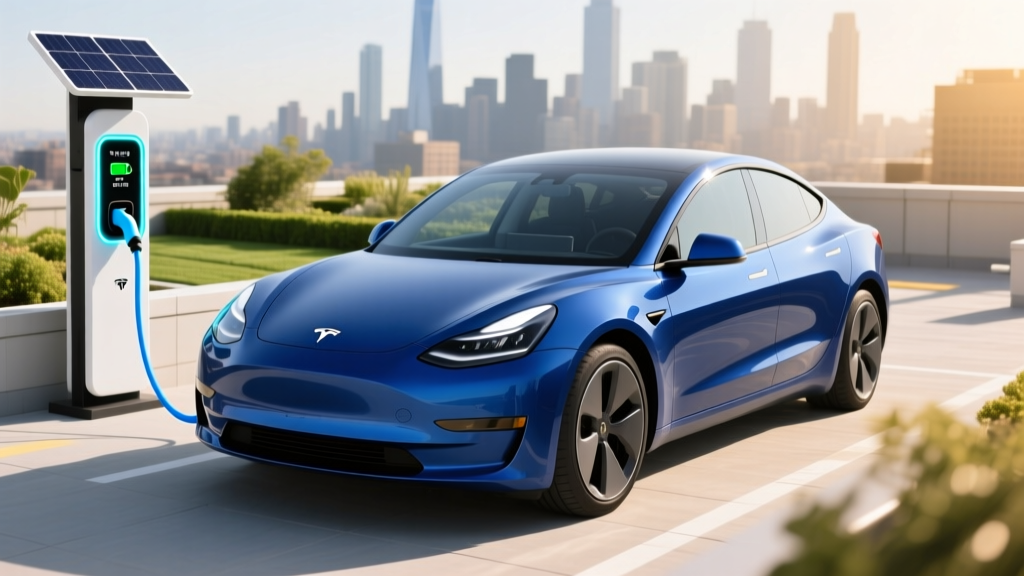
By 2026, the most visible outcome is NACS. What began as Tesla's proprietary charging connector is now the industry-standard charging port adopted by Ford, GM, Rivian, Hyundai, BMW, and others. Tesla opened the connector specification in late 2022, and the move transformed the Supercharger network into a de facto public utility — a strategic masterstroke that benefits Model 3 owners through unmatched charging reliability while generating revenue from rival-brand vehicles now plugging in.
Other technologies influenced by Tesla's open-patent approach include structural battery pack concepts, heat pump thermal management systems (critical for cold-weather range retention), and over-the-air software update architectures now standard across the industry.
2026 Tesla Model 3: Core Specifications at a Glance
| Spec | Model 3 RWD | Model 3 Long Range AWD | Model 3 Performance |
|---|---|---|---|
| EPA Range | 272 mi | 363 mi | 315 mi |
| Battery (usable) | ~60 kWh (LFP) | ~82 kWh (NMC) | ~82 kWh (NMC) |
| Drivetrain | RWD, single motor | AWD, dual motor | AWD, dual motor |
| Horsepower | 271 hp | 384 hp | 510 hp |
| 0-60 mph | 5.8 sec | 4.2 sec | 2.9 sec |
| Peak DC Charge Rate | 175 kW | 250 kW | 250 kW |
| 10-80% DC Time | ~28 min | ~25 min | ~25 min |
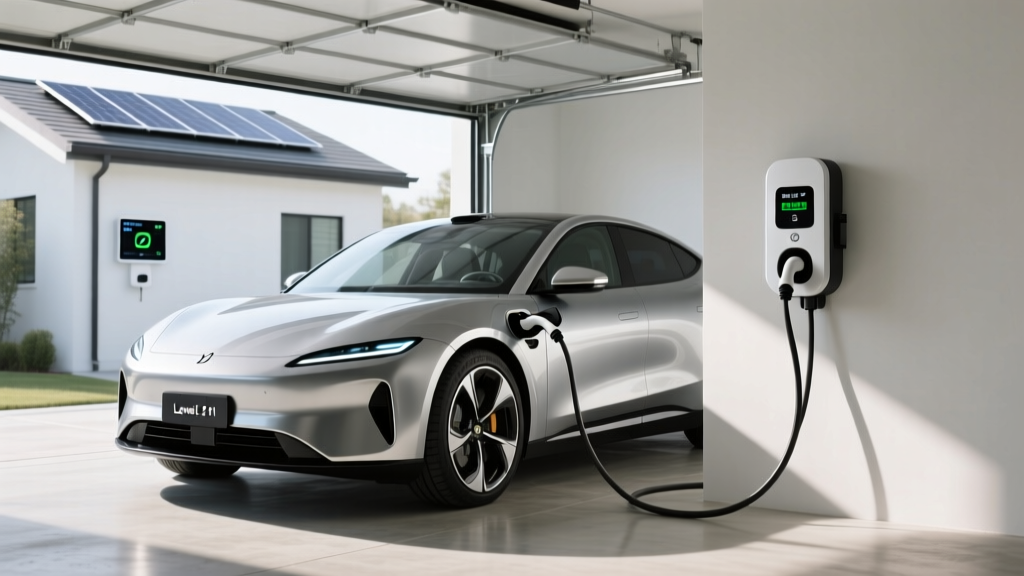
| Level 2 Home Charging | 11.5 kW (~44 mi/hr) | 11.5 kW (~44 mi/hr) | 11.5 kW (~44 mi/hr) |
| EPA Efficiency | 132 MPGe (25 kWh/100mi) | 131 MPGe (26 kWh/100mi) | 115 MPGe (29 kWh/100mi) |
| Cargo Volume | 23 cu ft (trunk) + 3.1 cu ft (frunk) | ||
| Rear Legroom | 35.2 in | ||
| Battery Warranty | 8 yr / 100,000 mi | 8 yr / 120,000 mi | |
| Base MSRP | $38,990 | $44,990 | $52,990 |
Range, Efficiency, and Real-World Expectations
The Long Range AWD Model 3 carries an EPA estimate of 363 miles — among the highest of any EV under $50,000. In real-world mixed driving at moderate temperatures (60-80°F), expect 310-340 miles. At sustained highway speeds of 75+ mph, range drops to approximately 280-300 miles. In freezing temperatures (below 32°F), plan for 240-270 miles of usable range, even with Tesla's heat pump preconditioning the battery.
The RWD model's LFP (lithium iron phosphate) battery sacrifices roughly 90 miles of range compared to the Long Range, but LFP chemistry offers distinct advantages: it tolerates routine 100% charging without the degradation concerns that NMC batteries carry, and it's sourced without cobalt or nickel — reducing both cost and supply-chain risk. For city commuters who charge nightly at home, the 272-mile EPA rating is more than sufficient, and the ability to charge to full without battery-health guilt is a genuine ownership perk.
Efficiency remains a Tesla stronghold. At 25-29 kWh per 100 miles depending on trim, the Model 3 extracts more miles per kilowatt-hour than nearly every competitor. The Hyundai Ioniq 6 SE achieves a comparable 27 kWh/100mi, but most rivals sit in the 30-35 range. This efficiency edge traces partly back to Tesla's aerodynamic refinements (0.219 drag coefficient on the refreshed body) and the Octovalve thermal management system — a technology whose foundational patents were part of Tesla's open-IP ecosystem.
Charging Speed: DC Fast, Level 2, and the Supercharger Advantage
| Charging Level | Power / Rate | Miles Added | Notes |
|---|---|---|---|
| Level 1 (120V household) | ~1.4 kW | ~5 mi/hr | Emergency/trickle only |
| Level 2 (240V home, 48A) | 11.5 kW | ~44 mi/hr | Full charge overnight (~8-9 hrs for LR) |
| DC Fast (V3 Supercharger) | Peak 250 kW | ~200 mi in 15 min | 10-80% in ~25 min; tapers above 80% |
| DC Fast (V4 Supercharger) | Peak 250 kW (cable-limited) | Similar to V3 | Newer stalls with longer cable reach |
The Model 3 Long Range and Performance trims peak at 250 kW on V3 and V4 Superchargers. The real-world charging curve matters more than the peak number: the Model 3 sustains above 200 kW from roughly 10% to 45% state of charge, then progressively tapers. A typical 10-80% session takes approximately 25 minutes, which is competitive but not class-leading — the Hyundai Ioniq 5 and Porsche Taycan can complete the same window faster thanks to 800V architectures.
Where Tesla dominates is network reliability. The Supercharger network consistently delivers uptime above 99% at most stations, with seamless plug-and-charge authentication. For Model 3 owners, this means fewer fumbled app activations and fewer broken-stall surprises on road trips — a tangible daily advantage over CCS-dependent competitors still navigating the fragmented Electrify America, EVgo, and ChargePoint ecosystems.
The RWD model's LFP battery charges at a lower peak rate of 175 kW. That translates to roughly 28 minutes for a 10-80% session — a few minutes longer, but still practical for highway rest stops.
Performance, Ride, and Daily Drivability
The Performance trim's 2.9-second 0-60 mph time places it in sports-car territory, but even the base RWD model's 5.8-second sprint is brisker than most gas-powered compact sedans. Dual-motor AWD trims deliver confident all-weather traction, and Tesla's regenerative braking (with adjustable intensity via the one-pedal driving mode) reduces brake wear significantly over ownership.
The 2026 Model 3's ride quality improved substantially with the "Highland" refresh that debuted for the 2024 model year. Acoustic glass, retuned dampers, and additional sound deadening addressed the most common complaint about pre-2024 Model 3s — cabin noise. On rough pavement, the car now feels settled and quiet, closer to a BMW i4 than the buzzy, firm-riding earlier generations.
Cargo space totals 23 cubic feet in the rear trunk plus a 3.1-cubic-foot frunk. Rear legroom at 35.2 inches is adequate for adults on shorter trips but tighter than a Hyundai Ioniq 6 or BMW i4 for six-foot passengers on long hauls. The minimalist interior — dominated by a 15.4-inch center touchscreen with no physical instrument cluster — remains polarizing. Climate controls, mirror adjustments, and even glovebox release are screen-only, which demands a learning curve.
Pricing, Tax Credits, and Total Cost
| Trim | Base MSRP | §30D Credit Eligibility | Effective Price (with credit) |
|---|---|---|---|
| RWD | $38,990 | Likely eligible (up to $7,500) | ~$31,490 |
| Long Range AWD | $44,990 | Likely eligible (up to $7,500) | ~$37,490 |
| Performance | $52,990 | Likely eligible (up to $7,500) | ~$45,490 |
Under current IRS §30D rules, the Model 3 qualifies for up to $7,500 in federal tax credits — available as a point-of-sale price reduction through a registered dealer (Tesla is registered for this transfer). However, eligibility depends on several buyer-specific and vehicle-specific factors:
- Income caps: Modified adjusted gross income must not exceed $150,000 (single), $225,000 (head of household), or $300,000 (joint filers).
- MSRP cap: Sedans must be priced at or below $55,000. The RWD and Long Range trims qualify; the Performance trim at $52,990 qualifies before options but may exceed the cap with certain add-ons.
- Battery sourcing: The $7,500 credit splits into two halves — $3,750 for critical minerals and $3,750 for battery component manufacturing. Sourcing requirements tighten annually, and Tesla's shifting supply chain means the exact credit amount can vary by production batch.
Always verify current eligibility on the IRS Clean Vehicle credit page and confirm with a tax professional before purchase. State and local incentives may stack on top but vary by jurisdiction.
Total cost of ownership favors the Model 3 strongly. With home electricity averaging $0.16/kWh nationally, a full Long Range charge costs roughly $13 — versus $45-$55 for a comparable gas sedan at 30 MPG and $3.50/gallon. Over five years and 75,000 miles, fuel savings alone can exceed $7,000, partially offsetting higher insurance premiums (EV insurance averages 15-25% above equivalent gas vehicles).
Tech, Autopilot, and Software
The 2026 Model 3 ships with Tesla's latest infotainment software on the 15.4-inch center display, including native navigation with real-time Supercharger routing, streaming media apps, and a built-in trip planner that accounts for elevation, temperature, and driving style when estimating arrival state of charge.
Tesla Autopilot and Full Self-Driving (Supervised) are SAE Level 2 driver-assist systems. They require the driver to remain fully engaged, hands on or near the wheel, with eyes on the road at all times. These systems are not self-driving. Only Level 4 services like Waymo operate without a human driver — and those are limited to geofenced areas.
Full Self-Driving (Supervised) remains available as an $8,000 add-on or $99/month subscription. It handles highway lane changes, traffic light recognition, and city street navigation with varying competence — impressive on well-marked suburban arterials, occasionally hesitant in construction zones or complex intersections. For most buyers, the included Basic Autopilot (adaptive cruise control + lane centering) is sufficient for highway commuting.
Standout tech features include Sentry Mode (360-degree parked security recording), Dog Mode (climate control for pets), over-the-air updates that add features post-purchase, and the Tesla app's remote preconditioning and charge monitoring. Notable drawbacks: no Apple CarPlay or Android Auto, no physical buttons for climate or volume (steering wheel scroll wheels handle most tasks), and no heads-up display.
How It Compares: Model 3 vs. the Competition
The 2026 Model 3 Long Range faces direct competition from the Hyundai Ioniq 6 (360 mi EPA, ~$46,000), BMW i4 eDrive40 (307 mi, ~$55,000), and Polestar 2 Long Range (320 mi, ~$49,000). The Model 3's advantages remain efficiency, Supercharger access, and software integration. Its weaknesses are rear-seat space, absence of CarPlay, and the polarizing touchscreen-only interface.
- Class-leading efficiency (25-29 kWh/100mi)
- 363-mi EPA range on Long Range
- Supercharger network reliability
- Strong over-the-air update cadence
- Competitive pricing after §30D credit
- LFP option allows daily 100% charging
- No Apple CarPlay / Android Auto
- Tight rear legroom for tall adults
- All controls via touchscreen
- Insurance costs above segment average
- FSD remains Level 2, not autonomous
- DC charge speed trails 800V rivals
Who the 2026 Model 3 Suits Best
Daily commuters benefit most from the Model 3's efficiency and home-charging convenience. Wake up to a full battery every morning, spend pennies per mile, and use Autopilot for highway monotony.
Road trippers will appreciate the Supercharger network — still the most reliable DC fast-charging ecosystem in North America — though the 25-minute 10-80% sessions are slightly longer than 800V competitors.
Families may find the rear seat tight for older children and car seats. The Model Y or Ioniq 5 offer more practical cargo and passenger space for growing households.
Tech-forward buyers who value software, OTA updates, and a minimalist aesthetic will feel right at home. Traditionalists who prefer physical controls and CarPlay should test-drive a BMW i4 or Polestar 2 first.
Frequently Asked Questions
What is the real-world range of the 2026 Tesla Model 3?
The Long Range AWD achieves an EPA-estimated 363 miles. In real-world mixed driving at moderate temperatures, expect 310-340 miles. Highway driving at 75+ mph reduces this to roughly 280-300 miles, and freezing winter conditions can drop range to 240-270 miles despite the heat pump system.
How fast does the Model 3 charge at home and on DC fast chargers?
On a 240V Level 2 home charger (48A), the Model 3 charges at 11.5 kW, adding roughly 44 miles of range per hour — enough for a full overnight charge. On a V3 or V4 Supercharger, the Long Range and Performance trims peak at 250 kW, achieving a 10-80% charge in approximately 25 minutes. The RWD trim peaks at 175 kW with a 10-80% time of about 28 minutes.
Does the 2026 Model 3 qualify for the federal EV tax credit?
The RWD ($38,990) and Long Range ($44,990) trims are likely eligible for up to $7,500 under IRS §30D, available as a point-of-sale reduction. The Performance trim ($52,990) qualifies before options but may exceed the $55,000 sedan MSRP cap with certain add-ons. Buyer income caps ($150K single / $300K joint) and battery-sourcing requirements also apply. Verify on the IRS Clean Vehicle page and consult a tax professional.
What did Tesla's open-source patents actually change for buyers?
Tesla's 2014 patent pledge accelerated industry-wide EV development by allowing competitors to reference Tesla's thermal management, battery architecture, and powertrain designs. The most direct consumer benefit is NACS — Tesla's open charging connector standard now adopted by Ford, GM, Hyundai, and others — which expanded the Supercharger network's utility and competitive pressure that keeps Model 3 pricing aggressive.
Is the Model 3 still worth buying over competitors in 2026?
Yes, if you prioritize efficiency, Supercharger reliability, and software integration. The 363-mile Long Range at $44,990 (potentially ~$37,490 after tax credits) is one of the best value-per-mile-of-range propositions available. If rear-seat space, physical controls, or CarPlay are dealbreakers, the Hyundai Ioniq 6 or BMW i4 are strong alternatives — but neither matches Tesla's charging network seamlessness.
What battery chemistry does the Model 3 use?
The RWD trim uses an LFP (lithium iron phosphate) battery (~60 kWh usable), which is cobalt-free, lower-cost, and can be routinely charged to 100% without degradation concerns. The Long Range and Performance trims use NMC (nickel manganese cobalt) chemistry (~82 kWh usable) for higher energy density and longer range, but Tesla recommends daily charging to 80% for battery longevity.