Why Tesla's Patent Portfolio Matters for Buyers
When shoppers ask how many patents does Tesla have, the answer reveals more than corporate R&D spending — it explains the engineering decisions that affect your daily driving experience. As of early 2026, Tesla holds an estimated 4,500 to 5,000+ granted patents globally across battery chemistry, thermal management, manufacturing processes, powertrain design, and autonomous driving systems. But unlike legacy automakers who hoard intellectual property, Tesla famously opened many of its patents in 2014, pledging not to initiate patent lawsuits against anyone acting in "good faith." This open-source approach accelerated industry-wide EV adoption while Tesla maintained competitive advantage through vertical integration and manufacturing speed.
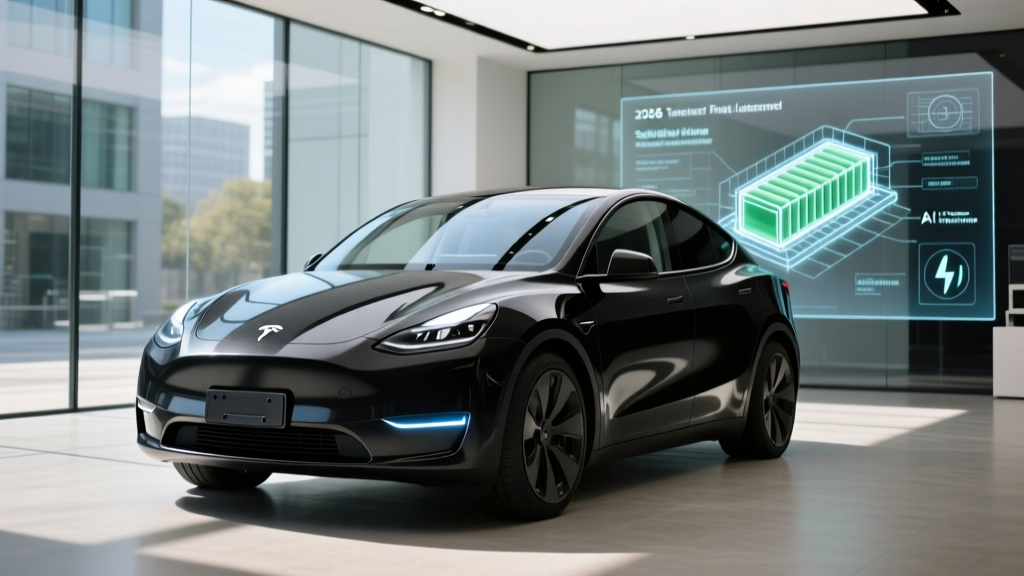
The 2026 Tesla Model Y — the "Juniper" refresh that debuted in early 2025 — showcases how Tesla translates its patent portfolio into real-world vehicle capability. From the 4680 battery cells manufactured at the Austin Gigafactory to the heat pump thermal management system and the HW4.0 Autopilot computer, nearly every subsystem reflects proprietary engineering. Let's examine what that engineering actually delivers for buyers.
2026 Tesla Model Y: Full Specifications
| Specification | Long Range RWD | Long Range AWD | Performance AWD |
|---|---|---|---|
| EPA Range | 335 miles | 320 miles | 295 miles |
| Battery (usable) | ~78 kWh (NMC) | ~78 kWh (NMC) | ~78 kWh (NMC) |
| MPGe (combined) | 122 MPGe | 117 MPGe | 110 MPGe |
| kWh/100 mi | 28 kWh | 29 kWh | 31 kWh |
| 0-60 mph | 5.8 sec | 4.8 sec | 3.5 sec |
| Horsepower | 346 hp | 384 hp | 510 hp |
| Drivetrain | Rear-Wheel Drive | Dual-Motor AWD | Dual-Motor AWD |
| Max DC Fast Charge | 250 kW | 250 kW | 250 kW |
| 10-80% DC Time | ~25 min | ~25 min | ~25 min |
| Level 2 Home Rate | 11.5 kW (~44 mi/hr) | 11.5 kW (~44 mi/hr) | 11.5 kW (~44 mi/hr) |
| Base MSRP | $46,630 | $49,630 | $54,630 |
| Cargo (rear seats up) | 30.2 cu ft | 30.2 cu ft | 30.2 cu ft |
| Cargo (rear seats down) | 72.1 cu ft | 72.1 cu ft | 72.1 cu ft |
| Rear Legroom | 38.0 in | 38.0 in | 38.0 in |
| Battery Warranty | 8 yr / 120,000 mi | 8 yr / 120,000 mi | 8 yr / 120,000 mi |
Sources: fueleconomy.gov, Tesla Model Y configurator.
Range and Efficiency: EPA vs. Real World
Real-World Expectation: ~270-290 miles on mixed highway driving; ~230-260 miles in freezing temperatures; ~300+ miles in city/regen-heavy commuting.
The Juniper Model Y's aerodynamic refinements — including a smoother front fascia, integrated rear spoiler, and underbody paneling — improve highway efficiency over the pre-refresh version. The Long Range RWD variant achieves an impressive 122 MPGe combined, translating to roughly 28 kWh per 100 miles. That efficiency is among the best in the compact electric SUV segment and a direct result of Tesla's patents on silicon carbide inverter design and the integrated heat pump system.
In cold-weather testing (below 32°F), expect a 15-25% range reduction depending on cabin heating demand and whether you precondition the battery. The Model Y's heat pump — a technology Tesla has refined across multiple patent generations — significantly mitigates cold-weather losses compared to resistive heating systems used by some competitors. Still, a 320-mile EPA rating realistically means 240-270 miles in a January Midwest commute with the heater running.
For highway road trips at sustained 75 mph in moderate temperatures, plan for roughly 270-290 miles before needing to stop. The navigation system's trip planner is one of the most accurate in the industry, accounting for elevation, temperature, and speed to predict arrival state-of-charge with impressive precision.
Charging Speed: DC Fast and Home Level 2
| Charging Level | Power | Speed | Use Case |
|---|---|---|---|
| Level 1 (120V) | ~1.4 kW | ~5 miles/hour | Overnight trickle; emergency top-up |
| Level 2 (240V, 48A) | 11.5 kW | ~44 miles/hour | Daily home charging; full overnight fill |
| DC Fast (Supercharger V3/V4) | Peak 250 kW | 10-80% in ~25 min | Road trips; rapid public charging |
| DC Fast (NACS adapter on non-Tesla) | Up to 250 kW | Varies by network | Electrify America, EVgo via NACS |
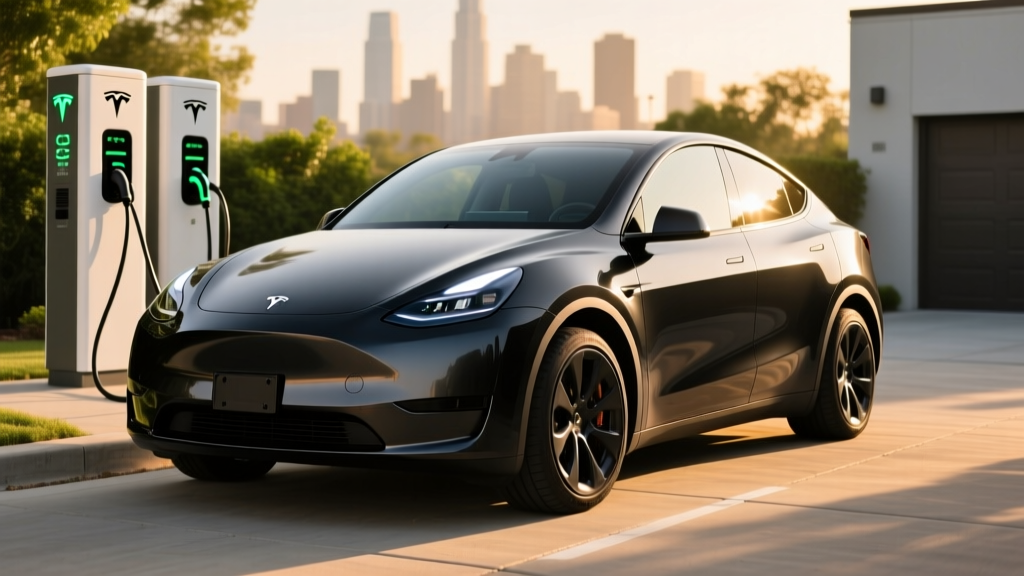
The 2026 Model Y uses the native NACS (North American Charging Standard) connector — Tesla's own design, now adopted industry-wide. On Tesla Superchargers, the Model Y peaks at 250 kW and sustains strong charging rates through the 10-60% state-of-charge window before tapering above 80%. The charge curve is a critical detail: peak kW is not sustained kW. A typical 10-80% session takes approximately 25 minutes, adding roughly 200+ miles of range.
For home charging, the onboard charger accepts up to 11.5 kW on a 240V/48A circuit. That means a full charge from 10% to 100% takes roughly 7-8 hours — easily accomplished overnight. A standard 40A Level 2 circuit (9.6 kW) will add about 36 miles per hour, still sufficient for most daily needs. Installation costs for a dedicated 48A circuit typically range from $800 to $2,500 depending on panel proximity and local electrical codes — always hire a licensed electrician for final specifications.
Tesla's Supercharger network remains the most reliable public charging infrastructure in North America, with over 25,000 stalls and growing. The Model Y can also charge on non-Tesla networks using the native NACS connector as more operators adopt the standard.
Performance and Driving Dynamics
The Model Y lineup offers three distinct performance profiles. The Long Range RWD delivers 346 hp and a 5.8-second 0-60 mph time — brisk enough for confident highway merging while maximizing efficiency. The Long Range AWD adds a front induction motor for 384 hp and a 4.8-second sprint, along with superior traction in rain and snow. The Performance model pushes 510 hp with a 3.5-second 0-60 time, adaptive dampers, larger brakes, and 21-inch wheels.
All variants benefit from Tesla's low center of gravity (battery pack mounted beneath the floor) and precise steering calibration. The Juniper refresh improved ride quality notably — revised suspension tuning and additional sound insulation address the most common criticism of earlier Model Y generations. Road noise at highway speeds is substantially reduced, and the cabin feels more premium.
Regenerative braking remains one-pedal-capable, though Tesla removed the adjustable regen setting in favor of a fixed calibration. Most owners adapt within a week and appreciate the reduced brake wear.
Tech, Driver Assistance, and Interior
The Juniper Model Y interior represents a significant upgrade. A 15.4-inch center touchscreen handles all infotainment and vehicle controls, joined by an 8-inch rear passenger screen. Ambient lighting, ventilated front seats, power-folding second-row seats, and improved material quality bring the cabin closer to luxury competitors. The panoramic glass roof with a new IR-reflective coating reduces cabin heat buildup — a welcome improvement.
Tesla Autopilot comes standard and includes Traffic-Aware Cruise Control and Autosteer (lane centering). Full Self-Driving (Supervised) is available as a $8,000 option or $99/month subscription and adds automatic lane changes, intersection navigation, and Smart Summon.
The HW4.0 Autopilot computer provides higher-resolution camera processing and improved object detection. Tesla's vision-only approach (no LiDAR or radar) relies on neural networks trained on billions of real-world driving miles — itself a product of Tesla's data-collection and AI patents.
Pricing, Tax Credits, and Ownership Costs
| Trim | Base MSRP | Est. Federal Credit | Effective Price |
|---|---|---|---|
| Long Range RWD | $46,630 | Up to $7,500* | ~$39,130 |
| Long Range AWD | $49,630 | Up to $7,500* | ~$42,130 |
| Performance AWD | $54,630 | Up to $7,500* | ~$47,130 |
*Federal §30D tax credit eligibility depends on buyer income (AGI caps: $150K single / $300K joint), vehicle MSRP (must be under $80,000 for SUVs — all Model Y trims qualify), and battery critical-mineral/battery-component sourcing requirements that change annually. The credit can now be transferred at point of sale as an immediate price reduction. Always verify current-year rules at IRS.gov and consult a tax professional.
The Model Y's total cost of ownership remains compelling. Electricity costs average $0.13-$0.16/kWh nationally, meaning a full 78 kWh charge costs roughly $10-$12 at home — compared to $45-$55 for equivalent gas in a similarly sized ICE crossover. Over five years and 75,000 miles, fuel savings alone can offset $8,000-$12,000 versus a gas vehicle, depending on local electricity and gas prices.
Insurance premiums for the Model Y tend to run 15-30% higher than comparable gas SUVs due to repair costs and parts pricing — factor this into your budget. Tesla offers its own insurance product in many states, often priced competitively based on real-time driving data.
Pros, Cons, and Who Should Buy
Pros
- Best-in-class Supercharger network access
- Excellent efficiency (122 MPGe LR RWD)
- Strong real-world range (270+ mi highway)
- Improved Juniper ride quality and cabin refinement
- Over-the-air updates add features post-purchase
- Class-leading cargo space (72.1 cu ft)
- 8-year/120,000-mile battery warranty
Cons
- No Apple CarPlay or Android Auto
- Touchscreen-dependent controls frustrate some drivers
- Insurance costs above segment average
- FSD (Supervised) remains Level 2 despite the name
- Fixed regen braking — no adjustability
- Service center availability varies by region
Best for: Tech-forward commuters and small families who want maximum range, reliable public charging, and strong efficiency. The Long Range AWD is the sweet spot for most buyers — offering dual-motor traction, 320 miles EPA, and reasonable pricing. Road trippers will appreciate the Supercharger network; cold-climate drivers benefit from the heat pump. Those who prioritize physical buttons, CarPlay integration, or luxury badge prestige should cross-shop the Hyundai Ioniq 5, BMW iX, or Ford Mustang Mach-E.
Frequently Asked Questions
How many patents does Tesla have, and do they affect my car?
Tesla holds roughly 4,500-5,000+ granted patents globally as of 2026, spanning battery manufacturing (4680 cells), thermal management (heat pump systems), powertrain design (permanent magnet and induction motors), and Autopilot AI. Many early patents were opened to the public in 2014. These patents translate directly to the Model Y's efficiency, charging speed, and range — areas where Tesla continues to lead the segment.
What is the real-world range of the 2026 Model Y?
Expect 270-290 miles on highway road trips at 75 mph in moderate temperatures for the Long Range AWD (EPA 320 mi). City driving with regenerative braking can exceed 300 miles. In freezing weather, plan for 230-260 miles depending on heating usage and preconditioning habits.
Does the 2026 Model Y qualify for the federal EV tax credit?
Yes, all Model Y trims fall under the $80,000 SUV MSRP cap. However, buyer eligibility also requires meeting AGI income limits ($150K single / $300K joint) and the vehicle must satisfy battery critical-mineral and component sourcing requirements, which are updated annually. The credit can be applied at point of sale. Verify details at IRS.gov.
How fast does the Model Y charge at home and on road trips?
At home on a 240V/48A Level 2 circuit, the Model Y charges at 11.5 kW, adding roughly 44 miles per hour. On a Tesla Supercharger (V3/V4), it peaks at 250 kW DC, reaching 10-80% in approximately 25 minutes. The charge rate tapers significantly above 80% — plan your stops to 80% for the fastest road-trip experience.
Is the Model Y worth buying over competitors in 2026?
The Model Y Long Range AWD at ~$42,130 after estimated federal credit is extremely competitive against the Hyundai Ioniq 5 ($44,000+), Ford Mustang Mach-E ($43,000+), and Kia EV6 ($43,500+). Tesla's advantages are the Supercharger network, efficiency, and software ecosystem. Competitors offer CarPlay, more physical controls, and in some cases faster peak charging. Test-drive both before deciding.
What is the battery warranty on the 2026 Model Y?
Tesla covers the battery and drive unit for 8 years or 120,000 miles (whichever comes first) on Long Range and Performance variants, with a guaranteed minimum 70% capacity retention over that period. The basic vehicle limited warranty is 4 years or 50,000 miles.