Tesla's Patent Portfolio: The Engineering Behind the Model Y
When EV shoppers search how many patents did Tesla have, they're usually trying to gauge whether the company's engineering depth justifies its premium pricing and market dominance. The answer is substantial: Tesla has been granted well over 1,000 U.S. patents spanning battery cell design, thermal management, powertrain integration, structural battery packs, gigacasting, and Autopilot hardware. In 2014, CEO Elon Musk famously announced Tesla would not initiate patent lawsuits against anyone using their technology "in good faith," effectively opening their IP vault to the industry. Yet Tesla's innovation pipeline continued accelerating, with filings covering everything from 4680 cell manufacturing to heat pump HVAC systems that dramatically improve cold-weather efficiency.
But patents on paper don't charge your car on a road trip. What matters to buyers in 2026 is how that engineering translates into the current Tesla Model Y Long Range AWD — the bestselling EV in America. Let's break down the real numbers: range, charging, pricing, and whether the Model Y's patent-backed tech actually delivers in your driveway.
2026 Tesla Model Y: Core Specifications at a Glance
| Attribute | Model Y Long Range AWD | Model Y Performance |
|---|---|---|
| EPA Range | 320 miles | 285 miles |
| Battery (usable) | ~75 kWh (NMC) | ~75 kWh (NMC) |
| Drivetrain | Dual-Motor AWD | Dual-Motor AWD |
| Horsepower | 384 hp | 456 hp |
| 0–60 mph | 4.8 sec | 3.5 sec |
| Max DC Fast Charge | 250 kW | 250 kW |
| 10–80% DC Time | ~25 min | ~25 min |
| Level 2 Rate | 11.5 kW (~44 mi/hr) | 11.5 kW (~44 mi/hr) |
| MPGe (combined) | 111 MPGe | 103 MPGe |
| Efficiency | 30 kWh/100 mi | 33 kWh/100 mi |
| Base MSRP | $44,990 | $48,990 |
Source: fueleconomy.gov and Tesla's official 2026 spec sheets.
Real-World Range: What the EPA Sticker Doesn't Tell You
Real-world expectation: Expect 270–290 miles on mixed highway driving at 70–75 mph. In cold weather (below 30°F), plan for a 20–30% reduction — roughly 220–255 miles — due to battery heating demands and cabin HVAC load. Tesla's patented heat pump system, introduced with the Model Y's original launch, significantly reduces this penalty compared to older resistive-heater EVs, but physics still applies. City driving with heavy regenerative braking can return results closer to or slightly above the EPA sticker.
The Model Y's structural battery pack — a direct product of Tesla's gigacasting and cell-integration patents — contributes to both rigidity and energy density. The NMC (nickel manganese cobalt) chemistry offers high energy density for its class, though it trades some cycle-life longevity against LFP alternatives found in the base Model 3. For most owners planning 5–8 years of ownership, NMC degradation remains manageable, typically losing 10–12% capacity over 100,000 miles based on fleet data.
Charging Speeds: DC Fast, Level 2, and the Charge Curve Reality
| Charging Level | Power | Miles Added | Typical Use |
|---|---|---|---|
| Level 1 (120V) | ~1.4 kW | ~4–5 mi/hr | Emergency / trickle |
| Level 2 (240V, 48A) | 11.5 kW | ~44 mi/hr | Home overnight |
| DC Fast (Supercharger V3) | Peak 250 kW | ~175 mi in 15 min | Road trips |
The charge curve matters more than peak kW. The Model Y peaks at 250 kW only between roughly 10–25% state of charge, then tapers progressively. From 10–80%, expect about 25 minutes at a V3 Supercharger. Above 80%, charging slows dramatically to protect battery health — a 90–100% top-off can take as long as the 10–80% session. Always precondition the battery via the Tesla navigation system before arriving at a DC charger; this warms the pack and unlocks the full charge curve, especially in cold weather.
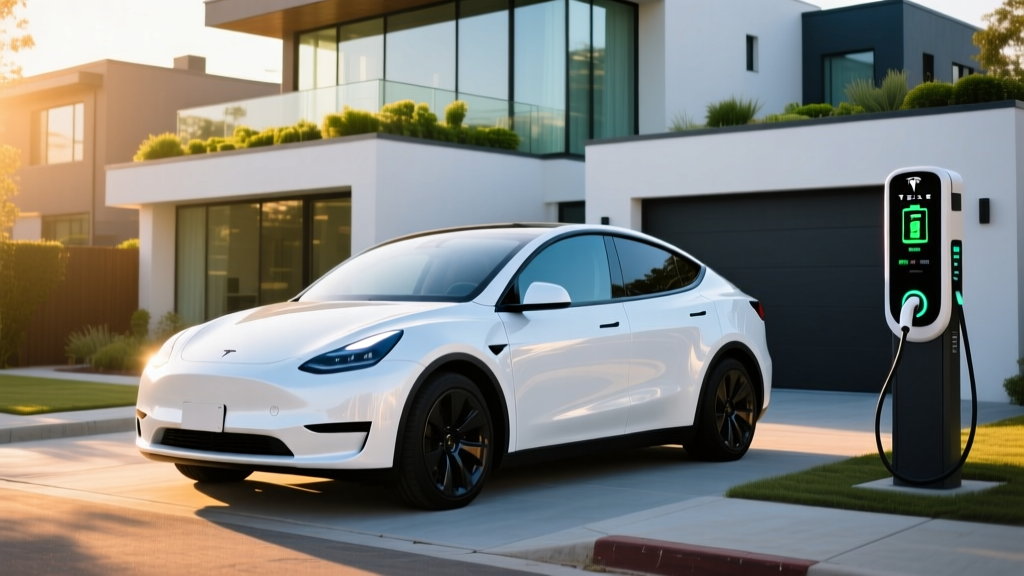
At home on a 48-amp Level 2 circuit (requiring a 60-amp breaker), the Model Y recovers roughly 44 miles of range per hour. Most owners charging overnight from 20–80% will wake to a full daily charge in under 6 hours. Installation of a NEMA 14-50 outlet or Tesla Wall Connector typically runs $500–$2,000 depending on panel proximity and local permitting, though older homes may require a $2,000–$4,000 panel upgrade to support a dedicated 60-amp circuit.
Pricing, Trims, and Federal Tax Credit Eligibility
| Trim | MSRP | Est. After §30D Credit | Destination |
|---|---|---|---|
| Model Y Long Range AWD | $44,990 | ~$37,490* | +$1,390 |
| Model Y Performance | $48,990 | ~$41,490* | +$1,390 |
*Estimated. Actual credit depends on buyer eligibility.
The federal EV tax credit under IRS §30D offers up to $7,500, but eligibility is governed by a matrix of rules that change regularly:
- MSRP Cap: SUVs like the Model Y must be under $80,000 — both trims qualify.
- Income Cap: Modified adjusted gross income must not exceed $300,000 (joint), $225,000 (head of household), or $150,000 (single).
- Battery Sourcing: A percentage of critical minerals and battery components must be sourced from the U.S. or free-trade-agreement partners. Tesla's U.S.-built battery packs have generally met these thresholds, but requirements tighten annually. Verify current-year compliance on the IRS qualified vehicles list before purchasing.
- Point-of-Sale Transfer: As of 2024, buyers can transfer the credit to the dealer at purchase, reducing the upfront price rather than waiting for a tax refund.
Always confirm eligibility with a tax professional. State and utility incentives may stack on top — check AFDC's state incentive database for local programs.
Interior, Cargo, and Daily Livability
The Model Y's crossover profile yields practical space that sedan-based EVs can't match. Cargo volume measures 30.2 cubic feet behind the second row and up to 72.1 cubic feet with rear seats folded — enough for furniture-hauling duty. The optional third row (best suited for children) reduces behind-row cargo but adds seating for up to seven. Front headroom is generous at 41.0 inches; rear legroom comes in at 37.7 inches, adequate for adults on longer trips.
The minimalist interior centers on a 15.4-inch touchscreen that handles navigation, climate, media, and vehicle settings. There is no traditional instrument cluster — speed and range appear in the corner of the main display. Wireless phone charging, ventilated front seats, and a panoramic glass roof are standard. Build quality has improved markedly since early Fremont production, with the 2025 refresh ("Juniper") adding acoustic glass, ambient lighting, and rear-seat ventilation.
Driver Assistance: Autopilot, FSD, and the SAE Level Reality
Tesla Autopilot and Full Self-Driving (Supervised) are Level 2 driver-assistance systems, not autonomous driving. The driver must remain attentive, keep hands on the wheel (or demonstrate engagement via steering torque), and be prepared to take over at any moment. True Level 4 driverless operation is currently only available in limited robotaxi services like Waymo, not in any consumer vehicle.
Standard Autopilot includes Traffic-Aware Cruise Control and Autosteer (lane centering) on divided highways. The optional FSD (Supervised) package adds automated lane changes, traffic light and stop sign recognition, and Navigate on Autopilot for highway on/off-ramps. FSD has improved significantly with Tesla's vision-only neural network approach, but it remains a driver aid — not a replacement for human judgment. Tesla's patent portfolio in computer vision and neural network processing underpins this system, though the company's decision to abandon radar and ultrasonic sensors in favor of cameras-only remains debated among safety researchers.
Warranty Coverage and Long-Term Ownership
Tesla provides a 4-year/50,000-mile basic vehicle limited warranty and an 8-year/120,000-mile battery and drive unit warranty for the Model Y Long Range and Performance trims. The battery warranty guarantees at least 70% capacity retention over the warranty period. In practice, Tesla fleet data suggests most Model Y packs retain 88–92% capacity at 100,000 miles, though individual results vary based on charging habits, climate, and Supercharger frequency.
Out-of-warranty battery replacement remains expensive — estimates range from $12,000 to $16,000 for a Model Y pack — though drive unit replacements are less common and less costly. Tesla's patent work on structural battery packs and cell-level repairability may eventually reduce these costs, but for now, the 8-year warranty provides meaningful protection.
Pros, Cons, and Who Should Buy the Model Y
Pros
- Supercharger network — the most reliable and extensive DC fast-charging ecosystem in North America, now opening to other brands via NACS adoption
- Class-leading efficiency (30 kWh/100 mi) reduces per-mile electricity cost
- Over-the-air updates continuously add features and refine performance
- Strong cargo versatility and optional 7-seat layout
- Excellent real-world fast-charging infrastructure integration with navigation-based preconditioning
Cons
- Touchscreen-dependent controls frustrate some drivers (no physical buttons for climate or wipers)
- FSD subscription cost ($99/mo or $8,000 one-time) adds up without delivering true autonomy
- Ride quality is firm, especially on 20-inch wheels — road imperfections transmit noticeably
- Service center wait times can stretch weeks in high-demand metro areas
- No Apple CarPlay or Android Auto — Tesla's proprietary infotainment is the only option
Who the Model Y Suits Best
Choose the Model Y Long Range AWD if: You want the lowest-friction EV ownership experience — Supercharger access, strong range, crossover utility, and proven resale value. Ideal for commuters with home charging, families needing cargo space, and road-trippers who value charging network reliability.
Choose the Model Y Performance if: Acceleration and handling matter to you, and you're willing to trade ~35 miles of range for a 3.5-second 0–60 time and sport-tuned suspension.
Consider competitors (Hyundai Ioniq 5, Ford Mustang Mach-E, Chevrolet Equinox EV) if: You prefer physical controls, want Apple CarPlay, need a lower entry price, or value a traditional dealership service network.
Frequently Asked Questions
What is the real-world range of the Tesla Model Y?
The EPA rates the 2026 Model Y Long Range AWD at 320 miles. In real-world highway driving at 70–75 mph, expect 270–290 miles. Cold weather (below 30°F) can reduce this to 220–255 miles despite Tesla's heat pump system. City driving with regenerative braking often returns results near or slightly above the EPA figure.
How fast does the Model Y charge at home and on road trips?
On a 48-amp Level 2 home charger, the Model Y gains about 44 miles of range per hour, fully replenishing overnight. At a Tesla V3 Supercharger (250 kW peak), a 10–80% session takes approximately 25 minutes. Charging slows significantly above 80% to protect battery health.
How much does the Model Y cost after federal tax credits?
The Model Y Long Range AWD starts at $44,990. If you qualify for the full $7,500 §30D credit (income limits, battery sourcing, and MSRP caps apply), the effective price drops to approximately $37,490. Always verify current-year eligibility on the IRS qualified vehicles list and consult a tax professional.
Does the Tesla Model Y qualify for the federal EV tax credit?
Generally yes — the Model Y falls under the $80,000 SUV MSRP cap, is assembled in the U.S., and Tesla's battery sourcing has historically met critical-mineral and component requirements. However, buyer income caps ($150K single / $300K joint) and annually tightening sourcing rules apply. Confirm on IRS.gov before purchasing.
Is the Model Y worth buying vs. key competitors?
The Model Y remains the benchmark for charging network access, efficiency, and software integration. Competitors like the Hyundai Ioniq 5 offer faster 800V charging architecture, more physical controls, and Apple CarPlay. The Ford Mustang Mach-E provides a more traditional driving feel. The Model Y wins if Supercharger access and over-the-air updates are priorities; look elsewhere if you want button-based climate controls or a softer ride.
How many patents did Tesla have, and does it matter for buyers?
Tesla holds over 1,000 U.S. patents covering battery design, thermal management, gigacasting, powertrain integration, and Autopilot software. While patents don't directly translate to buyer value, they reflect the engineering depth behind features like the Model Y's heat pump (better cold-weather range), structural battery pack (improved rigidity and efficiency), and vision-based driver assistance. Tesla's 2014 open-patent pledge also encouraged industry-wide EV adoption, indirectly expanding the charging infrastructure and supplier ecosystem all EV buyers benefit from today.