The Truth About Tesla Paint Defects in 2026
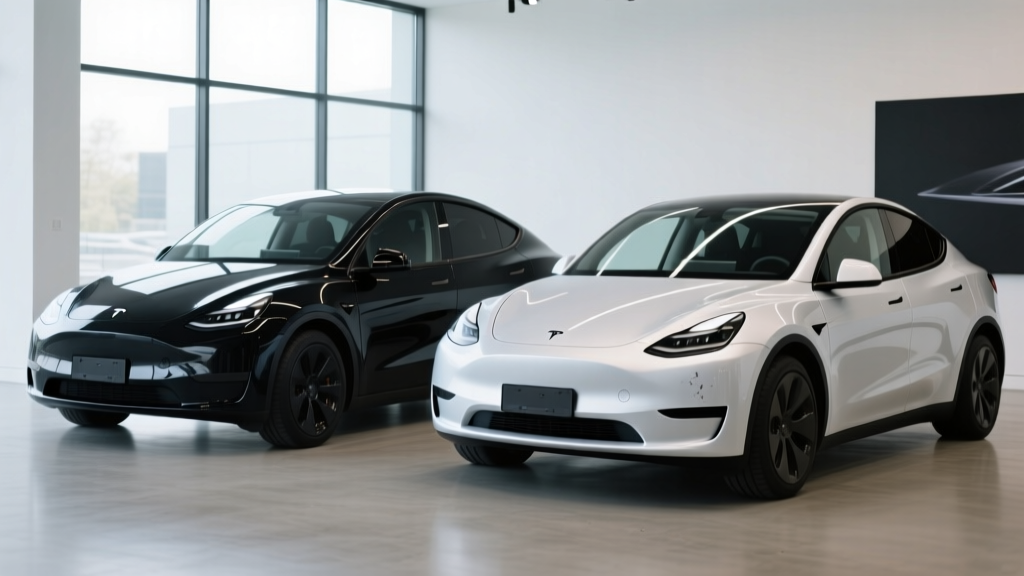
Search forums, Reddit threads, or YouTube delivery-day videos and you'll find the same recurring complaint: Tesla paint defects. From orange-peel texture to dust nibs, uneven clear coat, and panel-to-panel color mismatch, paint quality has dogged Tesla's reputation since the early Model S days. But with the 2026 Model Y "Juniper" refresh now in customer driveways and the refreshed Model 3 Highland well into its second model year, has Tesla finally closed the gap with legacy automakers?
The short answer: it's better, but not yet class-leading. Tesla's Fremont and Shanghai factories have invested in upgraded paint shops, and the Berlin Gigafactory — which supplies European Model Y units — uses a more advanced multi-coat process. Yet inconsistencies still surface, particularly on US-built vehicles. This guide examines what to look for, how Tesla's paint compares to competitors, and whether the issue should factor into your purchase decision — alongside the hard specs that matter for daily ownership.
2026 Tesla Model Y Long Range AWD — Key Specifications
| Spec | Value |
|---|---|
| EPA Estimated Range | 320 miles |
| Battery Capacity (usable) | ~78 kWh, NMC chemistry |
| Peak DC Fast Charge | 250 kW (V3 Supercharger) |
| 10–80% DC Charge Time | ~25 minutes |
| Level 2 Home Charging | 11.5 kW (~44 mi/hr) |
| 0–60 mph | 4.8 seconds |
| Horsepower | 384 hp (dual motor) |
| Drivetrain | Dual Motor AWD |
| Efficiency | 122 MPGe / 28 kWh/100mi |
| Cargo Volume | 30.2 cu ft (rear seats up), 72.1 cu ft (folded) |
| Rear Legroom | 41.6 inches |
| Base MSRP | $44,990 (before incentives) |
| Battery Warranty | 8 years / 120,000 miles |
What Tesla Paint Defects Actually Look Like
Not all paint issues are created equal. Here's a breakdown of the most commonly reported defects on 2024–2026 Model 3 and Model Y vehicles, based on owner reports aggregated from Tesla Motors Club forums and NHTSA complaint data:
- Orange peel: A wavy, dimpled texture in the clear coat that resembles the skin of an orange. Most visible on large flat panels like the hood and roof under direct sunlight. This is the single most reported issue.
- Dust nibs: Tiny bumps under the clear coat caused by airborne particles settling on wet paint during application. Feel like small grains of sand when you run your hand across the surface.
- Color mismatch: Adjacent panels (e.g., fender vs. door) showing slightly different hues or metallic flake density. Often caused by panels being painted in separate batches or at different facilities.
- Thin or uneven clear coat: Particularly on edges and body lines, where the clear coat may be thinner, leaving the base coat more vulnerable to chips and UV damage over time.
- Runs and drips: Less common on 2026 models but still occasionally reported — visible streaks where excess paint pooled before curing.
Tesla's standard paint warranty covers defects in materials and workmanship for 4 years / 50,000 miles (the basic vehicle limited warranty). However, owners report mixed experiences getting paint corrections honored, with some service centers classifying orange peel as "within factory tolerance."
Real-World Range vs. EPA Sticker
EPA Estimated: 320 miles (Model Y Long Range AWD)
Real-World Expectation: Plan for roughly 270–290 miles on a mixed highway commute at 70 mph in moderate temperatures. In cold weather (below 30°F), expect a 15–25% reduction, dropping usable range to approximately 240–260 miles. The Model Y Juniper's improved heat pump helps mitigate winter losses compared to pre-2025 models, but highway-speed driving remains the biggest efficiency killer in any EV.
Charging Speed and Infrastructure
Charging remains one of Tesla's strongest advantages over competitors, thanks to the Supercharger network. Here's what 2026 Model Y and Model 3 owners can expect:
| Charging Level | Power (kW) | Speed | Typical Use Case |
|---|---|---|---|
| Level 1 (120V) | ~1.4 kW | ~5 miles per hour | Emergency / overnight trickle |
| Level 2 (240V, 48A) | 11.5 kW | ~44 miles per hour | Home daily charging |
| DC Fast (V3 Supercharger) | Peak 250 kW | 10–80% in ~25 min | Road trips |
| DC Fast (V4 Supercharger) | Peak 250+ kW | 10–80% in ~22 min | Newer Supercharger stations |
A critical nuance: Tesla's peak 250 kW rate is not sustained across the entire charging session. The charge curve tapers significantly above 60% state of charge (SoC), and the final 80–100% top-up can add another 20+ minutes. For road-trip efficiency, Tesla's navigation system preconditions the battery when a Supercharger is set as your destination — warming the pack to optimize charge acceptance. Skipping preconditioning in cold weather can cut peak charge rates by 40% or more.
For home charging, a Wall Connector on a 60-amp circuit delivers the full 11.5 kW, adding roughly 44 miles of range per hour. Most owners who charge overnight at home rarely visit a Supercharger except on road trips. Budget $500–$1,500 for a professional Level 2 installation depending on your electrical panel's capacity and the run distance from panel to garage.
Pricing, Trims, and Federal Tax Credit Eligibility
The 2026 Tesla lineup has been streamlined. Here's where the Model Y and Model 3 land on pricing:
| Model / Trim | Base MSRP | Est. After §30D Credit |
|---|---|---|
| Model 3 RWD | $38,990 | ~$31,490* |
| Model 3 Long Range AWD | $42,990 | ~$35,490* |
| Model 3 Performance | $47,740 | ~$40,240* |
| Model Y Long Range AWD | $44,990 | ~$37,490* |
| Model Y Performance | $48,990 | ~$41,490* |
*Estimated price assumes full $7,500 federal tax credit under IRS §30D. Actual eligibility depends on multiple factors.
§30D Federal EV Tax Credit — 2026 Eligibility Checklist
- Buyer income cap: AGI ≤ $150,000 (single), $225,000 (head of household), $300,000 (joint)
- MSRP cap: Vehicle MSRP must not exceed $55,000 (sedans) or $80,000 (SUVs/trucks) — all current Model 3/Y trims qualify
- Battery sourcing: A percentage of critical minerals and battery components must be sourced from the US or free-trade-agreement countries; percentages increase annually
- Point-of-sale transfer: As of 2024, buyers can transfer the credit to the dealer at purchase for an immediate price reduction rather than waiting for a tax refund
- Foreign Entity of Concern (FEOC) restriction: Vehicles with battery components from certain foreign entities may be disqualified — verify current status at purchase
Rules evolve annually. Confirm your eligibility with a tax professional and check the latest fueleconomy.gov listings before committing.
Tesla Paint vs. the Competition
To put Tesla paint defects in perspective, here's how owner-reported paint satisfaction compares across the segment Tesla competes in:
| Vehicle | Paint Quality Reputation | Common Issues |
|---|---|---|
| Tesla Model Y (Fremont) | Below average for segment | Orange peel, dust nibs, panel mismatch |
| Tesla Model Y (Berlin/Shanghai) | Average | Fewer reports; better multi-coat process |
| Hyundai Ioniq 5 | Above average | Occasional thin clear coat on early batches |
| Ford Mustang Mach-E | Average to above average | Minor orange peel on some 2022–2023 units |
| BMW iX | Class-leading | Rare; BMW's Dingolfing plant is a benchmark |
It's worth noting that Tesla's Fremont factory — originally a GM/Toyota joint venture facility — has older paint infrastructure compared to purpose-built EV plants like Hyundai's Ulsan facility or BMW's Dingolfing operation. Tesla's Berlin Gigafactory, which opened in 2022, uses a more modern paint shop with improved application robotics, and vehicles built there consistently receive better owner paint ratings.
What to Do at Delivery: A Paint Inspection Checklist
If you're taking delivery of a new Tesla, a thorough paint inspection in the delivery bay can save you weeks of service-center back-and-forth. Bring a bright LED flashlight (your phone's light isn't sufficient) and follow this protocol:
- Walk the full perimeter in direct sunlight or bright light. Look at each panel at a low angle — orange peel and waves are most visible when light rakes across the surface.
- Run your fingertips lightly across every panel. Dust nibs and overspray feel gritty. A perfectly painted surface should feel glass-smooth.
- Compare adjacent panels for color consistency. Stand back 6–8 feet and look at where the fender meets the door, or the hatch meets the quarter panel. Any visible hue shift is a flag.
- Inspect edges, seams, and body lines. These are where clear coat tends to be thinnest and where runs or drips are most likely.
- Check the lower rocker panels and bumper edges. These areas are prone to overspray and are sometimes missed during quality checks.
- Document everything with photos before signing. If you find issues, note them on the delivery paperwork and request a service appointment for correction before accepting the vehicle, or negotiate a paint correction credit.
Tesla's delivery experience is largely self-guided via the app, which means there's no salesperson walking you through the car. This puts the onus entirely on you to catch defects before driving off the lot.
Is a Tesla Still Worth It Despite Paint Concerns?
Pros
- Best-in-class Supercharger network with 60,000+ stalls globally
- Class-leading efficiency (122 MPGe on Model Y LR)
- Over-the-air updates continuously add features
- Strong resale value relative to most EVs
- Spacious cargo area (72.1 cu ft with seats folded)
- Standard Autopilot is competent for SAE Level 2 driver assist
Cons
- Paint quality still inconsistent, especially Fremont-built units
- Panel gaps can be uneven (improved but not eliminated)
- No Apple CarPlay or Android Auto
- Service center wait times can stretch weeks in some markets
- FSD (Supervised) remains a Level 2 system despite the name — driver must stay engaged
- Ride quality is firm; some competitors offer more compliant suspensions
Who Should Buy a Tesla (and Who Shouldn't)
Choose Tesla if: You prioritize charging infrastructure, software sophistication, efficiency, and cargo versatility — and you're willing to accept that paint and panel fit may not match a BMW or Mercedes at this price point. If you can take delivery from a Berlin- or Shanghai-built batch, paint quality tends to be better.
Look elsewhere if: Build quality and paint perfection are top priorities, you need Apple CarPlay, or you live in an area with limited Tesla service center access. The Hyundai Ioniq 5, Kia EV6, and Ford Mustang Mach-E offer competitive range and charging with more consistent build quality at similar price points.
Protecting Your Tesla's Paint Post-Delivery
Whether your Tesla arrived with perfect paint or you've had corrections done, protecting the finish is worth the investment — especially given Tesla's thinner clear coat reputation:
- Paint Protection Film (PPF): A clear urethane film applied to high-impact areas (hood, fenders, mirrors, bumper). Full-front PPF typically costs $1,500–$2,500 installed. This is the single best protection against rock chips and is especially recommended for Tesla's large, flat hood.
- Ceramic coating: A semi-permanent SiO2 layer that adds gloss and hydrophobic properties. Costs $800–$1,500 professionally applied. Does not prevent chips but makes washing easier and adds UV protection.
- Touchless car washes only: Tesla's paint — particularly on pre-2025 models — can be softer than industry average. Avoid brush-style automatic washes to prevent swirl marks.
- Address chips immediately: Exposed primer or bare metal on an EV is no more prone to rust than a gas car, but untreated chips spread and become more visible. Use a factory-matched touch-up pen or have a mobile detailer fill them.
Frequently Asked Questions
Does Tesla's warranty cover paint defects?
Yes, under the basic vehicle limited warranty (4 years / 50,000 miles). However, Tesla service centers sometimes classify minor orange peel as "within factory tolerance." Document defects at delivery and file a warranty claim promptly. If a service center denies a legitimate defect, escalate through Tesla's app-based support or consider filing with your state's consumer protection agency.
Are 2026 Teslas better painted than older models?
Incrementally, yes. The Juniper-refreshed Model Y benefits from updated manufacturing processes, and Fremont's paint shop has seen equipment upgrades. But the gap between Tesla and legacy luxury automakers (BMW, Mercedes, Audi) hasn't fully closed. Berlin-built vehicles remain the paint-quality benchmark in the Tesla lineup.
What's the real-world range of the 2026 Model Y Long Range?
The EPA rates it at 320 miles. In real-world mixed driving at highway speeds, expect 270–290 miles. In winter conditions below freezing, plan for 240–260 miles. The Juniper generation's improved heat pump and thermal management narrow the cold-weather gap compared to earlier Model Y vehicles.
How fast does the 2026 Model Y charge at home and on the road?
At home on a Level 2 Wall Connector (11.5 kW), you'll add about 44 miles of range per hour — enough to fully recharge overnight. On a V3 Supercharger, peak rate is 250 kW, with a 10–80% session taking approximately 25 minutes. The charge curve tapers above 60% SoC, so the final 20% takes disproportionately longer.
Does the 2026 Tesla Model Y qualify for the $7,500 federal tax credit?
It can, but eligibility depends on your income (AGI ≤ $300,000 for joint filers), the vehicle's MSRP (must be under $80,000 for SUVs — all Model Y trims qualify), and battery component/critical mineral sourcing requirements that tighten annually. The credit can be transferred at point of sale for an instant price reduction. Verify current eligibility at irs.gov and with a tax professional.
Is Tesla's Autopilot or FSD actually self-driving?
No. Both Autopilot and FSD (Supervised) are SAE Level 2 driver-assistance systems. They can manage steering, acceleration, and braking on highways, but the driver must remain fully attentive with hands on or near the wheel at all times. Tesla's cabin camera monitors driver engagement. True self-driving (Level 4) is currently limited to geofenced robotaxi services like Waymo in select cities.
Should I wait for a Berlin-built Model Y for better paint?
If you're in the US, Berlin-built vehicles are not typically available — North American Model Y units come from Fremont, CA or the Austin, TX Gigafactory. If you're in Europe, Berlin-built Model Y vehicles generally receive higher paint quality marks from owners. US buyers should focus on a thorough delivery inspection and budget for PPF regardless of build origin.
Sources: fueleconomy.gov (EPA range and efficiency data), irs.gov (§30D tax credit rules), NHTSA complaint database.