The Tesla P85: A Landmark EV on the Used Market
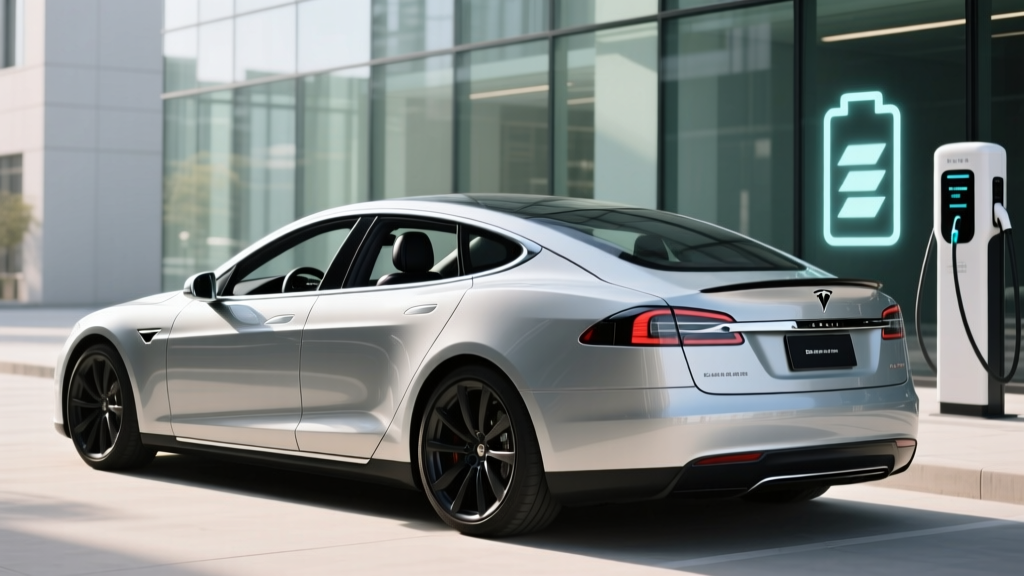
The Tesla P85 was the performance flagship of the original Model S lineup, produced roughly between 2012 and 2014 before Tesla restructured its naming convention to the P85D and eventually the P90D, P100D, and today's Model S Plaid. If you're researching the Tesla P85 in 2026, you're almost certainly looking at the used EV market — Tesla discontinued this specific variant over a decade ago. That doesn't make it irrelevant. The P85 remains a popular entry point into Tesla ownership on the secondhand market, often selling between $12,000 and $22,000 depending on mileage, battery health, and condition.
This review covers what you need to know before buying a used Tesla P85 today: real-world range expectations, charging realities on the aging 85 kWh pack, battery degradation data, maintenance concerns, and how it stacks up against modern used EVs in the same price bracket.
Tesla P85 Specifications at a Glance
| Specification | Tesla P85 (2012–2014) |
|---|---|
| EPA Range (Original) | 265 miles |
| Battery Capacity | 85 kWh (NMC chemistry) |
| Drivetrain | Rear-Wheel Drive (single motor) |
| Horsepower | 416 hp |
| 0–60 mph | 4.2 seconds |
| Top Speed | 130 mph |
| DC Fast Charge (Peak) | ~120 kW (V2 Supercharger) |
| Level 2 Charge Rate | 10 kW (single onboard charger) / 20 kW (twin chargers option) |
| EPA Efficiency | 89 MPGe (2.4 kWh/mile approx.) |
| Cargo Volume | 26.3 cu ft (rear) + 5.3 cu ft (frunk) |
| Seating | 5 adults (optional rear-facing child seats) |
| Original Base MSRP | ~$87,900 (before incentives) |
| 2026 Used Price Range | $12,000–$22,000 |
| Battery Warranty (Original) | 8 years / unlimited miles |
Real-World Range: What the 85 kWh Battery Actually Delivers
Real-World Expectation in 2026: 170–220 miles depending on battery State of Health (SoH), driving style, and climate
The original 85 kWh battery pack uses NMC (nickel manganese cobalt) chemistry, which offers high energy density but is more susceptible to calendar degradation than the LFP (lithium iron phosphate) packs Tesla uses in today's base Model 3 and Model Y. After 10–13 years of service, most P85 battery packs show between 10% and 25% degradation, meaning usable capacity often sits between 64 and 76 kWh.
In practical terms:
- City driving (moderate climate): Expect 200–220 miles at 65 mph with a healthy pack. Regen braking in stop-and-go traffic helps recover energy.
- Highway driving (70–80 mph): Range drops to 170–195 miles. The P85's single-speed reduction gear and aerodynamic drag at speed compound efficiency losses.
- Cold weather (below 32°F): The P85 lacks a heat pump (introduced in later Teslas). Resistive cabin heating can cut range by 25–35%, yielding as little as 130–160 miles in freezing conditions.
Before purchasing, request a battery health report. Tesla service centers can pull the pack's SoH percentage, and third-party tools like the TeslaFi app or Scan My Tesla via OBD-II can estimate remaining capacity. A pack showing less than 75% SoH is a negotiation point — replacement costs $12,000–$16,000 out of warranty.
Charging: Supercharger Access and Home Charging Realities
The P85 charges via Tesla's proprietary connector (pre-NACS standardization). It is compatible with the Tesla Supercharger network, which remains its biggest advantage for road trips. However, charging speeds on the 85 kWh pack are modest by 2026 standards.
| Charging Method | Power (kW) | Approximate Speed | Notes |
|---|---|---|---|
| Level 1 (120V household) | ~1.4 kW | ~3–4 miles/hour | Emergency/trickle only |
| Level 2 (240V, single charger) | 10 kW | ~29 miles/hour | Standard onboard charger |
| Level 2 (240V, twin chargers) | 20 kW | ~58 miles/hour | Optional upgrade; verify equipped |
| DC Fast Charge (Supercharger V2) | ~120 kW peak | 10–80% in ~45 minutes | Tapers significantly above 60% SoC |
| DC Fast Charge (Supercharger V3/V4) | Capped at ~120 kW | Same as V2 for this pack | 85 kWh pack cannot utilize 250 kW rates |
Key charging caveat: The P85's 85 kWh pack was never designed for the 250 kW charge rates of modern V3 Superchargers. The battery management system limits peak draw to roughly 120 kW, and sustained rates drop sharply above 60% State of Charge. A typical 10–80% session takes 40–50 minutes, compared to 15–20 minutes on a 2026 Model Y Long Range. Plan road trips accordingly.
For home charging, a Level 2 wall connector on a 60-amp circuit delivers the full 10 kW (single charger) or 20 kW (twin charger). A full overnight charge from 20% to 90% takes roughly 6–7 hours with the single charger — adequate for daily commuting.
Performance and Driving Dynamics
The P85's rear-mounted AC induction motor produces 416 hp and 443 lb-ft of torque, routed exclusively to the rear wheels. The 0–60 mph sprint takes 4.2 seconds — still genuinely quick by 2026 standards and devastatingly so when the P85 launched in 2012. The instantaneous torque delivery remains a hallmark of the EV experience.
Driving dynamics hold up reasonably well. The Model S platform is heavy (4,647 lbs curb weight), but the low center of gravity from the floor-mounted battery keeps body roll controlled. The air suspension (standard on most P85s) provides a compliant ride, though aging air struts are a known failure point — budget $1,500–$2,500 per corner if they haven't been replaced.
Notable driving limitations:
- Single-motor RWD: No all-wheel drive. Traction in snow and rain is adequate with quality tires but cannot match the dual-motor P85D or modern AWD EVs.
- Regen braking: The P85's regen is less aggressive than modern Teslas. True one-pedal driving is possible but requires more brake-pedal blending than a 2026 Model 3.
- Steering feel: The early electric power steering is numb by current standards. It's precise but lacks feedback.
Technology, Interior, and Daily Livability
The P85's 17-inch touchscreen was revolutionary in 2012 and still functions as the primary interface for climate, navigation, media, and vehicle settings. However, the MCU1 (Media Control Unit) hardware in 2012–2014 models is sluggish by 2026 standards. Tesla offered an MCU2 upgrade ($1,500–$2,500) that significantly improves responsiveness and enables features like Sentry Mode and theater streaming. Verify whether a used P85 has received this upgrade.
Driver assistance: Early P85s (pre-October 2014) lack Autopilot hardware entirely. Models built after September 2014 include Hardware 1 (HW1), which supports basic Autopilot (lane centering + adaptive cruise) but cannot run Full Self-Driving (Supervised). This is an SAE Level 2 system — the driver must remain fully engaged at all times.
Cargo and passenger space: The Model S offers 26.3 cubic feet behind the rear seats and a 5.3-cubic-foot front trunk (frunk). Rear legroom measures 35.4 inches — comfortable for adults on longer trips. Early models offered optional rear-facing jump seats for children, bringing total seating to 7, though these are rare and not suitable for adults.
Used Market Pricing and Tax Credit Eligibility
The Tesla P85 is only available on the used market. As of early 2026, pricing breaks down as follows:
| Condition / Mileage | Typical Price Range |
|---|---|
| Excellent (<60k miles, new battery) | $18,000–$22,000 |
| Good (60k–100k miles, original pack) | $14,000–$18,000 |
| Fair (100k+ miles, some degradation) | $12,000–$15,000 |
| Project car (high miles, needs battery) | $8,000–$12,000 |
Does the Tesla P85 Qualify for the Federal EV Tax Credit?
Yes — potentially. Under the IRS §30D Used Clean Vehicle Credit, qualifying buyers can receive up to $4,000 or 30% of the sale price (whichever is less) on a used EV purchased from a licensed dealer. For a P85 selling at $15,000, the credit would be $4,000 (since 30% of $15,000 = $4,500, but the $4,000 cap applies).
- Income caps: Modified AGI must not exceed $75,000 (single), $112,500 (head of household), or $150,000 (joint).
- Vehicle requirements: Sale price must be $25,000 or less (most P85s qualify), model year must be at least two years older than the current calendar year, and the vehicle must be purchased from a licensed dealer (not a private party).
- One-time use: The VIN can only be claimed once for the used-vehicle credit. Verify with the dealer that no prior owner has claimed it.
- Point-of-sale transfer: As of 2024, the used-vehicle credit can be transferred to the dealer at point of sale, reducing your purchase price directly.
Always confirm eligibility with a tax professional before finalizing your purchase. Rules are subject to change, and IRS guidance at irs.gov should be consulted for the latest requirements.
Battery Health, Warranty, and Long-Term Ownership Costs
The P85's original battery warranty was 8 years with unlimited miles — an industry-leading guarantee at the time. However, for a 2012–2014 model, that warranty has expired or is expiring in 2026. This makes battery health the single most critical factor in your purchase decision.
Battery replacement cost: A refurbished 85 kWh pack from Tesla costs approximately $12,000–$16,000 installed. Third-party shops offer replacements for $8,000–$12,000 using salvaged or rebuilt packs. Some owners opt for a 90 kWh or 100 kWh retrofit (when available), which can restore range closer to original specs.
Other common maintenance items:
- Drive unit (motor): Early P85 drive units had failure rates that prompted extended warranty coverage. Listen for whining or grinding noises during test drives. Replacement: $4,000–$7,000.
- Air suspension: Air struts fail with age. Budget $1,500–$2,500 per corner, or convert to coil springs (~$2,000 for all four).
- 12V battery: Like all EVs, the P85 has a 12V auxiliary battery for electronics. Replace every 3–4 years (~$300).
- Touchscreen (MCU1): The original MCU1 is prone to failure (yellowing, unresponsiveness). Replacement or upgrade: $1,000–$2,500.
Insurance: Expect premiums of $1,800–$3,000 annually depending on your profile and location. Tesla insurance is available in some states and may offer competitive rates.
Tesla P85 vs. Modern Used EV Alternatives
- Spacious luxury sedan with 26+ cu ft cargo room
- Free Supercharger access (transferable on many early VINs — verify with Tesla)
- 416 hp / 4.2-second 0–60 still impresses
- Over-the-air updates still supported for core functions
- Strong community and third-party support ecosystem
- Battery degradation reduces real range to 170–220 miles
- DC fast charging limited to ~120 kW (45+ min sessions)
- No heat pump — severe cold-weather range loss
- MCU1 hardware is outdated without upgrade
- Expired battery warranty means high replacement risk
- Single-motor RWD limits all-weather capability
At $14,000–$20,000, the P85 competes with used 2019–2021 Tesla Model 3 Standard Range Plus, used Chevrolet Bolt EVs, and older Nissan Leaf Plus models. The Model 3 offers newer hardware, better efficiency, and faster charging but less cargo space and a firmer ride. The Bolt EV provides similar range at lower cost but far less performance and no Supercharger access. The P85 wins on space, comfort, and performance — but loses on charging speed and battery risk.
Frequently Asked Questions
What is the real-world range of the Tesla P85 in 2026?
Expect 170–220 miles depending on battery health, driving conditions, and climate. Highway driving at 75+ mph and cold weather below freezing can reduce this to 130–160 miles. Always check the battery's State of Health before purchasing.
How fast does the Tesla P85 charge?
On a V2 Supercharger, the P85 peaks at roughly 120 kW, achieving a 10–80% charge in about 45 minutes. At home on Level 2 (240V), expect 29 miles per hour with the single onboard charger, or 58 miles per hour with the optional twin-charger configuration.
How much does a used Tesla P85 cost after the tax credit?
A P85 priced at $15,000 from a licensed dealer could net a $4,000 used-vehicle federal tax credit (subject to income caps and dealer requirements), bringing effective cost to $11,000. Verify eligibility under IRS §30D rules before purchasing.
Is the Tesla P85 worth buying vs. a used Model 3?
The P85 offers more interior space, a smoother ride, and higher performance. The Model 3 offers newer tech, faster charging, better efficiency, and lower battery-replacement risk. Choose the P85 if you prioritize comfort and cargo room; choose the Model 3 if charging speed and long-term reliability matter more.
Does the Tesla P85 still get free Supercharging?
Many early P85 VINs include unlimited free Supercharging that is transferable to subsequent owners. However, this is not universal — Tesla has changed its transfer policies over the years. Always verify with Tesla directly using the VIN before purchase.
Can I upgrade the P85's battery for more range?
Tesla occasionally offers battery upgrades (e.g., 90 kWh or 100 kWh packs) when replacing a failed 85 kWh unit, but availability varies and costs $14,000–$20,000+. Third-party shops sometimes source larger packs, but compatibility is not guaranteed.