Tesla P100D Horsepower and Performance: The Numbers That Still Impress
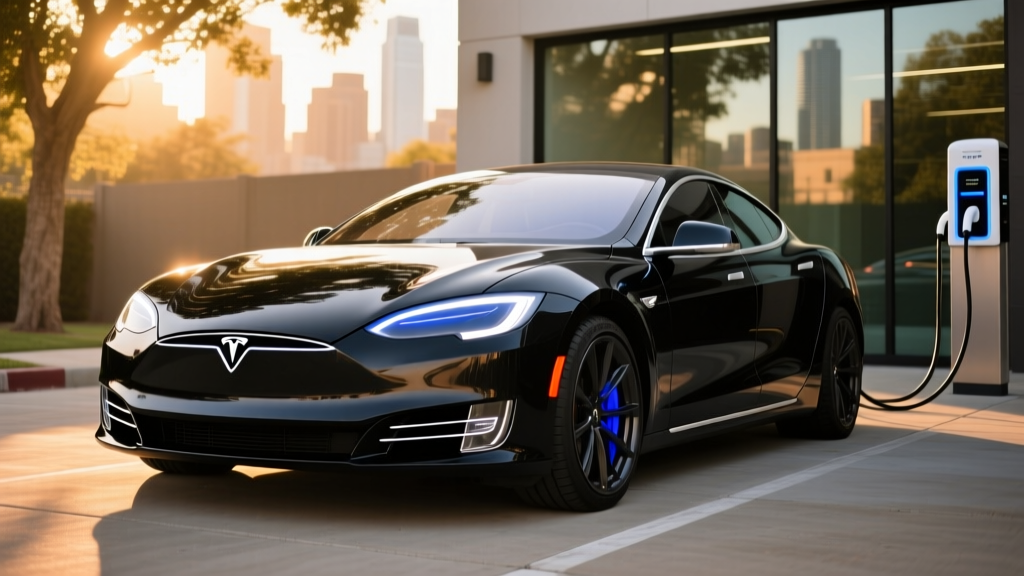
If you've searched for p100d tesla hp, you already suspect the answer is absurd. The Tesla Model S P100D produces a combined 762 horsepower and 791 lb-ft of torque from its dual-motor all-wheel-drive powertrain. That figure — derived from Tesla's own powertrain disclosures and independently verified by multiple test outlets — made the P100D the quickest production sedan in the world when it launched for the 2017 model year.
But raw horsepower only tells part of the story. The P100D's Ludicrous Mode launch delivers a 0-60 mph time of 2.5 seconds and a quarter-mile in roughly 10.9 seconds. Even by 2026 standards, where the refreshed Model S Plaid posts a 1.99-second 0-60, the P100D remains brutally quick. The difference is that the P100D achieves this with a 100 kWh battery pack rather than the Plaid's tri-motor setup, making it a fascinating study in what Tesla's older architecture can still deliver.
| Spec | Value |
|---|---|
| Horsepower (combined) | 762 hp |
| Torque | 791 lb-ft |
| 0-60 mph | 2.5 seconds (Ludicrous) |
| Top Speed | 155 mph |
| Drivetrain | Dual-Motor AWD |
| Battery Capacity | 100 kWh (NMC) |
| EPA Range | 315 miles |
| MPGe (combined) | 98 MPGe |
| EPA Efficiency | 34 kWh/100 mi |
| Cargo Volume | 26.3 cu ft (rear) + 5.3 cu ft (frunk) |
| Original MSRP | ~$136,000 (base P100D, 2017) |
The P100D was available in the Model S and Model X. This review focuses on the Model S variant, which delivers the best efficiency and performance figures of the two. The Model X P100D, while equally powerful, sacrifices roughly 20 miles of range and adds about 0.3 seconds to the 0-60 time due to its heavier SUV body.
Real-World Range: What 315 EPA Miles Actually Means
EPA Estimated Range: 315 miles
Real-World Expectation: Plan for 250–280 miles at sustained highway speeds (70–80 mph). In cold weather (below 32°F), expect 210–240 miles due to battery heating demands and reduced regenerative braking efficiency. City driving with regen can approach or even exceed the EPA figure.
The P100D's 100 kWh battery pack uses NMC (nickel manganese cobalt) chemistry, which was Tesla's standard before the company shifted to LFP for Standard Range models. NMC offers higher energy density — critical for fitting 100 kWh into the Model S platform — but it is more sensitive to sustained high states of charge. Tesla recommends daily charging to 80–90% for NMC packs, reserving 100% for road trips. This means your practical daily range is closer to 250–280 miles before you need to plug in.
For a used P100D in 2026, battery degradation is the critical variable. Most P100D packs built between 2017 and 2019 have accumulated 60,000–120,000 miles. Based on aggregated owner data, expect 8–14% capacity loss at this age and mileage, translating to a real-world maximum range of roughly 270–290 miles on a full charge when new-range conditions are met. Individual results vary significantly based on charging habits — owners who frequently charged to 100% and used DC fast charging exclusively tend to see higher degradation.
You can check a specific vehicle's battery health through the car's service menu or third-party tools like TeslaFi or Tessie, which log State of Health (SoH) over time. A P100D showing less than 85% SoH should be priced accordingly or avoided.
Charging Speeds: DC Fast Charging and Home Level 2
The P100D predates Tesla's current V4 Supercharger architecture, so its charging speeds reflect the hardware of its era. Here's what to expect across charging levels:
| Charging Level | Power / Rate | Speed | Notes |
|---|---|---|---|
| Level 1 (120V household) | ~1.4 kW | ~3–4 miles/hour | Emergency only; 30+ hours for full charge |
| Level 2 (240V home) | 11.5 kW (48A) | ~34 miles/hour | ~9 hours for 10–90%; requires NEMA 14-50 or hardwired Wall Connector |
| DC Fast (Tesla Supercharger V2) | Peak ~120 kW | 10–80% in ~40 min | Tapers significantly above 60%; sustained avg ~70 kW |
| DC Fast (Tesla Supercharger V3/V4) | Capped at ~150 kW | 10–80% in ~35 min | P100D cannot reach V3's 250 kW peak; architecture-limited |
The critical takeaway: the P100D's onboard charging architecture maxes out around 120–150 kW on DC fast charging, regardless of the Supercharger stall's rated output. You will not see 250 kW on a V3 or V4 stall — the vehicle's battery management system and pack design predate that capability. On a road trip, this means 20–25 minute stops for roughly 150–180 miles of range, which is manageable but noticeably slower than a 2025 Model S Long Range (which peaks at 250 kW and does 10–80% in roughly 20 minutes).
For home charging, the P100D supports up to 11.5 kW (48 amps) on a Level 2 connection using a Tesla Wall Connector or a NEMA 14-50 outlet with the Mobile Connector. At this rate, an overnight charge from 20% to 80% takes about 6 hours — perfectly adequate for daily use. If your home electrical panel supports only a 40-amp circuit (32A / 7.7 kW), plan on roughly 25 miles of range per hour of charging.
One ownership note: the P100D uses Tesla's proprietary connector, which became the NACS (North American Charging Standard) in 2024. You will have no adapter issues at Tesla Superchargers, and the growing NACS adoption across other networks (Ford, GM, Rivian, and others now use NACS) means the P100D is actually better-positioned for public charging compatibility in 2026 than CCS-equipped vehicles from legacy automakers.
Interior, Cargo, and Technology
The P100D-era Model S interior is a mixed bag by 2026 standards. The pre-refresh cabin (2012–2020 design) features a 17-inch center touchscreen that remains one of the largest in any production car, but the surrounding materials — piano black plastic, older synthetic leather — show their age compared to the 2021+ refreshed Model S interior.
Passenger space is generous for a sedan:
- Front legroom: 42.7 inches
- Rear legroom: 35.4 inches
- Rear cargo (behind second row): 26.3 cubic feet
- Front trunk (frunk): 5.3 cubic feet
- With rear seats folded: 58.1 cubic feet
Those cargo numbers remain competitive with mid-size luxury SUVs. The hatchback-style liftgate makes loading large items easy, and the flat floor (no transmission tunnel) maximizes usable space.
On the technology front, the P100D includes:
- Autopilot (basic): Traffic-aware cruise control and lane-keeping assist. This is SAE Level 2 driver assistance — you must keep your hands on the wheel and eyes on the road at all times.
- Enhanced Autopilot / FSD (optional): Some used P100Ds were purchased with Full Self-Driving capability. FSD (Supervised) remains Level 2 and requires active driver supervision. It is not autonomous driving.
- Over-the-air updates: Tesla continues to push software updates to older Model S vehicles, though the P100D's MCU1 (Media Control Unit 1) hardware — found in 2017–early 2018 builds — is sluggish by current standards. Tesla offered an MCU2 upgrade program; confirm whether a used P100D has received this upgrade, as it dramatically improves screen responsiveness and enables newer software features.
- HEPA air filtration (Bioweapon Defense Mode): Standard on P100D models equipped with the premium interior package.
Autopilot/FSD Limitation Notice: Tesla's Autopilot and Full Self-Driving (Supervised) are SAE Level 2 driver-assistance systems. They do not make the vehicle self-driving. The driver is legally and operationally responsible for all vehicle control at all times. See NHTSA guidance on automated vehicle safety for details.
Used Pricing and Federal Tax Credit Eligibility
No new Tesla P100D has been sold since 2019 (the model was replaced by the Performance and later Plaid trims). So this is strictly a used-vehicle purchase in 2026. Here's the current market landscape:
| Condition | Price Range | Notes |
|---|---|---|
| Original MSRP (2017) | $136,000–$145,000 | Varied by options (FSD, premium interior, smart air suspension) |
| Used, 60K–80K miles | $38,000–$48,000 | Good condition, MCU2 upgrade preferred |
| Used, 80K–120K miles | $28,000–$38,000 | Check battery SoH; air suspension service likely needed |
| Used, 120K+ miles | $20,000–$28,000 | Higher risk of battery/drive unit replacement; price accordingly |
Does a Used P100D Qualify for the Federal EV Tax Credit?
Yes — potentially. Under the IRS §30D Previously Owned Clean Vehicle Credit, you may qualify for up to $4,000 (or 30% of the sale price, whichever is less) on a used P100D purchase from a licensed dealer. Here are the requirements:
- Sale price cap: The used vehicle must sell for $25,000 or less. This means only higher-mileage P100Ds (typically 100K+ miles) will qualify.
- Buyer income limits: Adjusted gross income must not exceed $75,000 (single), $112,500 (head of household), or $150,000 (joint filers).
- Vehicle age: Must be at least 2 model years old (easily met for a 2017–2019 P100D).
- Dealer sale required: Private-party sales do not qualify. The credit can be transferred to the dealer at point of sale as a price reduction.
- First used sale: The credit applies only to the first qualified used sale after August 16, 2022 — verify the vehicle hasn't already been claimed.
Because the P100D originally retailed above $136,000, the $25,000 used-sale cap is the binding constraint. Most well-maintained P100Ds sell above this threshold, so the majority of used P100D purchases will not qualify for the federal credit. Check current rules at IRS.gov's Previously Owned Clean Vehicle Credit page and consult a tax professional before relying on credit eligibility.
Battery Warranty and Long-Term Ownership Costs
Tesla's original battery and drive unit warranty on the P100D was 8 years or 150,000 miles, whichever comes first, with a minimum 70% capacity retention threshold. For a 2017 model, this warranty expired in 2025. For a 2019 model, it may still be active through 2027 — but only if the vehicle has fewer than 150,000 miles on the odometer.
Out-of-warranty battery replacement for a 100 kWh pack runs $13,000–$20,000 at Tesla Service Centers, depending on whether a remanufactured or new pack is installed. Third-party EV shops may offer replacements for $10,000–$15,000. Drive unit replacements (front or rear motor) typically cost $4,000–$7,000 each.
Other ownership considerations for a used P100D:
- Air suspension: The smart air suspension system is a known wear item. Replacement struts cost $1,500–$2,500 per corner. Many high-mileage examples need at least one corner serviced.
- Door handles: The retractable door handles on pre-2021 Model S vehicles are notorious for failure. Budget $500–$800 per handle if they haven't been replaced under warranty.
- MCU1 to MCU2 upgrade: If not already done, Tesla charges approximately $1,500–$2,000 for the media control unit upgrade, which is nearly essential for usability in 2026.
- Insurance: Expect premiums 20–35% higher than a comparable gas sedan due to repair costs and the vehicle's performance classification. Get quotes before purchasing.
- Tires: The P100D's instant torque is hard on tires. Expect 20,000–30,000 miles from a set of high-performance rubber (21-inch Michelin Pilot Sport 4S or equivalent), at $300–$450 per tire.
P100D vs. 2026 Competitors: Is It Still Worth Buying?
The P100D competes in an unusual space in 2026: it's a used luxury performance EV priced similarly to new mainstream EVs. Here's how it stacks up against key alternatives:
Tesla Model S P100D (Used, $30K–$48K)
- 762 hp, 0-60 in 2.5s
- 250–280 mi real-world range
- Supercharger network access
- Out-of-warranty risk; aging interior
2026 Tesla Model 3 Performance ($54,990 new)
- 510 hp, 0-60 in 2.9s
- EPA 315 mi; ~280 mi real-world
- Full new-vehicle warranty, latest interior
- Less cargo space; smaller sedan
2026 Hyundai Ioniq 5 N ($68,000 new)
- 641 hp (N Grin Boost), 0-60 in 3.25s
- EPA 260 mi; ~220 mi real-world at pace
- 800V architecture, 10–80% in 18 min
- Smaller battery; range is the tradeoff
2026 BMW i4 M50 ($69,700 new)
- 536 hp, 0-60 in 3.7s
- EPA 271 mi; ~240 mi real-world
- Superior interior materials, build quality
- Slower charging; CCS adapter needed for NACS
The P100D's value proposition is clear: supercar-level acceleration for the price of a used Camry. If you can find a well-maintained example with confirmed battery health and you accept the out-of-warranty risk, it delivers a driving experience that most new EVs at twice the price cannot match. But if reliability, warranty coverage, and modern interior quality matter more, a new Model 3 Performance or Ioniq 5 N is the safer choice.
Pros
- 762 hp and 2.5s 0-60 for under $40K used
- 315-mile EPA range still competitive in 2026
- Native NACS connector; full Supercharger access
- Massive cargo space (26.3 cu ft + frunk)
- OTA software updates still being delivered
- HEPA air filtration (Bioweapon Defense Mode)
Cons
- Original battery/drive unit warranty expired or expiring soon
- DC fast charging capped at ~120–150 kW (slower than modern EVs)
- Pre-refresh interior feels dated; MCU1 is slow without upgrade
- Air suspension and door handles are known failure points
- Most used P100Ds exceed the $25K used-EV tax credit cap
- Insurance premiums significantly above average
Who Should Buy a Used Tesla P100D?
The P100D is best suited for:
- Performance enthusiasts on a budget who want supercar acceleration without supercar maintenance costs (no oil changes, no transmission fluid, fewer moving parts).
- Daily commuters with home charging access who need 250+ miles of real range and want a spacious, comfortable sedan.
- Buyers who prioritize Supercharger access for road trips and want native NACS compatibility without adapters.
It is not ideal for:
- Risk-averse buyers who want a full bumper-to-bumper warranty and predictable maintenance costs.
- High-mileage road trippers who need the fastest possible DC charging speeds — a newer Model S Long Range or any 800V-architecture vehicle (Ioniq 5, EV6, EV9) will spend less time at chargers.
- Buyers relying on the federal tax credit — the $25K sale-price cap disqualifies most P100D listings.
Frequently Asked Questions
How much horsepower does the Tesla P100D have?
The Tesla Model S P100D produces a combined 762 horsepower and 791 lb-ft of torque from its dual-motor all-wheel-drive system. This output is available in Ludicrous Mode, which preconditions the battery for maximum discharge rate.
What is the real-world range of a used P100D in 2026?
Expect 250–280 miles in mixed driving on a well-maintained pack. Highway driving at 75+ mph reduces this to roughly 230–260 miles. Cold weather (below freezing) can drop range to 210–240 miles. Actual results depend on battery degradation, which typically runs 8–14% on 2017–2019 examples.
How fast does the P100D charge at home and on the road?
At home on a Level 2 (240V, 48A) connection, the P100D charges at up to 11.5 kW, adding roughly 34 miles of range per hour. On DC fast charging (Supercharger), it peaks at approximately 120–150 kW, reaching 10–80% in about 35–40 minutes. It cannot utilize V3/V4 Supercharger peak rates of 250+ kW due to its older battery architecture.
Does a used P100D qualify for the federal EV tax credit?
Possibly, but it's unlikely for most listings. The §30D Previously Owned Clean Vehicle Credit offers up to $4,000, but the used sale price must be $25,000 or less, buyer income must fall below IRS caps, and the sale must be through a licensed dealer. Most P100Ds in good condition sell above $25,000. Verify current eligibility rules at IRS.gov.
Is the P100D worth buying over a new Model 3 Performance?
It depends on priorities. The P100D offers more power (762 vs 510 hp), more cargo space, and a lower entry price on the used market. But the Model 3 Performance comes with a full warranty, faster charging, a modern interior, and newer safety hardware. If you value reliability and low risk, choose the new Model 3. If you want maximum performance per dollar and accept used-EV risk, the P100D is compelling.
What battery chemistry does the P100D use?
The P100D uses NMC (nickel manganese cobalt) lithium-ion cells in a 100 kWh pack. NMC offers high energy density but is more sensitive to prolonged high states of charge than LFP chemistry. Tesla recommends charging to 80–90% for daily use and 100% only when needed for trips.
What is the P100D's MPGe rating?
The EPA rates the Model S P100D at 98 MPGe combined (city/highway), which translates to approximately 34 kWh per 100 miles. This is less efficient than a 2026 Model 3 Long Range (132 MPGe) due to the P100D's heavier weight and older powertrain technology, but still competitive with other large luxury EVs.