Quick Verdict: The P100D Defined an Era
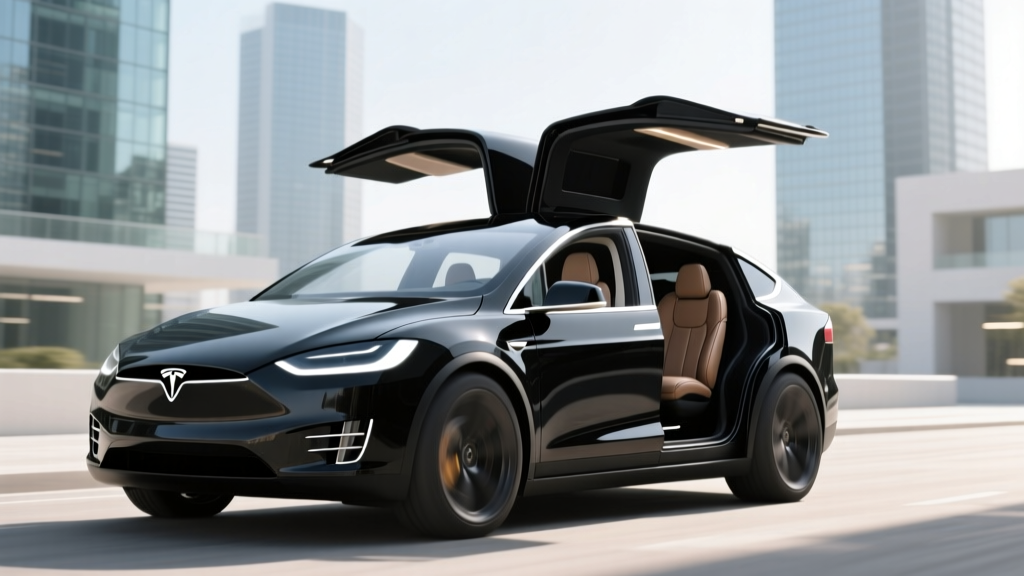
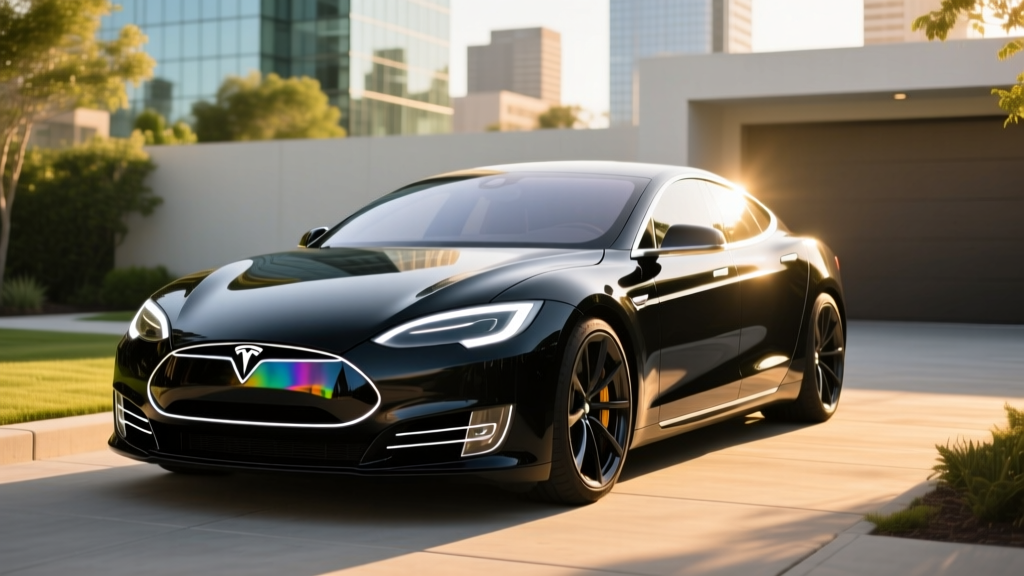
The Tesla Model S P100D was, for a time, the quickest-accelerating production sedan in the world. With a Ludicrous Mode launch that pinned occupants to their seats and a battery pack large enough to cross entire states, it proved that electric vehicles could outperform supercars while carrying four adults and their luggage. Today, the P100D lives exclusively on the used market — Tesla discontinued the 100 kWh pack option after the 2019 model year — but it remains a benchmark for buyers hunting high-performance EVs at depreciated prices.
This review covers the P100D's headline numbers, real-world ownership data, and how it stacks up against modern competitors in 2026.
| Spec | Value |
|---|---|
| EPA Range | 315 miles (2019 Refresh) |
| Battery Capacity | 100 kWh (NMC chemistry) |
| Horsepower | ~670 hp (combined dual-motor) |
| Torque | ~791 lb-ft |
| 0–60 mph | 2.4 seconds (Ludicrous Mode) |
| Drivetrain | Dual-Motor AWD |
| MPGe (combined) | 98 MPGe |
| Efficiency | 34 kWh / 100 mi |
| Max DC Fast Charge | ~145 kW (V2 Supercharger) |
| 10–80% DC Charge Time | ~45 minutes |
| Level 2 Home Charge Rate | ~11.5 kW (48A) |
| Cargo Volume | 26.3 cu ft (rear) + ~5.3 cu ft (frunk) |
| Battery Warranty (original) | 8 years / 150,000 miles |
| Original MSRP (2019) | $133,000–$145,000+ |
| Used Price Range (2026) | $38,000–$58,000 |
Tesla P100D Horsepower and Performance
The heart of the P100D's appeal is its powertrain. Tesla's dual-motor setup pairs a rear induction motor with a front permanent-magnet motor, delivering a combined system output of approximately 670 horsepower and 791 lb-ft of torque. Unlike internal-combustion engines that need to build revs, the P100D's electric motors deliver peak torque from zero RPM — which is why the 2.4-second 0–60 mph time feels even more violent than the number suggests.
In regular "Sport" mode, the P100D still runs a 3.0-second 0–60, making it quicker than most sports cars even without Ludicrous Mode engaged. The all-wheel-drive system provides exceptional traction in rain and light snow, though the car's 4,900+ lb curb weight is noticeable during aggressive cornering. This is a straight-line hero that handles competently but won't fool anyone into thinking it's a Porsche Taycan on a canyon road.
Tesla's Ludicrous Mode requires the battery to be at roughly 50% state of charge (SoC) or higher and benefits from a warm battery pack. Cold-soaked batteries will see significantly reduced launch performance — expect 0–60 times closer to 3.5–4.0 seconds in freezing conditions until the pack warms up through preconditioning or driving.
EPA Range vs. Real-World Expectations
Real-World Highway (70 mph, moderate temps): ~255–275 miles
Real-World Highway (freezing temps, heater on): ~200–230 miles
City / Suburban Mixed: ~280–310 miles
The 315-mile EPA figure applies specifically to the 2019 "Raven" refresh P100D, which received the more efficient permanent-magnet front motor. Pre-2019 P100D models with dual induction motors were rated at approximately 315 miles as well, though real-world efficiency was slightly worse due to the less efficient front motor.
At sustained highway speeds of 70–75 mph, expect to consume roughly 34–38 kWh per 100 miles, translating to 255–275 miles of practical range in mild weather. Cold weather is the great equalizer for all EVs: lithium-ion batteries lose capacity in freezing temperatures, and cabin heating draws significant energy. Without a heat pump (the P100D uses resistive PTC heating), winter range loss of 25–35% is typical.
Owners who primarily commute in stop-and-go traffic will see range closer to the EPA sticker thanks to regenerative braking recapturing energy. The P100D's regen is aggressive enough in "Standard" mode to enable near one-pedal driving in urban environments.
Charging Speed and Infrastructure
| Charging Level | Power (kW) | Miles Added per Hour | Notes |
|---|---|---|---|
| Level 1 (120V outlet) | ~1.4 kW | ~3–4 mi/hr | Emergency/trickle only |
| Level 2 (240V, 48A) | ~11.5 kW | ~32 mi/hr | Full charge in ~10 hrs |
| DC Fast (V2 Supercharger) | ~145 kW peak | ~290 mi/hr (peak) | 10–80% in ~45 min |
| DC Fast (V3 Supercharger w/ adapter) | ~145 kW (car-limited) | ~290 mi/hr (peak) | CCS adapter required for non-Tesla networks |
The P100D's 100 kWh NMC battery can accept a peak DC fast-charge rate of approximately 145 kW on Tesla's V2 Superchargers. On V3 Superchargers (250 kW capable), the P100D is limited by its onboard charge architecture — it cannot accept the full 250 kW, topping out around 145–150 kW. This means a 10–80% charge takes roughly 45 minutes, noticeably longer than modern 800V-architecture EVs like the Hyundai Ioniq 5 or Porsche Taycan that can complete the same charge in 18–22 minutes.
The charge curve on the P100D is typical of its era: it ramps quickly to peak rate between 10–30% SoC, sustains near-peak through about 50%, then tapers progressively. Above 80%, charging slows dramatically to protect the NMC cells — expect 80–100% to take as long as the 10–80% session. For road trips, plan to charge to 80% and move on rather than waiting for a full battery.
For home Level 2 charging, the P100D's onboard charger supports up to 11.5 kW (48 amps on a 60-amp circuit). A full overnight charge from 10% to 100% takes approximately 10 hours — perfectly adequate for daily use. According to fueleconomy.gov, home Level 2 charging at the national average electricity rate of $0.16/kWh costs roughly $16 for a full 100 kWh charge, or about $0.05 per mile.
Interior, Technology, and Driver Assistance
The P100D's interior reflects Tesla's minimalist philosophy — a 17-inch center touchscreen controls virtually everything, from climate settings to the glovebox release. Build quality on 2018–2019 Model S vehicles improved over earlier years but still shows variation in panel gaps and material quality compared to German luxury competitors.
Key technology features:
- Autopilot (basic): Traffic-aware cruise control and lane centering — SAE Level 2 driver assist, requires hands-on-wheel supervision
- Enhanced Autopilot / FSD (optional): Auto lane change, Navigate on Autopilot, traffic light recognition — still SAE Level 2, not autonomous
- Over-the-air (OTA) software updates adding features post-purchase
- Sentry Mode (dashcam/security system using exterior cameras)
- HEPA air filtration with Bioweapon Defense Mode
- Adaptive air suspension with adjustable ride height
Notable drawbacks include the lack of Apple CarPlay/Android Auto (Tesla uses its proprietary infotainment), absence of physical buttons for common functions (wipers, mirrors, glovebox all controlled via screen), and the P100D-era MCU1 or early MCU2 media computers that can feel sluggish compared to Tesla's current Ryzen-based hardware. Some 2018–2019 models received MCU2 upgrades under warranty or recall campaigns — verify this on any used example.
Pricing, Tax Credits, and Ownership Economics
No new P100D has been sold since 2019, so the federal §30D new-vehicle tax credit does not apply. However, buyers may qualify for the Used Clean Vehicle Credit under IRS §25E:
- Credit amount: Up to $4,000 or 30% of the sale price (whichever is less)
- Vehicle price cap: Sale price must be $25,000 or below
- Income caps: $75,000 single / $112,500 head of household / $150,000 joint filers
- Vehicle requirements: Must be purchased from a licensed dealer, model year at least 2 years older than current year, battery capacity ≥ 7 kWh
Given that most P100Ds sell for $38,000–$58,000 in 2026, they exceed the $25,000 used-credit price cap. Buyers who find a higher-mileage example near or below $25,000 from a dealer may qualify — but such examples are rare and warrant careful battery health inspection. See IRS.gov §25E rules for full eligibility details.
Ownership costs beyond purchase price deserve attention. Insurance on a P100D is elevated — expect $2,500–$4,000 annually depending on state and driving record. Tesla's battery and drive unit warranty (8 years / 150,000 miles) may still have residual coverage on low-mileage 2019 examples. Out-of-warranty battery replacement for the 100 kWh pack typically runs $18,000–$22,000 at Tesla service centers, though third-party refurbishment options exist for $10,000–$14,000.
Pros and Cons
Pros
- 670 hp and 2.4s 0–60 remain supercar-level in 2026
- Access to Tesla's Supercharger network (most reliable public DC charging in the US)
- Generous cargo space (26.3 cu ft + frunk) and comfortable seating for four adults
- OTA updates continue to add features years after purchase
- Significant depreciation means big performance per dollar on the used market
- Free Supercharging transferability on some 2017–2019 examples (verify VIN)
Cons
- DC charging speed (145 kW peak) is slow by 2026 standards
- No heat pump — significant winter range loss
- Out-of-warranty battery replacement costs $18,000–$22,000
- No Apple CarPlay/Android Auto support
- Older MCU hardware can feel dated vs current Tesla interiors
- Insurance premiums well above average for the segment
Who Should Buy the P100D in 2026?
The Tesla Model S P100D suits a specific buyer: someone who values extreme straight-line acceleration, wants access to Tesla's Supercharger network, and can accept the trade-offs of a 6–8-year-old EV. It remains an excellent daily driver for commuters who can charge at home and want occasional road-trip capability — 315 miles of EPA range plus Supercharger access covers most routes comfortably with one stop.
It's less ideal for buyers in extreme cold climates (no heat pump means brutal winter range loss), those who prioritize the latest infotainment tech, or anyone uncomfortable with the financial risk of an aging high-voltage battery. If you regularly drive in sub-freezing temperatures, a newer EV with a heat pump (like the Model S Plaid or Hyundai Ioniq 5) will serve you better.
How It Compares to Key Competitors
Against the 2024–2026 Tesla Model S Long Range (405 mi EPA, ~670 hp, $79,990 new), the P100D gives up range, charging speed, and interior technology but saves $25,000–$40,000 on purchase price. The Plaid (1,020 hp, 396 mi, $89,990) is in a different performance league entirely.
The Porsche Taycan Turbo S (750 hp, 227 mi EPA, 270 kW charging) offers far superior handling and faster charging but costs significantly more used and has half the range. The Lucid Air Pure (430 mi EPA, 430 hp, ~$70,000 new) dominates on efficiency and range but can't match the P100D's acceleration.
For the performance-per-dollar metric, the used P100D is remarkably hard to beat in 2026 — you'd need to spend nearly double to find another 670-hp, AWD sedan with this much cargo space.
Frequently Asked Questions
What is the real-world range of the Tesla P100D?
The EPA rates the 2019 Model S P100D at 315 miles. In real-world highway driving at 70 mph, expect 255–275 miles in moderate temperatures and 200–230 miles in freezing conditions due to the lack of a heat pump and NMC battery cold sensitivity.
How fast does the P100D charge at home and on the road?
On DC fast chargers, the P100D peaks at approximately 145 kW, completing a 10–80% charge in about 45 minutes. At home on a Level 2 (240V/48A) charger, it adds roughly 32 miles of range per hour, fully charging overnight in about 10 hours.
Does the P100D qualify for any federal EV tax credit?
Not the new-vehicle §30D credit — the P100D is discontinued. The used-vehicle §25E credit (up to $4,000) requires a sale price at or below $25,000 and buyer income under the caps. Most P100Ds sell above that price cap in 2026, making credit eligibility unlikely for most buyers.
How much horsepower does the Tesla P100D actually make?
The dual-motor powertrain produces approximately 670 combined horsepower and 791 lb-ft of torque. These figures are calculated from motor output and may vary slightly depending on battery state of charge and temperature.
Is the P100D worth buying over a newer EV in 2026?
If you prioritize raw acceleration, Supercharger network access, and value — yes, it's compelling at $38,000–$58,000 used. If you want faster charging, a heat pump, modern infotainment, or full warranty coverage, a newer EV will serve you better despite the higher price.
What is the P100D's battery chemistry and how long will it last?
The P100D uses NMC (nickel-manganese-cobalt) chemistry in its 100 kWh pack. NMC cells typically retain 85–90% capacity after 100,000 miles when charged primarily between 20–80% SoC. Tesla's original warranty covers degradation below 70% for 8 years or 150,000 miles. High-mileage examples (100k+ miles) should have battery health verified via the car's service menu or third-party diagnostics before purchase.