Why Tesla OTA Updates Matter to Owners
Over-the-air (OTA) software updates are one of Tesla's most defining ownership features. Unlike legacy automakers that require dealer visits for firmware patches, Tesla pushes improvements — from range optimization and brake-by-wire tuning to entirely new UI layouts and FSD (Supervised) capability bumps — directly to your driveway. But if you've just taken delivery or are considering a Tesla purchase, one practical question dominates: how long does a Tesla update take?
The short answer: it depends on the update size and your connection. In 2026, Tesla's OTA updates range from quick 10-minute security patches to full firmware overhauls that can take over an hour to install, plus significant download time. Below, we break down the real-world timing you can expect, then pivot to a full profile of Tesla's volume leader — the 2026 Model Y Long Range AWD — so you have the complete ownership picture.
How Long Does a Tesla Update Take? Download vs. Installation
A Tesla OTA update has two distinct phases, and confusing them is the most common source of owner frustration:
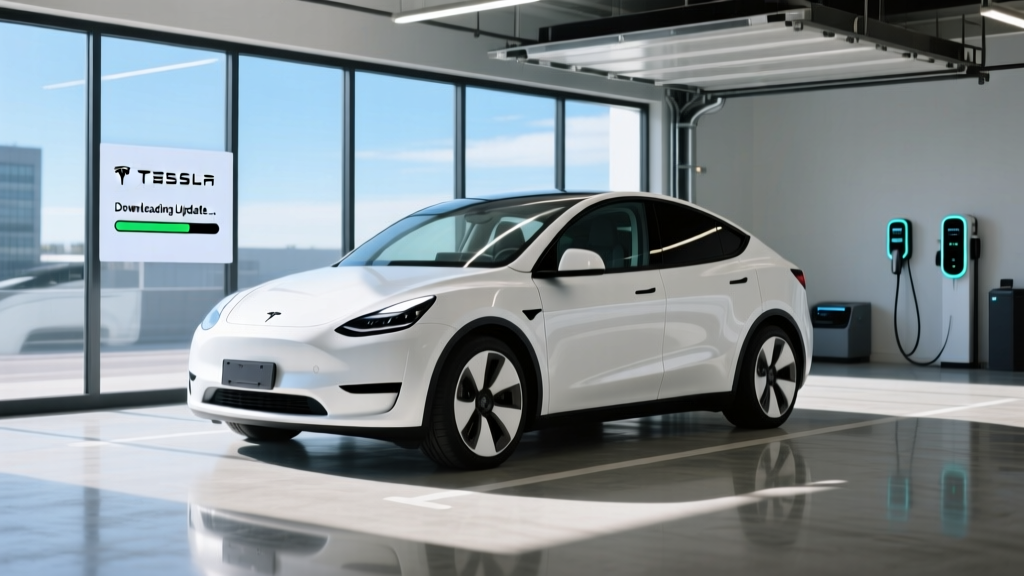
Phase 1: Download. The vehicle downloads the update package via Wi-Fi (strongly preferred) or the built-in LTE/5G connection. On a robust home Wi-Fi network, a typical 2026 firmware download (roughly 1–4 GB) completes in 15–40 minutes. On the car's cellular connection, the same download can stretch to 1–3 hours or longer, depending on signal strength and data throttling. Tesla prioritizes Wi-Fi downloads; some large updates won't even begin downloading over cellular.
Phase 2: Installation. Once downloaded, the car must be parked and cannot be driven or charged during installation. In our experience with 2025–2026 firmware versions:
- Minor updates (security patches, small bug fixes): 10–20 minutes
- Standard firmware updates (UI changes, efficiency tweaks, feature additions): 25–45 minutes
- Major version updates (new FSD stack, major OS overhaul, holiday releases): 45–75 minutes
During installation, the vehicle's screens go dark, you may hear clicking from relays and contactors, and climate control is unavailable. You cannot drive or charge the car. Tesla recommends scheduling installations for times when you won't need the vehicle — overnight is ideal.
2026 Tesla Model Y Long Range AWD: Full Spec Breakdown
The Model Y remains Tesla's best-selling vehicle globally and the benchmark for compact electric SUVs. The 2026 Model Y Long Range AWD (the "Juniper" refresh that debuted for the 2025 model year) brings meaningful updates to interior quality, ride comfort, and efficiency. Here are the exact numbers buyers need.
| Spec | Value |
|---|---|
| EPA Range | 320 miles |
| Battery (usable) | ~75 kWh (NMC chemistry) |
| Drivetrain | Dual-motor AWD |
| Horsepower | 384 hp (combined) |
| 0–60 mph | 4.8 seconds |
| Peak DC Fast Charge | 250 kW |
| 10–80% DC Charge Time | ~27 minutes |
| Level 2 Home Charge Rate | 11.5 kW (~44 mi/hr) |
| EPA Efficiency | 111 MPGe combined / 28 kWh/100 mi |
| Cargo (rear seats up) | 30.2 cu ft |
| Cargo (rear seats folded) | 72.1 cu ft |
| Front Trunk (Frunk) | 4.1 cu ft |
| Rear Legroom | 40.5 in |
| Battery Warranty | 8 years / 120,000 miles (≥70% retention) |
| Base MSRP | $47,990 (before destination) |
Real-World Range: What the EPA Sticker Doesn't Tell You
Tesla's efficiency remains class-leading. The Juniper refresh improved aerodynamics (lower drag coefficient) and thermal management, which partly offset the slight weight increase from added sound insulation and a revised suspension. On fueleconomy.gov, the Long Range AWD posts 111 MPGe combined — roughly 28 kWh per 100 miles — making it one of the most efficient dual-motor SUVs on the market.
For context: a 300-mile highway road trip in summer conditions will typically require one DC fast-charge stop of about 15–20 minutes (charging from ~15% to 80%). In winter, plan for two shorter stops or one longer stop, as cold batteries charge more slowly without thorough preconditioning.
Charging Speed: DC Fast, Level 2, and the Charge Curve
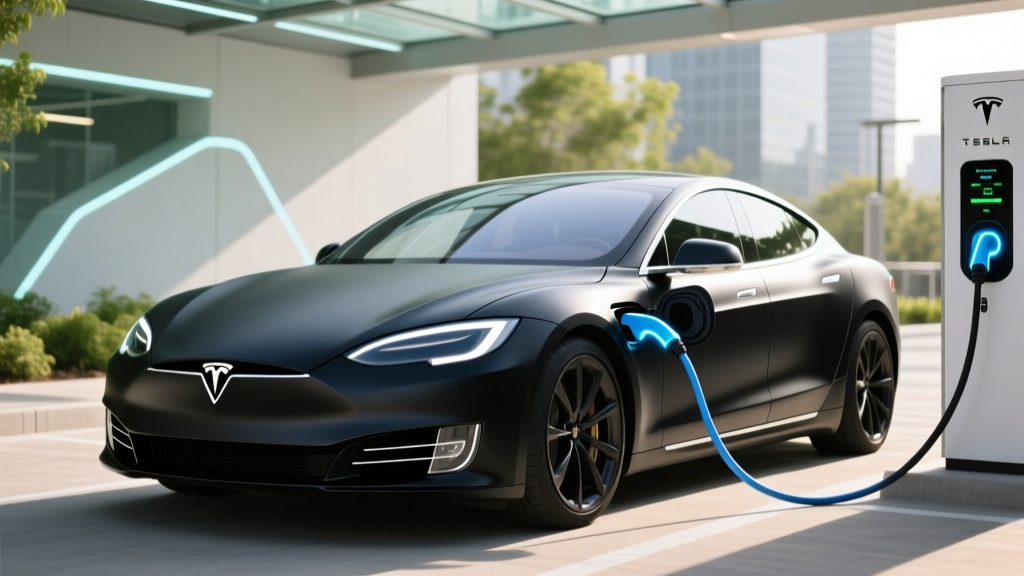
Understanding the charge curve is critical. The Model Y Long Range peaks at 250 kW on a V3 Supercharger or equivalent CCS/NACS DC fast charger, but it only sustains peak power between roughly 10–30% state of charge. Above 50%, the rate tapers significantly — by 80%, you're typically at 60–80 kW. This is normal lithium-ion behavior and applies to all EVs, but Tesla's thermal management is aggressive, meaning preconditioning (automatic when navigating to a Supercharger) is essential for hitting peak rates.
| Level | Power | Miles Added per Hour | Notes |
|---|---|---|---|
| Level 1 (120V) | ~1.4 kW | ~4–5 mi/hr | Emergency/trickle only |
| Level 2 (240V, 48A) | 11.5 kW | ~44 mi/hr | Home Wall Connector; full charge ~7–8 hrs |
| DC Fast (V3 Supercharger) | Up to 250 kW | ~1,000+ mi/hr (peak) | 10–80% in ~27 min; tapers above 50% |
| DC Fast (V4 Supercharger) | Up to 250 kW* | Similar to V3 | *Model Y capped at 250 kW; V4 supports higher for Cybertruck/Semi |
At home on a Tesla Wall Connector with a 60-amp circuit (48 amps continuous), you'll add roughly 44 miles of range per hour of charging. Most owners who plug in nightly never visit a charger except on road trips.
Pricing, Trims, and Federal Tax Credit Eligibility
The 2026 Model Y lineup is streamlined:
- Long Range RWD: ~$44,990 MSRP — 320+ mile range, single motor
- Long Range AWD: ~$47,990 MSRP — 320 mile range, dual motor (most popular)
- Performance AWD: ~$52,490 MSRP — 303 mile range, 3.5-sec 0–60
Federal Tax Credit (§30D): As of 2026, the Model Y qualifies for the IRS §30D clean vehicle credit, but the exact amount depends on battery sourcing compliance. Tesla's U.S.-built battery packs and cells have largely met critical-mineral and battery-component requirements, enabling the full $7,500 credit for eligible buyers. However, you must meet all of these conditions:
- Income caps: AGI ≤ $150,000 (single), ≤ $225,000 (head of household), ≤ $300,000 (joint)
- MSRP cap: SUVs must be ≤ $80,000 (all Model Y trims qualify)
- Point-of-sale transfer: You can apply the credit as a down-payment reduction at purchase (dealer must be registered with IRS)
- Vehicle must be new and placed in service by the taxpayer
| Item | Amount |
|---|---|
| Base MSRP | $47,990 |
| Destination Fee | $1,390 |
| Federal §30D Credit (if eligible) | −$7,500 |
| Effective Price (before state incentives) | ~$41,880 |
State incentives (California, Colorado, Massachusetts, and others) can stack on top. Consult a tax professional to confirm your personal eligibility.
Tech, Driver Assists, and the Software Experience
The Juniper-refreshed Model Y features a 15.4-inch center touchscreen (slightly larger than pre-2025 models), ventilated front seats, ambient lighting, power-folding second-row seats, and a rear-seat touchscreen for climate and media control. Tesla's infotainment remains the gold standard for responsiveness — no CarPlay or Android Auto, but the native system integrates navigation, streaming, gaming, and vehicle controls seamlessly.
Driver Assistance: Every Model Y ships with Basic Autopilot (lane centering + adaptive cruise). The optional FSD (Supervised) package ($8,000 one-time or $99/month in 2026) adds city-street navigation, traffic-light/stop-sign recognition, and automated parking.
The OTA update system ties directly into these features. FSD capability improvements arrive via software — a car purchased in 2024 may gain entirely new driving behaviors through 2026 updates, which is precisely why understanding update timing matters.
Pros, Cons, and Who Should Buy the Model Y
✅ Pros
- Class-leading efficiency (111 MPGe combined)
- Extensive Supercharger network (20,000+ stalls in North America)
- Continuous OTA improvements add value post-purchase
- Spacious cargo area (72+ cu ft with seats folded)
- Strong resale value relative to EV segment
- Qualifies for full $7,500 federal credit (if eligible)
❌ Cons
- No Apple CarPlay / Android Auto
- FSD (Supervised) remains Level 2 despite the name
- Rear visibility is limited; relies heavily on cameras
- 250 kW peak charge rate trails Hyundai/Kia's 350 kW E-GMP platform
- Insurance premiums run 15–30% above segment average
- Minimal physical controls — everything is screen-based
Best for: Daily commuters and small families who want a practical, efficient electric SUV with strong road-trip capability via the Supercharger network. The 320-mile EPA range and fast Level 2 home charging make it ideal for households with garage or driveway charging access.
Consider alternatives if: You need 350 kW ultra-fast DC charging (Hyundai Ioniq 5, Kia EV6), three-row seating (Kia EV9, Tesla Model X), or prefer physical buttons and Apple CarPlay integration (Ford Mustang Mach-E, BMW iX).
Frequently Asked Questions
How long does a Tesla update take from start to finish?
Plan for 30–90 minutes total: 15–40 minutes to download over Wi-Fi, plus 10–75 minutes to install depending on the update size. Major version updates (new FSD stack, holiday releases) take the longest. The car cannot be driven or charged during installation.
Can I drive my Tesla while it downloads an update?
Yes. The download phase happens in the background while you drive normally. However, installation requires the vehicle to be parked, and you cannot begin a drive until installation completes.
Does the Model Y charge faster than competitors?
At 250 kW peak, the Model Y charges quickly but not fastest in class. The Hyundai Ioniq 5 and Kia EV6 on 800V architecture can peak at 235–350 kW and sustain higher rates longer. However, Tesla's Supercharger network reliability and automatic preconditioning give it a real-world edge on road trips.
What is the real-world range of the 2026 Model Y Long Range?
EPA-estimated at 320 miles. Expect 260–290 miles in real-world highway driving at 70+ mph, and as low as 220–250 miles in freezing temperatures. City driving with regenerative braking in mild weather can approach or slightly exceed the EPA figure.
Does the 2026 Model Y qualify for the $7,500 federal tax credit?
Yes, as of 2026, the Model Y qualifies for the full §30D credit for buyers meeting IRS income caps ($150K single / $300K joint). The credit can be transferred at point of sale to reduce your purchase price. Verify current sourcing requirements on irs.gov, as rules can shift.
How often does Tesla release software updates?
Tesla typically pushes updates every 2–6 weeks, though the cadence varies. Major feature updates tend to arrive quarterly, while security and minor patches can come more frequently. Vehicles on the FSD (Supervised) track may receive updates on a different schedule than those on the standard track.