The Tesla Original Roadster: A Pioneer Revisited in 2026
Before the Model S redefined luxury sedans and the Model Y became the world's best-selling EV, there was the Tesla original Roadster — the car that proved electric vehicles could be fast, desirable, and capable of real-world range. Produced between 2008 and 2012, just 2,450 units rolled out of Tesla's Fremont facility, making it one of the rarest modern EVs on the road today.
This review examines the original Roadster's specs through a 2026 lens — not as a new-car buyer's guide, but as a collector's reference and a benchmark for how far EV technology has come. If you're researching the Tesla original Roadster for a potential purchase on the secondary market, a museum acquisition, or simply to understand EV history, this deep dive covers range, battery health, charging, and ownership realities.
Range, Battery, and Efficiency: What 53 kWh Delivered in 2008
The Tesla original Roadster shipped with a 53 kWh lithium-ion battery pack using NMC (nickel-manganese-cobalt) chemistry — the same cell architecture Tesla sourced from laptop-grade 18650 cells supplied by Panasonic. At launch, this was groundbreaking: no other production EV offered comparable energy density.
Real-World Expectation in 2026: Expect 150–190 miles depending on battery degradation state. Highway driving at 70+ mph drops this to ~130–160 miles. Cold weather (below 40°F) can reduce range by an additional 20–30%, yielding as little as 100–130 miles on a full charge for heavily degraded packs.
| Spec | Value |
|---|---|
| Battery Capacity | 53 kWh (usable ~50 kWh new) |
| Chemistry | NMC (18650 cylindrical cells) |
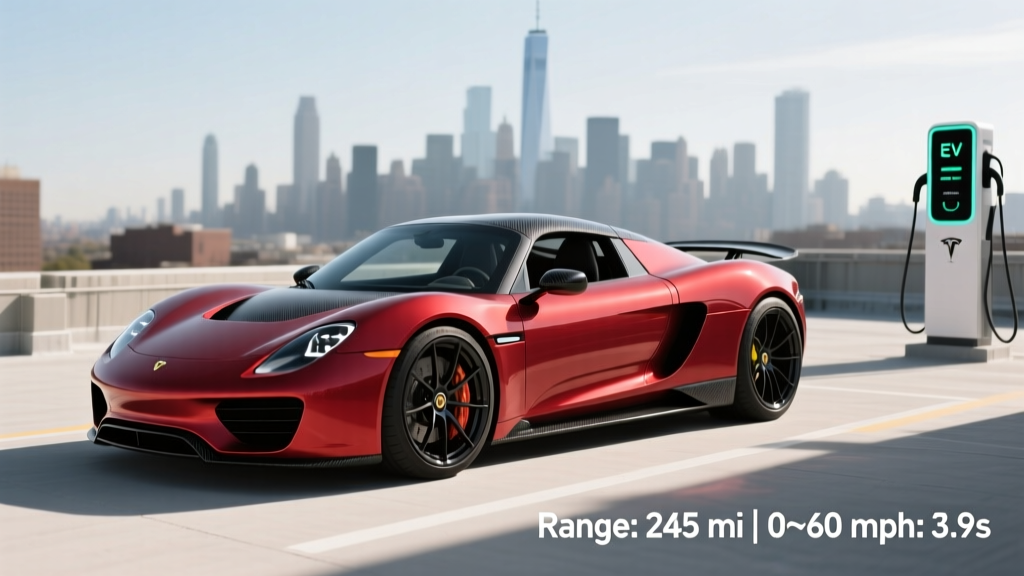
| EPA Range (Original) | 245 miles |
| Efficiency | ~215 Wh/mile (original); ~280–320 Wh/mile with aged pack |
| MPGe (Original) | 135 MPGe combined |
| Battery Warranty (Original) | 5 years / 100,000 miles (expired on all units by 2017) |
The critical reality for 2026 buyers: nearly every original Roadster battery is well past its warranty window. Degradation of 25–45% is common depending on charging habits, climate exposure, and whether the pack received Tesla's battery replacement or refurbishment program updates. Some owners report State of Health (SoH) readings as low as 55%, effectively halving usable range.
Tesla offered a battery replacement program in the mid-2010s, swapping degraded packs for refurbished units, but availability is now extremely limited. Third-party EV battery specialists like Gruber Power have offered aftermarket solutions, though costs range from $15,000 to $30,000 depending on cell availability.
Charging: Slow by Modern Standards
The original Roadster predates CCS, CHAdeMO, and Tesla's own Supercharger network. It was designed for an era when DC fast charging was essentially nonexistent for consumer EVs.
| Charging Method | Power (kW) | Time (10–80%) | Miles Added/Hour |
|---|---|---|---|
| Level 1 (120V standard outlet) | ~1.4 kW | ~36+ hours | ~5 miles/hr |
| Level 2 (240V, Roadster HPC) | ~16.8 kW (70A) | ~3.5 hours | ~55 miles/hr |
| Level 2 (240V, standard J1772 w/ adapter) | ~6.6–7.2 kW | ~7–8 hours | ~22–25 miles/hr |
| DC Fast Charging | Not natively supported | N/A | N/A |
The Roadster's proprietary High Power Connector (HPC) was its fastest charging option at 16.8 kW via a 240V / 70A circuit. This required a dedicated Tesla Wall Connector unit (now discontinued and difficult to source). Most owners today rely on J1772 adapters, which cap at 30–32A, delivering roughly 7 kW — a full overnight charge but far from convenient for road trips.
Important: The original Roadster cannot use Tesla Superchargers. There is no CCS or CHAdeMO inlet, and no adapter exists to enable DC fast charging without extensive (and risky) custom modifications. This is the single biggest practical limitation for anyone considering regular driving in 2026.
Performance: Still Respectable After 18 Years
The Roadster's rear-mounted AC induction motor produced 288 horsepower and 295 lb-ft of torque, sending power exclusively to the rear wheels. In 2008, a 3.7-second 0–60 mph time placed it firmly in supercar territory — against cars costing three times as much.
| Performance Spec | Value |
|---|---|
| Motor Type | AC Induction (rear-mounted) |
| Horsepower | 288 hp |
| Torque | 295 lb-ft |
| Drivetrain | RWD (single-speed gearbox) |
| 0–60 mph | 3.7 seconds (Sport model: 3.5s) |
| Top Speed | 125 mph (electronically limited) |
| Curb Weight | ~2,877 lbs |
The single-speed gearbox was a compromise: early Roadsters used a two-speed unit that proved unreliable, prompting Tesla to engineer a robust single-ratio replacement. Most surviving examples now have the updated gearbox. Acceleration remains brisk by any standard, though the lack of modern torque-vectoring, adaptive suspension, or launch control feels dated compared to a 2026 Model S Plaid or Taycan Turbo GT.
Interior, Tech, and Practicality
The Roadster was built on a modified Lotus Elise chassis, and it shows — for better and worse. The cabin is spartan, tight, and focused entirely on driving. There's no frunk, minimal storage, and ingress/egress requires genuine athleticism.
- Cargo Space: ~2.0 cu ft (rear trunk shelf — essentially a duffel bag slot)
- Seating: 2 passengers only
- Legroom: ~42 inches (driver); comparable to a Lotus Elise
- Infotainment: 7-inch touchscreen (basic media, nav, vehicle settings — no streaming, no OTA updates, no modern connectivity)
- Driver Assistance: None. No Autopilot, no adaptive cruise, no lane-keeping. This is a raw, analog driving experience.
Notable drawbacks include the absence of any driver-assistance features, limited HVAC effectiveness (a known pain point in extreme climates), and a convertible soft top that offers minimal sound insulation. The infotainment system is essentially frozen in 2010 — no Bluetooth audio streaming, no app integration, and no over-the-air updates.
Pros
- Historic significance — the EV that launched the modern electric era
- Lightweight (2,877 lbs) and engaging to drive
- Strong collector value; appreciating asset
- 288 hp from a single rear motor remains fun
- Removable roof panel for open-air driving
Cons
- No DC fast charging — Level 2 only, at best 16.8 kW
- Severe battery degradation on most surviving examples
- No Supercharger access; incompatible with modern Tesla network
- Cramped interior with almost no cargo space
- Zero driver-assistance features
- Battery replacement costs $15,000–$30,000 if available
- Parts scarcity — Tesla no longer actively supports this model
Pricing, Tax Credits, and Collector Market in 2026
The Tesla original Roadster is no longer sold new. Production ended in 2012, and Tesla has not produced a successor (the announced "Roadster 2" remains unreleased as of 2026). All purchasing activity occurs on the secondary collector market.
| Category | Detail |
|---|---|
| Original MSRP (2008–2012) | $109,000 (base) / $129,000 (Sport) |
| 2026 Collector Market Range | $120,000 – $250,000+ (depending on mileage, condition, battery SoH) |
| Federal EV Tax Credit (§30D) | Not eligible — only new vehicles qualify; used-EV credit (§25E) capped at $4,000 and requires dealer sale of qualifying used EV under $25,000 MSRP threshold, which no Roadster meets |
| State Incentives | None applicable — collector/used purchase |
The IRS §30D clean vehicle credit applies exclusively to new vehicle purchases with strict MSRP caps ($55,000 for sedans, $80,000 for SUVs/trucks), buyer income limits, and battery-sourcing requirements. The original Roadster qualifies for none of these. The used-EV credit (§25E) caps at $4,000 and requires the vehicle's original MSRP to be under $25,000 — also inapplicable.
For collectors, the Roadster's value proposition is historical rather than practical. Low-mileage examples with documented battery replacements or SoH readings above 80% command premiums. Auction results from Bring a Trailer and similar platforms show steady appreciation, particularly for Sport-trim models in original colors.
Who Should Consider the Tesla Original Roadster in 2026?
This is not a daily driver. It's not a weekend cruiser. It's a collector piece with genuine historical significance — the car that forced the global auto industry to take electric propulsion seriously.
- You're a collector seeking an appreciating, historically significant EV
- You want a lightweight, analog driving experience with EV instant torque
- You have access to a Level 2 charger and drive in mild climates
- You accept 120–180 miles of real-world range and no fast-charging capability
- You need a practical daily driver or road-trip vehicle
- You want modern tech, driver assists, or Supercharger access
- You're seeking a tax-credit-eligible EV purchase
- You need cargo space, passenger room, or all-weather capability
Frequently Asked Questions
What is the real-world range of the Tesla original Roadster in 2026?
Most surviving examples deliver 150–190 miles on a full charge, assuming moderate battery degradation (70–80% SoH). Heavily degraded packs (55–65% SoH) may only achieve 100–130 miles. Highway driving and cold weather further reduce this by 20–30%.
How fast does the original Roadster charge?
At its best, using the proprietary High Power Connector at 16.8 kW, a 10–80% charge takes roughly 3.5 hours. Using a standard J1772 Level 2 adapter at ~7 kW, expect 7–8 hours. There is no DC fast charging capability, and the car cannot use Tesla Superchargers.
Does the Tesla original Roadster qualify for any federal EV tax credit?
No. The §30D new vehicle credit applies only to new purchases meeting MSRP, income, and battery-sourcing requirements. The §25E used-EV credit requires an original MSRP under $25,000, which the Roadster ($109,000+ new) does not meet. Consult a tax professional for specific guidance per IRS guidelines.
Is the original Roadster worth buying vs. modern EVs?
As a collector car, yes — it has strong historical value and appreciation potential. As a practical EV, no. A 2026 Tesla Model 3 Long Range offers 341 miles of EPA range, 250 kW Supercharging, Autopilot, and a starting price under $45,000 (potentially $37,500 after tax credit). The Roadster is an investment, not a transportation solution.
Can I still get the battery replaced on an original Roadster?
Tesla's official battery replacement program has largely wound down. Third-party specialists offer refurbished packs at $15,000–$30,000, but cell availability is inconsistent. Always verify battery SoH and service history before purchasing.
What are the biggest ownership risks?
Battery degradation and replacement cost are the primary concerns. Secondary issues include parts scarcity (body panels, HVAC components, proprietary connectors), limited service expertise, and the inability to fast-charge on road trips. Insurance for collector EVs can also be expensive — specialty carriers like Hagerty or Grundy often offer better rates than standard insurers.