The recent Tesla Optimus robotics VP departure has sent ripples through both the robotics and electric-vehicle communities. When a senior executive overseeing a marquee skunkworks project exits, the question for car buyers isn't about bipedal robots — it's about what the reshuffling signals for Tesla's core automotive lineup, pricing aggression, and Full Self-Driving resource allocation heading into the 2026 model year.
As analysts who track Tesla's product cadence, charging network expansion, and real-world vehicle performance, we see this leadership change through the lens that matters to EV shoppers: does it affect the cars you can actually buy, the credits you can claim, and the software features you'll rely on? Below, we break down the departure's implications alongside a grounded look at Tesla's current 2026 vehicle portfolio — range, charging, pricing, and tax-credit reality.
Why the Optimus VP Departure Matters to EV Buyers
The Optimus humanoid robot program has consumed substantial engineering talent, compute budget, and executive attention since its 2021 announcement. A VP-level exit typically signals one of three dynamics: internal resource reallocation toward revenue-generating products (vehicles, energy storage, FSD licensing), strategic disagreement about timelines, or a broader talent-market pull toward competing robotics ventures like Figure AI or Agility Robotics.
For Tesla's automotive customers, the bullish read is straightforward: engineering hours previously funneled into Optimus servo-actuator design and locomotion planning may redirect toward vehicle-level improvements — next-generation battery pack architectures, the long-promised affordable compact platform, and FSD reliability. The bearish read is that executive churn in AI-adjacent divisions suggests the company's talent-retention challenge extends beyond automotive.
Neither reading changes the steel, lithium, and silicon in Tesla's current showroom. What matters for buyers in 2026 are the specs, the incentives, and the ownership math — so let's examine those.
Tesla's 2026 Vehicle Lineup at a Glance
Tesla's current US portfolio spans four core consumer vehicles plus the Cybertruck. Below is a consolidated spec table reflecting the most recent EPA-published figures and manufacturer MSRP data available through fueleconomy.gov and Tesla's configurator.
| Model | Trim | EPA Range | Battery (kWh / Chem.) | 0-60 mph | HP | Drivetrain | Base MSRP |
|---|---|---|---|---|---|---|---|
| Model 3 | Long Range AWD | 363 mi | ~79 kWh / NMC | 4.2 s | 346 | Dual-motor AWD | $47,740 |
| Model 3 | RWD | 272 mi | ~60 kWh / LFP | 5.8 s | 271 | RWD | $38,990 |
| Model Y | Long Range AWD | 320 mi | ~78 kWh / NMC | 4.8 s | 384 | Dual-motor AWD | $48,990 |
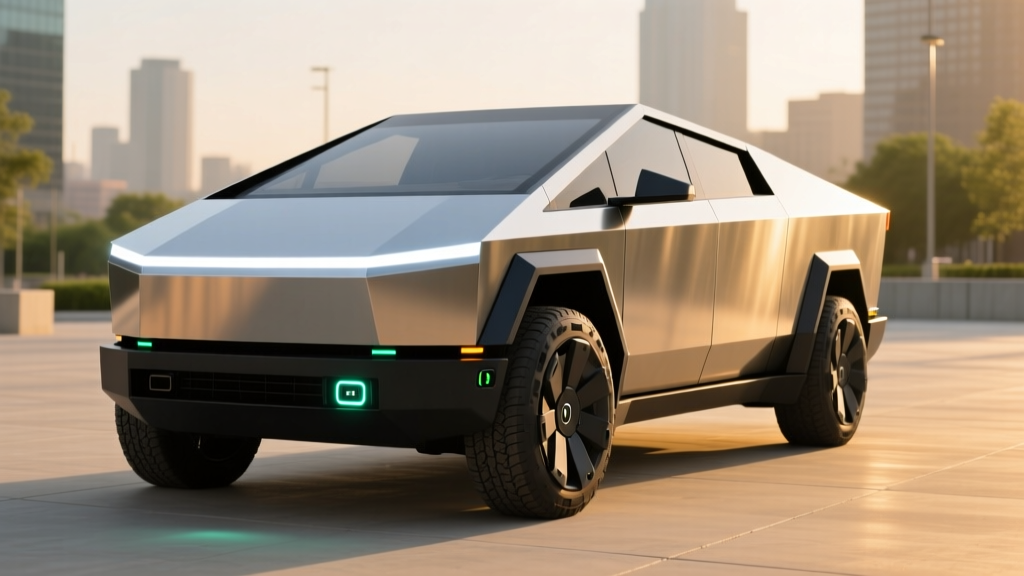
| Cybertruck | AWD | 340 mi | ~123 kWh / NMC | 4.1 s | 600 | Dual-motor AWD | $79,990 |
| Model S | Long Range | 402 mi | ~100 kWh / NMC | 3.1 s | 670 | Dual-motor AWD | $74,990 |
| Model X | Long Range | 335 mi | ~100 kWh / NMC | 3.8 s | 670 | Dual-motor AWD | $79,990 |
Charging Speed and Network Reality
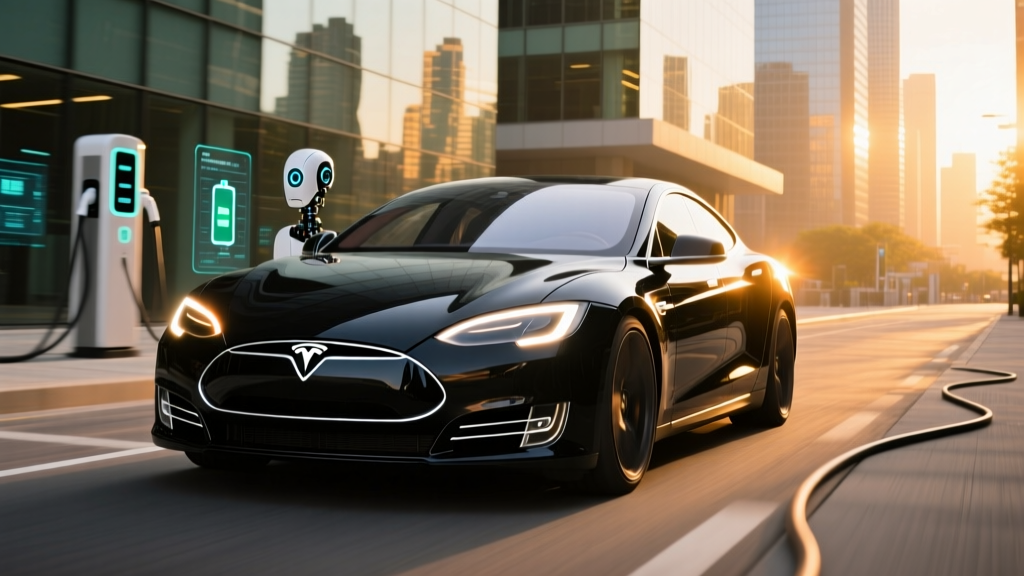
Tesla's Supercharger network remains the strongest competitive moat in DC fast charging, especially now that the North American Charging Standard (NACS) connector has been adopted by Ford, GM, Rivian, Volvo, and most major OEMs. But peak kW ratings tell only part of the story — the charge curve and sustained rate matter more for road-trip planning.
| Model | Max DC kW | 10-80% Time | Level 2 (11.5 kW) mi/hr | Connector |
|---|---|---|---|---|
| Model 3 LR AWD | 250 kW | ~25 min | ~44 mi/hr | NACS |
| Model Y LR AWD | 250 kW | ~27 min | ~42 mi/hr | NACS |
| Cybertruck AWD | 250 kW (800V arch) | ~22 min | ~37 mi/hr | NACS |
| Model S LR | 250 kW | ~30 min | ~40 mi/hr | NACS |
The Cybertruck's 800-volt architecture allows it to sustain higher charge rates longer in the curve, which is why its 10-80% time is competitive despite a larger battery pack. Models on the older 400V architecture (Model 3, Y, S, X) taper more aggressively above 60% state of charge. If you regularly DC-charge above 80%, expect the final 20% to add 15-25 minutes regardless of model.
For home Level 2 charging, Tesla's Wall Connector delivers up to 11.5 kW on a 60A circuit (48A continuous), adding roughly 40-44 miles of range per hour. A typical professional installation runs $800-$2,000 depending on panel proximity and whether your home's electrical service requires an upgrade to 200A.
Federal Tax Credit Eligibility — The §30D Reality
This is where many Tesla buyers encounter unpleasant surprises. The IRS §30D clean vehicle credit imposes three hard gates: MSRP caps, buyer income limits, and battery-component/critical-mineral sourcing requirements that tighten annually.
| Requirement | Threshold | Model 3 | Model Y | Cybertruck | Model S/X |
|---|---|---|---|---|---|
| MSRP Cap | Sedans: $55k / SUVs & trucks: $80k | ✓ Eligible | ✓ Eligible | ✓ Eligible (AWD) | ✗ Exceeds cap |
| Buyer MAGI Cap | $150k single / $300k joint | Varies | Varies | Varies | N/A |
| Battery Sourcing | Escalating critical-mineral % | Partial ($3,750) | Partial ($3,750) | Partial ($3,750) | N/A |
| Point-of-Sale Transfer | Available at dealer | ✓ | ✓ | ✓ | N/A |
The critical-mineral sourcing requirement is the moving target that trips most buyers. As of 2026, the percentage threshold for qualifying critical minerals and battery components has escalated significantly under the Inflation Reduction Act timeline. Tesla's LFP-equipped Model 3 RWD, which sources cells from CATL, typically fails the sourcing test entirely — meaning that trim rarely qualifies for any federal credit. The NMC Long Range variants with US-assembled packs generally secure half the credit ($3,750) but rarely the full $7,500. Always verify current eligibility on the IRS published list before purchase.
FSD, Autopilot, and the Optimus Resource Question
This is where the Optimus VP departure intersects most directly with vehicle buyers. Tesla's neural-network training compute — the massive H100 clusters running Dojo and external GPU arrays — serves both FSD and Optimus. A leadership change in robotics could shift compute allocation toward FSD reliability improvements, which remain the most polarizing aspect of Tesla ownership.
FSD (Supervised) currently costs $8,000 as a one-time purchase or $99/month. Its real-world performance is competent for highway interchange navigation and suburban street driving but requires vigilant supervision in construction zones, unprotected left turns across heavy traffic, and adverse weather. NHTSA continues to scrutinize Autopilot-related incidents, and buyers should treat FSD as a convenience feature, not an autonomy solution.
Who Should Buy a Tesla in 2026 — And Who Should Look Elsewhere
Pros
- Supercharger network remains the most reliable DC fast-charging ecosystem in North America
- Over-the-air updates continue to add features years after purchase
- Industry-leading efficiency: Model 3 LR achieves ~132 MPGe combined, ~25 kWh/100 mi
- Strong resale value relative to most EV competitors
- Minimal maintenance cost — no oil, spark plugs, or transmission fluid
Cons
- Build-quality variability persists — panel gaps, interior trim inconsistency
- Service center wait times in major metros can exceed 3 weeks for non-critical issues
- FSD remains a Level 2 system despite its name and price
- Insurance premiums run 15-30% higher than comparable ICE vehicles in most states
- No Apple CarPlay or Android Auto integration
Best for: Tech-forward commuters with home charging access, road-trip-oriented buyers who value Supercharger density, and households that can absorb the insurance premium in exchange for low fueling cost. The Model 3 Long Range AWD at ~$44,000 after a $3,750 credit is one of the most efficient all-wheel-drive sedans on the market.
Look elsewhere if: You need guaranteed full $7,500 tax-credit eligibility (consider the Hyundai Ioniq 5, Ford Mustang Mach-E, or Chevrolet Equinox EV), you require Apple CarPlay, you live in a region with sparse Supercharger coverage and no home-charging option, or you prioritize dealership service infrastructure over tech features.
The Bottom Line: Optimus Churn vs. Automotive Fundamentals
The Tesla Optimus robotics VP departure is a signal worth monitoring but not a reason to delay or accelerate a vehicle purchase. Tesla's automotive fundamentals — range efficiency, Supercharger access, OTA improvement cadence, and pricing — operate on their own cadence. If the departure redirects engineering talent toward the affordable compact platform expected in 2027 or accelerates FSD reliability, buyers will benefit indirectly within 12-18 months.
For buyers deciding today, the calculus is the same as it was before the news: evaluate the specific model on its EPA range, real-world charging curve, tax-credit eligibility for your income and the specific VIN's sourcing, and your local service-center capacity. The robots are a sideshow; the cars are the product you'll live with.
Frequently Asked Questions
Does the Optimus VP departure affect Tesla vehicle production or deliveries?
No. Optimus is a separate R&D division. Vehicle manufacturing at Fremont, Austin, Shanghai, and Berlin operates under distinct leadership and production schedules. No delivery timelines have shifted as a result of this departure.
What is the real-world range of the 2026 Model 3 Long Range?
EPA-rated at 363 miles. In mixed suburban/highway driving at 65°F, expect 320-345 miles. On a 75 mph highway run in freezing temperatures, plan for 235-270 miles. Preconditioning the battery via the car's navigation-routed charging feature recovers some cold-weather efficiency.
How fast does a Tesla charge at home vs. on the road?
At home on a Level 2 Wall Connector (11.5 kW), expect roughly 40-44 miles of range per hour — enough to fully replenish overnight. On a V3 Supercharger (250 kW DC), the 10-80% session takes 22-30 minutes depending on the model and battery preconditioning state.
Does the Model Y qualify for the full $7,500 federal tax credit?
Most 2026 Model Y configurations qualify for $3,750 (half credit) due to battery-component and critical-mineral sourcing requirements that Tesla's supply chain partially meets. The full $7,500 is rarely available. Verify the specific VIN on the IRS eligibility tool at purchase time, and note the $300,000 joint-filing MAGI cap.
Is Tesla's FSD worth the $8,000 purchase price?
For daily highway commuters on well-mapped routes, FSD reduces fatigue and handles lane changes competently. For the price, however, it remains a Level 2 system requiring constant supervision. Most buyers are better served by the $99/month subscription to evaluate it before committing, or by skipping it entirely and using the included Autopilot.