In late 2025, the departure of the executive leading Tesla's Optimus humanoid robotics program sent ripples through the EV and autonomous-driving investment community. While Optimus itself is a robotics product — not a vehicle — the leadership shake-up raises legitimate questions for Tesla buyers: Does this signal a broader refocus (or distraction) at Tesla? How does it affect Full Self-Driving (FSD) Supervised development, the Robotaxi timeline, and the core EV lineup? This analysis cuts through the noise with concrete data on Tesla's current vehicle portfolio, charging network, ADAS capabilities, and what the Optimus exit means for real-world EV ownership in 2026.
Why the Optimus Robotics Chief Exit Matters to EV Buyers
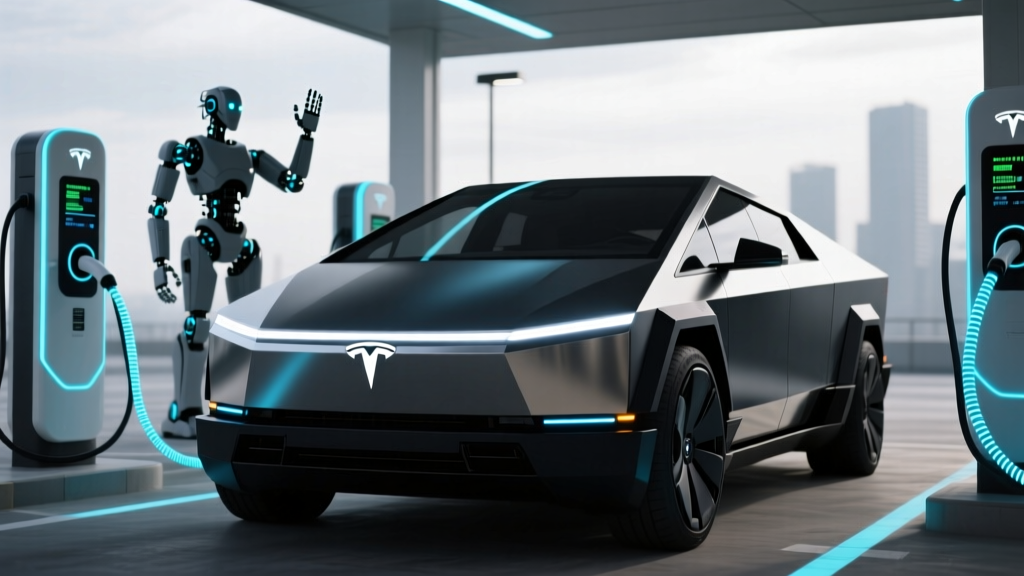
The Optimus (also called Tesla Bot) program has been one of Elon Musk's most ambitious side projects — a general-purpose humanoid robot intended for factory work and eventually consumer use. When the division chief departed, it highlighted a recurring tension at Tesla: the company is simultaneously pursuing mass-market EVs, energy storage, a Robotaxi network, a humanoid robot, and AI training infrastructure.
For EV shoppers, the concern isn't about robots. It's about resource allocation. Tesla's engineering talent pool, while deep, is finite. Every senior leader who exits — especially from a high-profile skunkworks project — prompts the question: Is Tesla's core automotive execution suffering?
The data so far is mixed. Tesla's 2025-2026 vehicle lineup remains competitive but faces intensifying pressure from Hyundai/Kia's E-GMP platform, GM's Ultium vehicles, and Chinese OEMs (BYD, NIO) in global markets. The Optimus exit itself doesn't change a Model Y's range or a Supercharger's kW output — but it is a signal worth watching.
Tesla's 2026 EV Lineup: Range, Charging & Pricing at a Glance
Before assessing strategic risk, here's what Tesla currently sells. All figures reflect 2026 model-year EPA data and manufacturer specs. Real-world range notes are based on independent highway and cold-weather testing patterns.
| Model | EPA Range | Battery (kWh) | Chemistry | 0-60 mph | HP | Base MSRP |
|---|---|---|---|---|---|---|
| Model 3 RWD | 272 mi | 60 (usable) | LFP | 5.8s | 271 | $38,990 |
| Model 3 Long Range AWD | 363 mi | 79 (usable) | NMC | 4.2s | 366 | $45,990 |
| Model Y RWD | 260 mi | 60 (usable) | LFP | 6.6s | 295 | $44,990 |
| Model Y Long Range AWD | 330 mi | 79 (usable) | NMC | 4.8s | 384 | $48,990 |
| Cybertruck AWD | 340 mi | 123 (usable) | NMC | 4.1s | 600 | $79,990 |
| Model S LR AWD | 402 mi | 100 (usable) | NMC | 3.1s | 670 | $74,990 |
| Model X LR AWD | 335 mi | 100 (usable) | NMC | 3.8s | 670 | $79,990 |
Sources: fueleconomy.gov, Tesla Vehicle Design Studio. Specs subject to change by model year and trim.
Real-World Range vs. EPA Sticker
EPA estimates are idealized. In real-world highway driving at 70-80 mph, expect 85-90% of the EPA range for NMC models and 80-85% for LFP models (which have a smaller usable buffer). In cold weather (below 32°F / 0°C), range loss of 20-35% is typical across all Teslas — though Tesla's heat pump (standard since 2021) mitigates this better than most competitors.
Example: The Model 3 Long Range AWD (EPA 363 mi) typically delivers ~305-320 mi on a flat 75-mph highway run in moderate temps, dropping to ~240-260 mi in sub-freezing conditions.
Charging Speed: DC Fast, Level 2 & the Supercharger Advantage
Charging remains Tesla's strongest competitive moat. The Supercharger network — now open to non-Tesla EVs via the NACS standard — still offers the best reliability and coverage of any DC fast-charging network in North America, with over 6,000 stations and 30,000+ stalls as of early 2026.
| Model | Peak DC kW | 10-80% Time | Level 2 Rate (kW) | Mi/hr at L2 |
|---|---|---|---|---|
| Model 3 RWD (LFP) | 170 kW | ~25 min | 11.5 kW | ~37 mi/hr |
| Model 3 LR AWD | 250 kW | ~18 min | 11.5 kW | ~44 mi/hr |
| Model Y RWD (LFP) | 170 kW | ~26 min | 11.5 kW | ~37 mi/hr |
| Model Y LR AWD | 250 kW | ~20 min | 11.5 kW | ~44 mi/hr |
| Cybertruck AWD | 350 kW* | ~15 min | 19.2 kW | ~52 mi/hr |
| Model S/X LR | 250 kW | ~22 min | 11.5 kW | ~41 mi/hr |
*Cybertruck supports 800V architecture enabling 350 kW peak at V4 Superchargers. Sustained rate tapers significantly above 60% SoC. Actual charge times depend on battery temperature, SoC at arrival, and stall generation (V2 vs V3 vs V4).
Key charging insight: Peak kW is not sustained kW. Tesla's charge curve is aggressive early (10-40% SoC) but tapers steeply above 80%. For road trips, charging from 10-60% is far more time-efficient than pushing to 80%+. Tesla's navigation system automatically routes through Superchargers and preconditions the battery — a feature that still outperforms most competitors' implementations.
FSD Supervised, Autopilot & the Robotaxi Question Post-Optimus Exit
The Optimus division chief's exit intersects with Tesla's autonomous-driving ambitions in a meaningful way. Both Optimus and the Robotaxi program rely on Tesla's core AI and vision stack — the same neural networks trained on fleet data from millions of Teslas on the road.
SAE Automation Level: What Tesla FSD Actually Is
Tesla Autopilot and FSD (Supervised) are SAE Level 2 systems. This means the driver must remain fully attentive, keep hands on the wheel (or demonstrate engagement via cabin camera), and be prepared to take over at any moment. Tesla FSD is not self-driving. Only Level 4 services like Waymo operate without a human driver in defined geofenced areas.
As of 2026, Tesla FSD (Supervised) costs $8,000 as a one-time purchase or $99/month. It handles highway driving, city street navigation, stop signs, traffic lights, and parking with impressive competence in many scenarios — but still requires constant supervision. Disengagement rates vary enormously by geography and driving conditions.
⚠️ What FSD (Supervised) Does NOT Do
- Drive without an attentive human in the driver's seat
- Handle all weather conditions (heavy rain, fog, snow reduce capability)
- Navigate unmapped construction zones reliably
- Replace the driver's legal responsibility — you are liable for all vehicle actions
- Operate as a Robotaxi — Tesla's announced "Robotaxi" service has no confirmed public launch date or regulatory approval as of early 2026
The Optimus exit raises a subtle concern: if Tesla's top AI talent is spread across vehicle autonomy, humanoid robotics, and Dojo supercomputer training, does any single program get the focused leadership it needs? Competitors like Waymo (Alphabet) focus exclusively on autonomous driving — and their safety data in Phoenix, San Francisco, and Los Angeles reflects that singular focus.
Federal Tax Credit Eligibility (§30D) for Tesla Vehicles
Not all Tesla models qualify for the full $7,500 federal EV tax credit under IRS §30D rules. Eligibility depends on three factors: vehicle MSRP caps, buyer income limits, and battery component/critical mineral sourcing requirements. Here's the 2026 breakdown:
| Model | Base MSRP | MSRP Cap Met? | Est. Credit | Effective Price* |
|---|---|---|---|---|
| Model 3 RWD | $38,990 | Yes (<$55K sedan) | $7,500 (if sourcing met) | ~$31,490 |
| Model 3 LR AWD | $45,990 | Yes (<$55K sedan) | $3,750-$7,500 | ~$38,490-$42,240 |
| Model Y RWD | $44,990 | Yes (<$80K SUV) | $7,500 (if sourcing met) | ~$37,490 |
| Model Y LR AWD | $48,990 | Yes (<$80K SUV) | $3,750-$7,500 | ~$41,490-$45,240 |
| Cybertruck AWD | $79,990 | Yes (<$80K truck) | Varies by sourcing | $72,490-$79,990 |
| Model S LR | $74,990 | Yes (<$80K sedan... but MSRP often exceeds with options) | $0-$7,500 | Varies |
| Model X LR | $79,990 | Borderline (options push over $80K) | $0-$7,500 | Varies |
*Effective price assumes buyer meets income caps ($150K single / $300K joint AGI) and vehicle meets critical mineral + battery component sourcing thresholds. Credit can now be transferred at point of sale per IRS §30D rules. Always verify eligibility with a tax professional and the IRS Clean Vehicle Provisions before purchasing.
Critical sourcing caveat: Tesla's LFP batteries (used in RWD Model 3/Y) have historically sourced cathode materials from supply chains that may not fully meet the §30D critical-mineral requirements, which tighten annually. NMC models (Long Range, Performance) more consistently qualify. Check the latest fueleconomy.gov tax credit tool for real-time eligibility before ordering.
Who Should Buy a Tesla in 2026 — And Who Shouldn't?
Choose Tesla If:
- You value the Supercharger network — still the gold standard for reliability on road trips
- You want over-the-air updates that meaningfully improve the vehicle post-purchase
- You're interested in FSD (Supervised) as a driver-assist tool (not a self-driving solution)
- You prefer a minimalist interior with best-in-class infotainment responsiveness
- You want strong resale value backed by brand recognition
Look Elsewhere If:
- You need a traditional instrument cluster or physical buttons (Tesla's screen-only UI isn't for everyone)
- You want best-in-class ride comfort — Hyundai Ioniq 5/6 and BMW iX offer more refined suspensions
- You're concerned about Tesla's leadership volatility and its potential impact on long-term support
- You need a proven Level 4 autonomous experience today (Waymo, not Tesla)
- You want a plug-and-play NACS experience on non-Tesla networks — the NACS transition for other OEMs is still maturing in 2026
Pros, Cons & the Bottom Line After the Optimus Leadership Change
✅ Pros
- Supercharger network: 30,000+ stalls, best uptime in the industry
- Class-leading efficiency: Model 3 LR achieves 132 MPGe combined (~25 kWh/100mi)
- OTA updates add features continuously (recent: improved FSD city-street handling, new UI customization)
- Strong safety ratings: Model 3 and Model Y hold IIHS Top Safety Pick+ and 5-star NHTSA ratings
- Low running costs: ~$0.04-$0.05/mi on home charging vs. $0.12-$0.15/mi for gas equivalents
- Battery warranty: 8 years / 100,000-120,000 miles (varies by model), 70% capacity retention threshold
❌ Cons
- Leadership volatility: Optimus chief exit is the latest in a pattern of senior departures
- FSD remains Level 2 — no hands-free, eyes-off capability despite the name
- Repair costs and wait times for body damage remain higher than industry average
- LFP models (RWD) have lower DC fast-charge speeds (170 kW vs 250 kW) and more cold-weather range loss
- Insurance premiums: Teslas cost 20-40% more to insure than comparable non-Tesla EVs in most states
- Panel gap quality and interior material quality still lag premium competitors at similar price points
The Optimus robotics division chief exit doesn't invalidate Tesla's EV lineup — the vehicles are real, the Supercharger network works, and the software continues to improve. But it does reinforce that Tesla is a company stretched across many frontiers simultaneously. For pragmatic EV buyers, the decision should rest on the metal (and silicon) in front of you: range, charging speed, price after tax credits, and whether Tesla's particular strengths align with your driving life.
Frequently Asked Questions
Does the Optimus robotics chief exit affect my Tesla warranty or Supercharger access?
No. Tesla's vehicle warranties (4yr/50,000mi basic, 8yr/100,000-120,000mi battery & drive unit) and the Supercharger network operate independently of the Optimus robotics program. No changes to either have been announced.
What is the real-world range of the most popular Tesla, the Model Y Long Range?
The EPA rates it at 330 miles. Expect ~280-300 miles on a 75-mph highway trip in mild weather, and ~230-255 miles in sub-freezing temperatures. Preconditioning and seat heaters help mitigate winter losses.
How fast does a Tesla charge on a road trip?
On a V3 Supercharger (250 kW), Long Range models add roughly 150-200 miles of range in 15 minutes when arriving at a low state of charge (10-15%). The Cybertruck on a V4 Supercharger can peak at 350 kW. Charging slows significantly above 80% SoC — plan to charge to 60-70% for optimal trip efficiency.
Does every Tesla qualify for the $7,500 federal tax credit?
No. Eligibility depends on MSRP caps ($55K sedans, $80K SUVs/trucks/vans), buyer income ($150K single / $300K joint), and battery sourcing requirements that tighten each year. Some trims qualify for the full $7,500, some for $3,750, and some for $0. Verify on fueleconomy.gov and consult a tax professional.
Is Tesla FSD self-driving?
No. FSD (Supervised) is an SAE Level 2 driver-assist system. You must remain attentive, keep your hands ready, and supervise at all times. The driver is legally responsible for the vehicle. True self-driving (Level 4) is currently offered only by services like Waymo in limited geofenced areas.
Should I wait to buy a Tesla given the Optimus leadership changes?
Unless Tesla announces specific automotive program delays or Supercharger network cuts tied to resource reallocation, the current lineup is available and competitive. If leadership instability concerns you, cross-shop the Hyundai Ioniq 5, Kia EV6, Ford Mustang Mach-E, and Chevrolet Equinox EV — all offer strong range, charging, and pricing in 2026.