When Elon Musk published his 2014 blog post titled "All Our Patent Are Belong To You," the automotive industry largely dismissed it as a publicity stunt. More than a decade later, Tesla's open-sourced patents have fundamentally reshaped the electric vehicle landscape — from the charging connector now adopted by nearly every major automaker to the battery management strategies that competitors have quietly replicated. For EV shoppers in 2026, understanding which Tesla patents went open and how they influenced today's market is more than trivia — it directly affects which vehicles you can buy, how fast they charge, and what you'll pay.
This article breaks down the most consequential Tesla open-sourced patents, traces their impact on the current EV ecosystem, and helps you understand what this means when comparing a Tesla Model Y, Ford Mustang Mach-E, Hyundai Ioniq 5, or any other EV on your shortlist.
The 2014 Pledge: What Tesla Actually Opened
In June 2014, Tesla announced it would not initiate patent lawsuits against anyone who, "in good faith," wanted to use its technology. The pledge covered Tesla's entire patent portfolio at the time — roughly 200+ patents spanning battery pack design, thermal management, electric drivetrain architecture, charging systems, and manufacturing techniques.
The critical phrase was "in good faith." Tesla defined this carefully: companies using Tesla patents could not then assert their own intellectual property against Tesla, could not copy Tesla's trademarks or trade dress, and could not challenge Tesla's patents. This created a one-way technology transfer that protected Tesla legally while seeding the industry with proven EV engineering.
The strategic logic was sound: Tesla's biggest threat in 2014 wasn't competition — it was the possibility that the EV market itself might fail to materialize. By lowering barriers to entry, Tesla helped create the market it would eventually dominate.
NACS: The Open Patent That Changed Everything
The single most impactful Tesla patent decision was the North American Charging Standard (NACS). While Tesla's proprietary connector was never technically "open-sourced" in the 2014 sense — Tesla published the NACS specification in November 2022 as an open standard rather than a patent release — the move was a direct philosophical descendant of the original pledge.
By 2026, the NACS connector has effectively won the charging standards war in North America:
| Automaker | Connector (2026) | Supercharger Access |
|---|---|---|
| Tesla (all models) | NACS native | Full network |
| Ford (Mach-E, F-150 Lightning) | NACS native | Via adapter or native |
| GM (Cadillac, Chevy, GMC) | NACS native | Full network |
| Hyundai/Kia (Ioniq 5, EV6, EV9) | NACS native | Full network |
| Rivian (R1T, R1S) | NACS native | Via adapter or native |
| BMW, VW, Volvo, Polestar | NACS native | Full network |
| Toyota (bZ4X successor) | NACS native | Full network |
| Nissan (Leaf successor) | NACS native | Full network |
For buyers, this convergence means you no longer need to worry about connector compatibility when shopping across brands. The CCS1 connector, once the presumed North American standard, has been largely phased out on new vehicles. CHAdeMO remains only on legacy Nissan Leafs and a handful of older models.
Battery and Thermal Management Patents: The Invisible Influence
Tesla's most technically significant open patents covered battery pack architecture and thermal management — specifically, the liquid cooling channel design that runs between battery cells and the structural battery pack concept that integrates cells into the vehicle's chassis for rigidity.
These patents influenced how nearly every modern EV manages battery temperature:
| Vehicle | Battery Chemistry | Usable Capacity | Thermal System |
|---|---|---|---|
| Tesla Model Y (Long Range) | NMC (Nickel Manganese Cobalt) | ~75 kWh | Liquid cooling/heating, heat pump standard |
| Tesla Model 3 (Standard) | LFP (Lithium Iron Phosphate) | ~57.5 kWh | Liquid cooling/heating, heat pump standard |
| Ford Mustang Mach-E (Extended Range) | NMC | ~91 kWh | Liquid cooling/heating, heat pump available |
| Hyundai Ioniq 5 (Long Range) | NMC | ~77.4 kWh | Liquid cooling/heating, heat pump standard |
| Chevrolet Equinox EV | NMC (Ultium platform) | ~85 kWh | Liquid cooling/heating, heat pump standard |
LFP vs. NMC — what you need to know: Tesla pioneered the use of LFP (lithium iron phosphate) chemistry in its Standard Range vehicles. LFP offers longer cycle life (more charge/discharge cycles before degradation), lower cost, and no cobalt dependency — but trades off lower energy density (less range per pound) and reduced cold-weather performance. NMC delivers higher range and better cold-weather output but at greater cost and with faster long-term degradation. Most 2026 EVs follow this same bifurcated approach: LFP for base trims, NMC for long-range variants.
Real-World Range and Charging: What Tesla's Engineering Delivers Today
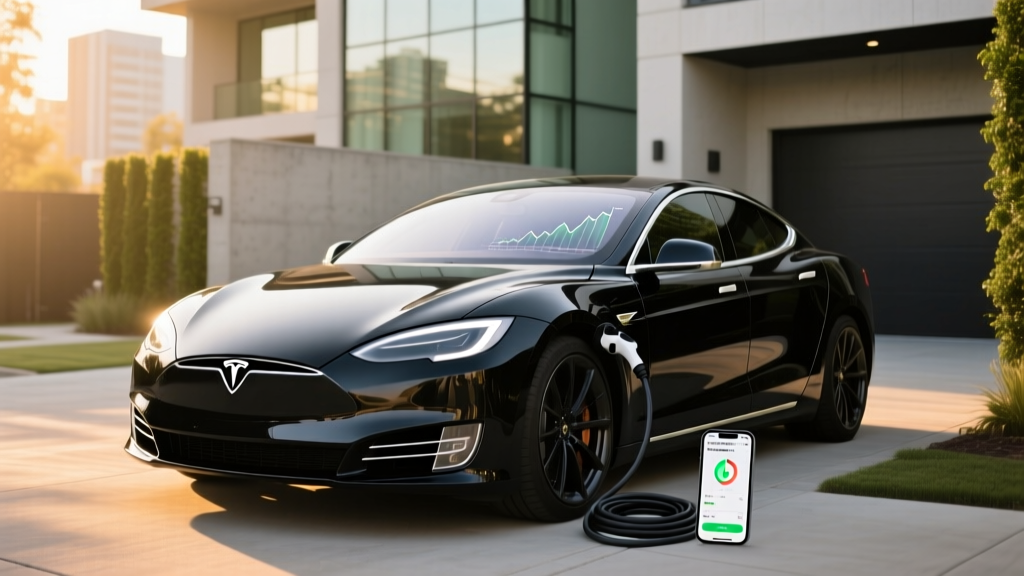
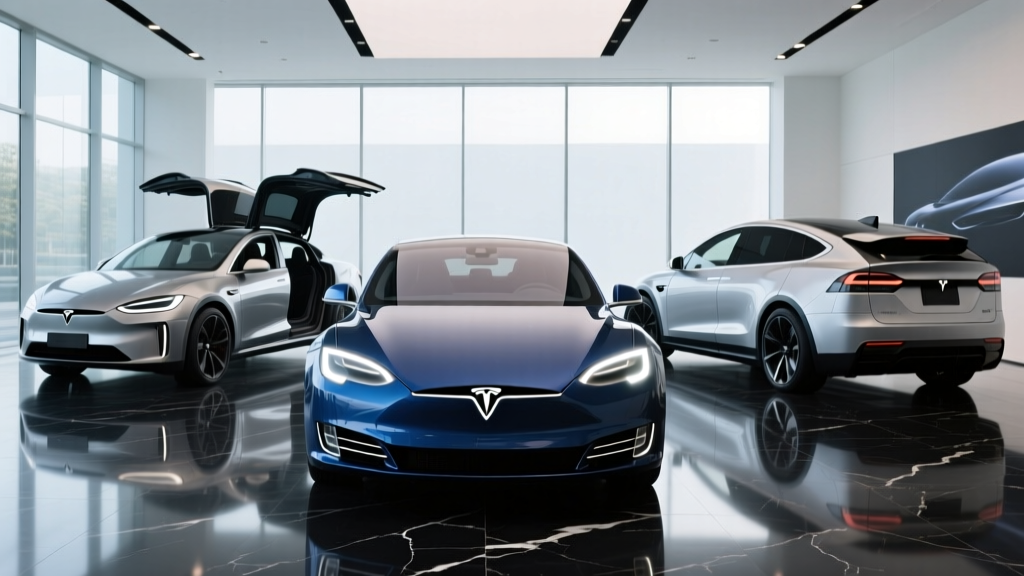
Tesla's open patents on battery management and efficiency directly translate into the range and charging performance buyers experience. Here's how the current Tesla lineup performs — with the real-world caveats the EPA sticker doesn't show:
| Spec | Model 3 LR AWD | Model Y LR AWD | Model S LR | Cybertruck AWD |
|---|---|---|---|---|
| EPA Range | 363 mi | 320 mi | 402 mi | 340 mi |
| Battery (usable) | ~75 kWh (NMC) | ~75 kWh (NMC) | ~95 kWh (NMC) | ~123 kWh (NMC) |
| Efficiency | 132 MPGe / 25 kWh/100mi | 122 MPGe / 28 kWh/100mi | 124 MPGe / 27 kWh/100mi | 76 MPGe / 44 kWh/100mi |
| Peak DC Charge Rate | 250 kW | 250 kW | 250 kW | 250 kW |
| 10-80% DC Time | ~25 min | ~27 min | ~32 min | ~35 min |
| Level 2 Home Rate | 11.5 kW (~44 mi/hr) | 11.5 kW (~44 mi/hr) | 11.5 kW (~44 mi/hr) | 11.5 kW (~34 mi/hr) |
| 0-60 mph | 4.2 sec | 4.8 sec | 3.1 sec | 4.1 sec |
| Horsepower | 346 hp | 384 hp | 670 hp | 600 hp |
| Drivetrain | Dual-motor AWD | Dual-motor AWD | Dual-motor AWD | Dual-motor AWD |
| Cargo Volume | 23 cu ft (trunk+frunk) | 76 cu ft (rear folded) | 28 cu ft (trunk+frunk) | ~120 cu ft (vault+bed) |
| Base MSRP | $47,740 | $48,240 | $79,990 | $79,990 |
- Highway driving (75 mph, 70°F): ~265–285 miles
- City/suburban mixed (55°F): ~290–310 miles
- Cold weather (25°F, highway): ~220–250 miles (20–30% reduction)
- Cold weather with cabin preconditioning: ~250–270 miles
How Open Patents Shaped Competitor Vehicles You're Also Considering
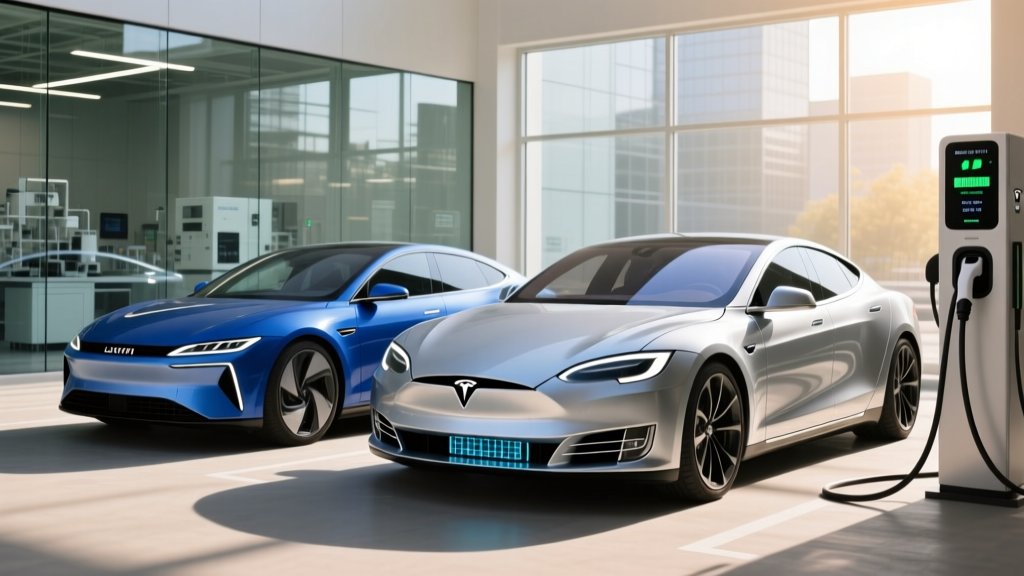
The ripple effects of Tesla's open-sourced patents extend well beyond Tesla's own vehicles. Several core engineering concepts are now industry-standard:
Skateboard platform architecture: Tesla's early patents on placing the battery pack low in the chassis as a structural element became the blueprint for Hyundai's E-GMP, GM's Ultium, VW's MEB, and Ford's GE2 platforms. Every modern EV you test-drive benefits from this approach to weight distribution and interior packaging.
Over-the-air (OTA) software updates: Tesla's patents on remotely updating vehicle firmware — enabling feature additions, performance improvements, and recall fixes without a dealership visit — are now replicated by Ford (Power-Up), GM (Ultifi), Hyundai, BMW, and Rivian. This fundamentally changes ownership: your car can improve after purchase.
One-pedal driving and regenerative braking calibration: Tesla's specific regen braking algorithms, covered under open patents, influenced how nearly every EV now handles deceleration when you lift off the accelerator. The result is a consistent driving feel across brands that reduces brake wear and recovers energy.
Supercharger network access: While not a patent issue per se, Tesla's decision to open its Supercharger network to NACS-equipped competitors (starting 2024, fully operational by 2025) means that buying a Ford, Hyundai, or GM EV in 2026 gives you access to the same charging infrastructure Tesla owners have enjoyed for years. This is arguably the biggest practical benefit for non-Tesla EV buyers.
Pricing, Tax Credits, and Total Cost: What You'll Actually Pay
Tesla's aggressive pricing — partly enabled by manufacturing efficiencies derived from patents it developed around gigacasting (large single-piece castings replacing dozens of welded parts) — has forced the entire market downward. Here's where Tesla's core models land for 2026 buyers:
| Model/Trim | MSRP | Federal Credit (§30D) | Effective Price | Eligibility Notes |
|---|---|---|---|---|
| Model 3 Standard RWD | $38,990 | Up to $7,500 | ~$31,490 | Qualifies; LFP battery sourcing under review |
| Model 3 Long Range AWD | $47,740 | Up to $7,500 | ~$40,240 | Qualifies; under MSRP cap ($55,000 sedans) |
| Model Y Long Range AWD | $48,240 | Up to $7,500 | ~$40,740 | Qualifies; under MSRP cap ($80,000 SUVs/trucks) |
| Model Y Performance | $52,490 | Up to $7,500 | ~$44,990 | Qualifies |
| Model S Long Range | $79,990 | $0 | $79,990 | Exceeds $55,000 sedan MSRP cap |
| Cybertruck AWD | $79,990 | Up to $7,500 | ~$72,490 | Under $80,000 truck cap; verify current sourcing |
- Income caps: Modified AGI ≤ $150,000 (single), $225,000 (head of household), $300,000 (joint)
- MSRP caps: ≤ $55,000 for sedans; ≤ $80,000 for SUVs, vans, and trucks
- Battery sourcing: Critical minerals and battery components must meet escalating domestic/free-trade-partner thresholds — verify on fueleconomy.gov before purchasing
- Point-of-sale transfer: You can transfer the credit to the dealer at purchase, reducing your out-of-pocket cost immediately rather than waiting for tax filing
Autopilot, FSD, and Driver-Assist Technology
Tesla's open patents also covered aspects of its driver-assistance vision system, though the core neural network training and FSD (Full Self-Driving) software remain proprietary. Here's what's important for buyers to understand:
Tesla Autopilot and FSD (Supervised) are Level 2 driver-assistance systems per SAE International classification. This means the vehicle can control steering, acceleration, and braking under certain conditions, but the driver must remain fully attentive, hands on or near the wheel, and prepared to take over at any moment. These are not self-driving systems. Only Level 4 robotaxi services (Waymo, Zoox) operate without a human driver. Do not treat any Tesla system as autonomous.
What's included standard: Tesla's basic Autopilot (Traffic-Aware Cruise Control + Autosteer) comes on every 2026 vehicle. Enhanced Autopilot ($6,000 add-on) adds Navigate on Autopilot, Auto Lane Change, Autopark, and Summon. FSD (Supervised) at $8,000 adds traffic light and stop sign recognition with city street driving capability — still requiring full driver supervision.
How competitors compare: Ford's BlueCruise and GM's Super Cruise offer hands-free driving on pre-mapped divided highways (a more limited operational domain but genuinely hands-off within that domain). Hyundai/Kia offer robust Highway Driving Assist 2. Tesla's system covers more road types but requires more active driver monitoring via cabin camera. None of these systems replace an attentive driver.
Warranty, Reliability, and Long-Term Ownership
Tesla's warranty structure has remained relatively stable and is competitive with the broader EV market:
| Coverage | Model 3 / Model Y | Model S / Model X | Cybertruck |
|---|---|---|---|
| Basic Vehicle | 4 years / 50,000 mi | 4 years / 50,000 mi | 4 years / 50,000 mi |
| Battery & Drive Unit | 8 years / 120,000 mi (LR AWD) 8 years / 100,000 mi (RWD) | 8 years / 150,000 mi | 8 years / 120,000 mi |
| Battery Retention Threshold | 70% capacity minimum | 70% capacity minimum | 70% capacity minimum |
The 70% capacity retention threshold means Tesla warrants that your battery will hold at least 70% of its original capacity during the warranty period. If it drops below that, Tesla will repair or replace it. Real-world data from high-mileage Tesla owners suggests typical degradation of 10–15% over 100,000 miles for NMC packs, with LFP packs showing even slower degradation curves — often under 10% loss at the same mileage.
Maintenance advantages: EVs eliminate oil changes, spark plugs, transmission fluid, and exhaust system repairs. Tesla's OTA update capability means many issues are resolved remotely. However, Tesla's service center network is less dense than legacy automaker dealer networks in some regions — a consideration for rural buyers.
Pros, Cons, and Who Should Buy a Tesla in 2026
Pros
- Access to Supercharger network — the most reliable DC fast-charging infrastructure in North America
- Class-leading efficiency (kWh/100mi) translates to lower charging costs and more real-world range per kWh
- Strong OTA update track record — vehicles improve over time with new features
- Extensive Supercharger preconditioning ensures consistent fast-charge speeds
- LFP option on Model 3 Standard offers exceptional long-term battery durability at lower cost
- Resale value remains strong relative to most EV competitors
- Heat pump standard on all models — better cold-weather range retention
Cons
- Model S and Model X exceed federal tax credit MSRP cap — no §30D credit available
- Service center density varies by region — rural owners may face longer wait times
- FSD (Supervised) remains a Level 2 system despite the name and $8,000 price tag
- Interior material quality and panel gap consistency lag some competitors (BMW i4, Genesis GV60)
- No Apple CarPlay or Android Auto — Tesla's proprietary infotainment is the only option
- Cybertruck's polarizing design and large footprint limit practicality in tight urban environments
- Insurance premiums tend to run 15–30% higher than comparable non-Tesla EVs in many markets
Who This Suits Best
- Daily commuters (20–60 miles round trip): Model 3 Standard RWD — lowest cost, LFP battery longevity, home charging covers 95%+ of needs
- Families needing cargo space: Model Y Long Range — 76 cu ft with seats folded, Supercharger access for road trips, available 7-seat configuration
- Frequent road trippers: Model 3 or Model Y Long Range — Supercharger network eliminates route-planning anxiety on long corridors
- Performance seekers: Model S Plaid or Model 3 Performance — sub-3-second 0-60 with daily-driver practicality
- Budget-conscious buyers: Model 3 Standard RWD at ~$31,490 after federal credit (if eligible) is one of the cheapest ways into a new, well-equipped EV in 2026
Frequently Asked Questions
What exactly did Tesla open-source?
Tesla pledged in 2014 not to enforce its patents (approximately 200+ at the time) against any party acting "in good faith" — meaning users could not assert their own patents against Tesla or challenge Tesla's IP. The patents covered battery pack design, thermal management, drivetrain architecture, charging systems, and manufacturing processes. In 2022, Tesla extended this philosophy by publishing the NACS charging connector as an open standard.
Did Tesla's open patents actually help competitors?
Yes, both directly and indirectly. The skateboard battery architecture, liquid thermal management approach, OTA update philosophy, and regenerative braking strategies became industry norms. More tangibly, the NACS connector adoption by Ford, GM, Hyundai, BMW, VW, Rivian, and others means every 2026 EV buyer benefits from Tesla's charging infrastructure — a direct result of Tesla opening its standard.
What is the real-world range of a Tesla Model Y?
The 2026 Model Y Long Range AWD carries an EPA estimate of 320 miles. In real-world highway driving at 75 mph and moderate temperatures, expect 265–285 miles. In cold weather (below 32°F), that drops to roughly 220–250 miles without preconditioning, or 250–270 miles with the heat pump and battery preconditioning active. Always plan charging stops around 70–80% of the EPA figure.
How fast does a Tesla charge at home and on the road?
On DC fast charging (Supercharger V3/V4), Tesla's 2026 models peak at 250 kW, achieving a 10–80% charge in approximately 25–35 minutes depending on the model and battery size. Note that peak rate is not sustained — charging tapers significantly above 60% SoC to protect battery health. At home on a Level 2 (240V) connection at 11.5 kW, you'll add roughly 34–44 miles of range per hour, fully replenishing overnight from any daily driving.
Does the Tesla Model Y qualify for the federal EV tax credit?
Yes, the Model Y qualifies for up to $7,500 under §30D, as its MSRP falls under the $80,000 SUV/truck cap. However, you must also meet income requirements (≤ $150,000 single / $300,000 joint modified AGI) and the vehicle must meet current-year battery sourcing and critical mineral thresholds. Verify the specific configuration on fueleconomy.gov before purchasing, as sourcing requirements can change.
Is Tesla still worth buying vs. Ford, Hyundai, or GM EVs in 2026?
Tesla retains advantages in Supercharger network access (though competitors now share it), efficiency (lower kWh/100mi means cheaper charging), and software update maturity. Competitors like the Hyundai Ioniq 5, Ford Mustang Mach-E, and Chevrolet Equinox EV offer compelling alternatives with more traditional interiors, Apple CarPlay support, and in some cases comparable range and charging speed. The right choice depends on whether you prioritize Tesla's ecosystem integration and efficiency or prefer a competitor's interior quality, dealer service network, or specific features. Test-drive both before deciding.