The 'Only Tunnel' Easter Egg and Why It Matters for Tesla Owners
If you've spent time in Tesla forums or watched YouTube walkthroughs, you've likely encountered the search term tesla only.tunnel — a quirky Easter egg hidden in Tesla's infotainment system. Type "only.tunnel" into the software version notes or toybox menu, and the car's display transforms into a retro-style tunnel animation. It's a small touch, but it exemplifies the software-first philosophy that separates Tesla from legacy automakers: your car gets better (and weirder) with every OTA update.
But Easter eggs don't commute you to work. For this 2026 review, we're pairing that software personality with a hard-data evaluation of the Tesla Model S — the sedan that started the modern EV era. We'll cover real-world range, charging curves, tax-credit reality, and whether the Model S still earns its premium price against newer rivals like the Lucid Air, BMW i5, and Mercedes EQS.
2026 Tesla Model S: Core Specifications at a Glance
| Specification | Model S Long Range | Model S Plaid |
|---|---|---|
| EPA Range | 402 miles | 396 miles |
| Battery Capacity (usable) | ~100 kWh (NMC) | ~100 kWh (NMC) |
| Drivetrain | Dual-Motor AWD | Tri-Motor AWD |
| Horsepower | 670 hp | 1,020 hp |
| 0–60 mph | 3.1 seconds | 1.99 seconds |
| Top Speed | 155 mph | 200 mph |
| Peak DC Fast Charge | 250 kW | 250 kW |
| 10–80% DC Charge Time | ~30 minutes | ~30 minutes |
| Level 2 Home Charge Rate | 11.5 kW (~41 mi/hr) | 11.5 kW (~41 mi/hr) |
| MPGe (combined) | 120 MPGe | 116 MPGe |
| Efficiency | 28 kWh/100 mi | 29 kWh/100 mi |
| Cargo Volume | 28 cu ft (rear) + frunk | 28 cu ft (rear) + frunk |
| Base MSRP (2026) | $74,990 | $89,990 |
Range Reality: EPA Sticker vs. What You'll Actually Get
Real-World Expectation: 320–350 miles highway at 75 mph; 250–280 miles in sub-30°F winter conditions
The Model S Long Range's 402-mile EPA figure remains one of the highest of any production EV sold in the U.S. for 2026, trailing only the Lucid Air Grand Touring (516 miles). But as with every EV, the EPA test cycle favors moderate speeds and mild temperatures.
In independent highway testing at sustained 75 mph on flat terrain in 70°F weather, the Model S Long Range typically delivers 320–350 miles before reaching 0% State of Charge. Drop ambient temperatures below 30°F, and expect that to fall to roughly 250–280 miles — a 30–35% reduction driven by battery chemistry limitations and cabin heating load. The heat pump (standard since the 2021 refresh) mitigates this somewhat compared to older resistance-heated EVs, but physics is physics.
For context, the EPA's fueleconomy.gov listing shows the Model S consuming 28 kWh per 100 miles — an efficiency figure that, multiplied against the ~100 kWh usable pack, mathematically confirms the 350-ish real-world highway range. If your commute is mostly city driving at lower speeds with frequent regenerative braking, you'll skew closer to the EPA sticker — sometimes exceeding 380 miles in mild weather.
Charging: 250 kW Peak, But the Curve Tells the Full Story
Tesla's Supercharger network remains the gold standard for public DC fast charging in 2026, and the Model S leverages it fully. Here's what the numbers actually mean for your road trip:
| Charging Level | Power / Rate | Time or Miles Added |
|---|---|---|
| Level 1 (120V household) | ~1.4 kW | ~5 miles per hour |
| Level 2 (240V, 48A Wall Connector) | 11.5 kW | ~41 miles per hour; full charge in ~10 hrs |
| DC Fast Charge (V3 Supercharger) | Peak 250 kW | 10–80% in ~30 min; 200 miles in 15 min |
| DC Fast Charge (CCS adapter, 350 kW station) | Peak 250 kW (car-limited) | Similar to V3 Supercharger |
The critical nuance most spec sheets omit: 250 kW is a peak, not a sustained rate. The Model S hits 250 kW only between roughly 10–25% State of Charge when the battery is properly preconditioned. Above 50% SoC, the rate tapers significantly — dropping to ~100 kW by 70% and ~50 kW by 85%. This is why Tesla quotes 10–80% in 30 minutes rather than 0–100%. Charging the final 20% takes nearly as long as the first 70%.
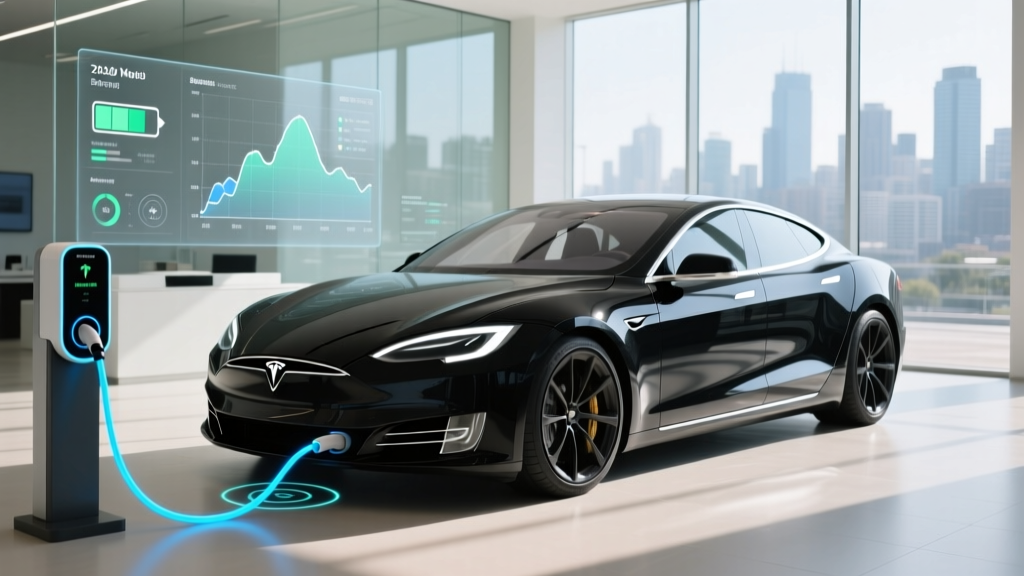
Preconditioning matters enormously. Navigate to a Supercharger using the built-in navigation, and the car automatically warms the battery en route, enabling peak charge rates upon arrival. If you drive to a charger without preconditioning (especially in cold weather), your peak rate may cap at 100–120 kW until the battery warms — adding 10–15 minutes to your stop.
For home charging, Tesla's Gen 2 Wall Connector on a 60-amp circuit delivers 11.5 kW (48 amps continuous), replenishing the full pack overnight. Most owners who drive 40–60 miles daily need only 2–3 hours of Level 2 charging per night. Installation typically runs $800–$2,000 depending on panel proximity and local permit fees.
Performance: From Sensible Commuter to 1,020-hp Hypercar Sedan
The Model S lineup splits into two distinct personalities. The Long Range (670 hp, 3.1-second 0–60) is already faster than nearly every combustion sedan ever sold, with dual-motor AWD providing confident traction in rain and light snow. It's the rational choice for buyers who want effortless passing power without the Plaid premium.
The Plaid (1,020 hp, tri-motor) is an engineering statement. Its 1.99-second 0–60 time makes it one of the quickest production cars on Earth, period. The third motor enables torque vectoring across the rear axle, sharpening corner exit behavior. But at $89,990, the Plaid commands a $15,000 premium over the Long Range for performance you'll use approximately 3% of the time on public roads.
Both trims feature adaptive air suspension with automatic ride-height adjustment, which lowers the car at highway speeds to reduce drag (contributing to that 402-mile range) and raises it for speed bumps or steep driveways. Steering feel is precise if somewhat numb — a common Tesla characteristic — and the brake pedal modulation has improved markedly since the 2021 refresh.
Interior, Tech, and the 'Only Tunnel' Easter Egg
The Model S cabin centers on a 17-inch landscape touchscreen running Tesla's proprietary infotainment OS. The yoke steering wheel (standard on Plaid, optional on Long Range) remains polarizing — it excels on highways but frustrates during multi-point parking maneuvers. A conventional round wheel is available at no extra charge on the Long Range.
Tech highlights include:
- Autopilot (standard): Adaptive cruise + lane centering — this is SAE Level 2 driver-assist, requiring continuous driver supervision.
- Full Self-Driving (Supervised): $8,000 add-on enabling automatic lane changes, navigation-guided on/off-ramp handling, and traffic-light recognition. Still Level 2 — the driver must monitor at all times. Despite the name, it does not drive itself.
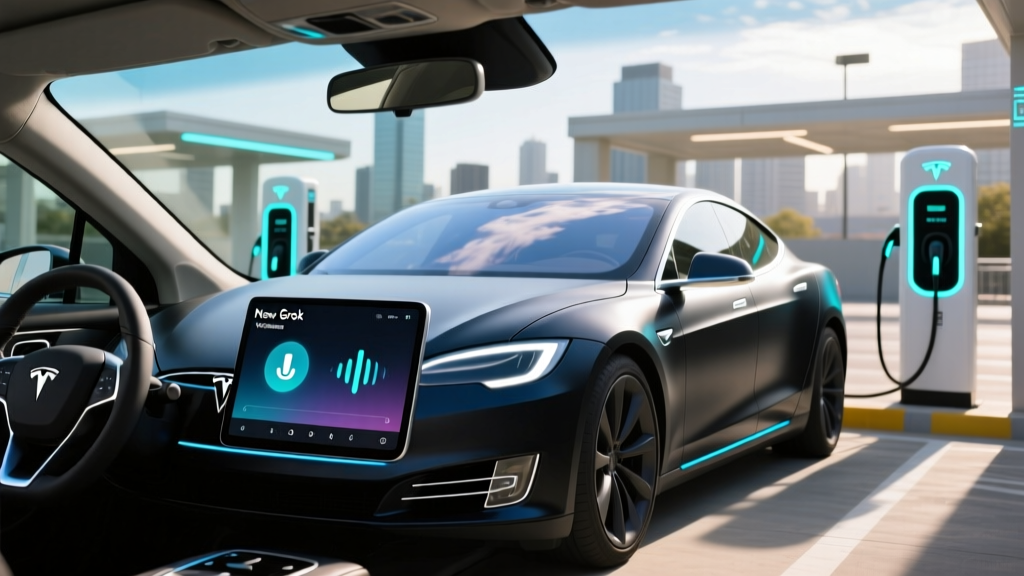
- Over-the-air updates: New features, UI improvements, and Easter eggs (including the only.tunnel tunnel animation) deploy wirelessly, sometimes monthly.
- Gaming: The 17-inch screen supports full Steam-game-library integration when parked, using the car's AMD Ryzen processor.
- 22-speaker audio: Among the best factory audio systems available, with active noise cancellation.
Cargo capacity is generous for a sedan: 28 cubic feet in the rear hatch (the liftback design provides SUV-like loading convenience) plus a front trunk (frunk) suitable for a carry-on bag or charging cables. Rear legroom measures 35.4 inches — adequate for adults but tighter than a BMW 5 Series or Lucid Air.
Pricing, Tax Credits, and Total Cost
| Trim | Base MSRP | Federal §30D Credit | Effective Price |
|---|---|---|---|
| Model S Long Range | $74,990 | $0 (MSRP exceeds $55,000 sedan cap) | $74,990 |
| Model S Plaid | $89,990 | $0 (MSRP exceeds $55,000 sedan cap) | $89,990 |
Here's the critical tax-credit reality: the Model S does not qualify for the $7,500 federal EV tax credit under IRS §30D rules. The law caps eligible sedans at an MSRP of $55,000, and even the base Long Range at $74,990 exceeds that threshold by nearly $20,000. Additionally, buyer income caps ($150,000 single / $300,000 joint for modified AGI) and battery-critical-mineral sourcing requirements further restrict eligibility for vehicles near the cap. For full rules, consult the IRS clean vehicle credit page.
State incentives may partially offset cost. California's CVRP previously offered rebates for vehicles under $60,000 MSRP (also excluding the Model S), but some states like Colorado offer credits with higher MSRP thresholds — check your local jurisdiction. A tax professional can confirm your specific eligibility.
On the ownership-cost side, the Model S benefits from low fueling expense (~$0.12–0.15/mile on home charging vs. ~$0.18–0.22/mile for a comparable gas sedan at $3.80/gal), minimal scheduled maintenance (no oil changes, brake pads last 80,000+ miles thanks to regenerative braking), and strong resale value relative to luxury EV competitors. However, insurance premiums run 20–40% higher than a comparable BMW 5 Series or Mercedes E-Class due to repair-cost data.
Warranty, Reliability, and Battery Longevity
Tesla covers the Model S with:
- Basic Vehicle Limited Warranty: 4 years / 50,000 miles
- Battery & Drive Unit Warranty: 8 years / 150,000 miles (Long Range) or 8 years / 150,000 miles (Plaid), with a guaranteed minimum 70% capacity retention over the warranty period
Real-world battery degradation data from Tesla fleet telemetry and owner tracking suggests the Model S's NMC (nickel-manganese-cobalt) pack typically retains 90–93% capacity after 100,000 miles — well above the warranty threshold. The 100 kWh pack's robust thermal management system (active liquid cooling/heating) is a key factor. For comparison, LFP (lithium iron phosphate) chemistry used in the Model 3 Standard Range offers longer cycle life but lower energy density, which is why Tesla reserves NMC for its long-range vehicles.
If out-of-warranty battery replacement becomes necessary, current estimates range from $12,000–$20,000 depending on pack configuration and labor — a significant cost, but one that fewer than 2% of owners face based on historical failure rates.
Model S vs. Key Competitors: Is It Still Worth It?
Choose the Lucid Air if: Maximum range (516 mi EPA Grand Touring), a more spacious rear seat, and traditional luxury interior materials matter more than charging-network breadth.
Choose the BMW i5 eDrive40 if: You want a more conventional luxury sedan experience, superior ride comfort, and don't need 400-mile range (i5: ~295 mi EPA).
Choose the Mercedes EQS if: You prioritize rear-seat comfort, hyperscreen tech, and don't mind the steeper depreciation curve.
The Biggest Pros and Cons
- 402-mile EPA range (Long Range) — top 3 among all EVs
- Supercharger network with 60,000+ stalls globally
- Tri-motor Plaid performance (1.99s 0–60) is hypercar-level
- Continuous OTA updates add features years after purchase
- Liftback cargo versatility (28 cu ft) beats traditional sedans
- Industry-leading efficiency (28 kWh/100 mi)
- No federal tax credit eligibility (MSRP above $55K sedan cap)
- Rear seat legroom (35.4") trails BMW 5 Series and Lucid Air
- Yoke steering polarizing; not ideal for low-speed maneuvers
- Panel gaps and interior material quality still lag German rivals
- Insurance premiums 20–40% above comparable luxury sedans
- FSD (Supervised) at $8,000 remains Level 2 — not autonomous
Who Should Buy the 2026 Tesla Model S?
The Model S fits a specific buyer profile: the tech-savvy executive or enthusiast who drives 30–60 miles daily, road-trips 3–5 times per year, and values software innovation over traditional luxury materials. Its 402-mile range and Supercharger access make it one of the most capable cross-country EVs available. The Long Range at $74,990 offers the best value proposition in the lineup; the Plaid exists for those who want to own a benchmark.
It does not suit buyers who prioritize rear-seat space for tall adults (look to the Lucid Air or Mercedes EQS), those who need a sub-$55,000 vehicle to access the federal tax credit (consider the Model 3 or Hyundai Ioniq 6), or anyone who prefers physical buttons and a conventional steering wheel.
Frequently Asked Questions
What is the real-world range of the Tesla Model S?
EPA-rated at 402 miles (Long Range), expect 320–350 miles on highway road trips at 75 mph and 250–280 miles in sub-freezing winter conditions. City driving with regenerative braking can approach or slightly exceed the EPA figure in mild weather.
How fast does the Model S charge at home and on the road?
On a 240V Level 2 Wall Connector (11.5 kW), the Model S gains ~41 miles of range per hour, fully charging overnight. On a V3 Supercharger, it peaks at 250 kW and charges 10–80% in approximately 30 minutes with proper preconditioning.
Does the Tesla Model S qualify for the $7,500 federal EV tax credit?
No. The Model S exceeds the $55,000 MSRP cap for sedans under IRS §30D rules. Both the Long Range ($74,990) and Plaid ($89,990) are ineligible regardless of buyer income or battery sourcing. Consult a tax professional for state-specific incentives.
What does 'only.tunnel' do in a Tesla?
The only.tunnel Easter egg triggers a retro-style tunnel animation on the Tesla touchscreen — a small software flourish accessible through the toybox or software-notes menus. It has no functional impact on the vehicle but represents Tesla's culture of embedding personality into its software.
Is the Model S worth buying over the Lucid Air or BMW i5?
If Supercharger access, 400+ mile range, and software-first ownership are your priorities, yes. If rear-seat comfort, traditional luxury build quality, or a lower price (after tax credits) matter more, the Lucid Air Pure, BMW i5, or even Tesla's own Model 3 may be better fits. Test-drive all three before deciding.
How long will the Model S battery last?
Tesla's NMC pack is warranted for 8 years/150,000 miles at 70% minimum capacity retention. Real-world fleet data shows ~90% retention at 100,000 miles. With proper care (avoiding repeated 100% charges on NMC, using daily limits of 80–90%), the pack should outlast 200,000+ miles before approaching the warranty threshold.