If you've been searching for a Tesla one wheel bike, you're not alone. The concept of a single-wheeled, self-balancing Tesla electric motorcycle has circulated across social media forums, YouTube renders, and EV enthusiast groups for years. But before you attempt to place a deposit, it's time to separate viral renders from production reality.
This article traces the origin of the Tesla one-wheel bike rumor, examines what Tesla has actually said about two-wheeled electric vehicles, and profiles the real self-balancing electric vehicles and electric motorcycles that exist on the market today. We'll also apply the same data-driven lens we use for every EV review — because if a product doesn't exist, you deserve to know that upfront rather than waste hours chasing phantom specs.
Where Did the Tesla One-Wheel Bike Idea Come From?
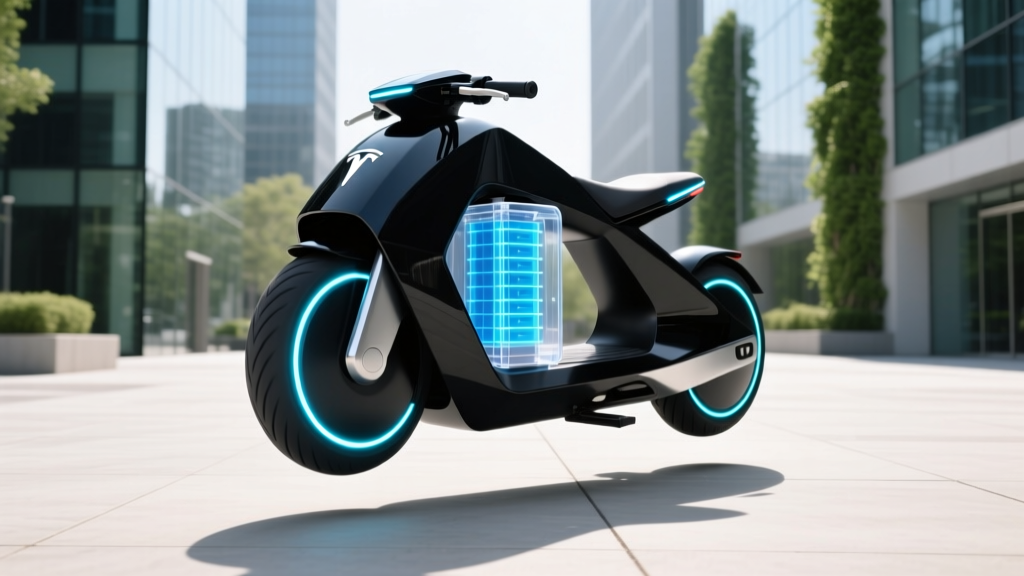
The "Tesla one wheel bike" concept appears to originate from a combination of sources: independent industrial design renders, AI-generated concept art, and speculative YouTube videos that began circulating around 2020-2022. Several designers created compelling visualizations of a single-wheeled, gyroscopically stabilized Tesla-branded personal transport device — essentially a monowheel motorcycle with Tesla's minimalist design language.
These renders were visually striking enough to be picked up by tech blogs and EV news aggregators, often without clear labeling as unofficial concepts. The result: a persistent search trend for a product that Tesla has never announced, patented in any detail, or added to its production roadmap.
As of early 2026, Tesla's official product lineup includes the Model S, Model 3, Model X, Model Y, Cybertruck, and Semi. The company has also discussed a next-generation compact vehicle (sometimes referred to as the "Model 2" or "Redwood" platform). A one-wheeled bike or monowheel personal transporter has never appeared in any Tesla earnings call, investor presentation, or regulatory filing.
Has Tesla Ever Talked About Motorcycles or Personal Transporters?
Tesla CEO Elon Musk has occasionally commented on the idea of a Tesla motorcycle. In a 2018 tweet, Musk stated that Tesla would "never" make a motorcycle, citing safety concerns. He later softened that position slightly, suggesting that if Tesla ever did build a motorcycle, it would be electric and potentially feature self-balancing technology — but no development program was announced.
Tesla has also never entered the electric bicycle, e-scooter, or personal transporter market. The company's focus remains squarely on four-wheeled (and multi-axle, in the case of the Semi) vehicles. This is consistent with Tesla's core business model: vehicles large enough to require substantial battery packs, which is where Tesla's manufacturing scale and battery supply chain investments pay off.
What Actually Exists: Self-Balancing Electric Vehicles and Electric Motorcycles
While a Tesla one-wheel bike doesn't exist, the underlying concept — a self-balancing, single-track electric vehicle — does have real-world analogues. Here are the closest production vehicles that match what the Tesla one-wheel bike renders imagined:
Self-Balancing Monowheels and Electric Unicycles (EUCs)
Electric unicycles (EUCs) are single-wheeled, self-balancing personal transporters made by companies like Kingsong, Inmotion, Begode, and Leaperkim. These are not motorcycles — they're compact personal transport devices typically used for last-mile commuting. Specs for a typical high-end EUC in 2026:
| Spec | Typical High-End EUC (e.g., Kingsong S22) |
|---|---|
| Top Speed | ~43 mph (70 km/h) |
| Range | ~50-65 miles (varies by rider weight and speed) |
| Battery | ~2,220 Wh (2.2 kWh), lithium-ion |
| Motor | ~3,000W peak |
| Weight | ~73 lbs (33 kg) |
| Charge Time (0-100%) | ~5-6 hours (standard charger) |
| Price | $2,800-$3,500 |
These devices use gyroscopic sensors and accelerometers to maintain balance — the rider leans forward to accelerate and backward to brake. They are not regulated as motor vehicles in most US states, and they do not qualify for any federal EV tax credits.
Electric Motorcycles (Two-Wheeled)
If you're drawn to the Tesla one-wheel bike idea because you want a high-performance electric motorcycle, several real options exist from established manufacturers:
| Model | Range | 0-60 mph | Top Speed | Price (MSRP) |
|---|---|---|---|---|
| Zero SR/S | ~161 mi (city), ~82 mi (hwy) | ~3.5 sec | 124 mph | ~$21,495 |
| LiveWire ONE | ~146 mi (city), ~70 mi (hwy) | ~3.0 sec | 110 mph | ~$21,999 |
| Energica Ego+ | ~261 mi (city), ~124 mi (hwy) | ~2.6 sec | 150 mph | ~$28,000+ |
| Damon HyperSport | ~200 mi (claimed, combined) | ~3.0 sec (est.) | 200 mph (claimed) | ~$25,000 (est.) |
None of these are Tesla products, and none feature a single-wheel design. However, they represent the current state of high-performance electric motorcycling — and they're available now.
Could Tesla Ever Build a One-Wheel Bike? Technical Feasibility
From a pure engineering standpoint, a self-balancing single-wheeled electric vehicle is feasible. The technology exists in EUCs, and larger self-balancing vehicles have been demonstrated as prototypes. The challenge isn't physics — it's economics, safety regulation, and market fit.
A Tesla-branded one-wheel bike would face several hurdles:
- Safety regulation: Motorcycles are regulated by NHTSA under FMVSS standards that assume two or more wheels. A single-wheeled motor vehicle would require entirely new regulatory frameworks.
- Battery packaging: Tesla's competitive advantage lies in large-format battery packs (60-100+ kWh) manufactured at gigafactory scale. A one-wheeled vehicle would need a pack closer to 5-15 kWh — a market segment Tesla has no current manufacturing footprint in.
- Insurance and liability: Self-balancing monowheels used as road vehicles would raise significant liability questions, particularly around gyroscopic system failures at speed.
- Market size: The electric motorcycle market is small relative to Tesla's production volume targets. Tesla sold approximately 1.8 million vehicles in 2024; the entire global electric motorcycle market is a fraction of that.
What Tesla Owners Actually Buy for Last-Mile Transport
Survey data and forum discussions among Tesla owners suggest that those seeking compact electric personal transport tend to gravitate toward:
- Electric bicycles: Rad Power Bikes, Super73, Trek, and Specialized e-bikes are popular among Tesla owners for local commuting. These cost $1,500-$5,000 and don't require registration or insurance in most states.
- Electric scooters: Segway Ninebot, Apollo, and Dualtron scooters fill the gap between e-bikes and EUCs, priced from $600 to $3,000+.
- Electric unicycles: A niche but enthusiastic community of EUC riders exists, many of whom also own EVs. Brands like Kingsong, Inmotion, and Begode dominate this space.
None of these categories are ones Tesla has indicated interest in entering. The company's stated mission focuses on "accelerating the world's transition to sustainable energy" through mass-market vehicles, energy storage, and solar — not personal micromobility devices.
Tesla's Actual Vehicle Lineup: What You Can Buy in 2026
If you're visiting this page because you're interested in Tesla products, here's a quick reference to Tesla's actual, purchasable vehicles as of the 2026 model year, with key specs and pricing. All data sourced from fueleconomy.gov and Tesla's official specifications:
| Model | EPA Range | Battery (kWh) | 0-60 mph | Starting MSRP | §30D Credit Eligible? |
|---|---|---|---|---|---|
| Model 3 RWD | 341 mi | ~60 (LFP) | 5.8 sec | $38,990 | Yes (verify sourcing) |
| Model 3 Long Range AWD | 363 mi | ~79 (NMC) | 4.2 sec | $45,490 | Yes (verify sourcing) |
| Model Y Long Range AWD | 320 mi | ~79 (NMC) | 4.8 sec | $44,990 | Yes (verify sourcing) |
| Model S Long Range | 402 mi | ~100 (NMC) | 3.1 sec | $74,990 | No (over MSRP cap) |
| Cybertruck AWD | 340 mi | ~123 (NMC) | 3.9 sec | $79,990 | No (over MSRP cap) |
Frequently Asked Questions
Is Tesla making a one-wheel bike or electric motorcycle?
No. As of 2026, Tesla has not announced, prototyped, or produced any single-wheeled or two-wheeled vehicle. The "Tesla one wheel bike" is an internet concept that originated from independent design renders and AI-generated images, not from Tesla itself.
Can I pre-order a Tesla one-wheel bike?
No. Since the product does not exist, there is no legitimate pre-order program. Any website claiming to accept deposits or pre-orders for a Tesla one-wheel bike is not affiliated with Tesla and should be treated as fraudulent.
What is the closest real product to a Tesla one-wheel bike?
The closest real products are electric unicycles (EUCs) made by companies like Kingsong, Inmotion, and Begode. These are self-balancing, single-wheeled personal transporters with ranges of 30-70 miles and top speeds of 25-45 mph, priced from $1,000 to $3,500. They are not Tesla products and are not classified as motor vehicles.
Does Tesla make any two-wheeled vehicle?
No. Tesla does not manufacture electric motorcycles, scooters, or bicycles. Elon Musk has stated that Tesla's focus is on four-wheeled vehicles and that motorcycles present safety challenges he is not interested in addressing.
Will Tesla ever make an electric motorcycle?
There is no indication from Tesla that an electric motorcycle is in development. Musk previously said Tesla would "never" make a motorcycle, though he later suggested that if one were made, it would be electric and self-balancing. This remains purely speculative.
What should I buy if I want a Tesla-like electric experience on two wheels?
Consider electric motorcycles from Zero Motorcycles, LiveWire, or Energica. These offer high performance (0-60 in 2.6-3.5 seconds), ranges of 70-160+ miles at highway speeds, and DC fast charging capability. They are not Tesla products, but they deliver the electric performance experience on two wheels.
Bottom Line: Save Your Search — This EV Doesn't Exist
The Tesla one-wheel bike is a compelling piece of internet speculation, but it remains exactly that — speculation. No prototype exists, no patent has been filed for a production vehicle, and Tesla has given no indication that single-wheeled or two-wheeled vehicles are part of its roadmap.
If you're drawn to the concept of self-balancing electric personal transport, electric unicycles from established manufacturers offer real, purchasable products today. If you want high-performance electric motorcycling, companies like Zero, LiveWire, and Energica have mature lineups with verified specs, dealer networks, and warranty support.
And if you want a Tesla, the company's four-wheeled lineup continues to offer some of the most efficient, best-charging, and longest-range EVs on the market. The Model 3 and Model Y remain strong choices for buyers who want Tesla's Supercharger network access, over-the-air updates, and competitive EPA range figures — all in vehicles that actually exist and can be delivered this quarter.
For more on Tesla's actual vehicles, see our detailed reviews of the Model 3 and Model Y, including real-world range testing, charging curve analysis, and federal tax credit eligibility breakdowns.