The 2026 Tesla Lineup: What's Actually on Sale
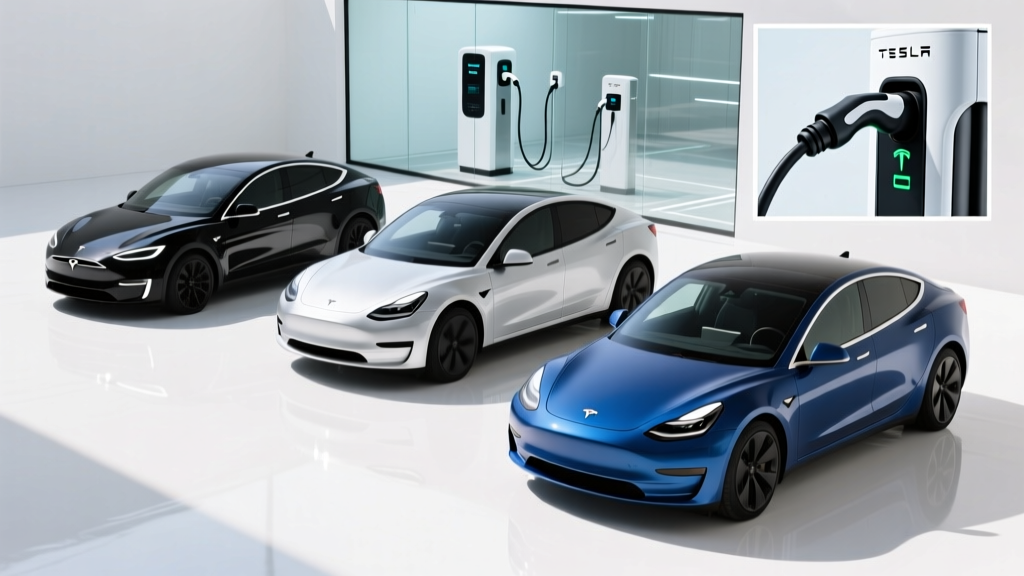
If you're researching what Tesla offers now, the 2026 lineup spans five production vehicles: the refreshed Model 3 sedan, the Juniper-updated Model Y crossover, the flagship Model S and Model X, and the polarizing Cybertruck. Each occupies a distinct price and utility bracket, and the differences in battery chemistry, charging speed, and federal tax credit eligibility matter far more than the spec sheet suggests. Below is a data-driven breakdown of every vehicle Tesla currently sells, with real-world range expectations, charging curves, and ownership economics that go beyond the marketing page.
| Model | Trim | EPA Range (mi) | Battery (kWh usable) | Chemistry | 0-60 mph (s) | HP | Drivetrain | Base MSRP |
|---|---|---|---|---|---|---|---|---|
| Model 3 | RWD | 363 | ~57.5 | LFP | 5.8 | 271 | RWD | $38,990 |
| Model 3 | Long Range AWD | 346 | ~75 | NMC | 4.2 | 346 | AWD Dual-Motor | $44,990 |
| Model 3 | Performance | 315 | ~75 | NMC | 2.9 | 510 | AWD Dual-Motor | $52,990 |
| Model Y | Long Range AWD | 320 | ~75 | NMC | 4.8 | 384 | AWD Dual-Motor | $44,990 |
| Model Y | Performance | 298 | ~75 | NMC | 3.5 | 456 | AWD Dual-Motor | $51,490 |
| Model S | Long Range | 402 | ~95 | NMC | 3.1 | 670 | AWD Dual-Motor | $79,990 |
| Model S | Plaid | 359 | ~95 | NMC | 1.99 | 1,020 | AWD Tri-Motor | $94,990 |
| Model X | Long Range | 335 | ~95 | NMC | 3.8 | 670 | AWD Dual-Motor | $84,990 |
| Model X | Plaid | 311 | ~95 | NMC | 2.5 | 1,020 | AWD Tri-Motor | $99,990 |
| Cybertruck | AWD | 340 | ~123 | NMC | 4.1 | 600 | AWD Dual-Motor | $79,990 |
| Cybertruck | Cyberbeast | 320 | ~123 | NMC | 2.6 | 845 | AWD Tri-Motor | $99,990 |
Real-World Range vs. EPA Stickers
Real-World Range Reality Check: EPA estimates assume a mixed city/highway cycle at moderate temperatures. In sustained 75 mph highway driving, expect a 10-15% reduction from the EPA number. In freezing temperatures (below 32°F / 0°C), range can drop 20-30% due to cabin heating loads and battery resistance — even with Tesla's heat pump standard on all 2026 models.
The Model 3 Long Range AWD's 346-mile EPA rating is among the best in the segment, but on a cold-weather interstate run at 75 mph, plan for roughly 270-290 miles before needing to stop. The Model Y Long Range, despite sharing a similar battery, loses more efficiency to its taller, less aerodynamic profile — expect ~270 miles highway in fair weather, dropping to ~220 miles in deep winter.
The Model S Long Range genuinely delivers on its 402-mile sticker in city-heavy commuting thanks to regenerative braking recovery and excellent aero (Cd 0.208). Highway reality is closer to 340-355 miles. The Cybertruck, with its heavy stainless-steel exoskeleton and aggressive frontal area, sees the largest real-world gap: owners report 260-285 miles highway at 70 mph, and under 230 miles in cold weather or while towing. If towing is a priority, Tesla rates the Cybertruck AWD at 11,000 lbs — but range halves under heavy trailer loads.
Charging Speeds: DC Fast, Level 2, and the Charge Curve
Charging speed is where Tesla's Supercharger network advantage is most tangible. All 2026 Teslas use the NACS (North American Charging Standard) connector natively, and Tesla has opened select Superchargers to non-Tesla EVs via Magic Dock adapters. Here's what each model actually delivers at the plug:
| Model | Max DC Fast Charge (kW) | 10-80% Time | Level 2 Home Rate (kW) | Miles Added/hr (L2) |
|---|---|---|---|---|
| Model 3 RWD (LFP) | 170 kW | ~25 min | 11.5 kW | ~44 mi/hr |
| Model 3 LR / Perf (NMC) | 250 kW | ~18 min | 11.5 kW | ~44 mi/hr |
| Model Y LR / Perf | 250 kW | ~20 min | 11.5 kW | ~40 mi/hr |
| Model S / X Long Range | 250 kW | ~22 min | 11.5 kW | ~38 mi/hr |
| Model S / X Plaid | 250 kW | ~24 min | 11.5 kW | ~35 mi/hr |
| Cybertruck AWD / Beast | 250 kW | ~28 min | 11.5 kW | ~30 mi/hr |
The charge curve matters more than peak kW. Tesla's NMC batteries (Model 3 LR, Model Y, S, X, Cybertruck) sustain peak or near-peak rates from roughly 10-40% SoC, then taper progressively. By 65% SoC, you're typically at 100-120 kW; above 80%, charging slows to under 50 kW to protect the cells. This is why the 10-80% metric is the one that counts for road trips — charging from 80-100% can take as long as 10-80%.
The Model 3 RWD's LFP (lithium iron phosphate) battery charges slower at 170 kW peak, but LFP chemistry tolerates frequent 100% charging without degradation concerns. Tesla recommends daily charging to 100% for LFP packs — a practical advantage for commuters who want maximum available range every morning. NMC packs, by contrast, are best kept between 20-80% for daily use to maximize longevity.
For home Level 2 charging, all 2026 Teslas accept up to 11.5 kW on a 48-amp circuit (requiring a 60-amp breaker). A full overnight charge from 20% to 80% takes roughly 4-6 hours depending on battery size — easily covering even a Model S Long Range's daily needs. Installation of a Tesla Wall Connector typically runs $800-$2,000 depending on panel proximity and local permitting, according to industry estimates.
Pricing, Tax Credits, and True Cost
Tesla's pricing has shifted repeatedly, but as of early 2026, the lineup spans from $38,990 (Model 3 RWD before incentives) to $99,990 (Model X Plaid and Cybertruck Cyberbeast). The federal §30D EV tax credit remains the biggest variable in actual purchase cost, and eligibility is anything but universal.
| Model / Trim | MSRP | §30D Credit Eligible? | Est. Net Price (with credit) |
|---|---|---|---|
| Model 3 RWD | $38,990 | Up to $7,500* | ~$31,490 |
| Model 3 Long Range AWD | $44,990 | Up to $7,500* | ~$37,490 |
| Model 3 Performance | $52,990 | Up to $7,500* | ~$45,490 |
| Model Y Long Range AWD | $44,990 | Up to $7,500* | ~$37,490 |
| Model Y Performance | $51,490 | Up to $7,500* | ~$43,990 |
| Model S Long Range | $79,990 | No (exceeds MSRP cap) | $79,990 |
| Model S Plaid | $94,990 | No (exceeds MSRP cap) | $94,990 |
| Model X Long Range | $84,990 | No (exceeds MSRP cap) | $84,990 |
| Model X Plaid | $99,990 | No (exceeds MSRP cap) | $99,990 |
| Cybertruck AWD | $79,990 | No (exceeds MSRP cap) | $79,990 |
| Cybertruck Cyberbeast | $99,990 | No (exceeds MSRP cap) | $99,990 |
*§30D credit eligibility requires: buyer AGI under $150K (single) / $300K (joint), vehicle MSRP under $55K (sedans) or $80K (SUVs/trucks), and compliance with critical mineral and battery component sourcing rules. The credit can be transferred to the dealer at point of sale as a price reduction. Battery sourcing requirements tighten annually — verify current eligibility on fueleconomy.gov before purchasing.
The Model 3 and Model Y are the only Teslas that can qualify for the full $7,500 credit, and even then, the Model 3 Performance at $52,990 fits under the $55K sedan cap, while the Model Y qualifies under the $80K SUV/truck cap. The Model S, Model X, and Cybertruck all exceed their respective MSRP caps and are categorically ineligible for §30D — a fact that significantly changes their value proposition against luxury competitors that may also exceed caps but offer different trade-offs.
Efficiency: MPGe and kWh per 100 Miles
Efficiency determines your ongoing fuel cost and, in cold weather, how gracefully range degrades. Tesla's vehicles consistently rank among the most efficient EVs on the market per EPA data:
- Model 3 RWD: 132 MPGe combined / 25 kWh per 100 mi
- Model 3 Long Range AWD: 125 MPGe combined / 27 kWh per 100 mi
- Model Y Long Range AWD: 117 MPGe combined / 29 kWh per 100 mi
- Model S Long Range: 116 MPGe combined / 29 kWh per 100 mi
- Model X Long Range: 102 MPGe combined / 33 kWh per 100 mi
- Cybertruck AWD: 79 MPGe combined / 42 kWh per 100 mi
The Model 3 RWD's 25 kWh/100 mi is remarkable for any vehicle, translating to roughly $0.04-$0.05 per mile on residential electricity (national average ~$0.16/kWh). The Cybertruck, at 42 kWh/100 mi, costs nearly 70% more per mile to fuel and is less efficient than some gas-powered trucks on an energy-equivalent basis — a consequence of its 6,800-lb curb weight and boxy aerodynamics.
Cargo, Passenger Space, and Practicality
Interior volume often decides a purchase for family buyers. Here's how the lineup measures up:
- Model 3: 23 cu ft trunk + 3.1 cu ft frunk (26.1 total). Rear legroom: 35.2 in. Best for couples and solo commuters; rear seat is tight for adults on long trips.
- Model Y: 30 cu ft behind rear seats, 72 cu ft with seats folded + 4.1 cu ft frunk. Rear legroom: 40.5 in. The default family EV — fits two car seats and a double stroller with room to spare.
- Model S: 28 cu ft rear hatch + 5.3 cu ft frunk (33.3 total). Rear legroom: 35.4 in. More premium than the 3, but rear space hasn't grown meaningfully with the refresh.
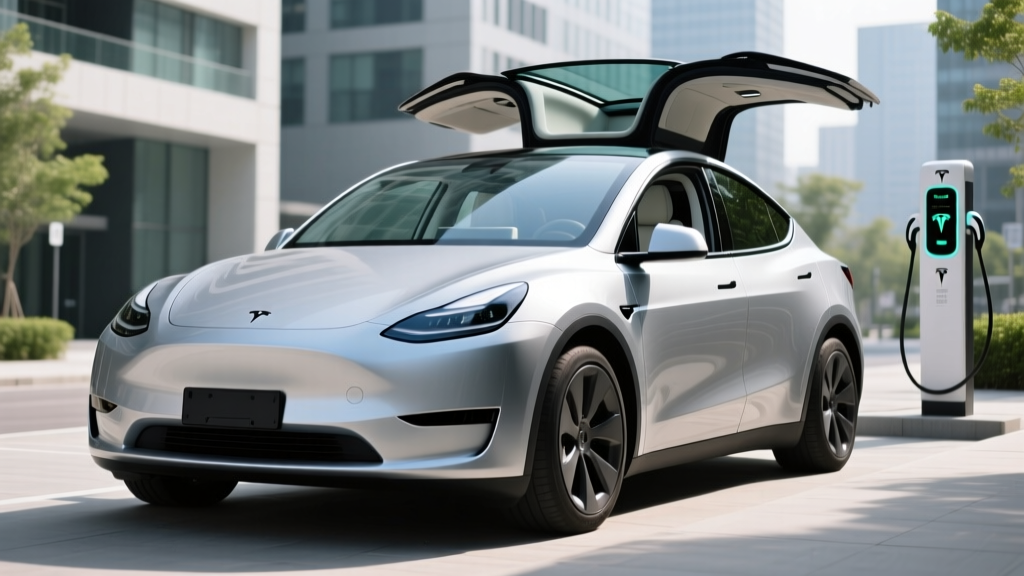
- Model X: Up to 88 cu ft with all rear seats folded (5-seat config). Falcon-wing doors aid car-seat loading in tight garages. Available 6- or 7-seat layouts.
- Cybertruck: 6-ft bed (lockable tonneau), ~35 cu ft enclosed vault space + frunk. Rear legroom: 36.0 in. A genuine work truck, but the bed is shorter than a full-size F-150.
Driver Assistance: Autopilot, FSD, and What Tesla Actually Delivers
SAE Automation Level: Tesla Autopilot and Full Self-Driving (Supervised) are SAE Level 2 driver-assistance systems. The driver must remain engaged, hands on or near the wheel, and eyes on the road at all times. These are not self-driving systems. Only Level 4 services like Waymo operate without a human driver in defined geographic zones.
All 2026 Teslas ship with basic Autopilot (adaptive cruise + lane centering). Full Self-Driving (Supervised) remains a $8,000 add-on (or $99/month subscription) and adds automatic lane changes, traffic-light/stop-sign recognition, and city-street navigation. As of 2026, FSD Supervised has logged billions of miles and shows measurable improvement in intervention frequency, but it still requires active supervision and can make errors at construction zones, unmapped intersections, and in heavy rain. Tesla's vision-only approach (no LiDAR or radar) remains a philosophical bet that neural networks can match sensor-fusion systems — the data trend is encouraging but not yet conclusive for unsupervised operation.
What FSD (Supervised) Does NOT Do: It does not drive you while you sleep, read, or look away. It does not handle all construction zones, emergency vehicles, or unmapped roads reliably. You are legally the driver and liable for all actions. NHTSA continues to monitor Tesla's Autopilot/FSD crash data under its Standing General Order for crash reporting.
Warranty, Battery Longevity, and Ownership Costs
Tesla's warranty structure is straightforward:
- Basic Vehicle: 4 years / 50,000 miles (all models)
- Battery & Drive Unit: 8 years / 100,000 miles (Model 3 RWD) or 8 years / 120,000 miles (Model 3 LR, Model Y, S, X, Cybertruck)
- Capacity Retention Threshold: Tesla warrants a minimum of 70% battery capacity retention over the warranty period
Real-world degradation data from fleet aggregators shows most Tesla NMC packs retain 88-92% capacity at 100,000 miles when charged primarily to 80% SoC. LFP packs (Model 3 RWD) show even slower degradation due to the chemistry's inherent stability, with many fleet vehicles at 93-95% SoH at 100,000 miles. Out-of-warranty battery replacement remains expensive — $12,000-$18,000 depending on model — but is rarely needed within the vehicle's typical ownership horizon.
Insurance costs are the hidden tax on Tesla ownership. Average annual premiums run $2,200-$3,500 depending on model, state, and driver profile — 20-40% higher than comparable non-Tesla EVs, driven by high repair costs for aluminum and stainless-steel body panels and proprietary parts. Tesla Insurance is available in select states and uses real-time driving data to set rates, which can benefit safe drivers.
Pros, Cons, and Verdict: Which Tesla Fits Your Use Case?
Pros (Across Lineup)
- Supercharger network — still the most reliable DC fast-charging ecosystem in North America
- Industry-leading software, OTA updates, and infotainment responsiveness
- Top efficiency (kWh/100 mi) in their respective segments
- NACS connector is now the industry standard — future-proof
- Strong resale value relative to most EV competitors
Cons (Across Lineup)
- No physical stalks on Model 3/Y (turn signals on steering wheel buttons — polarizing)
- Insurance premiums significantly above segment average
- FSD (Supervised) is expensive and still requires full driver attention
- Build quality improving but panel-gap variability still reported
- No Apple CarPlay or Android Auto — Tesla's ecosystem is closed
Choose the Model 3 RWD if: You commute under 60 miles daily, have home charging, and want the lowest entry price with LFP durability. Net ~$31,490 after tax credit.
Choose the Model 3 Long Range if: You road-trip regularly and need AWD for snow. The 346-mile EPA range and 250 kW charging make it the best all-around sedan Tesla offers.
Choose the Model Y Long Range if: You need family cargo space, car-seat access, and the practicality of a crossover. The best-selling EV in the US for a reason.
Choose the Model S Long Range if: You want 400+ mile range, premium build, and don't need the credit (MSRP exceeds cap). Best for high-mileage luxury commuters.
Choose the Model X if: You need three rows or falcon-wing convenience for car seats. Niche, but nothing else matches the combination.
Choose the Cybertruck if: You need a truck bed, tow rating, and want EV torque. Accept the efficiency penalty and high price.
Frequently Asked Questions
What is the real-world range of a Tesla in 2026?
Expect 85-90% of the EPA sticker in mixed fair-weather driving, 70-80% on sustained highway trips at 75 mph, and 65-75% in freezing winter conditions. The Model 3 RWD's 363-mile EPA rating translates to roughly 300 miles highway in summer and 255 miles in deep cold. Preconditioning the battery (automatic when navigating to a Supercharger) recovers some cold-weather efficiency.
How fast do Teslas charge at home and on the road?
At home on a Level 2 Wall Connector (11.5 kW / 48A), expect 30-44 miles of range added per hour depending on model efficiency — a full overnight charge for any Tesla. On DC fast charging, NMC models peak at 250 kW with 10-80% in 18-28 minutes; the LFP Model 3 RWD peaks at 170 kW with 10-80% in about 25 minutes.
Which Teslas qualify for the $7,500 federal tax credit?
Only the Model 3 (all trims) and Model Y (all trims) are under their respective MSRP caps ($55K sedans, $80K SUVs). The buyer must also meet income limits ($150K single / $300K joint AGI) and the vehicle must satisfy critical mineral and battery component sourcing requirements, which tighten each year. Verify current eligibility at fueleconomy.gov. The credit can be applied at point of sale as an immediate price reduction.
Is a Tesla worth buying vs. Hyundai, Ford, or BMW EVs?
For charging infrastructure reliability and software integration, Tesla still leads. For interior luxury at similar prices, the BMW i4 and Hyundai Ioniq 6 are strong Model 3 competitors. For family crossover space, the Kia EV9 and Hyundai Ioniq 5 offer competitive range with more physical controls and CarPlay. Tesla wins on Supercharger access, efficiency, and resale value — but the gap has narrowed considerably since 2023.
Does Tesla's battery last? What does replacement cost?
Tesla's 8-year / 100,000-120,000 mile battery warranty covers capacity below 70%. Real-world fleet data shows most packs retain 88-95% capacity at 100K miles. Out-of-warranty replacement runs $12,000-$18,000. LFP packs (Model 3 RWD) show superior longevity and can be charged to 100% daily without degradation concerns, making them ideal for high-mileage commuters.