The Tesla October 7 Event: What Was Actually Announced
The Tesla October 7 announcement time — officially dubbed the "We, Robot" event held at Warner Bros. Studios in Burbank, California — was positioned as Tesla's most consequential product reveal since the Model 3. Elon Musk took the stage to unveil the Cybercab (a purpose-built, steering-wheel-free robotaxi), the Robovan (a high-capacity autonomous people-mover), and an updated Optimus Gen-2 humanoid robot. For buyers focused on vehicles they can actually purchase today, the event also served as a backdrop for quietly updated specs across the Model S, Model X, Model 3, and Model Y lineups heading into the 2026 model year.
This review dissects what the October 7 announcement means for real-world EV shoppers: which vehicles are available now, which remain concept-stage promises, and how Tesla's current lineup stacks up on range, charging, pricing, and federal tax credit eligibility.
Cybercab Robotaxi: Announced, Not Yet Available
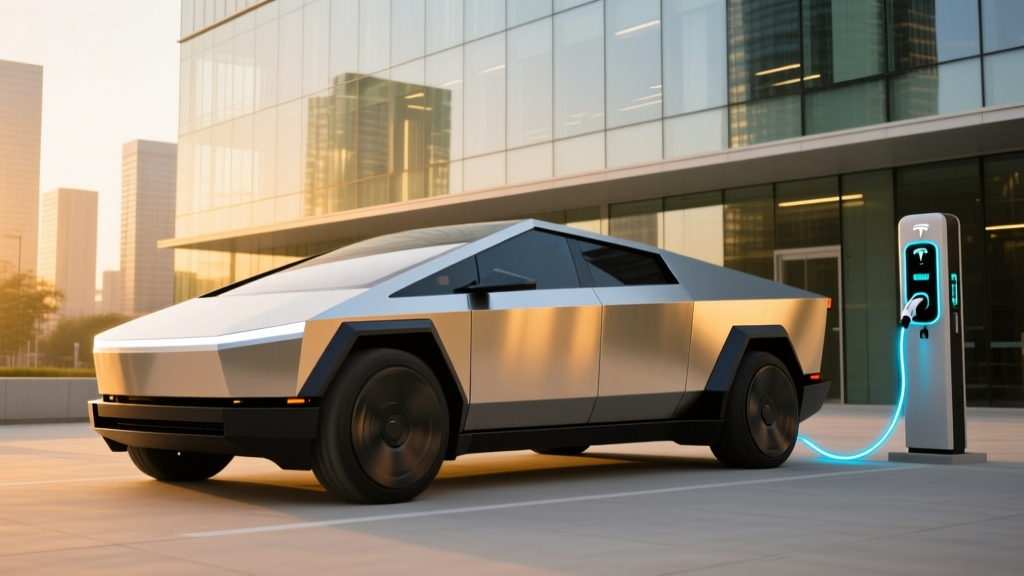
The headline product of the October 7 event was the Tesla Cybercab — a two-seat, butterfly-door coupe with no steering wheel or pedals, designed exclusively for autonomous ride-hailing. Tesla projected a production start no earlier than 2026–2027, with a target per-mile operating cost below $0.20. Because this vehicle is not available for consumer purchase, we're treating specs as preliminary/announced.
| Attribute | Detail |
|---|---|
| Vehicle Type | 2-seat autonomous robotaxi (no steering wheel/pedals) |
| SAE Level | Level 4 (driverless, geo-fenced) |
| Projected Range | ~250+ miles (est., unconfirmed by EPA) |
| Charging | Wireless inductive (no plug); details TBD |
| Target Production | 2026–2027 (announced) |
| Consumer Purchase | Not planned — fleet/ride-hail only |
Bottom line: You cannot buy a Cybercab. It is a fleet vehicle concept aimed at competing with Waymo and Cruise-style robotaxi services. If you're shopping for a Tesla to own, focus on the current Model lineup below.
2026 Tesla Model Lineup: What You Can Actually Buy
While the Cybercab grabbed headlines, Tesla's 2026 consumer lineup — the Model 3, Model Y, Model S, and Model X — received incremental updates in battery efficiency, software, and pricing. Here's the full spec breakdown for the vehicles you can order today.
| Spec | Model 3 LR AWD | Model Y LR AWD | Model S LR | Model X LR |
|---|---|---|---|---|
| EPA Range | 363 mi | 320 mi | 402 mi | 335 mi |
| Battery (usable) | ~75 kWh, NMC | ~75 kWh, NMC | ~95 kWh, NMC | ~95 kWh, NMC |
| Max DC Charge | 250 kW | 250 kW | 250 kW | 250 kW |
| 10–80% DC Time | ~25 min | ~27 min | ~30 min | ~32 min |
| Level 2 (240V/48A) | 11.5 kW / ~44 mi/hr | 11.5 kW / ~40 mi/hr | 11.5 kW / ~48 mi/hr | 11.5 kW / ~42 mi/hr |
| 0–60 mph | 4.2 sec | 4.8 sec | 3.1 sec | 3.8 sec |
| Horsepower | ~346 hp | ~384 hp | ~670 hp | ~670 hp |
| Drivetrain | Dual Motor AWD | Dual Motor AWD | Dual Motor AWD | Dual Motor AWD |
| MPGe (combined) | 132 MPGe | 122 MPGe | 120 MPGe | 109 MPGe |
| Efficiency | 25 kWh/100mi | 28 kWh/100mi | 28 kWh/100mi | 31 kWh/100mi |
| Cargo Volume | 23 cu ft (rear+frunk) | 76 cu ft (max) | 28 cu ft | 88 cu ft (max) |
| Base MSRP | $47,740 | $48,990 | $79,990 | $84,990 |
Sources: EPA / fueleconomy.gov, Tesla.com official specs. MSRPs reflect pricing at time of publication; Tesla adjusts prices frequently.
Real-World Range: What the EPA Sticker Doesn't Tell You
- Model 3 LR: EPA 363 mi → Expect ~290–310 mi highway (75 mph), ~240–270 mi in freezing temps
- Model Y LR: EPA 320 mi → Expect ~255–280 mi highway, ~210–240 mi in freezing temps
- Model S LR: EPA 402 mi → Expect ~330–350 mi highway, ~280–310 mi in freezing temps
- Model X LR: EPA 335 mi → Expect ~270–295 mi highway, ~220–255 mi in freezing temps
Cold weather (below 32°F) typically reduces range 15–30% due to battery resistance and cabin heating demands. Highway driving at 75+ mph reduces range ~15–20% vs. the EPA combined cycle. Tesla's heat pump (standard on all current models) mitigates some cold-weather loss.
Tesla's EPA range figures remain among the highest in the industry, but the gap between sticker and reality matters for road-trip planning. On a 300-mile interstate drive in a Model Y Long Range at 75 mph in 35°F weather, you'll likely arrive with roughly 10–15% state of charge remaining — tight enough that you'll want to identify a Supercharger stop around the 200-mile mark. In moderate temperatures and mixed driving, the Model 3 Long Range easily delivers 320+ usable miles.
Charging Speed: DC Fast Charging and Home Level 2
All current Tesla models use the NACS (North American Charging Standard) connector — the same connector now being adopted by Ford, GM, Rivian, Hyundai, and most major automakers. This gives Tesla owners native access to the Supercharger network, which remains the most reliable and widespread DC fast-charging network in the U.S. with over 6,500 stations and 30,000+ stalls as of 2026.
| Charging Level | Power | Miles Added/Hour | Notes |
|---|---|---|---|
| Level 1 (120V) | ~1.4 kW | 3–5 mi/hr | Emergency/trickle only |
| Level 2 (240V/48A) | 11.5 kW | 40–48 mi/hr | Full charge overnight (~7–8 hrs) |
| DC Fast (Supercharger V3) | Peak 250 kW | ~200 mi in 15 min | 10–80% in ~25–32 min; tapers above 80% |
| DC Fast (V4 Supercharger) | Up to 350 kW (cab) | TBD by model | Newer Tesla vehicles may accept higher rates in future OTA updates |
Charging curve reality: Tesla's peak 250 kW rate is only sustained between roughly 10–30% state of charge. By 50% SoC, the rate drops to ~150 kW, and above 80%, it falls below 50 kW. This is why Tesla (and all EV manufacturers) quote 10–80% times rather than 0–100%. For road trips, plan stops around the 10–80% window to minimize charging time. Preconditioning — which the navigation system triggers automatically when a Supercharger is set as your destination — warms the battery to optimize charge speed and is critical in cold weather.
Home charging setup: Tesla's Wall Connector ($420) delivers up to 11.5 kW on a 60A circuit (48A continuous). Most homeowners will need a licensed electrician to install a NEMA 14-60 outlet or hardwire the Wall Connector. Expect $500–$2,000 for installation depending on panel proximity and whether a service upgrade (200A panel) is needed.
Pricing, Trim Levels, and Federal Tax Credit Eligibility
| Model / Trim | Base MSRP | Under MSRP Cap? | Est. After $7,500 Credit |
|---|---|---|---|
| Model 3 RWD | $38,990 | ✅ Yes (sedan cap: $55K) | ~$31,490 |
| Model 3 Long Range AWD | $47,740 | ✅ Yes | ~$40,240 |
| Model 3 Performance | $54,990 | ✅ Yes | ~$47,490 |
| Model Y LR AWD | $48,990 | ✅ Yes (SUV cap: $80K) | ~$41,490 |
| Model S LR | $79,990 | ❌ Exceeds $55K sedan cap | $79,990 (no credit) |
| Model X LR | $84,990 | ❌ Exceeds $80K SUV cap | $84,990 (no credit) |
The $7,500 federal tax credit (or up to $7,500 applied at point of sale) requires ALL of the following:
- MSRP caps: Sedans ≤ $55,000 / SUVs & trucks ≤ $80,000
- Buyer income caps (MAGI): $150K single / $225K head of household / $300K joint
- Battery sourcing: Critical minerals and battery components must meet phased-in domestic/free-trade-partner thresholds (increasing annually through 2032)
- Final assembly: Must occur in North America (all US-market Teslas qualify)
- Point-of-sale transfer: As of 2024+, you can transfer the credit to the dealer for an upfront price reduction, even if you owe less than $7,500 in taxes
Rules are current as of publication. Battery sourcing requirements tighten annually — always verify at IRS.gov and fueleconomy.gov before purchasing. Consult a tax professional for your specific situation.
Key takeaway: The Model 3 and Model Y are the Tesla vehicles that qualify for the federal tax credit. The Model S and Model X exceed their respective MSRP caps and do not qualify — making them significantly more expensive than the sticker suggests relative to credit-eligible competitors.
Tech, Driver Assistance, and Interior
Every Tesla comes standard with Basic Autopilot (Traffic-Aware Cruise Control + Autosteer). The optional FSD (Supervised) package — currently $8,000 upfront or $99/month — adds Navigate on Autopilot, Auto Lane Change, Autopark, and traffic light/stop sign recognition. It is important to be explicit: FSD (Supervised) is SAE Level 2, not autonomous driving. The driver must keep hands on the wheel (or demonstrate attentiveness via the cabin camera) and is legally responsible for all vehicle operation.
Interior highlights across the 2026 lineup:
- 15.4-inch center touchscreen (Model 3/Y) or 17-inch (Model S/X) — controls virtually all vehicle functions
- Rear touchscreen (Model 3 Highland refresh, Model S/X) for climate and entertainment
- Ventilated front seats and ambient lighting (Model 3 Performance, Model S/X)
- HEPA air filtration with Bioweapon Defense Mode (Model S/X)
- Over-the-air updates that continuously add features — Tesla's strongest software advantage
Notable drawbacks: The minimalist interior lacks physical buttons, which frustrates some drivers (climate adjustments, glovebox, and mirror controls all live on the screen). The Model Y's ride quality, while improved in the 2025 refresh, remains firmer than competitors like the Hyundai Ioniq 5 or Ford Mustang Mach-E. No Apple CarPlay or Android Auto — Tesla's proprietary infotainment is a walled garden.
Warranty and Battery Longevity
Tesla's warranty coverage:
- Basic Vehicle: 4 years / 50,000 miles
- Battery & Drive Unit: 8 years / 100,000 miles (Model 3 RWD) or 8 years / 120,000 miles (Model 3 LR, Model Y, Model S, Model X)
- Capacity retention guarantee: Tesla warrants that the battery will retain at least 70% of original capacity during the warranty period
In practice, Tesla's NMC batteries have shown strong longevity. Fleet data from sources like Tesla's own impact reports and third-party tracking indicate average degradation of approximately 12% after 200,000 miles. The LFP (lithium iron phosphate) batteries used in the Model 3 RWD trade slightly lower energy density for longer cycle life and the ability to regularly charge to 100% without degradation concern — a practical advantage for daily commuters who need maximum range every morning.
Who Should Buy a Tesla in 2026?
- You want access to the Supercharger network — still the gold standard for road-trip charging reliability
- You value OTA software updates that improve the car over time
- You want class-leading efficiency (kWh/100mi) that maximizes range per dollar of electricity
- You prefer a minimalist, screen-centric interior
- The Model 3 or Model Y fits your budget and qualifies for the $7,500 federal credit
🔄 Look Elsewhere If:
- You want physical buttons and knobs (consider Hyundai Ioniq 5, BMW i4)
- You need Apple CarPlay/Android Auto (nearly every competitor offers this)
- You want a luxury flagship sedan under the $55K credit cap (Model S doesn't qualify; consider BMW i5, Mercedes EQE)
- You prefer a more compliant ride quality (Model Y is firm; the Ioniq 5 and Mach-E are softer)
- You're buying primarily for the Cybercab — it's not for sale to consumers
- Supercharger network: 30,000+ stalls, industry-best uptime
- Class-leading efficiency (Model 3: 25 kWh/100mi)
- OTA updates continuously improve the vehicle
- Strong real-world range (300+ mi achievable in Model 3 LR)
- Model 3/Y qualify for $7,500 federal tax credit
- NACS connector: future-proof as industry standard
- Model S/X exceed MSRP caps — no federal tax credit
- No Apple CarPlay or Android Auto
- Minimalist interior frustrates button-preferring drivers
- FSD (Supervised) is Level 2 only — not autonomous despite the name
- Repair costs and insurance premiums above segment average
- Firm ride quality in Model Y vs. comfort-oriented rivals
Frequently Asked Questions
What is the real-world range of the Tesla Model Y Long Range?
The EPA rates the 2026 Model Y Long Range AWD at 320 miles. In real-world highway driving at 75 mph in moderate temperatures, expect roughly 255–280 miles. In freezing conditions (below 32°F), range drops to approximately 210–240 miles due to increased battery resistance and cabin heating demands. The heat pump helps, but physics is physics.
How fast does a Tesla charge at a Supercharger vs. at home?
At a V3 Supercharger, current Teslas peak at 250 kW and can add ~200 miles in 15 minutes, with a 10–80% charge taking 25–32 minutes depending on the model. The charge rate tapers significantly above 80% SoC. At home on a Level 2 Wall Connector (240V/48A), Teslas charge at 11.5 kW, adding roughly 40–48 miles per hour — enough to fully replenish overnight.
How much does a Tesla cost after the federal tax credit?
The Model 3 RWD drops from $38,990 to approximately $31,490 after the $7,500 §30D credit. The Model Y LR AWD falls from $48,990 to roughly $41,490. However, eligibility depends on your income (MAGI ≤ $150K single / $300K joint), and the vehicle must meet battery sourcing requirements. The Model S and Model X do not qualify — their MSRPs exceed the $55K sedan / $80K SUV caps.
Does the Tesla Model 3 qualify for the federal EV tax credit?
Yes — the Model 3 (all trims, including RWD, Long Range, and Performance) falls under the $55,000 sedan MSRP cap and is assembled in Fremont, California. Eligibility still depends on your income, battery component and critical mineral sourcing (requirements tighten annually), and the vehicle not being leased (leased vehicles fall under different §45W commercial credit rules). Verify current eligibility at fueleconomy.gov.
Is a Tesla worth buying vs. the Hyundai Ioniq 5 or Ford Mustang Mach-E?
It depends on your priorities. Tesla wins on charging network access (Supercharger reliability), efficiency (more miles per kWh), and software/OTA updates. The Ioniq 5 wins on ride comfort, 800V ultra-fast charging capability (up to 350 kW on compatible chargers), and physical controls. The Mach-E offers a more traditional SUV feel and Ford dealer service accessibility. If road-trip charging reliability is your top concern, Tesla's Supercharger advantage is still meaningful — though the gap is closing as other networks expand.
What did the Tesla October 7 announcement time mean for current owners?
The "We, Robot" event primarily showcased future products (Cybercab, Robovan, Optimus) that are not available for purchase. For current owners, the practical impact is minimal — no new hardware was announced for existing vehicles. The event reinforced Tesla's strategic pivot toward autonomous ride-hailing as a long-term revenue model, but current Tesla vehicles remain SAE Level 2 driver-assist cars that require full driver engagement.
What is the battery warranty on a Tesla?
Tesla provides an 8-year / 100,000-mile battery and drive unit warranty on the Model 3 RWD, and 8 years / 120,000 miles on the Model 3 Long Range, Model Y, Model S, and Model X. The warranty guarantees at least 70% capacity retention over the coverage period. Out-of-warranty battery replacement costs range from approximately $12,000–$20,000 depending on the model, though most Tesla batteries are lasting well beyond 200,000 miles based on fleet data.
Editorial note: All specifications, pricing, and tax credit information reflect data available at time of publication. Tesla adjusts pricing frequently and tax credit eligibility rules change annually. Always verify current figures at Tesla.com, fueleconomy.gov, and IRS.gov before making a purchase decision.