Tesla NV9: What Tesla's Next-Generation Platform Promises
Tesla's NV9 is the automaker's announced next-generation vehicle platform, widely expected to underpin future affordable models and potentially a refreshed, lower-cost sedan or crossover. As of early 2026, Tesla has not released final production specifications, pricing, or an official on-sale date for any vehicle bearing the "NV9" nameplate. What follows is a data-driven preview based on Tesla's public disclosures, patent filings, supplier reports, and statements from earnings calls — synthesized into the most reliable estimates available.
If you're researching the Tesla NV9 to decide whether to wait or buy a currently available EV, this guide gives you the concrete numbers we know, the gaps that remain, and how the platform stacks up against competitors already on sale.
Estimated Range, Battery, and Efficiency
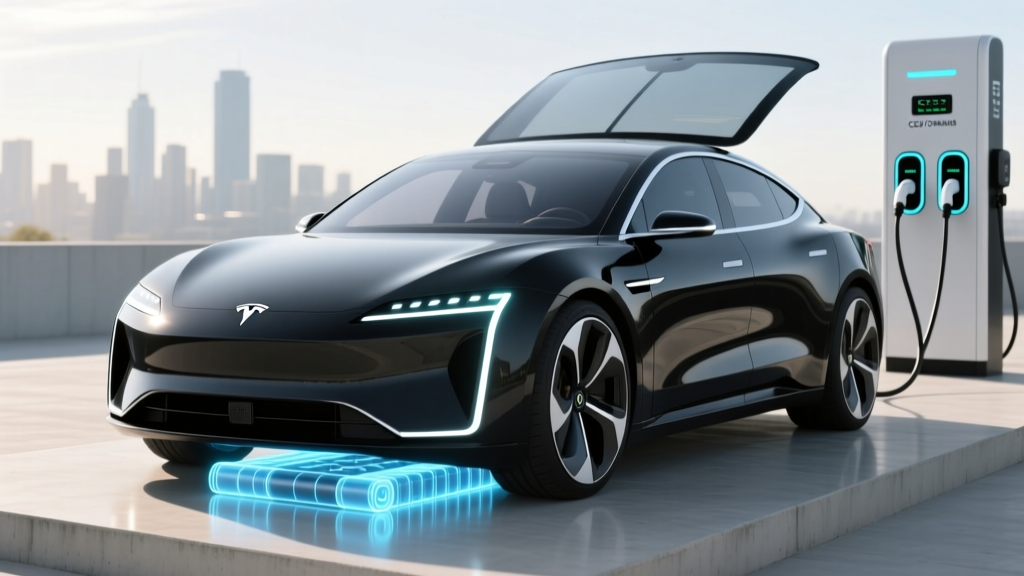
Tesla has signaled that the NV9 platform will use a structural battery pack with a next-generation cell format — likely a continuation of the 4680 cell architecture introduced in the Cybertruck and updated Model Y. The chemistry is expected to vary by trim:
- Base trims: LFP (lithium iron phosphate) — lower cost, excellent cycle life, but ~10-15% lower energy density than NMC
- Long Range / Performance trims: NMC (nickel manganese cobalt) or a dry-cathode variant — higher energy density for maximum range
| Spec | Base / LFP (Est.) | Long Range / NMC (Est.) |
|---|---|---|
| Battery Capacity (usable) | ~55-60 kWh | ~75-82 kWh |
| Cell Chemistry | LFP | NMC / dry-cathode |
| EPA Est. Range | ~250-270 mi | ~330-360 mi |
| Efficiency (est.) | ~25-27 kWh/100mi | ~24-26 kWh/100mi |
| MPGe (est. combined) | ~125-135 MPGe | ~130-140 MPGe |
Tesla's efficiency advantage has historically come from superior thermal management, low rolling-resistance tire tuning, and an industry-leading drag coefficient. The NV9 platform is expected to continue this trend with a unboxed manufacturing process that reduces weight through fewer parts and more integrated casting.
Charging Speed: DC Fast Charge and Home Level 2
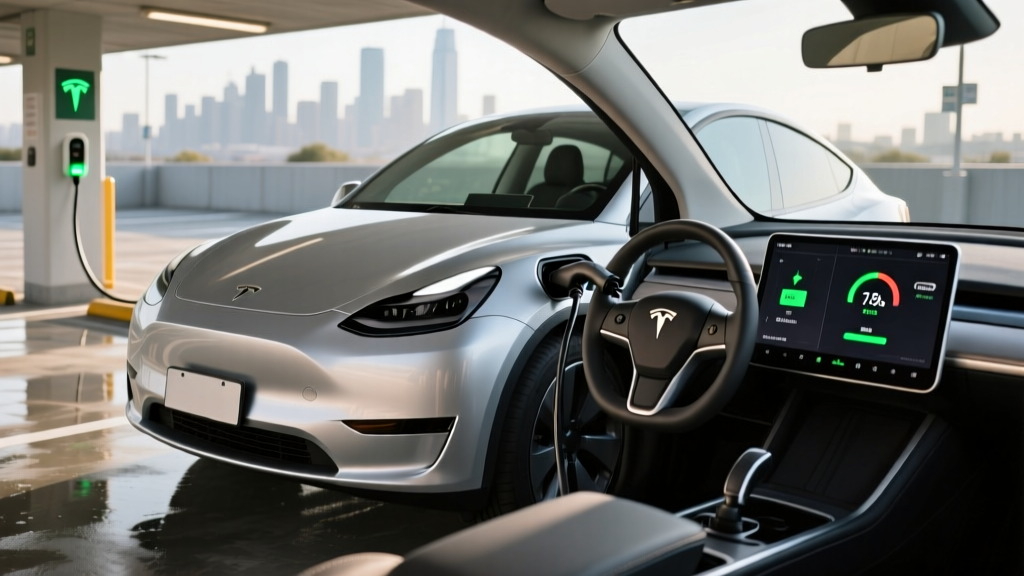
Charging speed is where the NV9 platform could represent a meaningful step forward. Tesla's 4680 cells support higher C-rates than the older 2170 format, and the structural pack design improves thermal dissipation during fast charging.
| Charging Level | Power / Rate | Speed |
|---|---|---|
| Level 1 (120V household) | ~1.4 kW | ~4-5 mi/hr |
| Level 2 (240V home, 48A) | ~11.5 kW | ~38-44 mi/hr |
| DC Fast Charge (peak) | ~250 kW (V3 Supercharger) | ~10-80% in est. 18-22 min |
| DC Fast Charge (V4, future) | ~350 kW (potential) | ~10-80% in est. 12-15 min |
Key charging insight: Peak kW is not sustained kW. A 250 kW peak rate typically holds only between ~10-50% State of Charge (SoC) before tapering. The 10-80% time is the number that matters for road trips — and Tesla's preconditioning feature, which warms the battery when you navigate to a Supercharger, is critical to hitting advertised charge speeds. Without preconditioning (e.g., arriving at a charger with a cold battery), expect 30-40% slower charge rates.
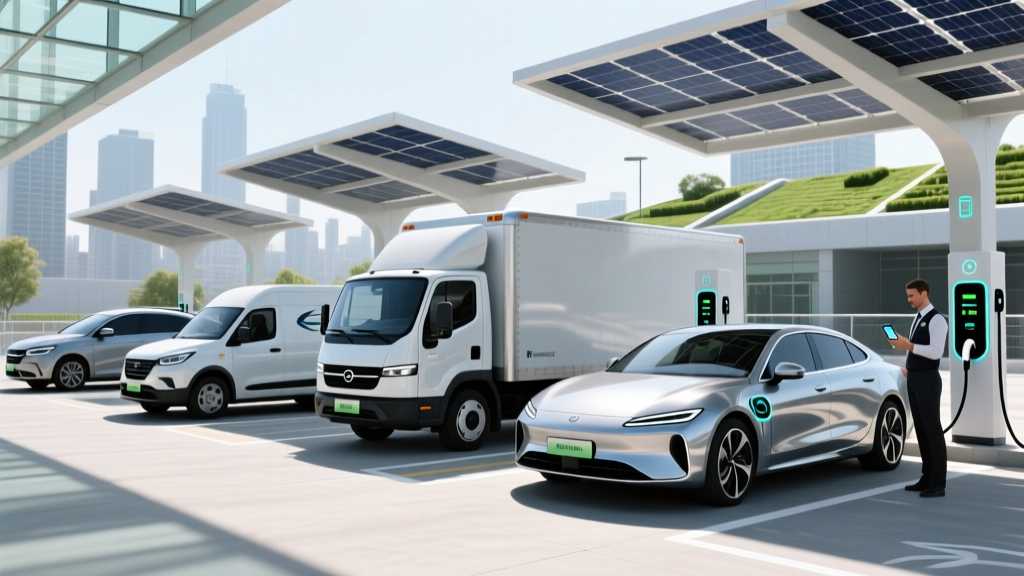
The NV9 is expected to ship with the NACS (North American Charging Standard) connector natively, which is now the dominant standard in North America after Ford, GM, Rivian, and most major automakers adopted it for 2025-2026 models. This gives NV9 owners full access to Tesla's Supercharger network — currently over 6,000 stations and 65,000+ connectors in North America, per Tesla's Supercharger page.
Performance, Drivetrain, and Handling
Tesla's dual-motor AWD configurations have historically delivered class-leading acceleration. The NV9 platform is expected to offer both RWD (single motor) and AWD (dual motor) layouts:
| Configuration | Horsepower (est.) | 0-60 mph (est.) | Drivetrain |
|---|---|---|---|
| Base RWD | ~280-310 hp | ~5.8-6.2 sec | Rear-wheel drive |
| Long Range AWD | ~380-420 hp | ~4.2-4.8 sec | Dual-motor AWD |
| Performance AWD | ~480-520 hp | ~3.1-3.5 sec | Dual-motor AWD |
Tesla's permanent-magnet synchronous reluctance motors remain among the most power-dense in the industry. The NV9's next-gen drive unit is expected to use a silicon carbide inverter with further efficiency gains, reducing energy loss during power delivery.
Pricing, Trims, and Federal Tax Credit Outlook
Tesla has publicly stated the goal of producing a next-generation vehicle at roughly half the production cost of the Model 3/Y. This points to a base MSRP significantly below the current Model 3 lineup. Industry analysts estimate the following pricing structure, though Tesla has not confirmed final numbers:
| Trim | Est. Base MSRP | §30D Credit Eligible? | Est. After-Credit Price |
|---|---|---|---|
| Base RWD (LFP) | ~$25,000-$28,000 | Likely (under MSRP cap) | ~$17,500-$20,500 |
| Long Range AWD | ~$35,000-$40,000 | Likely (under MSRP cap) | ~$27,500-$32,500 |
| Performance AWD | ~$42,000-$48,000 | Depends on final MSRP | ~$34,500-$40,500 |
- MSRP cap: Sedans must be ≤$55,000; SUVs/trucks ≤$80,000
- Buyer income cap: AGI ≤$150,000 (single), ≤$300,000 (joint)
- Battery sourcing: Critical minerals and battery components must meet phased-in domestic/free-trade-agreement thresholds (increasing annually through 2029)
- Point-of-sale transfer: Eligible buyers can apply the credit as an instant discount at purchase rather than waiting for tax filing
- FEOC exclusion: Vehicles with battery components from a "foreign entity of concern" (e.g., certain Chinese suppliers) are disqualified
Source: IRS Clean Vehicle Credits. Eligibility depends on final NV9 battery sourcing and your personal tax situation — consult a tax professional.
The NV9's LFP battery variant could face sourcing challenges under §30D rules, as LFP cells have historically been dominated by Chinese manufacturers (CATL, BYD). Tesla's partnership with Panasonic and its own cell production in Texas may help meet domestic-content thresholds, but this is the single biggest variable in the NV9's tax credit eligibility.
Interior, Cargo, and Technology
Tesla's interior philosophy has trended toward minimalism — a single central touchscreen, no instrument cluster, and sparse physical controls. The NV9 is expected to continue this approach while potentially addressing the most common criticisms (lack of turn signal stalks, no ultrasonic parking sensors in recent models).
Estimated dimensions (based on platform targeting compact-to-midsize segment):
- Passenger volume: ~95-105 cu ft
- Cargo (trunk + frunk): ~22-28 cu ft combined
- Rear legroom: ~35-38 inches
- Frunk (front trunk): ~3-5 cu ft
Expected technology features:
- 15.4-inch central touchscreen with Tesla's latest UI
- HW5 or next-gen AI computer for Autopilot / FSD (Supervised)
- Over-the-air (OTA) software updates
- Heat pump HVAC with cabin overheat protection
- Sentry Mode, Dog Mode, and Tesla app integration
- Potential V2L (vehicle-to-load) capability for powering devices
Warranty and Long-Term Ownership
Tesla's current battery and drive unit warranty is among the strongest in the industry, and the NV9 is expected to carry similar coverage:
- Battery warranty: 8 years / 100,000-120,000 miles (whichever comes first), with guaranteed minimum 70% capacity retention
- Drive unit warranty: 8 years / 100,000-120,000 miles
- Basic vehicle warranty: 4 years / 50,000 miles
LFP batteries, expected in the base NV9, have a significant longevity advantage: they tolerate regular 100% charging without the degradation concerns of NMC chemistry. Tesla recommends charging LFP packs to 100% at least weekly to maintain cell balancing. NMC packs, by contrast, benefit from daily charging limits of 80-90% with 100% reserved for road trips.
Based on fueleconomy.gov data for current Tesla models and Tesla's own impact reports, battery degradation in modern Tesla packs averages approximately 10-12% over 150,000 miles — well within the warranty threshold.
Tesla NV9 vs. the Competition
The NV9 will compete in the most crowded segment of the EV market. Here's how it's likely to stack up against currently available alternatives:
| Attribute | Tesla NV9 LR (Est.) | Chevy Equinox EV | Hyundai Ioniq 5 | Tesla Model 3 LR |
|---|---|---|---|---|
| EPA Range | ~340 mi | 319 mi | 318 mi | 341 mi |
| DC Fast Charge | ~250 kW | ~150 kW | ~240 kW | ~250 kW |
| Base MSRP | ~$35K-$40K | ~$33K | ~$42K | ~$42K |
| Supercharger Access | Native | NACS adapter | NACS adapter | Native |
- You want the lowest-cost entry into the Tesla/Supercharger ecosystem
- Sub-$30K pricing (after credit) is your priority
- You value OTA updates and Tesla's software stack
- You can wait for production ramp (likely 2027+)
- You need a vehicle in the next 6-12 months
- You want proven EPA-certified range and reliability data
- Local dealer service and support matter to you
- You prefer a traditional instrument cluster or physical controls
Pros, Cons, and Final Verdict
- Potentially the most affordable Tesla ever — sub-$30K before credits
- Native Supercharger / NACS access — best charging network in North America
- Tesla's industry-leading efficiency (kWh/100mi)
- LFP option for daily 100% charging without degradation worry
- OTA updates continuously add features post-purchase
- Strong estimated range (330+ mi for Long Range)
- Not yet on sale — announced specs may change before production
- Tesla's minimalist interior isn't for everyone (no stalks, sparse controls)
- Tax credit eligibility depends on unresolved battery sourcing questions
- No confirmed towing capacity — unlikely to exceed 2,000 lbs
- Tesla service center availability remains limited in rural areas
- Build quality concerns persist from current Model 3/Y ownership reports
Who the NV9 suits best: Budget-conscious EV buyers who want Tesla's software ecosystem and Supercharger access at the lowest possible price point. It's ideal for commuters with home Level 2 charging who drive 30-60 miles daily and take occasional road trips. Families needing maximum cargo space or those who tow should look at larger platforms (Model Y, Rivian R2, or upcoming affordable crossovers from Hyundai/Kia).
Frequently Asked Questions
What is the real-world range of the Tesla NV9?
Based on estimated battery capacity and Tesla's historical efficiency, expect ~250-270 miles (base LFP) or ~330-360 miles (Long Range NMC) on the EPA cycle. Real-world highway driving at 70+ mph will yield approximately 85-90% of EPA estimates. Cold weather (below freezing) can reduce range by 20-30%.
How fast does the Tesla NV9 charge?
Estimated peak DC fast-charge rate is ~250 kW on V3 Superchargers, achieving 10-80% in approximately 18-22 minutes with proper battery preconditioning. Home Level 2 charging at 11.5 kW (48A, 240V) adds roughly 38-44 miles per hour of charging.
How much does the NV9 cost after tax credits?
If eligible for the full $7,500 §30D federal credit (subject to income caps, MSRP caps, and battery-sourcing rules), the base NV9 could cost as little as ~$17,500-$20,500. However, LFP battery sourcing from non-FEOC suppliers is the key uncertainty — final credit eligibility won't be confirmed until Tesla certifies the production vehicle.
Does the Tesla NV9 qualify for the federal EV tax credit?
Likely yes for base and Long Range trims (under the $55,000 sedan MSRP cap), provided battery components and critical minerals meet §30D sourcing thresholds and the buyer's AGI is within limits. Check the latest rules at IRS.gov before purchasing.
Is the Tesla NV9 worth waiting for vs. buying a current EV?
If you can wait until late 2026 or 2027 and want the cheapest possible Tesla with Supercharger access, the NV9 is worth monitoring. If you need a vehicle now, the Chevy Equinox EV, Hyundai Ioniq 5, and current Tesla Model 3 are proven alternatives with confirmed EPA ratings, available inventory, and known tax-credit eligibility.
When will the Tesla NV9 be available to buy?
Tesla has not confirmed an official on-sale date. Based on typical Tesla timelines from announcement to production, earliest deliveries could begin in late 2026 or 2027, with volume production ramping into 2028. Tesla has a history of timeline delays, so treat any date as preliminary.