The Truth About a Tesla Nurse Discount
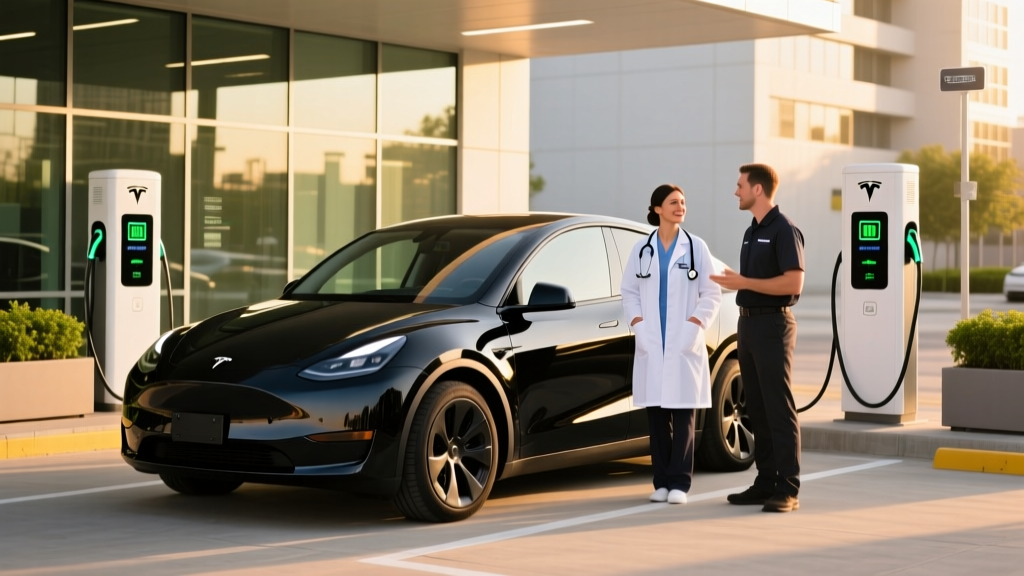
If you're a nurse, doctor, or healthcare worker searching for a Tesla nurse discount, here is the short answer: Tesla does not offer a dedicated nurse, healthcare, military, student, or first-responder discount program. Unlike legacy automakers such as GM, Ford, or Hyundai — many of which participate in programs like GM's Discount for First Responders or Ford's A-Plan/Z-Plan pricing — Tesla sells every vehicle at a single, non-negotiable MSRP through its online storefront.
That doesn't mean healthcare workers are out of luck. Between the §30D federal EV tax credit, state and utility rebates, Tesla's periodic low-rate financing promotions, and referral incentives, a registered nurse earning a median U.S. salary can often reduce the effective cost of a new Tesla by $7,500 to $12,000 or more. This guide breaks down exactly how to stack those savings and which Tesla model makes the most sense for 12-hour shift commutes and hospital-zone driving.
Why Tesla Doesn't Do Occupational Discounts
Tesla's direct-to-consumer sales model eliminates dealerships and, with them, the dealer-applied incentive programs common in the legacy auto industry. Every Tesla is ordered online at the same price whether you're a nurse, a software engineer, or a retiree. Tesla has occasionally offered limited-time promotions — referral credits, free Supercharging miles, or reduced APR financing — but these are available to all buyers equally.
For healthcare professionals accustomed to verifying employment for a corporate discount code, this can feel like a missed opportunity. The upside is pricing transparency: no haggling, no dealer markups disguised as "market adjustments" (at least in normal inventory conditions), and no need to present a hospital ID badge at delivery.
Real Ways Healthcare Workers Save on a Tesla in 2026
Since a Tesla nurse discount doesn't exist as a formal program, here's how to replicate — or exceed — that savings through available incentives.
§30D Federal EV Tax Credit
The IRS §30D Clean Vehicle Credit offers up to $7,500 for eligible new EVs, and since 2024 it can be transferred to the dealer at the point of sale, reducing your purchase price directly rather than waiting until tax filing. Key eligibility rules for 2026:
- Income caps: Modified adjusted gross income (MAGI) must not exceed $150,000 (single), $225,000 (head of household), or $300,000 (joint filing).
- MSRP caps: Vans, SUVs, and pickup trucks are capped at $80,000; sedans and other vehicles at $55,000.
- Battery sourcing: The $7,500 credit splits into two $3,750 halves — one tied to critical-minerals sourcing, the other to battery-component manufacturing. Vehicles with components from a "foreign entity of concern" (FEOC) may lose one or both halves.
- Point-of-sale transfer: You can apply the credit as an instant price reduction at delivery.
As of early 2026, the Tesla Model Y Long Range AWD (base MSRP ~$44,990) and the Model 3 Long Range AWD (~$42,490) generally qualify for the full $7,500 credit, though battery-sourcing rules can shift. Always verify current eligibility on the IRS Clean Vehicle Credits page before ordering.
State, Local, and Utility Rebates
Many states and electric utilities stack additional incentives on top of the federal credit. Examples include California's Clean Fuel Rebate (up to $1,000–$2,000 depending on income), Colorado's state EV tax credit (up to $5,000 for 2026), and utility programs from providers like PG&E, ConEdison, or Xcel Energy offering $500–$1,500 for new EV purchases or home charger installations. These vary by jurisdiction and are subject to change — check your state energy office and local utility for current programs.
Tesla Referral and Financing Promotions
Tesla periodically offers referral credits (typically $500–$1,000 off or free Supercharging miles) when an existing owner shares a referral link. The company also runs promotional APR financing — sometimes as low as 0.99%–2.99% for well-qualified buyers — which can save thousands in interest over a 60- or 72-month loan compared to standard auto-loan rates. These promotions rotate, so timing your order around a financing offer can yield more savings than any occupational discount.
Best Tesla for Nurses: 2026 Model 3 Long Range AWD Profile
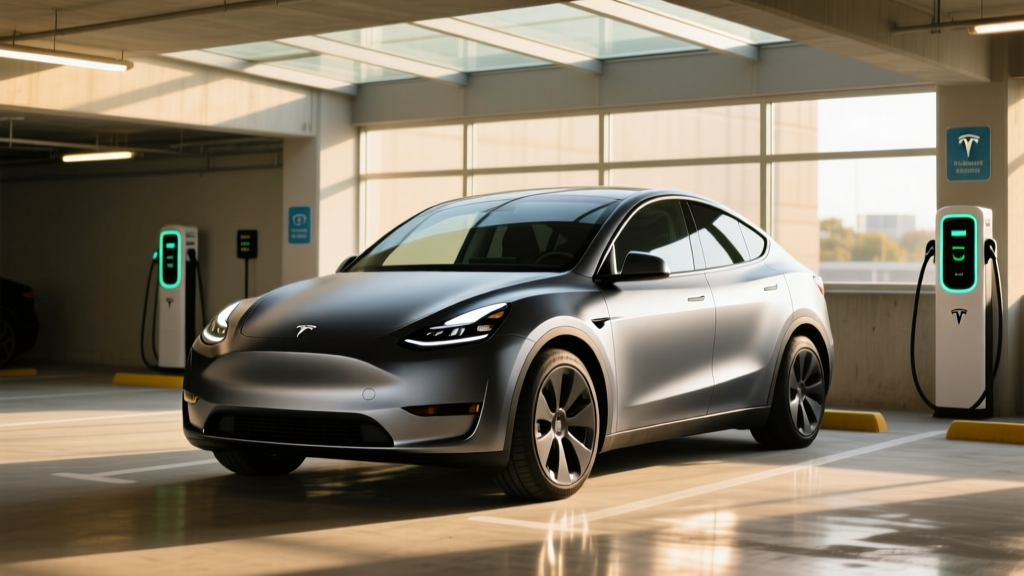
For most healthcare workers — especially those commuting to hospitals with irregular shifts, overnight hours, and limited parking — the 2026 Tesla Model 3 Long Range AWD hits the sweet spot of range, efficiency, and price. Here's the full spec breakdown.
| Spec | Value |
|---|---|
| EPA Range | 346 miles |
| Battery Capacity | ~79 kWh usable (NMC chemistry) |
| Drivetrain | Dual Motor AWD |
| Horsepower | ~384 hp combined |
| 0–60 mph | 4.2 seconds |
| Efficiency | 132 MPGe / 25 kWh/100 mi |
| Max DC Fast Charge | 250 kW peak (V3 Supercharger) |
| 10–80% DC Charge Time | ~25 minutes |
| Level 2 Home Charge Rate | 11.5 kW (~44 mi/hr) |
| Cargo Volume | 23 cu ft (rear trunk + frunk) |
| Rear Legroom | 35.2 inches |
| Battery Warranty | 8 years / 120,000 miles (70% retention) |
| Basic Vehicle Warranty | 4 years / 50,000 miles |
| Base MSRP | $42,490 (before destination) |
| As-Tested (common config) | ~$45,000–$48,000 with paint/wheels/FSD |
Charging: What Nurses Need to Know
For healthcare workers pulling 12-hour shifts, the ideal setup is Level 2 home charging. At 11.5 kW on a Wall Connector (48-amp circuit), the Model 3 recovers roughly 44 miles of range per hour — meaning a full overnight session (8–10 hours) easily replenishes even a near-depleted battery. A 240V/48-amp home charger installation typically costs $800–$2,000 including the $425 Wall Connector unit, electrician labor, and permitting, though a 200-amp panel upgrade can add $1,500–$3,000 if your home's electrical service is older.
For road trips or emergencies, Tesla's Supercharger network remains the most reliable public DC fast-charging option in the U.S. At a V3 (250 kW) stall, the Model 3 Long Range peaks at 250 kW and charges from 10–80% in approximately 25 minutes. However, like all EVs, the charge curve tapers significantly above 80% — a 10–100% session takes closer to 45–50 minutes. For daily driving, charging to 80% (the recommended daily limit for NMC batteries) preserves long-term battery health.
| Charging Level | Power | Miles Added Per Hour | Best For |
|---|---|---|---|
| Level 1 (120V outlet) | ~1.4 kW | ~4–5 mi/hr | Emergency top-ups only |
| Level 2 (240V, 48A Wall Connector) | 11.5 kW | ~44 mi/hr | Daily home charging |
| DC Fast (V3 Supercharger) | 250 kW peak | ~170 mi in 15 min | Road trips, quick stops |
| DC Fast (V4 Supercharger) | Up to 250 kW* | Similar to V3 for Model 3 | Newer station locations |
*V4 Superchargers support higher peak rates for compatible vehicles; Model 3 architecture caps at ~250 kW.
2026 Tesla Pricing and Tax Credit Breakdown
Here's how the numbers shake out for a nurse buying a Model 3 Long Range AWD in 2026, assuming full §30D eligibility and a common configuration.
| Item | Amount |
|---|---|
| Base MSRP | $42,490 |
| Destination Fee | $1,390 |
| Pearl White Paint Upgrade | $1,000 |
| Configured Price | $44,880 |
| §30D Federal Tax Credit (point-of-sale) | −$7,500 |
| State Rebate (example: CA Clean Fuel) | −$1,000 |
| Estimated Effective Price | ~$36,380 |
- Your MAGI is under $150,000 (single) or $300,000 (joint).
- The vehicle MSRP (including options, before destination) is under $55,000 for sedans.
- The battery meets current-year critical-minerals and component-sourcing requirements per IRS guidance.
- You have not exceeded the once-per-VIN purchase rule (you can claim §30D once every 3 years for new EVs).
- Always confirm eligibility at fueleconomy.gov and the IRS §30D page — rules and eligible VIN lists update periodically.
Standout Tech and the Drawbacks Nurses Should Consider
What Works Well for Healthcare Shift Workers
Tesla app and preconditioning: Schedule your Model 3 to warm up (or cool down) while you're finishing charting at the end of a shift. Walking out to a climate-controlled car at 7 AM after a night shift is a daily quality-of-life win that no gas car can match without remote-start fuel waste.
Autopilot (Level 2 driver assist): Tesla's basic Autopilot includes Traffic-Aware Cruise Control and Autosteer, which reduce fatigue on highway commutes. Note: this is SAE Level 2 — you must keep your hands on the wheel and eyes on the road at all times. It is not self-driving. Full Self-Driving (Supervised) adds automated lane changes, traffic-light recognition, and city-street navigation, but still requires full driver supervision and costs an additional $8,000 or $99/month as of 2026.
Over-the-air updates: Tesla regularly pushes software improvements that add features, improve efficiency, and refine the UI without a dealership visit — valuable for nurses who can't easily take time off for service appointments.
Sentry Mode and dashcam: Hospital parking lots and garages are high-traffic environments. Sentry Mode records surrounding activity when the car is parked, and the built-in dashcam captures forward footage — useful for hit-and-run or door-ding documentation.
Notable Drawbacks
Minimalist interior: The Model 3 has no physical buttons, no traditional instrument cluster, and no Apple CarPlay or Android Auto. All controls — including climate, mirrors, and glovebox — are accessed through the 15.4-inch center touchscreen. Some drivers adapt quickly; others find it distracting.
Service center access: Tesla's service network is less dense than legacy dealerships. In rural or underserved areas, a warranty repair might require a mobile ranger visit or a tow to a distant service center. For nurses in smaller metro areas, verify your nearest Tesla Service Center before purchasing.
Insurance costs: Teslas tend to carry higher insurance premiums than comparable ICE sedans due to repair costs and parts pricing. Get a quote from your insurer before ordering — in some states, Tesla's own insurance product offers competitive rates based on real-time driving data.
Pros
- 346-mile EPA range — among the best in its class
- Supercharger network reliability (best-in-class public charging)
- $7,500 §30D credit at point of sale reduces effective price below $37K
- Dual-motor AWD handles rain, snow, and hospital-garage ramps confidently
- OTA updates and app-based preconditioning ideal for shift schedules
- Low running costs: ~$0.04–$0.06/mile on home electricity vs. $0.12–$0.16/mile on gas
Cons
- No occupational, nurse, or first-responder discount program
- No Apple CarPlay/Android Auto — phone integration is Bluetooth only
- Higher insurance premiums in many states
- Service center density still limited outside major metros
- NMC battery requires 80% daily charge limit for longevity (vs. LFP's 100% tolerance)
- FSD is expensive ($8,000 or $99/mo) and still Level 2, not autonomous
Model 3 vs. Competitors: Is Tesla Still the Best Buy?
For a nurse weighing options, the Model 3 Long Range competes primarily with the Hyundai Ioniq 6, BMW i4, and Polestar 2. Here's how they stack up on the metrics that matter for daily commuting and long-term ownership.
| Spec | Tesla Model 3 LR AWD | Hyundai Ioniq 6 SEL AWD | BMW i4 xDrive40 |
|---|---|---|---|
| EPA Range | 346 mi | 316 mi | 282 mi |
| Battery (kWh) | ~79 (NMC) | 77.4 (NMC) | 81.5 (NMC) |
| DC Fast Charge (peak kW) | 250 kW | 240 kW | 205 kW |
| 10–80% DC Time | ~25 min | ~18 min | ~31 min |
| 0–60 mph | 4.2 sec | 5.1 sec | 4.7 sec |
| Base MSRP | $42,490 | $46,000 | $57,000 |
| §30D Credit Eligible | Yes (full $7,500) | Partial/Varies | No (MSRP sourcing) |
| Apple CarPlay | No | Yes | Yes |
The Ioniq 6 charges slightly faster from 10–80% thanks to its 800V architecture and offers Apple CarPlay, but its range trails by 30 miles and its §30D eligibility has been inconsistent due to battery-sourcing rules. The BMW i4 is a premium option with superior interior materials but starts $15,000 higher and typically doesn't qualify for the federal credit. For a nurse prioritizing range, charging-network reliability, and total cost of ownership, the Model 3 Long Range remains the strongest value proposition in this segment.
Who Should Buy the Tesla Model 3 (and Who Shouldn't)
Buy the Model 3 Long Range AWD if:
- You commute 30–80 miles round-trip to a hospital and want to charge at home overnight, never visiting a gas station.
- You live in a region with cold winters and need AWD plus battery preconditioning for reliable winter range.
- You qualify for the §30D credit and want a sub-$37K effective price on a 346-mile EV.
- You value Tesla's Supercharger network for occasional road trips (family visits, conferences, travel nursing assignments).
- You're comfortable with a touchscreen-centric interface and don't need CarPlay.
Look elsewhere if:
- You need a larger vehicle for carpooling, child seats, or hauling medical equipment — consider the Model Y or an electric SUV.
- You lack access to home or workplace Level 2 charging and your area has limited public infrastructure.
- You strongly prefer physical controls, a traditional gauge cluster, or Apple CarPlay/Android Auto — the Ioniq 6 or BMW i4 may suit you better.
- Your income exceeds §30D caps and no state incentives apply, making the effective price less competitive.
Frequently Asked Questions
Does Tesla offer any discount for nurses, doctors, or healthcare workers?
No. Tesla does not have a nurse discount, healthcare worker discount, military discount, or any occupation-specific pricing program. All buyers pay the same online MSRP. However, healthcare workers can save significantly through the §30D federal tax credit (up to $7,500), state rebates, utility incentives, and Tesla's periodic low-APR financing offers.
What is the real-world range of the 2026 Tesla Model 3 Long Range?
The EPA rates it at 346 miles. Real-world highway driving at 70–75 mph typically yields 290–310 miles. In freezing temperatures, expect 240–270 miles of highway range. City driving with regenerative braking often exceeds the EPA estimate slightly.
How fast does the Model 3 charge at home and on the road?
At home on a 240V/48A Tesla Wall Connector, it charges at 11.5 kW, adding about 44 miles of range per hour — a full overnight charge. On a V3 Supercharger (250 kW DC), it charges from 10–80% in approximately 25 minutes, adding up to 170 miles in 15 minutes at peak rate.
Does the Tesla Model 3 qualify for the $7,500 federal tax credit?
As of early 2026, the Model 3 Long Range AWD generally qualifies for the full $7,500 §30D credit, which can be applied at the point of sale. Eligibility depends on your income (under $150K single / $300K joint), the vehicle's battery sourcing compliance, and MSRP caps. Always verify on irs.gov before ordering.
Is the Tesla Model 3 worth it compared to the Hyundai Ioniq 6 or BMW i4?
For total cost of ownership, range, and charging-network reliability, the Model 3 Long Range is the strongest value in the segment — especially after the §30D credit brings the effective price below $37K. The Ioniq 6 offers faster 10–80% charging and CarPlay; the i4 delivers a more premium interior but at a significantly higher price without federal credit eligibility.
Can I negotiate the price of a Tesla?
No. Tesla uses a fixed-price online ordering system. There are no dealer markups, no negotiation, and no trade-in haggling. Trade-in values are offered at a fixed algorithmic price, which is often lower than private-party sale value — consider selling your current car privately for more.
What's the battery warranty on the Model 3 Long Range?
Tesla covers the battery and drive unit for 8 years or 120,000 miles, whichever comes first, with a minimum 70% capacity retention guarantee. If the battery degrades below 70% of its original capacity within that period, Tesla will repair or replace it at no cost.