Why Norwalk, CA Drivers Are Eyeing the Tesla Model 3 in 2026
If you're searching for a Tesla in Norwalk, CA, you're not alone. The San Gabriel Valley and greater Southeast Los Angeles County corridor have become a hotspot for EV adoption, thanks to short commutes along the I-605 and I-105, abundant public charging infrastructure, and California's aggressive clean-air incentives. The 2026 Tesla Model 3 remains one of the most compelling options for buyers in this area — combining strong range, access to the Supercharger network, and a starting price that undercuts many competitors after federal and state incentives.
This review covers everything a Norwalk-area buyer needs to know: real-world range on Southern California highways, home charging setup in older Southeast LA homes, current federal tax credit eligibility under IRS §30D rules, and how the Model 3 stacks up against the Hyundai Ioniq 6 and BMW i4. Let's get into the numbers.
2026 Tesla Model 3: Core Specifications at a Glance
| Spec | RWD (Base) | Long Range AWD | Performance |
|---|---|---|---|
| EPA Range | 272 mi | 341 mi | 315 mi |
| Battery (usable) | ~60 kWh (LFP) | ~79 kWh (NMC) | ~79 kWh (NMC) |
| Drivetrain | Rear-Wheel Drive | Dual-Motor AWD | Dual-Motor AWD |
| Horsepower | 271 hp | 346 hp | 510 hp |
| 0–60 mph | 5.8 sec | 4.2 sec | 2.9 sec |
| Max DC Fast Charge | 170 kW | 250 kW | 250 kW |
| 10–80% DC Time | ~30 min | ~25 min | ~25 min |
| Level 2 Home Rate | 7.6 kW (~30 mi/hr) | 11.5 kW (~44 mi/hr) | 11.5 kW (~44 mi/hr) |
| MPGe (combined) | 132 MPGe | 131 MPGe | 119 MPGe |
| kWh/100 mi | 25 | 26 | 28 |
| Base MSRP | $38,990 | $45,990 | $52,990 |
Source: fueleconomy.gov, Tesla.com (2026 model year). Specs reflect current production estimates and may vary by configuration.
Real-World Range: What to Expect Driving Around Norwalk and Beyond
EPA Sticker: 272 mi (RWD) / 341 mi (Long Range AWD)
Real-World Expectation: In Norwalk's mild Southern California climate, expect 245–260 miles highway in the RWD and 305–325 miles highway in the Long Range at sustained 70–75 mph. Cold-weather range loss is minimal here — rarely more than 5–8% during winter mornings in the low 40s. However, frequent A/C use in summer (common June–October) can reduce range by 8–12% compared to spring/fall driving.
The Model 3's efficiency is genuinely class-leading. At 25–28 kWh per 100 miles depending on trim, it sips less energy per mile than most competitors. On a typical Norwalk-to-Palm Springs trip (roughly 110 miles each way via I-10), a Long Range AWD owner can complete the round trip with approximately 30% battery remaining — no en-route charging needed, assuming moderate speeds and standard climate use.
For daily commuting along the 605 freeway or surface streets through Santa Fe Springs and Cerritos, the RWD's 272 EPA miles means most owners will charge at home just 2–3 times per week, even with a 40-mile round-trip commute.
Charging Speeds: DC Fast Charging and Home Setup in Southeast LA
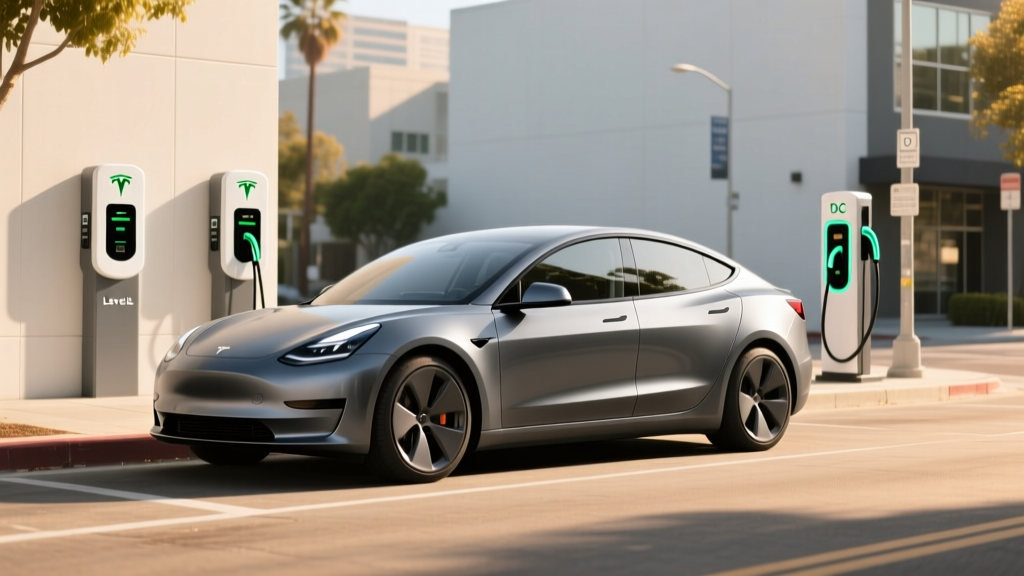
| Charging Level | Power (kW) | Miles Added per Hour | Typical Use Case |
|---|---|---|---|
| Level 1 (120V household) | ~1.4 kW | ~4–5 mi/hr | Overnight trickle; emergency only |
| Level 2 (240V, 48A Wall Connector) | 11.5 kW | ~44 mi/hr | Daily home charging (recommended) |
| Level 2 (240V, 32A Mobile Connector) | 7.6 kW | ~30 mi/hr | Dryer-outlet or lower-amp panel |
| DC Fast Charge (V3 Supercharger) | Up to 250 kW | ~200 mi in 15 min (peak) | Road trips; rapid top-ups |
| DC Fast Charge (V4 Supercharger) | Up to 250+ kW | Similar to V3 with better cable management | Newer Tesla stations |
Charging curve reality check: The Model 3 Long Range peaks at 250 kW only at low state-of-charge (roughly 10–30%). Above 50% SoC, the rate tapers significantly — expect ~100–120 kW at 60% and ~50 kW above 80%. This means the advertised 25-minute 10–80% time is realistic, but charging from 80–100% can add another 25–30 minutes. For road trips, the optimal strategy is to charge to 80% and move on.
Home Charging Installation in Norwalk
Many homes in Norwalk, South Whittier, and nearby communities were built in the 1950s–1970s with 100-amp or 125-amp electrical panels. Installing a Tesla Wall Connector on a 60-amp circuit (the recommended setup for 11.5 kW charging) requires:
- Panel capacity check: A licensed electrician must verify your panel has enough spare capacity. Older 100A panels may need an upgrade to 200A ($1,500–$3,500 in the LA basin).
- Circuit and wiring: A dedicated 60A circuit with 6 AWG copper wire, typically $500–$1,200 for a straightforward run from panel to garage.
- Tesla Wall Connector: $475 direct from Tesla (hardware cost).
- Permits: Norwalk requires an electrical permit through LA County Department of Public Works. Budget $150–$350 for permitting and inspection.
- Total typical install: $1,200–$2,500 for homes with adequate panels; $3,000–$5,500 if a panel upgrade is needed.
Pro tip for Norwalk buyers: Southern California Edison (SCE) offers time-of-use (TOU) rates that make overnight charging significantly cheaper. On the TOU-D-4-9 plan, off-peak electricity (before 8 AM and after 9 PM) runs approximately $0.13–$0.16/kWh, meaning a full Model 3 Long Range charge costs roughly $10–$13 at home — equivalent to about $3 per gallon gasoline.
Pricing, Trims, and Federal Tax Credit Eligibility
| Trim | Base MSRP | Est. §30D Credit | Effective Price | CA Clean Fuel Rebate |
|---|---|---|---|---|
| Model 3 RWD | $38,990 | Up to $7,500* | ~$31,490* | Up to $2,000 (income-limited) |
| Model 3 Long Range AWD | $45,990 | Up to $7,500* | ~$38,490* | Up to $2,000 (income-limited) |
| Model 3 Performance | $52,990 | Up to $7,500* | ~$45,490* | Up to $2,000 (income-limited) |
* Federal §30D credit eligibility requires meeting ALL of the following (per IRS guidelines):
- Buyer income caps: Modified AGI ≤ $150,000 (single) / $300,000 (married filing jointly)
- MSRP cap: Vehicle base MSRP must not exceed $55,000 for sedans (all Model 3 trims qualify)
- Battery sourcing: Critical minerals and battery components must meet escalating percentage thresholds from US or FTA-partner countries — Tesla has progressively improved compliance, but verify current eligibility on the IRS qualified vehicles list before purchasing
- Point-of-sale transfer: As of 2024+, you can transfer the credit to the dealer at purchase, reducing your out-of-pocket cost immediately rather than waiting for tax filing
- Assembly: Vehicle must undergo final assembly in North America (Model 3 is built in Fremont, CA — qualifies)
Critical note: Tax credit eligibility for specific battery configurations can change quarter to quarter as supply chains shift. Always verify the specific VIN's credit status on fueleconomy.gov or with your Tesla advisor before finalizing your order. Consult a tax professional for your personal situation.
Tech, Interior, and Driver Assistance
The 2026 Model 3 "Highland" refresh (introduced for the 2024 model year and carried forward) brought meaningful improvements over the pre-2024 interior:
- Ventilated front seats — critical for Norwalk's hot summers
- Rear 8-inch touchscreen for climate and entertainment control
- Ambient lighting and upgraded materials throughout the cabin
- Improved NVH (noise/vibration/harshness) — noticeably quieter at freeway speeds
- 15.4-inch front touchscreen running Tesla's latest software with wireless Apple CarPlay (via Tesla app) and native navigation
Driver Assistance: Autopilot and FSD Supervised
SAE Level 2 — NOT self-driving. Tesla Autopilot (standard) and Full Self-Driving Supervised ($8,000 option or $99/month) are Level 2 driver-assistance systems. You must keep your hands on the wheel (or demonstrate attentiveness via the cabin camera) and remain fully responsible for the vehicle at all times. FSD Supervised can navigate highways, handle on-ramps, and follow navigation routes, but it does not eliminate the need for active driver supervision. Only Level 4 services like Waymo operate without a human driver.
On the I-605 and I-5 corridors near Norwalk, Autopilot performs well in steady-flow traffic. FSD Supervised handles most freeway interchanges competently but can be hesitant in complex construction zones (common on the I-105). The cabin camera attentiveness monitoring is strict — look away for more than a few seconds and the system will issue escalating warnings before disengaging.
Cargo and Passenger Space
- Rear legroom: 35.3 inches (adequate for adults on shorter trips)
- Front headroom: 40.3 inches
- Cargo (rear trunk): 21.0 cu ft
- Frunk (front trunk): 3.1 cu ft — fits a laptop bag or charging cables
- Total cargo: ~24.1 cu ft (with rear seats up)
The Model 3 is a compact executive sedan — it's not a family hauler. If you need more cargo room, the Model Y (up to 76 cu ft with seats folded) is the logical step up, though at a higher price point.
How the Model 3 Compares to Key Competitors
For Norwalk buyers cross-shopping the Model 3, the most common alternatives are:
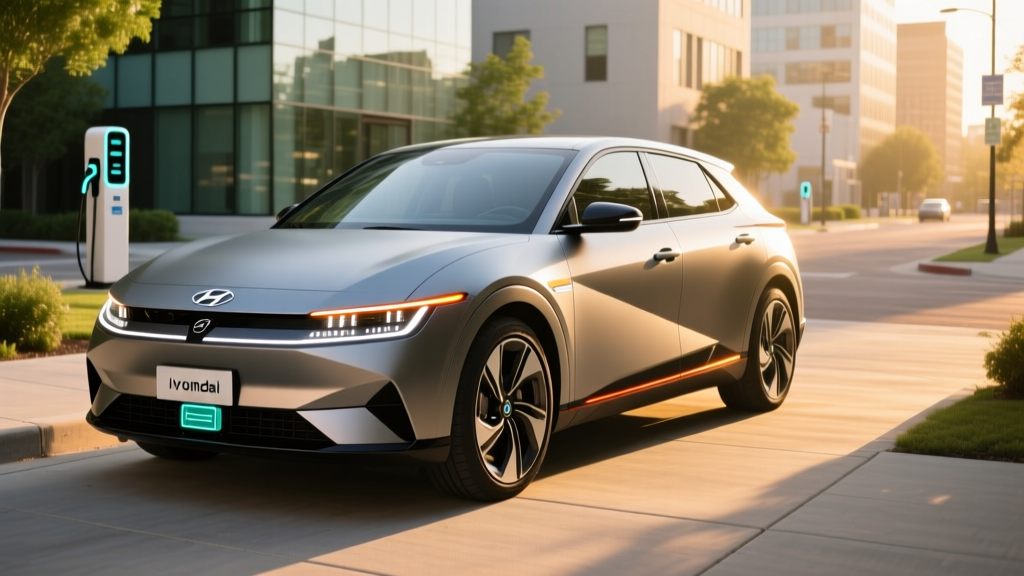
- Hyundai Ioniq 6 SE/SEL ($39,950–$47,500): Slightly more range (up to 361 mi EPA), faster 800V charging architecture (10–80% in ~18 min at 350 kW), but no access to Tesla's Supercharger network without adapters. Interior quality is competitive; styling is polarizing.
- BMW i4 eDrive40 ($52,200+): More premium interior and driving dynamics, but significantly more expensive and shorter range (301 mi EPA). Better suited for luxury-oriented buyers.
- Polestar 2 ($49,800+): Strong build quality and distinctive design, but shorter range and higher price. Niche choice.
Pros
- Best-in-class efficiency (25–28 kWh/100 mi)
- Access to 6,000+ Tesla Superchargers nationwide (many in SoCal)
- Over-the-air updates continuously add features
- Lowest total cost of ownership in its segment
- Strong resale value relative to EV peers
- Built in Fremont, CA — qualifies for §30D assembly requirement
Cons
- No Apple CarPlay/Android Auto (native Tesla interface only)
- Rear seat space is tight for taller passengers
- Touchscreen-dependent climate controls (no physical buttons)
- FSD Supervised is expensive ($8,000) and still requires full attention
- Insurance costs in LA County run 20–35% higher than segment average
- RWD trim uses LFP battery — lower cold-weather resilience (less relevant in SoCal)
Who the Tesla Model 3 Suits Best
Choose the Model 3 RWD if: You commute under 60 miles daily, mostly drive in the city or on shorter freeway segments, want the lowest entry price, and can charge at home. The LFP battery is durable (Tesla recommends charging to 100% daily for LFP) and the 272-mile range is plenty for Norwalk-area driving.
Choose the Model 3 Long Range AWD if: You take regular road trips (Palm Springs, Big Bear, San Diego), want the security of 341 EPA miles, or need dual-motor AWD for occasional mountain driving. The NMC battery delivers stronger sustained performance and faster peak charging.
Choose the Model 3 Performance if: You prioritize acceleration (2.9-second 0–60 mph) and track-capable handling. The $7,000 premium over Long Range is hard to justify for pure practicality, but the performance delta is substantial.
Look elsewhere if: You need to regularly carry 3+ passengers, tow anything, or prefer traditional infotainment with Apple CarPlay. Consider the Model Y, Ioniq 5, or Rivian R2 instead.
Warranty and Long-Term Ownership
- Basic vehicle warranty: 4 years / 50,000 miles
- Battery & drive unit warranty: 8 years / 100,000 miles (RWD) or 8 years / 120,000 miles (Long Range/Performance) — covers battery if capacity drops below 70% of original
- Real-world degradation: Tesla fleet data shows Model 3 batteries typically retain ~88–92% capacity at 100,000 miles. LFP batteries in the RWD trim show even lower degradation rates, often retaining 93%+ at equivalent mileage.
For Norwalk owners who drive the national average of ~13,500 miles per year, the battery warranty covers roughly 7–9 years of ownership. Battery replacement out of warranty currently runs $12,000–$16,000 depending on configuration, though prices continue to decline as battery costs fall.
Frequently Asked Questions
What is the real-world range of the Tesla Model 3 in Southern California?
In Norwalk's climate, expect 245–260 highway miles (RWD) or 305–325 highway miles (Long Range AWD). City driving with regenerative braking can match or slightly exceed EPA estimates. Summer A/C use reduces range by roughly 8–12%.
How fast does the Model 3 charge at home and on road trips?
At home on a 240V/48A Tesla Wall Connector, the Long Range adds ~44 miles per hour (full charge in ~7 hours). On V3 Superchargers, it peaks at 250 kW and charges 10–80% in about 25 minutes. The RWD model charges at 170 kW peak (10–80% in ~30 minutes).
Does the Tesla Model 3 qualify for the $7,500 federal EV tax credit?
As of 2026, the Model 3 qualifies for up to $7,500 under IRS §30D, subject to buyer income limits ($150K single / $300K joint), the $55K sedan MSRP cap (all trims qualify), and battery sourcing requirements that can change. Verify eligibility on IRS.gov before ordering. The credit can be transferred at point of sale.
Is the Model 3 worth buying vs the Hyundai Ioniq 6 or BMW i4?
The Model 3 wins on efficiency, Supercharger network access, and total cost of ownership. The Ioniq 6 offers faster DC charging and more range but lacks native Supercharger access. The BMW i4 is more luxurious but significantly pricier. For most Norwalk commuters prioritizing value and charging convenience, the Model 3 Long Range remains the strongest all-around choice.
What are the biggest drawbacks of owning a Tesla Model 3?
The main compromises are rear-seat space (tight for tall adults), no Apple CarPlay/Android Auto, touchscreen-only climate controls, higher-than-average insurance costs in LA County, and the $8,000 FSD option that still requires full driver attention. Build quality has improved significantly with the Highland refresh but still shows occasional panel-gap variation.
Where is the nearest Tesla Service Center and Supercharger to Norwalk?
Tesla operates Supercharger stations throughout Southeast LA County, including locations in Cerritos, Downey, and Commerce — all within 10–15 minutes of central Norwalk. The nearest Tesla Service Center is in Cerritos (approximately 6 miles away). Mobile service is also available for many repairs at your home or workplace.