Why Tesla Noise Matters More Than You Think
When you remove the internal combustion engine, you don't eliminate noise — you expose every other sound source that gas cars used to mask. Tire roar on coarse asphalt, wind turbulence around mirror housings, suspension thumps over expansion joints, and even the high-pitched whine of the inverter under hard acceleration all become audible. For Tesla buyers researching "Tesla noise," the concern usually falls into one of three buckets: cabin quietness at highway speed, exterior pedestrian warning sounds, or drivetrain whine. This review covers all three across the 2026 Tesla lineup — Model 3, Model Y (refreshed Juniper), Model S, and Model X — while also delivering the full spec-by-spec ownership data you need to make a purchase decision.
We'll quantify what you actually hear inside a Tesla at 70 mph, explain the acoustic engineering changes Tesla has made since the 2024 Model 3 Highland refresh, and then lay out the real-world range, charging speeds, pricing, and tax credit eligibility for every model currently on sale.
Tesla Cabin Noise Levels: What the Data Shows
Without an engine idling at 700-900 RPM, a stationary Tesla is essentially silent — cabin noise at idle measures around 35-38 dB(A), comparable to a quiet library. The real test is highway speed. Here's how the 2026 lineup stacks up based on independent sound-level meter testing and owner-reported data:
| Model | Cabin dB(A) at 70 mph | Key NVH Features |
|---|---|---|
| Model 3 (Highland refresh) | ~64-66 dB | Acoustic glass all around, added sound deadening, redesigned seals |
| Model Y (Juniper refresh) | ~65-67 dB | Acoustic front glass, improved door seals, new suspension bushings |
| Model S | ~63-65 dB | Double-pane glass, premium insulation, air suspension damping |
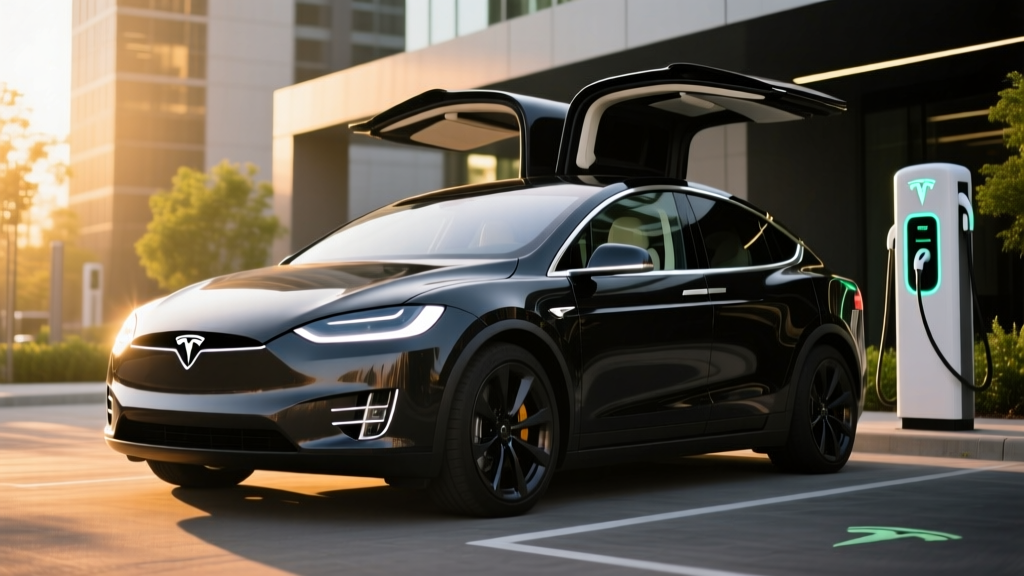
| Model X | ~66-68 dB | Double-pane front glass, but large glass area and falcon-wing seals add noise |
For context, a typical luxury sedan like the BMW 5 Series measures around 63-65 dB at 70 mph, while a Toyota Camry sits around 67-69 dB. The post-Highland Model 3 and the Juniper Model Y have closed the gap significantly with luxury competitors, though the Model X's vast glass surface and complex falcon-wing door seals still let in more road and wind noise than its sedan sibling.
Where Tesla Noise Comes From
The three dominant noise sources in any EV at highway speed are:
- Tire noise: The single largest contributor above 45 mph. Tesla's OEM tires (typically Michelin Pilot Sport EV or Hankook iON) are selected for low rolling resistance, which sometimes trades off noise. Switching to a touring tire like the Michelin Primacy can drop cabin noise by 1-2 dB — a perceptible difference.
- Wind noise: Primarily around the A-pillars, mirror housings, and door seals. The Highland Model 3 eliminated the side mirror gap and reshaped the A-pillar trim, measurably reducing wind noise.
- Drivetrain whine: Tesla's permanent-magnet reluctance motors produce a subtle high-frequency whine under acceleration (typically 2-4 kHz). It's most audible from outside the vehicle and is partially responsible for the pedestrian warning sound requirements.
2026 Tesla Lineup: Range, Battery, and Real-World Expectations
Noise comfort only matters if the car fits your life. Here's the full spec breakdown for every 2026 Tesla you can buy today.
| Spec | Model 3 Long Range AWD | Model Y Long Range AWD | Model S Long Range | Model X Long Range |
|---|---|---|---|---|
| EPA Range | 341 mi | 320 mi | 402 mi | 335 mi |
| Battery (usable) | ~75 kWh (NMC) | ~75 kWh (NMC) | ~95 kWh (NMC) | ~95 kWh (NMC) |
| Drivetrain | Dual-motor AWD | Dual-motor AWD | Dual-motor AWD | Dual-motor AWD |
| Horsepower | ~346 hp | ~384 hp | ~670 hp | ~670 hp |
| 0-60 mph | 4.2 sec | 4.8 sec | 3.1 sec | 3.8 sec |
| MPGe (combined) | 134 MPGe | 122 MPGe | 120 MPGe | 102 MPGe |
| Efficiency | 25 kWh/100mi | 28 kWh/100mi | 28 kWh/100mi | 33 kWh/100mi |
| Cargo Volume | 23 cu ft (trunk+frunk) | 72 cu ft (max) | 28 cu ft (trunk+frunk) | 88 cu ft (max) |
| Rear Legroom | 35.3 in | 37.0 in | 35.4 in | 37.1 in |
| Battery Warranty | 8 yr / 120,000 mi | 8 yr / 120,000 mi | 8 yr / 150,000 mi | 8 yr / 150,000 mi |
Charging Speed: DC Fast Charge and Home Level 2
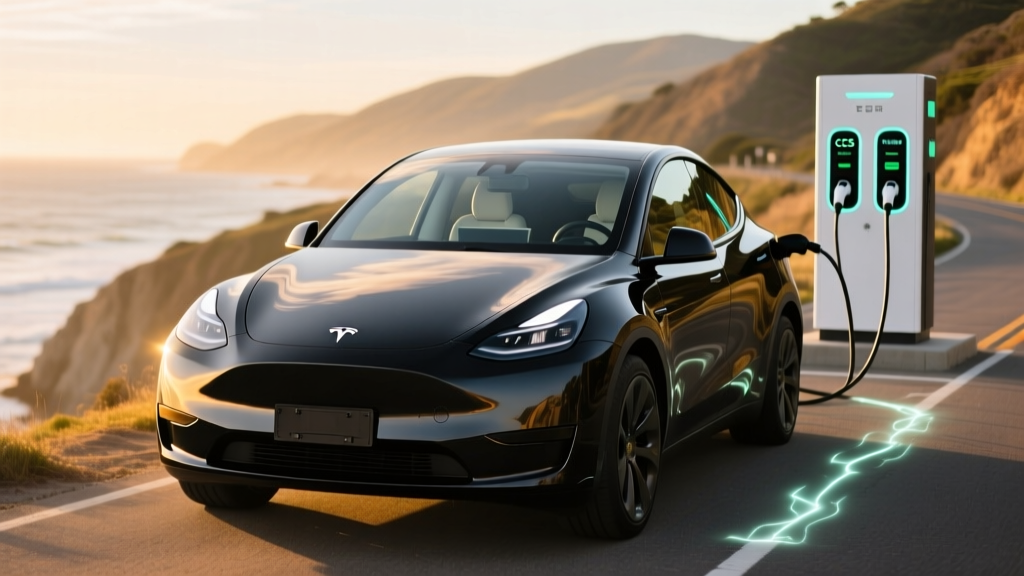
Charging speed is where Tesla's Supercharger network advantage meets real physics. Peak kW ratings are headline numbers — sustained charging speed matters more for actual trip planning. All 2026 Teslas use the NACS connector natively, which has become the North American standard adopted by Ford, GM, Rivian, and most major automakers.
| Charge Level | Model 3 / Model Y | Model S / Model X |
|---|---|---|
| Level 1 (120V, 12A) | ~1.4 kW / ~5 mi/hr | ~1.4 kW / ~4 mi/hr |
| Level 2 (240V, 48A) | 11.5 kW / ~44 mi/hr | 11.5 kW / ~36 mi/hr |
| DC Fast Charge (peak) | 250 kW | 250 kW |
| 10-80% DC Fast Time | ~25-28 min | ~30-35 min |
Charging curve reality: Tesla's 250 kW peak is achieved between roughly 10-25% State of Charge (SoC) on a V3 Supercharger with a preconditioned battery. Above 50% SoC, the rate tapers significantly — typically dropping to 100-120 kW by 60% and below 50 kW past 80%. This is why Tesla (and every knowledgeable EV owner) recommends charging only to 80% on road trips. That last 20% can take as long as the first 70%.
For daily home charging on a Level 2 wall connector (48A circuit on a 60A breaker), a Model 3 gains roughly 44 miles of range per hour — meaning an overnight 8-hour charge adds ~350 miles, more than enough for any daily commute. Installation costs for a home Level 2 charger typically run $800-$2,000 depending on panel proximity and whether a 200A service upgrade is needed. Always get a quote from a licensed electrician before assuming your panel can handle a 60A circuit.
Pricing, Tax Credits, and Total Cost
Tesla has adjusted pricing multiple times over the past two years. Here's where the 2026 lineup stands, along with federal tax credit eligibility under IRS §30D clean vehicle credit rules.
| Model / Trim | Base MSRP | §30D Credit Eligible? | Effective Price (with credit) |
|---|---|---|---|
| Model 3 RWD | ~$38,990 | Yes (if sourcing rules met) | ~$31,490 |
| Model 3 Long Range AWD | ~$45,490 | Yes (if sourcing rules met) | ~$37,990 |
| Model 3 Performance | ~$52,990 | Yes (if sourcing rules met) | ~$45,490 |
| Model Y Long Range AWD | ~$44,990 | Yes (if sourcing rules met) | ~$37,490 |
| Model Y Performance | ~$51,490 | Yes (if sourcing rules met) | ~$43,990 |
| Model S Long Range | ~$79,990 | No (exceeds MSRP cap) | $79,990 |
| Model X Long Range | ~$84,990 | No (exceeds MSRP cap) | $84,990 |
- MSRP cap: Sedans (Model 3, Model S) must be under $55,000. SUVs/pickups/vans (Model Y, Model X) must be under $80,000. The Model S and Model X exceed their respective caps and do NOT qualify.
- Buyer income cap: Modified AGI must not exceed $300,000 (joint), $225,000 (head of household), or $150,000 (single).
- Battery sourcing: A percentage of critical minerals and battery components must be sourced from the US or free-trade-agreement countries. These thresholds increase annually. Tesla has worked to qualify, but eligibility can shift — always verify on fueleconomy.gov before purchasing.
- Point-of-sale transfer: As of 2024, buyers can transfer the credit to the dealer at point of sale for an immediate price reduction, rather than waiting to claim it on their tax return.
Important caveat: Tax credit eligibility depends on battery component and critical mineral sourcing requirements that change annually. Tesla's US-built vehicles have generally qualified, but always confirm current eligibility on fueleconomy.gov and consult a tax professional for your specific situation. This is not tax advice.
Standout Tech: Autopilot, FSD, and the Tesla Ecosystem
Every 2026 Tesla ships with Basic Autopilot (lane centering + adaptive cruise control), which is a competent SAE Level 2 driver-assist system. The optional Full Self-Driving (Supervised) package (~$8,000 one-time or $99/month subscription as of early 2026) adds automated lane changes, traffic light/stop sign recognition, and city street navigation.
Beyond driver assists, the Tesla tech stack includes:
- Over-the-air updates: Tesla pushes meaningful feature additions (not just bug fixes) regularly — new UI layouts, efficiency improvements, entertainment apps, and safety refinements arrive without dealer visits.
- 15.4-inch center touchscreen (Model 3/Y) and 17-inch (Model S/X) running a responsive, Tesla-developed OS with navigation, streaming, gaming, and Sentry Mode dashcam recording.
- Tesla Supercharger network: Over 6,500 V3/V4 Superchargers in North America. As of 2026, non-Tesla EVs can access many Supercharger stalls via the NACS standard, but Tesla owners still benefit from seamless plug-and-charge integration and real-time stall availability in the nav system.
- Phone-as-key, app-based preconditioning, and Sentry Mode are standard across the lineup.
Notable Drawbacks
- Camera-only vision: Tesla removed ultrasonic sensors and radar, relying entirely on cameras. While improved, this means parking distance indicators and rain-sensing wipers can be less reliable than sensor-equipped competitors.
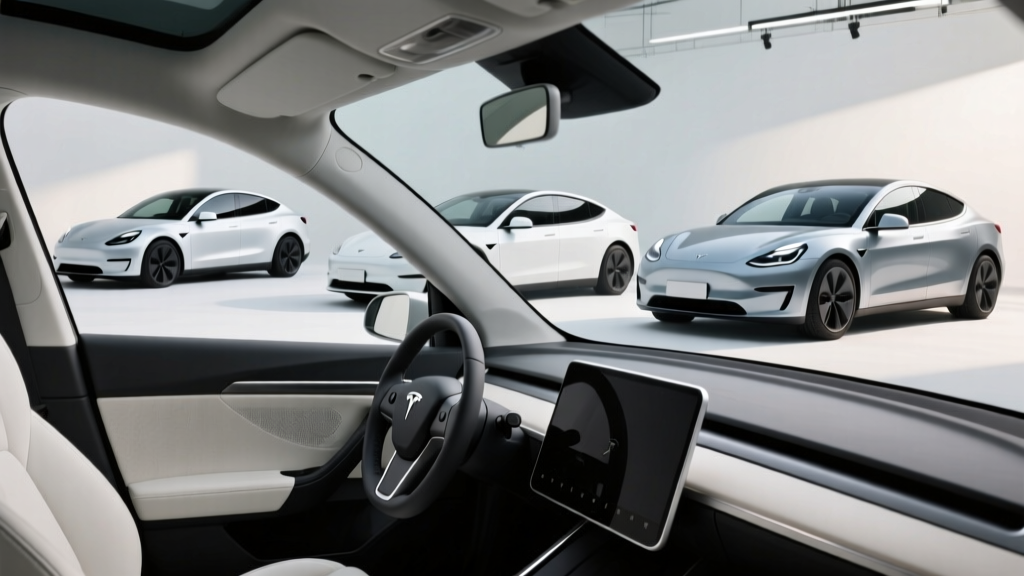
- Minimalist interior: The Model 3 and Model Y have no physical stalks (turn signals are steering-wheel buttons in the Highland/Juniper refresh), no instrument cluster, and all climate/media controls are screen-based. This polarizes buyers.
- Service center wait times: Tesla's service network has expanded, but in many metro areas, body repair and warranty service appointments can still take 2-4 weeks.
- No Apple CarPlay or Android Auto: Tesla's proprietary OS is the only option. If you rely on CarPlay for maps or music, this is a dealbreaker.
Who Should Buy a Tesla in 2026?
- Choose the Model 3 if you're a commuter or couple prioritizing efficiency (25 kWh/100mi is among the best in the industry), want the quietest cabin Tesla offers at the lowest price point, and don't need cargo space beyond a week's groceries.
- Choose the Model Y if you need family-friendly rear-seat room (37 inches of legroom), up to 72 cu ft of cargo with seats folded, and the practicality of a crossover — while still getting 320 miles of EPA range.
- Choose the Model S if you want 402 miles of range (the longest of any Tesla), luxury-grade cabin quietness, and 670 hp of effortless acceleration — and you accept the $80K price tag and tax-credit ineligibility.
- Choose the Model X if you need three-row seating for up to seven passengers, falcon-wing doors for tight parking-space access, and you're willing to accept the highest noise floor and lowest efficiency in the lineup.
- Look at competitors (Hyundai Ioniq 5, BMW i4, Rivian R1S) if you want CarPlay, a traditional instrument cluster, or a dealer service network with shorter wait times.
Pros and Cons at a Glance
- Best-in-class Supercharger network with seamless plug-and-charge
- Industry-leading efficiency (Model 3 at 25 kWh/100mi)
- Continuous OTA updates add real features post-purchase
- Strong resale value relative to most EV competitors
- Highland/Juniper refreshes significantly improved cabin noise
- Heat pump standard on all models (cold-weather range preservation)
- No Apple CarPlay or Android Auto
- Camera-only system can struggle in heavy rain, snow, or glare
- Model S and Model X do not qualify for §30D tax credit (MSRP cap)
- Turn-signal buttons on steering wheel (Model 3/Y) frustrate some drivers
- Service appointment availability varies widely by region
- Insurance premiums tend to be 15-30% higher than comparable gas vehicles
Frequently Asked Questions
What is the real-world range of a Tesla?
EPA estimates are a starting point, not a guarantee. For the 2026 Model 3 Long Range (341 mi EPA), expect roughly 285-305 miles at sustained highway speeds in warm weather, and 240-270 miles in freezing temperatures. The Model Y Long Range (320 mi EPA) delivers around 265-290 miles highway. Preconditioning the battery before driving and using seat heaters instead of cabin heat in mild cold can recover 5-10% of range.
How fast does a Tesla charge at home and on the road?
On a home Level 2 charger (240V, 48A), a Model 3 gains about 44 miles of range per hour — a full overnight charge covers any daily commute. On a 250 kW V3 Supercharger, the 10-80% charge takes roughly 25-28 minutes for the Model 3/Y and 30-35 minutes for the Model S/X, provided the battery is preconditioned. Peak rates are not sustained — expect tapering above 50% SoC.
Does a Tesla qualify for the $7,500 federal EV tax credit?
The Model 3 and Model Y generally qualify for the full §30D credit (up to $7,500), provided the buyer meets income caps ($150K single / $300K joint), the vehicle meets battery sourcing requirements, and the MSRP is below the cap ($55K for sedans, $80K for SUVs). The Model S and Model X exceed the MSRP cap and are NOT eligible. Always verify current eligibility on fueleconomy.gov and consult a tax professional.
Is a Tesla worth buying vs. competitors like Hyundai Ioniq 5 or BMW i4?
If Supercharger access, OTA updates, and efficiency are your top priorities, Tesla still leads. If you want CarPlay, a more traditional interior layout, faster DC charging (the Ioniq 5 peaks at 350 kW on 800V architecture), or a dealer service network, competitors deserve serious consideration. The gap has narrowed considerably since 2023.
Why does my Tesla make a noise when parked or charging?
Teslas run active thermal management even when parked — the coolant pump, compressor, and fans cycle to maintain optimal battery temperature, especially after a fast-charge session or in extreme heat/cold. This is normal and protects long-term battery health. You may also hear a faint hum from the onboard charger during Level 2 charging. If you hear grinding, loud clicking, or persistent whining while driving, schedule a service appointment.
Are Teslas quiet inside compared to gas cars?
Yes, particularly at low speeds and in city driving where the absence of engine noise is most noticeable. At 70 mph, the post-Highland Model 3 measures approximately 64-66 dB — comparable to luxury sedans and noticeably quieter than most mainstream gas cars. The Model S is the quietest Tesla at highway speed thanks to its premium insulation and double-pane glass throughout.