Tesla's pricing strategy shifts more often than any legacy automaker's, and 2026 is no exception. If you're searching for Tesla new deals, you're likely weighing aggressive MSRPs against federal tax credit eligibility, real-world range, and the total cost of ownership versus rivals like the Hyundai Ioniq 5, Ford Mustang Mach-E, and Chevrolet Equinox EV. This guide dissects the current 2026 Tesla Model 3 and Model Y lineup — the two vehicles most buyers are actually cross-shopping — with exact numbers on range, charging, pricing after incentives, and the ownership realities no brochure will tell you.
2026 Tesla Lineup at a Glance: What's Actually on Sale
Tesla's US consumer lineup in 2026 remains focused: the refreshed Model 3 sedan (Highland update carries over with minor tweaks) and the Model Y crossover (now on the Juniper-refreshed platform). The Cybertruck is available but occupies a niche we'll address separately. The Model S and Model X continue in low-volume production but rarely feature in mainstream deal conversations due to their $80,000+ pricing, which exceeds the IRS §30D MSRP caps. Here's the spec breakdown for the volume sellers.
| Spec | Model 3 RWD | Model 3 Long Range AWD | Model Y RWD | Model Y Long Range AWD |
|---|---|---|---|---|
| EPA Range | 272 mi | 363 mi | 290 mi | 330 mi |
| Battery (usable, chemistry) | ~57.5 kWh, LFP | ~79 kWh, NMC | ~60 kWh, LFP | ~79 kWh, NMC |
| Peak DC Fast Charge | 170 kW | 250 kW | 170 kW | 250 kW |
| 10–80% DCFC Time | ~28 min | ~22 min | ~30 min | ~24 min |
| Level 2 (240V/48A) | ~32 mi/hr (11.5 kW) | ~44 mi/hr (11.5 kW) | ~33 mi/hr (11.5 kW) | ~44 mi/hr (11.5 kW) |
| 0–60 mph | 5.8 sec | 4.2 sec | 6.5 sec | 4.8 sec |
| Horsepower | 271 hp | 346 hp | 295 hp | 384 hp |
| Drivetrain | RWD (single motor) | AWD (dual motor) | RWD (single motor) | AWD (dual motor) |
| MPGe (combined) | 132 MPGe | 125 MPGe | 123 MPGe | 117 MPGe |
| Efficiency (kWh/100 mi) | 25 | 27 | 27 | 29 |
| Base MSRP (incl. dest.) | $38,990 | $45,990 | $41,990 | $48,990 |
Source: fueleconomy.gov and Tesla's official 2026 configurator. EPA estimates; real-world results vary.
Real-World Range: What the EPA Sticker Doesn't Tell You
Model 3 Long Range AWD: EPA 363 mi → Expect ~290–310 mi on sustained highway driving at 70–75 mph; ~220–250 mi in sub-30°F winter conditions.
Model 3 RWD: EPA 272 mi → Expect ~215–235 mi highway; ~170–195 mi in cold weather.
Model Y Long Range AWD: EPA 330 mi → Expect ~265–285 mi highway; ~200–230 mi in cold weather.
Model Y RWD: EPA 290 mi → Expect ~230–250 mi highway; ~180–205 mi in cold weather.
Tesla's EPA range figures are among the most optimistic in the industry. In independent highway loop testing at sustained 70–75 mph speeds in moderate temperatures (60–75°F), both Model 3 and Model Y typically deliver 78–85% of their EPA sticker range. Cold weather (below freezing) compounds this: LFP batteries in the RWD models suffer more acutely, with a 30–40% range reduction being common when cabin heat and battery preconditioning are active. The NMC packs in Long Range variants handle cold somewhat better but still lose 25–35%.
For daily commuting under 80 miles round-trip, any trim is adequate. For road trips exceeding 250 miles one-way, the Long Range AWD trims are the practical choice — not because of the EPA number, but because the sustained highway buffer gives you more flexibility between Supercharger stops.
Charging Speed: Supercharger Network Advantage
Tesla's charging ecosystem remains its strongest competitive moat in 2026. While NACS adoption by other automakers has opened the Supercharger network to non-Teslas, Tesla vehicles still enjoy the most seamless plug-and-charge experience with no adapter required.
| Level | Power | Model 3 LR (mi added/hr) | Model Y LR (mi added/hr) | Notes |
|---|---|---|---|---|
| Level 1 (120V) | ~1.4 kW | ~4 mi/hr | ~4 mi/hr | Emergency/trickle only |
| Level 2 (240V/48A) | 11.5 kW | ~44 mi/hr | ~44 mi/hr | Home Wall Connector or destination |
| DC Fast (V3 Supercharger) | 250 kW peak | ~175 mi in 15 min | ~162 mi in 15 min | Peak rate, first 10–30% SoC |
| DC Fast (V4 Supercharger) | Up to 250 kW* | Similar to V3 | Similar to V3 | *V4 cabinet supports more; vehicle-limited |
Charging curve reality: The 250 kW peak on Long Range models is sustained only between roughly 10–30% State of Charge. By 50% SoC, the rate tapers to ~150 kW; by 80%, it drops below 60 kW. The 10–80% time of ~22–24 minutes reflects this taper. RWD models with LFP chemistry peak at 170 kW and taper more gradually, which is why their 10–80% time is only modestly longer despite the lower peak.
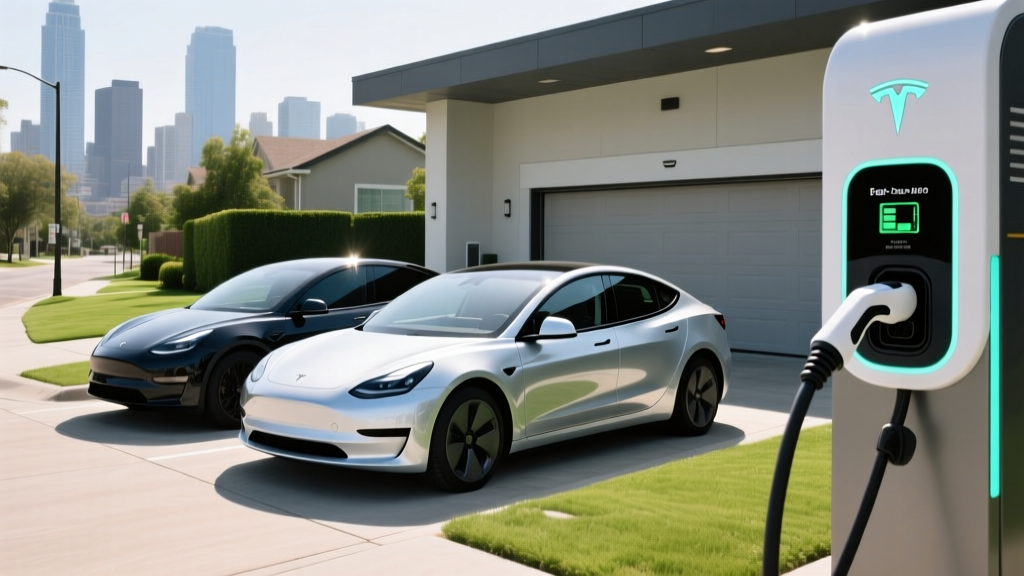
For home charging, Tesla's Wall Connector ($475, hardwired, up to 48A) remains one of the best Level 2 units available. Budget $500–$1,500 for professional installation depending on your panel's capacity and the run length from panel to garage. A 200A panel is typically sufficient; older homes with 100A service may need a $1,500–$3,000 panel upgrade.
Pricing, Trims & Federal Tax Credit Eligibility
The phrase "Tesla new deals" in 2026 is less about dealer discounts (Tesla sells direct) and more about federal and state incentives, referral credits, and inventory markdowns on specific configurations. Here's the pricing landscape.
| Model/Trim | Base MSRP | §30D Credit | Effective Price | Eligibility Notes |
|---|---|---|---|---|
| Model 3 RWD | $38,990 | Up to $7,500 | ~$31,490 | Qualifies — LFP battery sourcing under review; verify at purchase |
| Model 3 Long Range AWD | $45,990 | Up to $7,500 | ~$38,490 | Under $55,000 sedan cap; NMC sourcing qualifies (partial) |
| Model Y RWD | $41,990 | Up to $7,500 | ~$34,490 | Under $80,000 SUV cap |
| Model Y Long Range AWD | $48,990 | Up to $7,500 | ~$41,490 | Under $80,000 SUV cap |
Critical §30D caveats (per IRS.gov):
- Income caps: Modified AGI must not exceed $150,000 (single), $225,000 (head of household), or $300,000 (joint). Phase-out applies.
- MSRP caps: Sedans (Model 3) capped at $55,000; SUVs/trucks (Model Y) capped at $80,000. All current trims qualify.
- Battery sourcing: The credit splits into two halves — $3,750 for critical minerals and $3,750 for battery component assembly, both with escalating domestic-content thresholds through 2026. Tesla's US-built battery packs generally qualify for the component half; critical-mineral sourcing varies by batch and chemistry. Always verify the specific VIN's eligibility at point of sale.
- Point-of-sale transfer: As of 2024, you can transfer the credit to the dealer (Tesla) at purchase, reducing your out-of-pocket cost immediately rather than waiting for tax filing. This effectively functions as a down-payment reduction.
Tesla also periodically offers referral credits ($500–$1,000 off), free Supercharging miles, or discounted FSD transfers on existing inventory. Check Tesla's website for current promotions — these change monthly and are not available on custom orders.
Tech, Interior & Driver Assistance
The 2026 Model 3 Highland interior is a study in minimalism: a single 15.4-inch center touchscreen handles everything — climate, media, navigation, vehicle settings. The rear passengers get an 8-inch screen for climate and entertainment. There are no physical stalks (turn signals are steering-wheel buttons) and no instrument cluster. Love it or hate it, the learning curve is roughly one week for most drivers.
Driver assistance — SAE Level 2 only:
Tesla Autopilot and FSD (Supervised) are SAE Level 2 systems. The driver must remain fully engaged, hands on or near the wheel, eyes on the road, and ready to take over at any moment. These are NOT self-driving systems. Only Level 4 robotaxi services (Waymo, Zoox) operate without a human driver. Do not nap, text, or disengage attention while using Autopilot or FSD.
Autopilot (included) provides adaptive cruise control and lane centering on highways. FSD (Supervised), a $8,000 option or $99/month subscription, adds automatic lane changes, navigation-on-autopilot, and city-street traffic-light/stop-sign recognition. It's impressive but imperfect — expect occasional phantom braking, awkward lane positioning in construction zones, and the need for constant vigilance.
Infotainment & comfort: Ventilated front seats, ambient lighting, a 17-speaker audio system (Model 3 LR), and a panoramic glass roof are highlights. Drawbacks include the lack of Apple CarPlay/Android Auto (Tesla's native system is capable but closed), limited rear-seat headroom in Model 3 due to the sloping roofline, and panel-gap inconsistencies that still appear on some deliveries.
Cargo, Passenger Space & Practicality
| Dimension | Model 3 | Model Y |
|---|---|---|
| Front legroom | 42.7 in | 41.8 in |
| Rear legroom | 35.2 in | 40.5 in |
| Cargo (rear seats up) | 23 cu ft | 30 cu ft |
| Cargo (rear seats folded) | 65 cu ft | 72 cu ft |
| Frunk (front trunk) | 3.1 cu ft | 4.1 cu ft |
| Towing capacity | Not rated | 3,500 lbs (AWD) |
The Model Y is the clear choice for families needing rear-seat space and cargo versatility. The Model 3 is a sport-sedan package that prioritizes driving dynamics over utility — adequate for two adults and weekend luggage, tight for four adults on longer trips.
Warranty & Long-Term Ownership
Tesla's warranty structure is straightforward:
- Basic vehicle: 4 years / 50,000 miles
- Battery & drive unit (RWD/LFP): 8 years / 100,000 miles, minimum 70% capacity retention
- Battery & drive unit (Long Range/NMC): 8 years / 120,000 miles, minimum 70% capacity retention
Real-world degradation data from fleet aggregators like Recurrent and TeslaFi shows that 2026-era LFP packs lose roughly 5–8% capacity over the first 60,000 miles before stabilizing, while NMC packs degrade 6–10% over the same distance. Both chemistries are well within the 70% warranty threshold at 100K miles. Out-of-warranty battery replacement remains expensive — $12,000–$16,000 for a Model 3/Y pack — but statistically rare within the first decade of ownership.
Insurance costs remain a Tesla pain point. Expect premiums 20–40% higher than comparable ICE vehicles due to repair costs (aluminum body panels, sensor recalibration after minor collisions, and Tesla's proprietary parts supply chain). Get quotes before purchasing.
Tesla vs. Key Competitors: Where the Deals Stack Up
| Attribute | Tesla Model 3 LR | Hyundai Ioniq 5 LR AWD | Ford Mach-E ER AWD |
|---|---|---|---|
| Base MSRP | $45,990 | $49,500 | $48,995 |
| EPA Range | 363 mi | 290 mi | 290 mi |
| Peak DCFC | 250 kW | 238 kW | 150 kW |
| 10–80% DCFC | ~22 min | ~18 min | ~38 min |
| §30D Credit | Up to $7,500 | Up to $7,500 | Up to $7,500 |
| Effective Price | ~$38,490 | ~$42,000 | ~$41,495 |
| Apple CarPlay | No | Yes | Yes |
| Charging network | Native Supercharger | NACS adapter needed* | NACS adapter needed* |
*By 2026, most non-Tesla EVs ship with NACS ports or include adapters for Supercharger access, but the plug-and-charge experience is not as seamless as native Tesla.
Tesla wins on range-per-dollar and charging network seamlessness. The Ioniq 5 wins on charging speed (its 800V architecture sustains higher rates longer) and interior ergonomics. The Mach-E is the most traditional-driving option but lags badly on DCFC speed. None of these competitors match the Model 3 LR's 363-mile EPA range at a similar price point.
Who Should Buy a Tesla in 2026?
- You want the longest EPA range per dollar in the segment (Model 3 LR at ~$38,490 after credit)
- You road-trip frequently and value the Supercharger network's reliability and coverage
- You can charge at home (Level 2) and your daily commute is under 150 miles
- You prefer a minimalist, tech-forward interior and don't need Apple CarPlay
- You meet §30D income requirements and can verify battery sourcing at purchase
- You need a traditional instrument cluster, physical buttons, or Apple CarPlay/Android Auto
- You live in an apartment without home charging access and rely solely on public infrastructure
- You need three-row seating or heavy towing (consider the Rivian R1S or wait for a larger Tesla)
- You're uncomfortable with Tesla's corporate governance and Elon Musk's public controversies affecting resale perception
- You want the absolute fastest DC charging (Ioniq 5/Porsche Taycan 800V architectures charge faster)
Frequently Asked Questions
What is the real-world range of a 2026 Tesla Model 3 or Model Y?
Expect 78–85% of EPA range on sustained highway driving in moderate temperatures. The Model 3 Long Range AWD (EPA 363 mi) delivers roughly 290–310 highway miles. Cold weather (below 30°F) reduces range by an additional 10–15%, bringing the Model 3 LR to approximately 220–250 miles in winter highway driving. City driving with regenerative braking recovers some efficiency, often achieving 90–100% of EPA in stop-and-go conditions.
How fast does a 2026 Tesla charge at home and on the road?
At home on a Level 2 Wall Connector (240V/48A), a Model 3 or Model Y gains roughly 44 miles of range per hour — a full overnight charge from 20% to 80% takes about 6–8 hours. On DC fast chargers, Long Range models peak at 250 kW (V3/V4 Superchargers) and charge 10–80% in approximately 22–24 minutes. RWD models peak at 170 kW with a 10–80% time of roughly 28–30 minutes. Charging slows significantly above 80% SoC to protect battery health.
Does the 2026 Tesla Model 3 or Model Y qualify for the $7,500 federal tax credit?
Generally yes, but with caveats. Both models are below the §30D MSRP caps ($55,000 for sedans, $80,000 for SUVs). However, eligibility depends on the buyer's modified adjusted gross income (not exceeding $150K single / $300K joint), and the specific vehicle's battery must meet critical-mineral and component-sourcing thresholds that change annually. Tesla's US-assembled packs typically qualify for at least the $3,750 component half; the critical-mineral half varies. Always confirm eligibility for your specific VIN at point of sale and consult a tax professional. Source: IRS Clean Vehicle Credits.
How much does a 2026 Tesla cost after tax credits?
The Model 3 RWD starts at $38,990 and can drop to approximately $31,490 with the full $7,500 §30D credit applied at point of sale. The Model 3 Long Range AWD drops from $45,990 to roughly $38,490. The Model Y RWD goes from $41,990 to ~$34,490, and the Model Y Long Range AWD from $48,990 to ~$41,490. These figures assume full credit eligibility; partial credit ($3,750) or no credit is possible depending on battery sourcing and buyer income.
Is a 2026 Tesla worth buying vs. the Hyundai Ioniq 5 or Ford Mach-E?
The Tesla Model 3 Long Range offers the best range-per-dollar in the segment (363 mi EPA at ~$38,490 after credit) and the most seamless charging network. The Ioniq 5 charges faster (18 min 10–80% vs. Tesla's 22 min) and has a more conventional interior with CarPlay. The Mach-E drives more like a traditional crossover but charges significantly slower. If range and road-trip charging are your top priorities, Tesla wins. If interior ergonomics and CarPlay matter more, the Ioniq 5 is a strong alternative. See IIHS for crash-test comparisons across all three.
What are the biggest pros and cons of buying a 2026 Tesla?
Pros: Best-in-class EPA range per dollar; Supercharger network reliability; strong software/OTA updates; spacious frunk + trunk; low operating cost (electricity vs. gas); strong resale value relative to most EVs.
Cons: No Apple CarPlay/Android Auto; minimalist interior frustrates some buyers; inconsistent panel gaps; higher insurance premiums; FSD is expensive and still Level 2 (not autonomous); LFP RWD models lose more range in cold weather; corporate reputation affects some buyers' willingness to purchase.