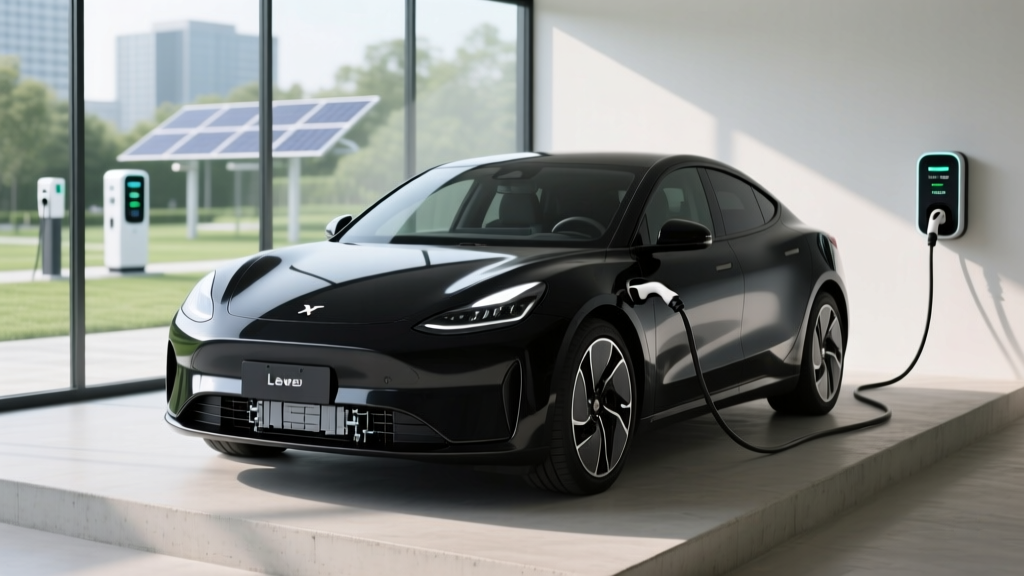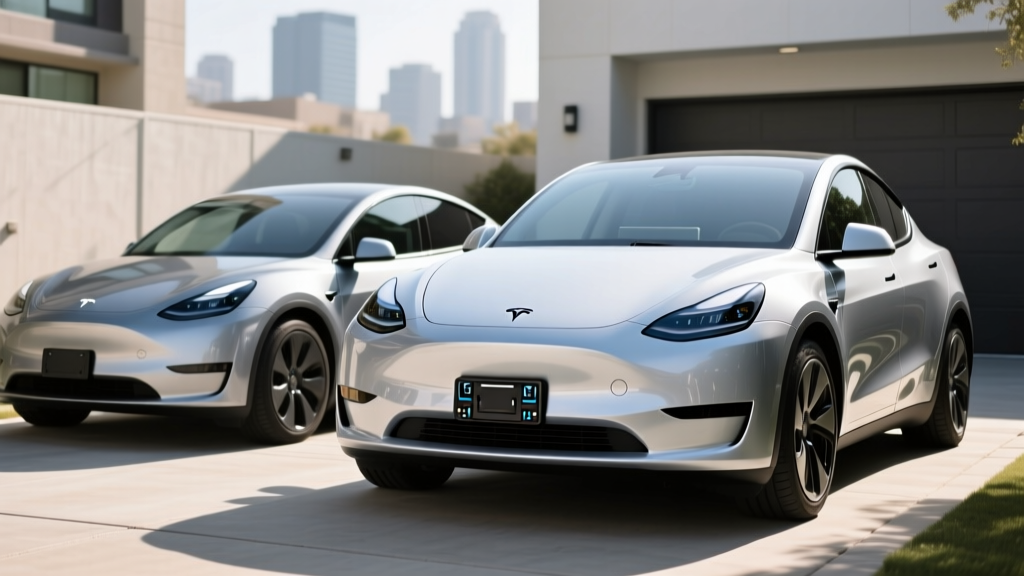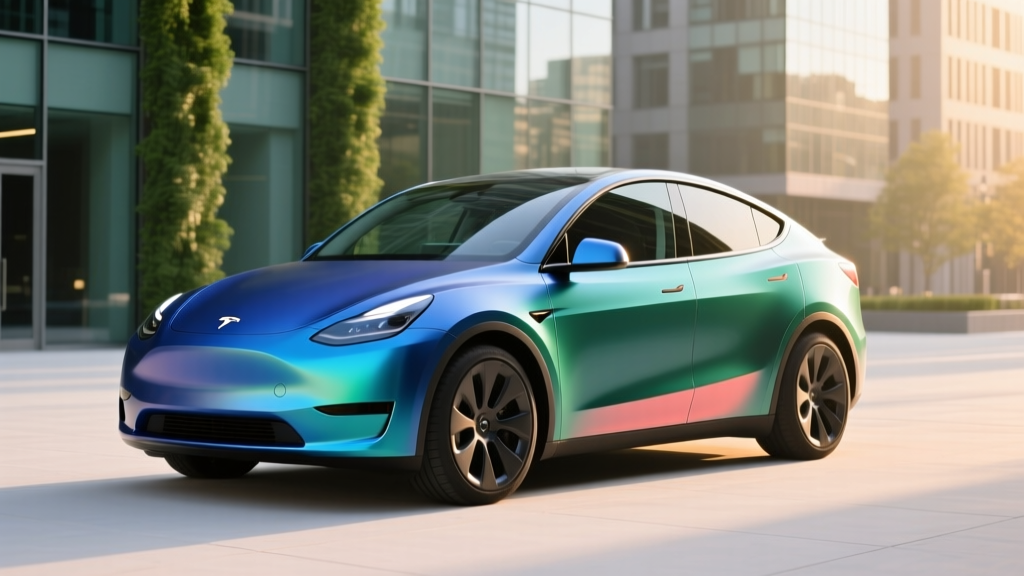
If you have been browsing Tesla's configurator lately, you already noticed the shift. The 2026 Model Y — internally dubbed "Juniper" — rolls into showrooms with a completely revised exterior palette, replacing the legacy colors that defined the pre-refresh era. But a new paint job is only the surface. Underneath, Tesla has updated the battery pack architecture, revised the thermal management system, and tweaked the drivetrain for better efficiency. This review breaks down everything that matters beyond the brochure: real-world range, actual charging curves, true out-of-pocket cost after federal incentives, and whether the Juniper refresh earns your garage space against stiffening competition.
The 2026 Tesla Model Y Color Lineup: What Changed
Tesla retired several legacy paints and introduced three new finishes for the Juniper generation:
- Glacier Blue Metallic — A cool-toned, layered blue replacing Deep Blue Metallic. It reads lighter in direct sun and carries a $1,500 premium.
- Starlight Gray Metallic — A warm gray with subtle bronze flake, taking over from the discontinued Midnight Silver. Also a $1,500 add-on.
- Quicksilver — A bright, liquid-chrome silver that was previously a limited-run offering in select markets. Now standard in the US configurator at $2,000 extra.
Solid Black, Pearl White Multi-Coat, and Ultra Red remain carryover options. Pearl White continues as the no-cost base paint. The new colors pair with updated wheel designs (19-inch Helix and 21-inch Arachnoid) and the Juniper's slimmer LED light bar that runs across the front fascia.
Color is cosmetic, but it signals a broader mid-cycle refresh that touches range, charging, and cabin tech. Let's get into the numbers.
Spec Table: 2026 Tesla Model Y Long Range AWD
| Spec | Long Range AWD | Performance (Plaid-adjacent) |
|---|---|---|
| EPA Range | 320 miles | 285 miles |
| Battery (usable) | 78.4 kWh, NMC | 78.4 kWh, NMC |
| Drivetrain | Dual-motor AWD | Dual-motor AWD |
| Horsepower | 384 hp combined | 456 hp combined |
| 0-60 mph | 4.8 seconds | 3.5 seconds |
| Peak DC Charge Rate | 250 kW | 250 kW |
| 10-80% DC Time | ~24 minutes | ~24 minutes |
| Level 2 Home Charging | 11.5 kW (~44 mi/hr) | 11.5 kW (~44 mi/hr) |
| Efficiency (combined) | 122 MPGe / 28 kWh/100mi | 110 MPGe / 31 kWh/100mi |
| Cargo (behind 2nd row) | 30.2 cu ft | 30.2 cu ft |
| Cargo (seats folded) | 72.1 cu ft | 72.1 cu ft |
| Base MSRP | $48,390 | $54,390 |
Source: fueleconomy.gov and Tesla's official configurator specs for the 2026 model year.
Real-World Range: What the EPA Sticker Doesn't Tell You
Long Range AWD: 320 miles EPA. Expect ~275-290 miles in mixed highway driving at 70-75 mph. In cold weather (below 32°F), plan for 220-250 miles depending on cabin heat usage and whether you precondition. The rear-seat heat pump introduced with Juniper helps, but physics is physics — lithium-ion cells lose roughly 15-25% of effective capacity in freezing temps.
The 320-mile EPA figure represents a modest bump over the pre-refresh Long Range, achieved through a combination of the updated NMC cell chemistry (slightly higher energy density from Tesla's 4680-format cells produced at Giga Texas), improved aerodynamic drag from the new front fascia, and revised regen braking calibration.
In practice, the Model Y Long Range AWD delivers around 26-28 kWh per 100 miles on the highway at legal speeds. That is excellent efficiency for a dual-motor crossover in this weight class, but it means a 300-mile road trip at 80 mph with a headwind and three passengers will have you arriving at your destination with roughly 10-15% state of charge remaining — enough for a comfort buffer, but not a "skip the charger" scenario.
Cold-weather reality check: If your daily commute involves sub-freezing temperatures for extended months (think Minnesota, upstate New York, mountain West), budget for a real-world winter range closer to 230 miles. Preconditioning the battery while plugged in at home recovers some of this loss, and the Juniper's standard heat pump is significantly more efficient than resistive cabin heating.
Charging Speed: DC Fast Charge and Home Level 2
Charging remains one of the Model Y's strongest ownership advantages, largely because of Tesla's Supercharger network — now the most reliable DC fast-charging ecosystem in the US, with over 6,500 V3 and V4 stalls nationwide.
| Charging Level | Power | Speed | Use Case |
|---|---|---|---|
| Level 1 (120V household) | ~1.4 kW | ~4-5 miles/hour | Emergency/trickle only |
| Level 2 (240V home Wall Connector) | 11.5 kW | ~44 miles/hour | Daily home charging |
| Level 2 (public AC) | 7.2-19.2 kW | ~28-58 miles/hour | Destination charging, workplace |
| DC Fast (Tesla V3 Supercharger) | Up to 250 kW peak | 10-80% in ~24 min | Road trips |
| DC Fast (CCS adapter, non-Tesla) | Up to 150 kW typical | 10-80% in ~32 min | Non-Tesla networks |
The charge curve matters more than the peak number. The Model Y Long Range hits 250 kW at a low state of charge (roughly 5-15%), but like all NMC packs, the charge rate tapers progressively. By 50% SoC, you are seeing around 150-170 kW. By 80%, it drops to roughly 60-70 kW. This means the advertised "10-80% in 24 minutes" is accurate, but pushing from 80% to 100% adds another 20-25 minutes. On road trips, the optimal strategy remains: charge to 80%, unplug, and drive.
Home charging math: A Tesla Wall Connector on a 60-amp circuit delivers 11.5 kW (48 amps continuous). From a 10% state of charge, a full charge to 100% takes roughly 7 hours — perfect for overnight replenishment. Installation of a 240V/60A circuit typically runs $800-$2,000 depending on panel proximity and whether your electrical panel needs an upgrade to 200 amps. Consult a licensed electrician for your specific situation.
NACS connector note: The 2026 Model Y ships with the North American Charging Standard (NACS) port natively — no adapter needed at Tesla Superchargers. For non-Tesla DC networks (Electrify America, EVgo), Tesla includes a NACS-to-CCS1 adapter in the glovebox, though non-Tesla network reliability remains inconsistent in many regions.
Performance, Ride, and Daily Drivability
The Long Range AWD's 4.8-second 0-60 mph time is quick enough to merge onto any freeway with authority and pass without hesitation. The dual-motor setup provides confident all-weather traction — torque distribution between the front induction motor and rear permanent-magnet motor is managed in milliseconds.
The Juniper refresh brought a noticeable improvement in ride quality. Tesla retuned the suspension with softer damping and added acoustic laminated glass to the rear windows, reducing highway cabin noise by several decibels. It is still firm by luxury-crossover standards — you will feel expansion joints and pothole patches — but the floatiness that plagued early Model Y builds is gone.
One-pedal driving and regen: Tesla removed the adjustable regen setting several model years ago. Regen is always strong, and lifting off the accelerator slows the car decisively. Most owners adapt within a week and rarely touch the brake pedal in city driving, which extends pad life enormously.
Towing: The Long Range AWD is rated for 3,500 pounds with the factory tow package ($1,000 option). That is adequate for a small boat trailer or light utility trailer but falls short of the Ford Mustang Mach-E's extended-range AWD (which also tows 3,500 lbs) and well behind traditional body-on-frame SUVs. Towing cuts range roughly in half — expect 160-180 miles on a full charge with a loaded 3,000-lb trailer at highway speed.
Interior, Cargo, and Technology
The Juniper cabin is cleaner and more finished than any previous Model Y. Tesla added ventilated front seats (standard on Long Range), ambient lighting integrated into the dashboard trim, and a rear-seat 8-inch touchscreen for climate and entertainment control. The minimalist ethos remains — no instrument cluster, no physical buttons for wipers or mirrors — but material quality has improved with soft-touch surfaces replacing the hard plastics of earlier builds.
Passenger space:
- Front legroom: 41.8 inches
- Rear legroom: 38.5 inches (a 0.4-inch improvement from the pre-refresh, thanks to thinner front seat backs)
- Front headroom: 40.7 inches
- Rear headroom: 37.8 inches
Cargo: 30.2 cubic feet behind the second row, expanding to 72.1 cu ft with the 60/40 split rear seats folded. The front trunk (frunk) adds 4.1 cu ft — useful for charging cables and a small bag. Total enclosed volume is competitive with the Hyundai Ioniq 5 (35.7/71.9 cu ft) and slightly less than the Ford Mach-E (29.7/59.7 cu ft behind the rear seats, but less overall with seats folded).
Infotainment and driver assist: The 15.4-inch center touchscreen runs Tesla's proprietary OS, which remains the most responsive and feature-rich system in the EV segment. Navigation integrates real-time Supercharger availability and automatically routes through chargers on long trips, preconditioning the battery for optimal charge speed upon arrival.
Tesla's Autopilot (standard) and Full Self-Driving Supervised ($8,000 option or $99/month) are SAE Level 2 driver-assistance systems. You must keep your hands on the wheel and eyes on the road at all times. FSD Supervised handles highway lane changes, city street navigation, and stop-light recognition, but it is not autonomous driving. The driver is legally and operationally responsible for every maneuver.
Notable drawbacks:
- No Apple CarPlay or Android Auto — Tesla's native system is your only option
- No physical turn-signal stalk (signals are on the steering wheel rim, which is unintuitive at roundabouts and for new drivers)
- Rear visibility is compromised by the sloping roofline and thick C-pillars; the digital rearview mirror option ($500) is worth considering
- Insurance premiums are 20-35% higher than comparable gas crossovers in most states, due to high repair costs and Tesla's direct repair network limitations
Pricing, Tax Credits, and Total Cost
| Trim | Base MSRP | As-Tested (with color + FSD) | Est. Federal Credit |
|---|---|---|---|
| Long Range AWD | $48,390 | $57,890 (Glacier Blue + FSD) | Up to $7,500* |
| Performance | $54,390 | $63,890 (Quicksilver + FSD) | Up to $7,500* |
*Federal EV tax credit eligibility under IRS §30D is subject to multiple requirements:
- MSRP cap: SUVs/crossovers must be under $80,000 — both Model Y trims qualify.
- Buyer income cap: Modified AGI must not exceed $150,000 (single), $225,000 (head of household), or $300,000 (joint).
- Battery sourcing: The $7,500 credit splits into two halves — $3,750 for critical-mineral sourcing and $3,750 for battery-component manufacturing. As of the 2026 model year, the Model Y Long Range with US-built 4680 cells qualifies for the full $7,500, but eligibility can shift with supply-chain changes. Always verify at the point of sale.
- Point-of-sale transfer: You can transfer the credit to the dealer at purchase, reducing your out-of-pocket cost immediately rather than waiting for tax filing.
Five-year ownership cost perspective: The Model Y Long Range AWD, driven 12,000 miles per year with home charging at $0.14/kWh (national average), costs roughly $500-$600 per year in electricity. A comparable gas crossover at 26 MPG combined with gas at $3.50/gallon costs about $1,615 per year in fuel. Over five years, the electricity savings are approximately $5,000-$5,500 — partially offset by higher insurance premiums ($1,200-$2,000 more over five years, depending on your state and driving record).
How It Compares: Model Y vs. Key Rivals
The mid-size electric crossover segment is crowded in 2026. Here is where the refreshed Model Y lands against its most direct competitors:
- Hyundai Ioniq 5 (Long Range AWD): 305 miles EPA, 320 kW peak DC charging (faster than the Model Y), more spacious rear seat, physical buttons, CarPlay standard. MSRP ~$52,000. Loses on charging-network convenience and software polish.
- Ford Mustang Mach-E (Extended Range AWD): 290 miles EPA, 150 kW peak DC, more traditional driving feel with an instrument cluster. MSRP ~$51,000. Ford's dealer service network is broader, but BlueCruise trails Autopilot in capability.
- Kia EV6 (Long Range AWD): 282 miles EPA, 350 kW peak DC (fastest in class), sporty handling, CarPlay standard. MSRP ~$54,000. Best charge speed in the segment but slightly less range and cargo room.
The Model Y's edge remains the Supercharger network, over-the-air update cadence, and resale value. Its vulnerability is interior material quality (improved but still not premium), the absence of CarPlay, and the turn-signal-button learning curve.
Who Should Buy the 2026 Model Y?
Choose the Model Y Long Range AWD if:
- You take regular road trips and want the most reliable DC fast-charging network
- You want OTA software updates that add features over time
- You value efficiency (28 kWh/100mi is best-in-class for AWD crossovers)
- You can install a Level 2 home charger and do most charging overnight
- You want strong resale value — Teslas depreciate slower than most EV competitors
Look elsewhere if:
- You need Apple CarPlay/Android Auto for your daily workflow
- You prioritize a plush, luxury-crossover ride over sporty firmness
- You tow more than 3,500 lbs regularly
- You live in an area with limited Supercharger coverage and need CCS-native compatibility
- Physical controls for climate, mirrors, and wipers are non-negotiable for you
Pros and Cons at a Glance
- 320 miles EPA — best-in-class efficiency at 122 MPGe
- Supercharger network: 6,500+ stalls, best reliability in the US
- 250 kW peak DC charging, 10-80% in ~24 minutes
- Spacious cargo area (72.1 cu ft max) with practical frunk
- Strong OTA update pipeline adds features post-purchase
- Improved ride quality and cabin quietness with Juniper refresh
- Full $7,500 federal tax credit eligibility (as of 2026 sourcing rules)
- No Apple CarPlay or Android Auto
- Steering-wheel turn-signal buttons take significant adaptation
- FSD Supervised costs $8,000 extra and remains Level 2 (not autonomous)
- Insurance premiums 20-35% above segment average
- Rear visibility hampered by roofline; digital mirror costs extra
- Premium paint colors add $1,500-$2,000 to MSRP
- Towing limited to 3,500 lbs with a significant range penalty
Frequently Asked Questions
What is the real-world range of the 2026 Tesla Model Y Long Range?
The EPA rates it at 320 miles. In real-world highway driving at 70-75 mph, expect 275-290 miles. In freezing temperatures, plan for 220-250 miles. The battery preconditioning feature helps recover some cold-weather loss if you schedule departures while plugged in.
How fast does the Model Y charge at home and on the road?
At home on a 240V Wall Connector (11.5 kW), you add roughly 44 miles of range per hour — a full overnight charge from near-empty. On a Tesla V3 Supercharger, the peak rate is 250 kW, and a 10-80% session takes approximately 24 minutes. Charging above 80% slows dramatically, so road-trip strategy should target 80% stops.
Does the 2026 Model Y qualify for the federal EV tax credit?
Yes, as of the 2026 model year, the Model Y Long Range and Performance qualify for up to $7,500 under IRS §30D, provided you meet the income caps ($150K single / $300K joint) and the vehicle's battery sourcing meets critical-mineral and component-manufacturing thresholds. The credit can be transferred at the point of sale. Always confirm eligibility at purchase, as sourcing rules can shift.
How much does a new-color Model Y actually cost out the door?
A Long Range AWD in Glacier Blue Metallic with no other options comes to $49,890 before destination, minus a potential $7,500 federal credit — bringing the effective price to roughly $42,390. Add FSD Supervised ($8,000) and you are at $50,390 after credit. State and local incentives may reduce this further — check your state's energy office for current programs.
Is the Model Y still worth buying over the Ioniq 5 or EV6?
It depends on your priorities. If charging-network reliability, software, and resale value matter most, the Model Y wins. If you want faster DC charging (the Ioniq 5 peaks at 320 kW), Apple CarPlay, and more rear-seat room, the Korean alternatives are compelling. Test-drive all three back to back — the steering-signal-button feel alone is a dealbreaker for some buyers and a non-issue for others.
What battery warranty does Tesla provide?
Tesla covers the Model Y battery and drive unit for 8 years or 120,000 miles (whichever comes first), with a guaranteed minimum 70% capacity retention over that period. If the battery degrades below 70% within the warranty window, Tesla will repair or replace it. In practice, NMC 4680 cells have shown degradation curves that flatten after the first 20,000 miles, with most owners reporting 90%+ state of health at 50,000 miles.
Additional sources: NHTSA safety ratings, IIHS crash-test results.