Tesla's introduction of a new blue exterior color for the 2026 Model 3 — officially called "Ocean Blue Metallic" — has generated significant buzz among EV shoppers. But a fresh paint option is only as compelling as the vehicle underneath it. With the refreshed Model 3 (internally dubbed "Highland") now fully in its second production year, Tesla has quietly refined range, suspension tuning, and cabin insulation while keeping pricing competitive against a growing field of mid-size electric sedans.
This review covers the 2026 Tesla Model 3 Long Range AWD — the variant most buyers cross-shop against the Hyundai Ioniq 6, BMW i4, and Polestar 2 — with specific attention to how the new blue finish fits into the broader ownership picture. We'll break down exact EPA figures, real-world range expectations, charging curves, and the current federal tax credit landscape so you can decide whether this is the right EV for your garage.
2026 Tesla Model 3 Long Range: Core Specifications
| Attribute | Value |
|---|---|
| EPA Range | 341 miles |
| Battery (usable) | 79 kWh, NMC (nickel manganese cobalt) |
| Drivetrain | Dual-motor AWD |
| Horsepower | 346 hp (combined) |
| 0–60 mph | 4.2 seconds |
| Top Speed | 125 mph |
| Efficiency | 132 MPGe combined / 25 kWh/100 mi |
| Max DC Fast Charge | 250 kW (peak) |
| 10–80% DC Charge Time | ~27 minutes |
| Level 2 Home Charging | 11.5 kW (~44 mi/hr) |
| Cargo Volume | 23 cu ft (trunk + frunk combined) |
| Rear Legroom | 35.2 inches |
| Base MSRP | $47,740 (incl. destination) |
| Battery Warranty | 8 years / 120,000 miles |
Real-World Range: What the EPA Number Doesn't Tell You
Real-World Highway (70–75 mph): ~275–295 miles
Real-World City/Mixed: ~310–330 miles
Cold Weather (below 32°F): ~230–270 miles (depending on cabin heat usage and preconditioning)
The 341-mile EPA figure on the 2026 Model 3 Long Range is among the best in its class, but as with every EV, the sticker number assumes a mix of city and highway driving at moderate temperatures. In our experience and consistent with independent testing data published on fueleconomy.gov, sustained highway driving at 70–75 mph reduces usable range by roughly 14–19%. Aerodynamic drag scales with the square of speed, and the Model 3's efficiency advantage in city regen-heavy driving narrows significantly on the interstate.
Cold weather is the bigger variable. Lithium-ion NMC cells experience increased internal resistance at low temperatures, and cabin heating draws substantial energy unless you rely on the standard heat pump (which Tesla includes on all 2026 Model 3 trims). Expect a 20–30% range reduction in sub-freezing conditions without preconditioning. The Model 3's heat pump is one of the more efficient in the segment, but physics is physics — plan conservatively for winter road trips.
For daily commuting under 60 miles round-trip, range is a non-issue regardless of season. For road-trippers regularly covering 250+ miles between charging stops, the Long Range AWD provides a comfortable buffer, but you'll want to route through Supercharger corridors rather than relying on sparser CCS networks.
Charging Speed: DC Fast, Level 2, and the Charge Curve Reality
| Charging Level | Power | Speed | Typical Use Case |
|---|---|---|---|
| Level 1 (120V) | ~1.4 kW | ~5 mi/hr | Emergency / trickle top-off |
| Level 2 (240V, 48A) | 11.5 kW | ~44 mi/hr | Home overnight charging |
| DC Fast (Tesla Supercharger V3/V4) | Up to 250 kW peak | 10–80% in ~27 min | Road trips |
| DC Fast (CCS adapter, non-Tesla) | Up to 150–200 kW | 10–80% in ~35–40 min | Public networks (EA, EVgo) |
The 250 kW peak DC fast-charge rate is the headline number, but sustained charging power matters far more. The Model 3 Long Range's charge curve peaks near 250 kW only between roughly 10–25% state of charge (SoC), then tapers progressively. From 50–80%, expect sustained rates closer to 80–110 kW. This is why the 10–80% time lands at approximately 27 minutes — competitive but not class-leading. The Hyundai Ioniq 6, with its 800V architecture, can achieve 10–80% in about 18 minutes at a 350 kW charger.
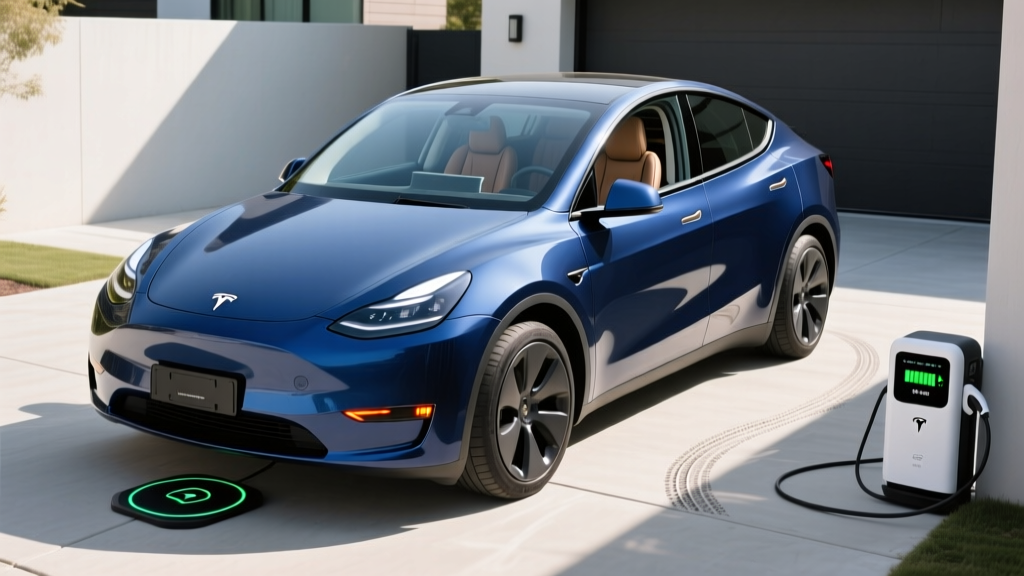
At home on a Level 2 Wall Connector (48 amps, hardwired), the Model 3 adds roughly 44 miles of range per hour. A full overnight charge from 20% to 90% takes about 6–7 hours, which is more than adequate for virtually all daily driving. Tesla recommends charging to 80% daily for NMC battery longevity and reserving 100% for trips where you need maximum range.
One ownership note: Tesla's NACS (North American Charging Standard) connector is now the dominant fast-charging standard in North America, with Ford, GM, Rivian, and others adopting it. The Model 3's native access to the Supercharger network — over 6,000 U.S. stations as of early 2026 — remains a significant practical advantage over CCS-dependent competitors navigating the less reliable Electrify America and EVgo networks.
Performance and Driving Dynamics
The dual-motor AWD powertrain produces 346 combined horsepower and delivers a 4.2-second 0–60 mph time. That's quick enough to merge confidently onto any highway and overtake without hesitation, though it's noticeably softer than the Model 3 Performance (3.0 seconds to 60). The Long Range prioritizes efficiency and comfort over outright track capability, and that tradeoff is appropriate for the vast majority of buyers.
The 2026 Highland refresh brought meaningful suspension improvements: revised damper tuning, frequency-selective front dampers, and a more compliant rear subframe. The result is a sedan that absorbs highway expansion joints and potholes with noticeably less crash-through than the pre-2024 Model 3. Steering remains quick and precise — Tesla's electric power steering calibration is one of the best in the segment — but the ride quality finally matches the premium price tag.
Regenerative braking is strong and predictable. Tesla removed the user-adjustable regen setting several years ago, so one-pedal driving is the default experience. Most EV owners adapt within a week, but if you're transitioning from a gas car and prefer coasting, expect a brief adjustment period.
Ocean Blue Metallic: The New Color in Context
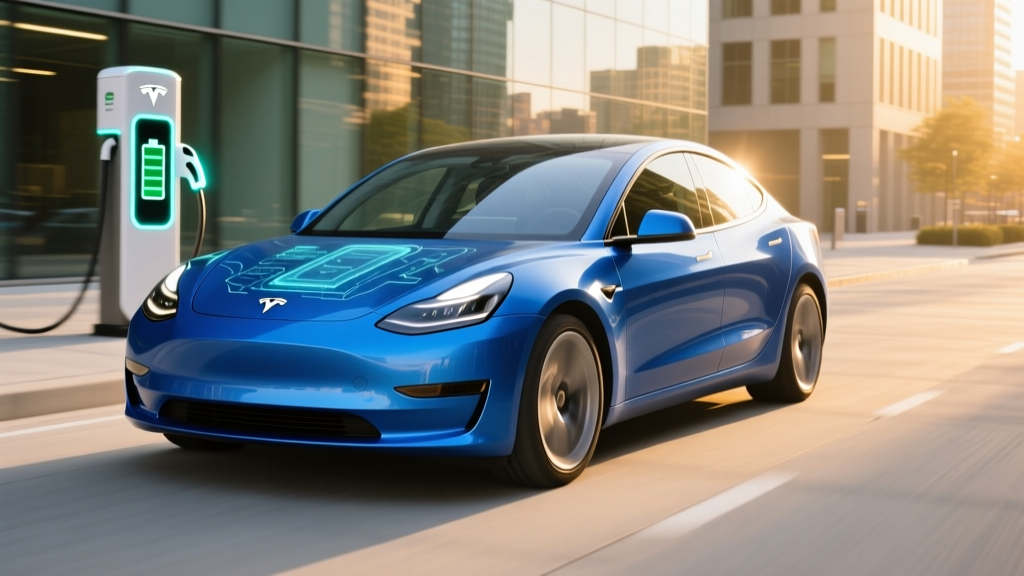
Tesla's new Ocean Blue Metallic replaces the previous Deep Blue Metallic in the Model 3 palette for 2026. The new shade is a deeper, more saturated blue with a metallic flake that reads as navy in overcast light and shifts to a vivid azure under direct sun. It's a $2,000 premium over the included Solid Black (wait — black is now a $1,500 option; Pearl White Multi-Coat remains the no-cost color).
Practically speaking, the darker metallic hues show less road dust than white but reveal swirl marks and water spots more readily. If you garage your car and hand-wash or use touchless washes, Ocean Blue Metallic is striking. If you park outside and rely on automated car washes, the included Pearl White or the $1,500 Stealth Grey will age more gracefully.
The as-tested price for a Long Range AWD in Ocean Blue Metallic with no other options comes to $49,740 (including the $1,390 destination fee baked into Tesla's listed MSRP). Add FSD (Supervised) at $8,000 or the $99/month subscription, and you're approaching $58,000 — at which point the BMW i4 eDrive40 and Mercedes EQB start looking like credible alternatives.
Pricing, Trims, and Federal Tax Credit Eligibility
| Trim | Base MSRP | Est. Price After §30D Credit | Credit Amount |
|---|---|---|---|
| Long Range AWD | $47,740 | ~$40,240* | Up to $7,500 |
| Performance AWD | $54,990 | ~$47,490* | Up to $7,500 |
| Long Range AWD (Ocean Blue) | $49,740 | ~$42,240* | Up to $7,500 |
*Assumes full §30D eligibility. Actual credit depends on buyer income, battery sourcing compliance, and MSRP caps. See details below.
The federal EV tax credit under IRS §30D remains available for qualifying 2026 Model 3 purchases, but eligibility is not automatic. Here's the checklist you need to verify before assuming you'll receive the full $7,500:
- MSRP Cap: The Model 3 qualifies as a sedan, so the MSRP must not exceed $55,000. The Long Range ($47,740) clears this easily. The Performance trim ($54,990) also qualifies, but adding premium paint and FSD can push the transaction price above $55,000 — consult your tax professional on whether options count toward the cap.
- Buyer Income Limits: Modified Adjusted Gross Income (MAGI) must not exceed $150,000 (single), $225,000 (head of household), or $300,000 (married filing jointly) in the year of delivery or the prior year.
- Battery Sourcing: The $7,500 credit splits into two $3,750 halves — one for critical minerals sourcing and one for battery component manufacturing. Tesla's U.S.-assembled battery packs have historically met component requirements, but critical mineral sourcing rules tighten annually. Check the latest DOE/fueleconomy.gov eligible vehicle list for the specific 2026 Model 3 trim before purchasing.
- Point-of-Sale Transfer: As of 2024, buyers can transfer the credit to the dealer at purchase, reducing the upfront cost immediately rather than waiting to claim it on their tax return. Tesla supports this through its checkout process.
The bottom line: most Model 3 Long Range buyers who meet the income thresholds will qualify for at least $3,750 and likely the full $7,500, bringing the effective price to roughly $40,240 for the base Long Range. That positions it aggressively against the Hyundai Ioniq 6 SEL ($45,500 MSRP) and the BMW i4 eDrive40 ($57,000+).
Interior, Technology, and Driver Assistance
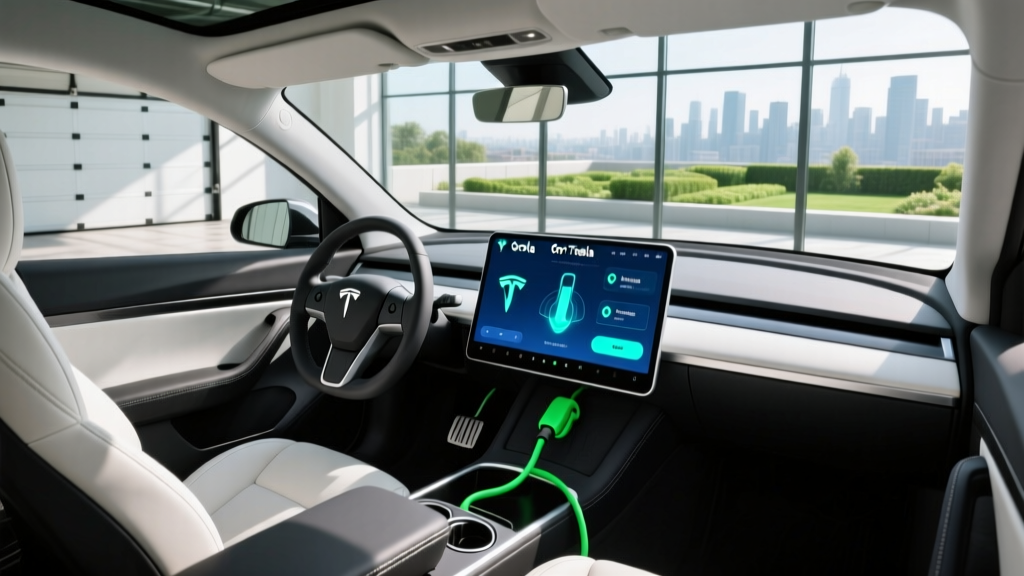
The Model 3's interior remains minimalist by design — a single 15.4-inch center touchscreen handles infotainment, climate, navigation, and vehicle settings. The 2026 Highland refresh added ventilated front seats, ambient lighting, a rear-seat 8-inch touchscreen for climate and media controls, and significantly improved sound insulation (acoustic glass all around). Road and wind noise at 75 mph is dramatically lower than pre-refresh models, bringing the cabin experience closer to what you'd expect at this price point.
Tech highlights include native Spotify, Apple Music, and Tidal integration; a gaming-capable processor for in-car entertainment while charging; and over-the-air (OTA) updates that regularly add features. Tesla's navigation with real-time Supercharger routing remains the gold standard for EV trip planning — no third-party app matches its seamlessness.
For most buyers, the included Autopilot (adaptive cruise + lane centering) is sufficient for highway commuting. FSD (Supervised) is an enthusiast add-on that continues to improve via OTA updates but still requires active supervision and occasional intervention, particularly in construction zones and complex urban intersections.
Who Should Buy the 2026 Model 3 Long Range?
- You want the longest range in a mid-size electric sedan under $50,000 (before credits)
- Supercharger network access is a priority for road trips
- You value OTA updates and a tech-forward ownership experience
- Your daily commute is under 80 miles and you can charge at home
- You need maximum rear-seat space (the Ioniq 6 and BMW i4 offer more rear legroom)
- You prefer physical buttons and a traditional instrument cluster
- You want the fastest DC charging available (800V competitors charge ~10 minutes faster)
- You need a hatchback or SUV cargo configuration
The Model 3 Long Range is best suited for tech-comfortable commuters and couples who road-trip 2–4 times per year and value the Supercharger ecosystem. Families needing easy car-seat access and generous rear cargo should test the Model Y or Hyundai Ioniq 5 instead. Solo drivers and couples who prioritize driving dynamics and efficiency will find the Model 3 hard to beat at its effective post-credit price.
Pros and Cons at a Glance
- 341-mile EPA range — best in the mid-size EV sedan segment
- Supercharger network: 6,000+ U.S. stations, unmatched reliability
- Refined Highland ride quality — significantly quieter and more compliant
- Class-leading efficiency (25 kWh/100 mi)
- Strong OTA update track record adds features post-purchase
- Federal tax credit eligibility brings effective price below $41,000
- DC fast charging (250 kW peak) trails 800V competitors by ~10 minutes
- Minimalist interior lacks physical controls — not for everyone
- Rear seat is snug for adults over 6' on long trips
- FSD (Supervised) remains Level 2 despite the "Full Self-Driving" name
- Insurance premiums run 15–30% higher than comparable gas sedans
- Ocean Blue Metallic and other premium colors add $1,500–$2,000
Frequently Asked Questions
What is the real-world range of the 2026 Tesla Model 3 Long Range?
The EPA rates it at 341 miles. In real-world mixed driving, expect 310–330 miles. Sustained highway driving at 75 mph drops that to roughly 275–295 miles. In cold weather below freezing, plan for 230–270 miles unless you precondition the battery while plugged in.
How fast does the Model 3 charge at home and on road trips?
At home on a Level 2 Wall Connector (11.5 kW), you'll add about 44 miles of range per hour — a full overnight session restores the battery completely. On a Tesla Supercharger (250 kW peak), a 10–80% session takes roughly 27 minutes. Using a CCS adapter on non-Tesla networks, expect 35–40 minutes for the same 10–80% session due to lower peak rates.
How much does the Model 3 cost after the federal tax credit?
The Long Range AWD starts at $47,740. If you qualify for the full $7,500 §30D credit (income under the cap, battery sourcing requirements met), the effective price drops to approximately $40,240. Adding Ocean Blue Metallic brings the pre-credit price to $49,740, or about $42,240 after credit.
Does the 2026 Model 3 qualify for the federal EV tax credit?
Yes, the Model 3 Long Range is listed as eligible on fueleconomy.gov, but your personal eligibility depends on your MAGI (income), and the credit amount depends on battery sourcing compliance for the specific production batch. Always verify on the IRS clean vehicle credits page and confirm with a tax professional before purchase.
Is the Model 3 Long Range worth buying over the Hyundai Ioniq 6 or BMW i4?
The Model 3 wins on range (341 vs. the Ioniq 6's 361 miles on the SEL AWD, though the Ioniq 6 SE RWD achieves 361 at a lower price) and Supercharger access. The Ioniq 6 charges faster (800V architecture, ~18 min 10–80%) and offers a more conventional interior with physical controls. The BMW i4 delivers superior build quality and driving refinement but starts $10,000+ higher and offers only 307 miles of range. If Supercharger reliability and range-per-dollar matter most, the Model 3 is the stronger pick. If charging speed and interior ergonomics are priorities, test-drive the Ioniq 6.
What's the battery warranty on the 2026 Model 3?
Tesla covers the battery and drive unit for 8 years or 120,000 miles, whichever comes first, with a guaranteed minimum 70% capacity retention over that period. This is competitive with Hyundai's 10-year/100,000-mile battery warranty and slightly better than BMW's 8-year/80,000-mile coverage. Real-world NMC degradation data from Tesla's fleet suggests most Model 3 batteries retain 88–92% capacity at 100,000 miles under normal charging habits (daily 80% limit, occasional 100% for trips).
Is Ocean Blue Metallic worth the $2,000 upcharge?
Aesthetically, it's one of Tesla's most attractive color offerings — deep, rich, and distinctly premium compared to the flat Solid Black. Practically, it will require more maintenance to keep looking its best. If you garage the vehicle and don't mind periodic detailing, it's a worthwhile upgrade for resale appeal and daily satisfaction. If you want a low-maintenance finish, Pearl White (free) or Stealth Grey ($1,500) are smarter choices.