The Tesla Music App: More Than a Novelty in the 2026 Model Y
Search for the Tesla music app and you'll find owners debating Spotify integration, Tidal hi-fi support, and whether the built-in player justifies ditching a phone. In 2026, Tesla's native music streaming remains a differentiator among mainstream EVs — no other automaker bundles Spotify, Tidal, TuneIn, and Apple Music directly into the vehicle's infotainment without requiring CarPlay or Android Auto as a bridge.
But an infotainment feature only matters if the vehicle underneath is worth buying. This review evaluates the 2026 Tesla Model Y Long Range AWD — Tesla's highest-volume seller and the platform where the Tesla music app sees the most daily use — across the metrics that actually decide a purchase: real-world range, charging speed, pricing after federal incentives, and how it compares to the Hyundai Ioniq 5, Ford Mustang Mach-E, and Chevrolet Equinox EV.
2026 Tesla Model Y Long Range AWD: Core Specifications
| Spec | Value |
|---|---|
| EPA Range | 320 miles |
| Battery Capacity | 78.1 kWh usable (NMC chemistry) |
| Drivetrain | Dual-Motor AWD |
| Horsepower | 384 hp combined |
| 0–60 mph | 4.8 seconds |
| Max DC Fast Charge | 250 kW peak (V3 Supercharger) |
| 10–80% DC Fast Charge | ~25 minutes |
| Level 2 Home Charge Rate | 11.5 kW (~44 mi/hr) |
| MPGe (combined) | 122 MPGe |
| Efficiency | 28 kWh/100 mi |
| Cargo Volume (rear seats up) | 30.2 cu ft |
| Cargo Volume (rear seats folded) | 72.0 cu ft |
| Rear Legroom | 38.4 inches |
| Battery Warranty | 8 years / 120,000 miles |
| Base MSRP | $44,990 (before destination) |
Sources: EPA fueleconomy.gov, Tesla Model Y specs.
Real-World Range: What the EPA Sticker Doesn't Tell You
EPA Estimated Range: 320 miles
Real-World Expectation: 270–290 miles at sustained 70 mph highway speeds; 230–250 miles in sub-30°F winter conditions without preconditioning.
The 2026 Model Y Long Range carries an EPA-rated 320 miles on its 78.1 kWh NMC (nickel-manganese-cobalt) battery pack. NMC chemistry delivers higher energy density than LFP (lithium iron phosphate), which is why Tesla reserves it for Long Range and Performance trims — the Standard Range RWD model uses an LFP pack with lower capacity but longer cycle life and a 100% daily-charge recommendation.
In practice, highway driving at 70–75 mph with climate control active typically yields 270–290 miles before the battery hits 10% SoC (State of Charge). Cold weather is the larger variable: at 20°F, expect a 20–30% range reduction unless you precondition the battery via the Tesla app before departure. Preconditioning warms the pack to optimal operating temperature, which also restores regenerative braking strength — a common complaint from new Tesla owners in winter is "weak regen" that resolves after preconditioning.
Compared to the Hyundai Ioniq 5 (EPA 305 mi, 77.4 kWh) and Ford Mustang Mach-E Extended Range (EPA 312 mi, 91 kWh usable), the Model Y's efficiency per kWh is among the best in class. Its 28 kWh/100 mi translates to roughly $0.045/mile at the US average residential electricity rate of $0.16/kWh — about one-third the per-mile cost of a 25 MPG gas car at $3.50/gallon.
Charging Speed: Supercharger Network Advantage
| Charging Level | Power | Miles Added per Hour | Notes |
|---|---|---|---|
| Level 1 (120V household) | ~1.4 kW | ~5 mi/hr | Emergency/trickle only |
| Level 2 (240V home, 48A) | 11.5 kW | ~44 mi/hr | Full charge in ~7 hours |
| DC Fast (V3 Supercharger) | 250 kW peak | ~1,000 mi/hr (peak) | 10–80% in ~25 min |
| DC Fast (V4 Supercharger) | Up to 325 kW | Higher sustained rate | Model Y accepts ~250 kW max |
The Model Y's charge curve peaks at 250 kW between roughly 10–30% SoC, then tapers progressively. By 60% SoC, expect ~120 kW; by 80%, ~60 kW. This is why Tesla (and all EV makers) quote 10–80% times rather than 0–100%: the final 20% can take as long as the first 70%. For road trips, the practical strategy is charging to 80% and moving on — a 25-minute stop every 200–220 miles.
Tesla's NACS (North American Charging Standard) connector is now the industry default. Ford, Rivian, GM, Volvo, and others have adopted NACS, meaning the Model Y accesses both the 60,000+ stall Supercharger network and growing third-party NACS stations from Electrify America and EVgo. This is a tangible ownership advantage over CCS1-equipped competitors still transitioning.
For home charging, a Tesla Wall Connector on a 60-amp circuit delivers 48 amps / 11.5 kW — sufficient to replenish a full day's 50-mile commute in about 75 minutes overnight. Installation costs range from $800–$2,500 depending on panel proximity and whether your home needs a 200-amp service upgrade (defer to a licensed electrician for final assessment).
The Tesla Music App and Infotainment: What Sets It Apart
The Tesla music app in 2026 supports native streaming from:
- Spotify — full account integration, playlists, podcasts, offline caching
- Tidal — hi-fi lossless streaming (added in late 2024, a differentiator for audiophiles)
- Apple Music — native integration without CarPlay
- TuneIn — internet radio and live sports
- USB media player — FLAC/WAV/MP3 from a flash drive
- Bluetooth audio — any phone-based source
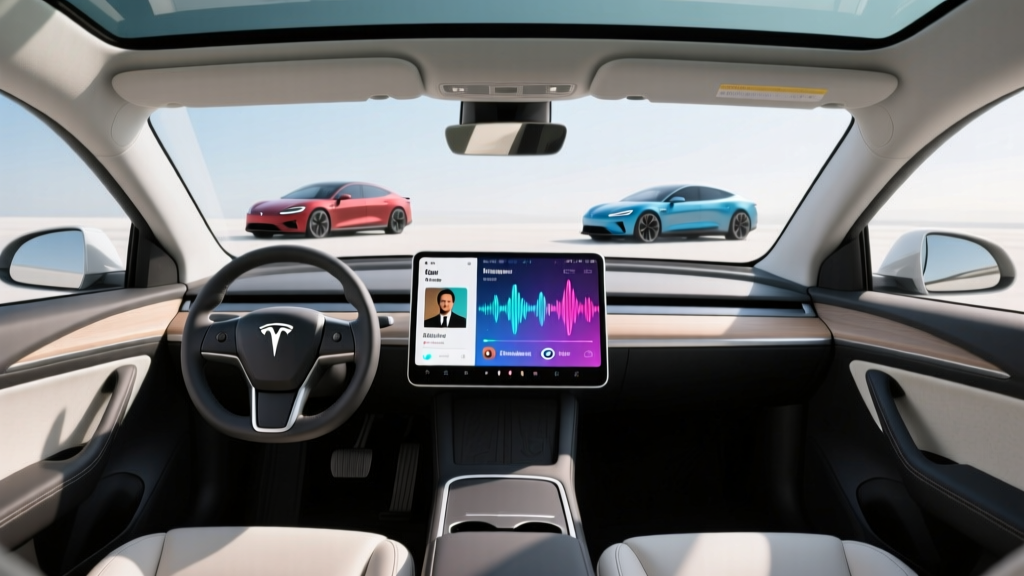
The 15.4-inch center touchscreen runs Tesla's proprietary OS, which processes audio through a 14-speaker immersive sound system (on Long Range and above). The interface allows queue management, lyric display, and cross-fade settings without touching a phone — a safety and convenience advantage on long drives.
The trade-off: Tesla does not offer Apple CarPlay or Android Auto. If your workflow depends on Google Maps navigation, Waze, or phone-native podcast apps, you'll adapt to Tesla's built-in alternatives or accept the friction. Most owners adjust within two weeks, but it remains a dealbreaker for some buyers.
Beyond music, the Model Y's infotainment includes Netflix, YouTube, Disney+, and Arcade gaming while parked; a full web browser; Dashcam and Sentry Mode recording; and over-the-air software updates that add features monthly. The 2026 software build includes improved voice commands and a redesigned media player with album-art grid view.
Autopilot, FSD (Supervised), and Safety
SAE Automation Level: Level 2 — driver assistance, NOT self-driving.
Tesla Autopilot and FSD (Supervised) require continuous driver attention and hands-on or eyes-on engagement. The driver is legally and practically responsible at all times. Only Waymo and Zoox robotaxi services operate at Level 4 (no driver required) in limited geofenced areas.
The 2026 Model Y comes standard with Autopilot (Traffic-Aware Cruise Control + Autosteer lane centering). Full Self-Driving (Supervised) remains an $8,000 add-on or $99/month subscription, adding automatic lane changes, Navigate on Autopilot for highway interchanges, traffic light/stop sign recognition, and Autopark.
FSD (Supervised) in 2026 is more capable on highways but still struggles with construction zones, faded lane markings, and unprotected left turns in dense urban traffic. Treat it as a fatigue-reduction tool on long road trips — not a replacement for an attentive driver.
Safety ratings remain strong: the Model Y earned a 5-star overall NHTSA rating and IIHS Top Safety Pick+ designation for 2025–2026. Standard active safety includes automatic emergency braking, blind-spot monitoring, lane departure prevention, and rear cross-traffic alert.
Pricing, Tax Credits, and Total Cost
| Trim | Base MSRP | Destination | Est. After §30D Credit* |
|---|---|---|---|
| Long Range RWD | $42,990 | $1,390 | ~$36,880 |
| Long Range AWD | $44,990 | $1,390 | ~$38,880 |
| Performance AWD | $48,990 | $1,390 | ~$42,880 |
*Federal §30D tax credit eligibility requires: buyer AGI under $150K single / $300K joint; vehicle MSRP under $80,000 (SUVs); battery critical-mineral and component sourcing thresholds met; point-of-sale transfer available at delivery. Rules change annually — verify at IRS.gov before purchase.
As of early 2026, the Model Y Long Range AWD qualifies for the full $7,500 federal credit when purchased by an eligible buyer, and Tesla supports point-of-sale transfer — meaning the $7,500 reduces your purchase price at delivery rather than waiting for a tax refund.
The Performance trim adds ~$4,000 for a 3.5-second 0–60 time, 21-inch Überturbine wheels, Performance brakes, and Track Mode. However, the larger wheels reduce EPA range to ~285 miles and increase tire replacement costs ($1,600–$2,200 for a set of performance rubber).
Compared to key competitors at similar price points:
- Hyundai Ioniq 5 Limited AWD — $52,600 MSRP, 290 mi EPA, 800V architecture (faster peak charging at 350 kW)
- Ford Mustang Mach-E Premium AWD — $48,995 MSRP, 312 mi EPA, BlueCruise hands-free on approved highways
- Chevrolet Equinox EV RS AWD — $43,900 MSRP, 307 mi EPA, GM Ultium platform, Super Cruise available
The Model Y's advantage remains the Supercharger network, efficiency per kWh, and software integration — including the Tesla music app's native streaming. Competitors match or beat it on peak charging speed (Ioniq 5), hands-free driving polish (Mach-E BlueCruise), or starting price (Equinox EV).
Pros, Cons, and Who Should Buy
Pros
- Best-in-class efficiency (28 kWh/100 mi)
- Supercharger network: 60,000+ reliable stalls globally
- Native Tesla music app with Spotify, Tidal, Apple Music — no phone required
- OTA updates add features post-purchase
- Strong resale value relative to non-Tesla EVs
- Spacious cargo area (72 cu ft with seats folded)
Cons
- No Apple CarPlay / Android Auto — a dealbreaker for some
- FSD (Supervised) is expensive ($8K) and still Level 2
- Ride quality firm on 20-inch wheels; road noise noticeable at highway speed
- Panel gaps and paint quality inconsistent vs. legacy automakers
- No physical buttons — all climate/media controls via touchscreen
Choose the Model Y if:
- You road-trip frequently and want the most reliable DC fast-charging network
- You value native infotainment (Tesla music app, streaming, gaming) over phone mirroring
- You want strong efficiency and a proven battery platform
Look elsewhere if:
- You refuse to give up CarPlay/Android Auto (consider Ioniq 5 or Mach-E)
- You need hands-free highway driving today (Mach-E BlueCruise or GM Super Cruise are more polished)
- You want the lowest entry price (Equinox EV starts ~$1,000 less)
Frequently Asked Questions
What is the real-world range of the 2026 Tesla Model Y?
EPA-rated at 320 miles, real-world highway driving at 70 mph typically yields 270–290 miles. In sub-30°F winter conditions without preconditioning, expect 230–250 miles. Preconditioning via the Tesla app before departure mitigates cold-weather loss significantly.
How fast does the Model Y charge at home and on the road?
On a Level 2 home charger (11.5 kW / 48A), you gain ~44 miles per hour — a full overnight charge in about 7 hours. On a V3 Supercharger, peak rate is 250 kW, achieving 10–80% in approximately 25 minutes. The charge curve tapers significantly above 60% SoC.
Does the 2026 Model Y qualify for the federal EV tax credit?
Yes, as of early 2026, the Model Y qualifies for the full $7,500 §30D credit for eligible buyers (AGI under $150K single / $300K joint). Tesla supports point-of-sale transfer, so the credit reduces your delivery price. Battery sourcing requirements and MSRP caps apply — confirm at IRS.gov before ordering.
What music streaming services does the Tesla music app support?
Native support includes Spotify, Tidal (with hi-fi lossless), Apple Music, TuneIn internet radio, USB media playback (FLAC/WAV/MP3), and Bluetooth audio from any phone. No CarPlay or Android Auto is available.
Is the Model Y worth buying vs. the Ioniq 5 or Mach-E?
The Model Y wins on efficiency, Supercharger access, and software integration (including the Tesla music app). The Ioniq 5 charges faster on 350 kW chargers (800V architecture). The Mach-E offers BlueCruise hands-free driving. Your priority — charging network, charging speed, or driver assist — determines the best fit.
How long does the Tesla Model Y battery last?
Tesla warranties the battery for 8 years / 120,000 miles with a minimum 70% capacity retention threshold. Real-world data from high-mileage owners shows NMC packs retaining ~88–92% capacity at 100,000 miles with typical charging habits (20–80% daily, occasional 100% for trips).