Why the Tesla Fremont Factory Still Matters in 2026
Search for tesla motors tour fremont and you'll find a mix of outdated blog posts, YouTube walkthroughs, and a conspicuous absence of official public tour bookings. That's because Tesla does not operate a general-public, walk-in factory tour program at its Fremont, California plant the way it once did for early adopters and press. What the Fremont facility — the former NUMMI joint venture between GM and Toyota that Tesla acquired in 2010 — offers instead is a window into the company's manufacturing DNA and, more importantly for buyers, the four vehicles that still roll off its lines: the Model S, Model 3, Model X, and Model Y.
This guide takes the spirit of a factory tour — understanding where your Tesla is built, how it's assembled, and what that means for quality, specs, and ownership — and pairs it with the exact 2026 numbers a buyer needs: EPA range, battery chemistry, DC fast-charge curves, real-world efficiency, pricing after the federal tax credit, and the honest pros and cons of each Fremont-built model.
Inside the Fremont Production Line: What Gets Built Where
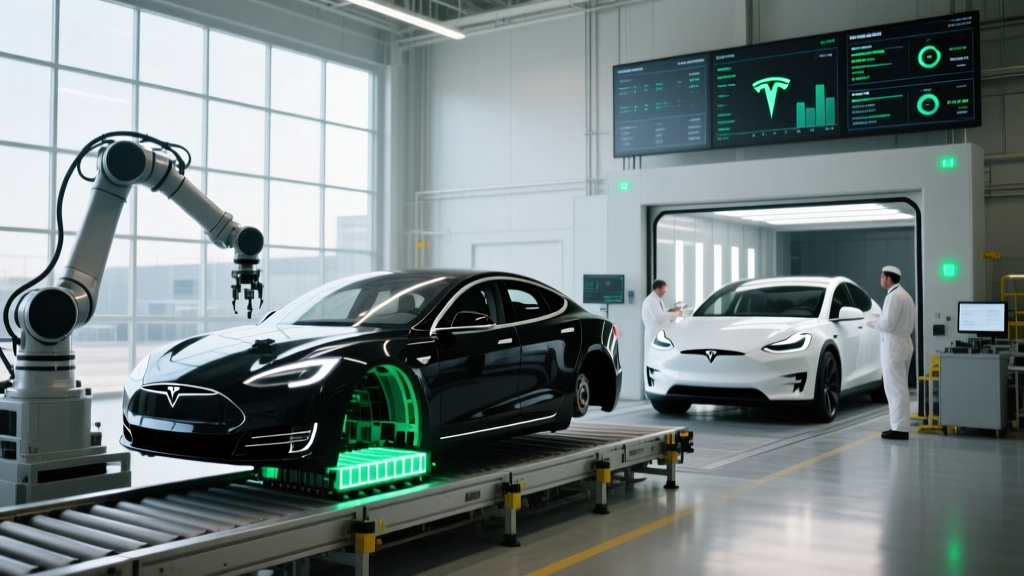
The 5.3-million-square-foot Fremont factory remains Tesla's oldest and most vertically integrated U.S. plant. It handles stamping, body-in-white welding, paint, general assembly, and end-of-line testing for four distinct vehicle programs on shared and dedicated lines. Key things to know as a prospective buyer:
- Model 3 and Model Y share the company's "unboxed"-influenced assembly sequences, though the structural battery pack and gigacastings introduced at Giga Texas and Giga Berlin have only partially migrated back to Fremont due to retooling costs.
- Model S and Model X continue on a lower-volume, dedicated line. These are the halo cars — tri-motor Plaid variants, air suspension, and the most complex wiring harnesses Tesla builds.
- Quality variance: Fremont-built Teslas historically show slightly wider panel-gap and paint variance than Giga Texas output, though 2025–2026 model-year data from owner surveys indicates meaningful improvement after paint-shop and final-inspection upgrades.
The Four Fremont-Built Teslas: 2026 Spec Table
| Spec | Model 3 Long Range AWD | Model Y Long Range AWD | Model S Long Range | Model X Long Range |
|---|---|---|---|---|
| EPA range | 363 mi | 320 mi | 402 mi | 348 mi |
| Battery (usable) | ~75 kWh, NMC | ~75 kWh, NMC | ~95 kWh, NMC | ~95 kWh, NMC |
| Drivetrain | Dual-motor AWD | Dual-motor AWD | Dual-motor AWD | Dual-motor AWD |
| 0–60 mph | 4.2 sec | 4.8 sec | 3.1 sec | 3.8 sec |
| Peak DC charge | 250 kW | 250 kW | 250 kW | 250 kW |
| 10–80% DC time | ~28 min | ~28 min | ~34 min | ~34 min |
| Level 2 rate | 11.5 kW (~44 mi/hr) | 11.5 kW (~44 mi/hr) | 11.5 kW (~44 mi/hr) | 11.5 kW (~44 mi/hr) |
| MPGe (combined) | 132 MPGe | 122 MPGe | 124 MPGe | 111 MPGe |
| Base MSRP | $47,740 | $48,630 | $79,630 | $84,630 |
| Battery warranty | 8 yr / 120,000 mi | 8 yr / 120,000 mi | 8 yr / 150,000 mi | 8 yr / 150,000 mi |
Sources: fueleconomy.gov (EPA), tesla.com.
Real-World Range: What the EPA Sticker Doesn't Tell You
Tesla's thermal management — including the heat pump standard on all 2026 models — mitigates cold-weather losses better than most competitors, but physics still wins. The Model S Long Range's 402-mi EPA rating remains the longest of any current-production U.S.-market EV, and its real-world highway figure (~340–360 mi at 70 mph, 65°F) is genuinely road-trip transformative.
Charging Speed and the Supercharger Advantage
All 2026 Fremont-built Teslas use the NACS (J3400) connector natively and charge on the Supercharger network at up to 250 kW peak on V3/V4 stalls. The charge curve matters more than the peak: Tesla's NMC packs hold near-peak power from roughly 10% to 50% SoC, then taper progressively, with a noticeable step-down above 80%. That's why the 10–80% time (~28 min for 3/Y, ~34 min for S/X) is the figure that actually predicts road-trip stop length.
At home on a 48-amp Level 2 circuit (the typical Wall Connector install on a 60-amp breaker), expect ~44 miles of range added per hour — enough to fully replenish a Model 3 Long Range overnight in about 8 hours. Homes with older 100-amp service panels may need a $1,500–$3,000 panel upgrade before a Level 2 install; confirm with a licensed electrician.
Pricing, Trims, and the 2026 Federal Tax Credit (§30D)
Tesla's Fremont lineup spans from the ~$38k-base Model 3 RWD (LFP battery, built partly at Giga Texas — verify VIN origin) up through six-figure Model X Plaid configurations. For the mainstream Long Range trims most buyers cross-shop:
Model 3 Long Range AWD ($47,740) and Model Y Long Range AWD ($48,630) both fall under their respective MSRP caps and, as of early 2026, have typically qualified for the full $7,500 — bringing effective prices to roughly $40,240 and $41,130. Model S and Model X exceed the §30D MSRP caps ($55k sedan / $80k SUV) and do not qualify for the new-vehicle credit; buyers may explore the used-EV credit (§25E, up to $4,000) on CPO inventory instead.
Driver-Assist Tech: Autopilot and FSD (Supervised)
FSD Supervised adds city-street navigation, traffic-light/stop-sign handling, and autosteer on unmapped roads. Its real-world performance in 2026 is markedly better than 2022–2023 versions but still requires active supervision — particularly in construction zones, unprotected left turns, and adverse weather. NHTSA continues to monitor Tesla's Autopilot/FSD crash and disengagement data; see nhtsa.gov for standing orders and recalls.
Who Should Buy a Fremont-Built Tesla?
- Model 3 Long Range: Commuters and small families wanting best-in-class efficiency (132 MPGe), long real-world range, and Supercharger access — the default answer to "which EV should I buy?" for most sedan shoppers.
- Model Y Long Range: The U.S. best-selling EV for a reason — crossover cargo space (30+ cu ft behind the second row, 70+ cu ft folded), available third row (small children only), and towing up to 3,500 lb.
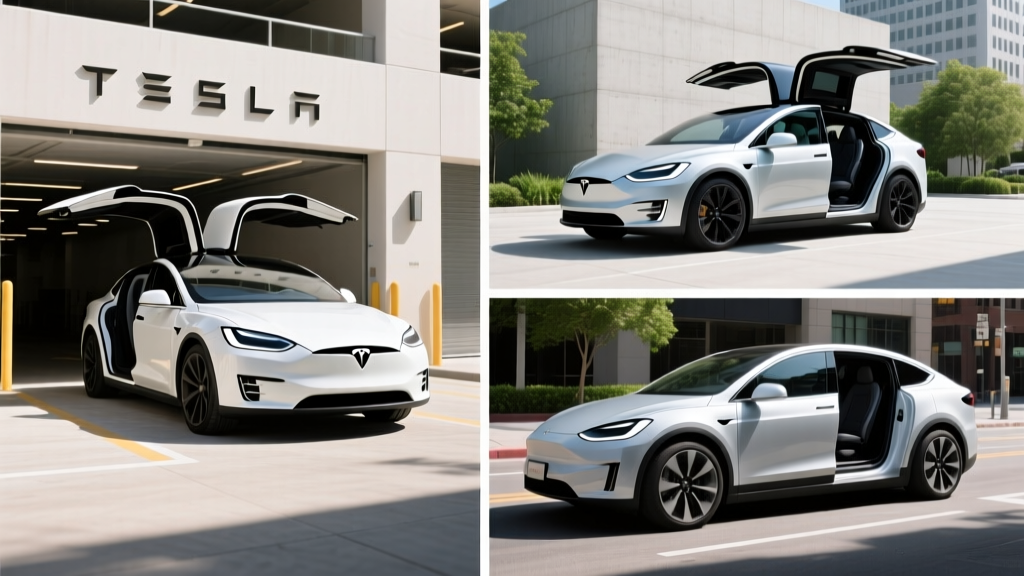
- Model S / X: Buyers who want halo-car performance (Plaid tri-motor, ~1,020 hp, 0–60 under 2 sec) or premium-SUV space with falcon-wing rear doors (X), and who don't need the federal credit to justify the spend.
Pros, Cons, and the Verdict
- Supercharger network — still the most reliable DC network in the U.S.
- Class-leading efficiency and real-world range per kWh
- OTA updates add features years after purchase
- Strong resale value vs. most EV peers
- Panel-gap and paint variance at Fremont still above Giga Texas average
- No Apple CarPlay / Android Auto — Tesla-native UI only
- FSD remains Level 2 and requires subscription vigilance
- Model S/X priced out of §30D credit eligibility
Frequently Asked Questions
Can the public tour the Tesla Fremont factory in 2026?
No general-public tour program exists as of 2026. Access is typically limited to owners invited via referral events, press, investors during designated windows, and educational groups by arrangement. For the closest public experience, visit the Fremont factory store and delivery center, which has some vehicle displays.
Are Fremont-built Teslas lower quality than Texas-built ones?
Historically, yes — Fremont's older paint shop and higher line speed produced more variance. Since the 2024–2025 paint-shop upgrades and added inspection stations, the gap has narrowed meaningfully, though not fully closed. Check panel gaps and paint on your specific delivery rather than assuming plant-wide consistency.
Which Fremont Tesla qualifies for the $7,500 federal credit?
Model 3 Long Range AWD and Model Y Long Range AWD typically qualify under 2026 §30D rules, subject to buyer income caps and annual sourcing requirements. Model S and Model X exceed MSRP caps and do not. Confirm on irs.gov and with your tax advisor before purchase.
What's the real-world highway range of a Model Y Long Range?
Expect roughly 265–285 miles at 70 mph in mild weather; 210–240 miles in sub-freezing temperatures without preconditioning. The 320-mi EPA figure assumes mixed driving.
Is FSD worth the $8,000 or $99/mo in 2026?
For most drivers, no — standard Autopilot handles highway cruising well. FSD Supervised is a compelling tech demo and useful for frequent city driving, but it is not autonomous and demands constant attention. Try the monthly subscription before committing to the full purchase.