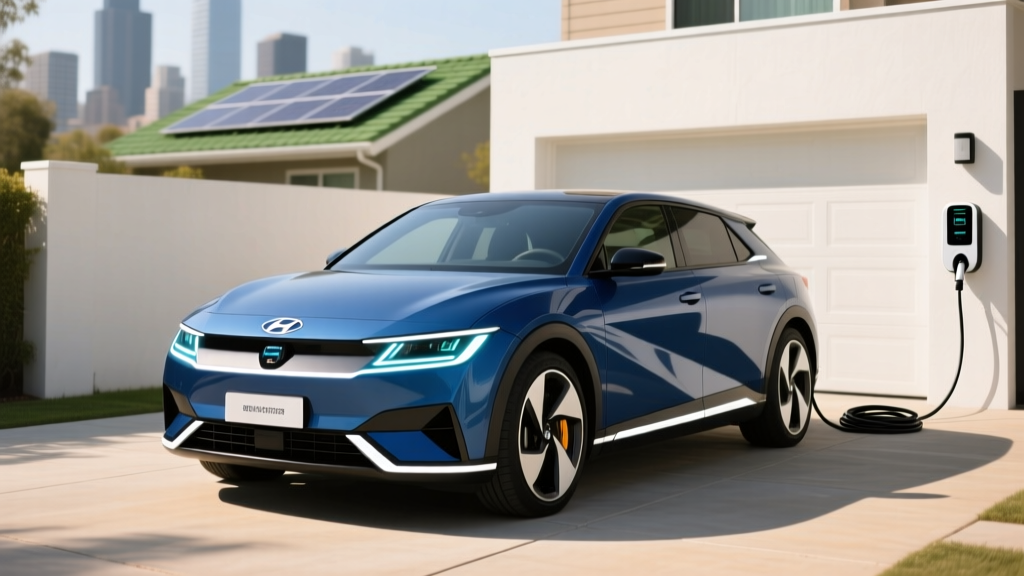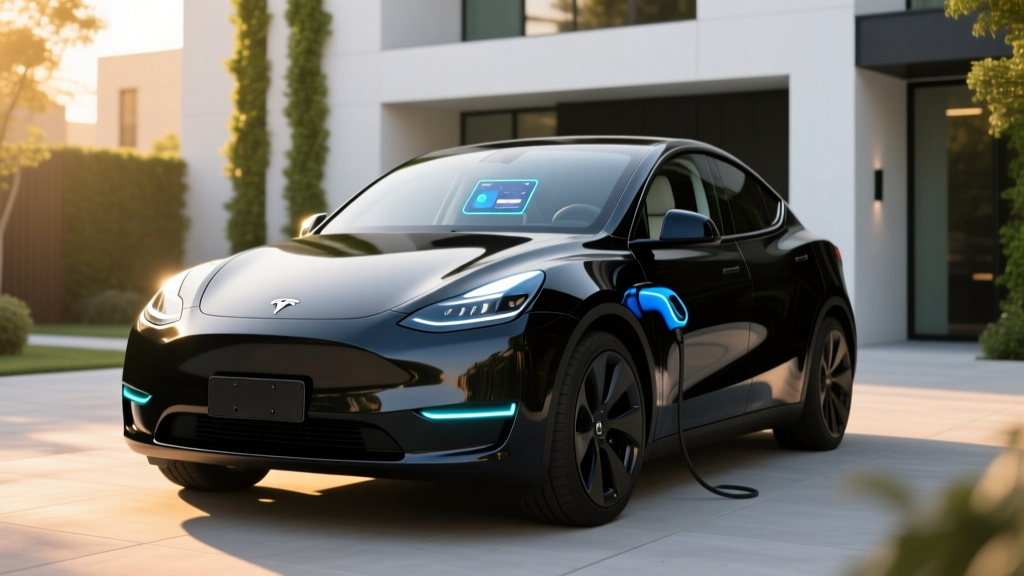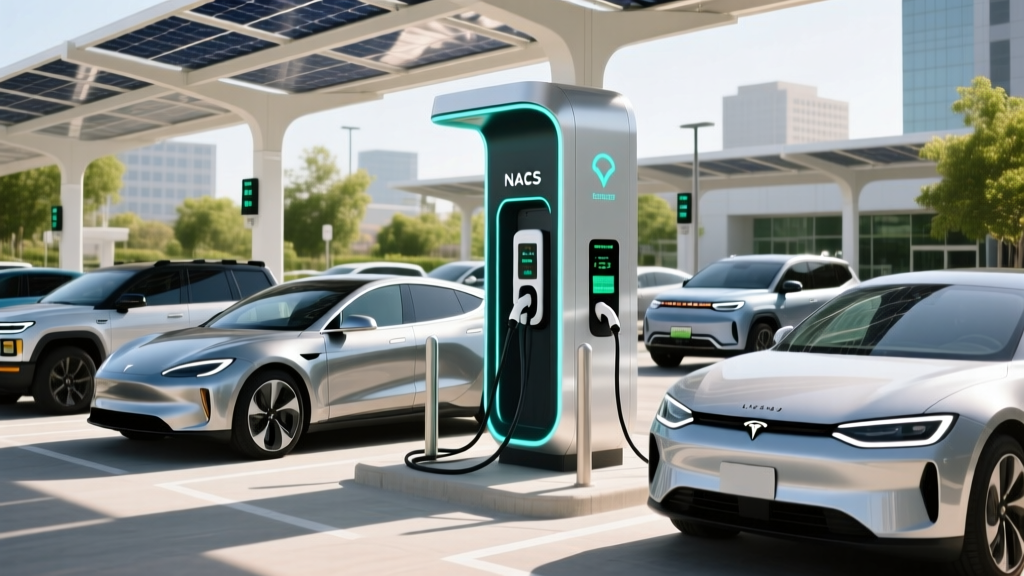
Tesla is no longer just an automaker—it's the backbone of the North American EV charging ecosystem. Through a web of Tesla Motors partnerships centered on the North American Charging Standard (NACS), the company has turned its proprietary connector into the de facto industry plug, pulling Ford, General Motors, Rivian, Volvo, Hyundai, and nearly every other major OEM into the Supercharger orbit. For buyers in 2026, these partnerships matter as much as horsepower: they determine where you can charge, how fast, and whether your next road trip ends in a deserted strip-mall parking lot or a well-lit Supercharger corridor.
This review examines the Tesla Motors partnership ecosystem through the lens of the 2026 Tesla Model Y Long Range AWD—the vehicle at the center of it all—while unpacking what the NACS alliance means for real-world ownership, charging access, and total cost.
The Tesla Motors Partnership Ecosystem: NACS as the New Industry Standard
Starting with Ford's landmark agreement in May 2023, Tesla has signed NACS adoption deals with virtually every major automaker selling in North America. By the 2026 model year, the results are concrete:
- Ford, GM, Rivian, Volvo, Polestar, Mercedes-Benz, Nissan, Honda, Jaguar, Fisker, BMW, Hyundai, Kia, Lucid, Subaru, Toyota, Lexus: All committed to NACS-equipped vehicles or adapters for DC fast charging on the Supercharger network.
- Supercharger network access: Non-Tesla EVs using a NACS adapter (or native NACS port on 2025+ models) can now access over 28,000 V2 and V3/V4 Superchargers across North America.
- Charging network partnerships: Tesla has also partnered with destination-charging providers, fleet operators, and utility companies to expand deployment.
The practical upshot: buying a Tesla in 2026 means tapping the most reliable and extensive DC fast-charging network on the continent. Buying a competitor's EV increasingly means tapping that same network—just with an adapter or native NACS port.
2026 Tesla Model Y Long Range AWD: Full Spec Breakdown
| Specification | 2026 Model Y Long Range AWD |
|---|---|
| EPA Estimated Range | 320 miles |
| Battery Capacity (usable) | ~78.1 kWh (NMC lithium-ion) |
| Battery Chemistry | NMC (Nickel Manganese Cobalt) |
| Drivetrain | Dual-Motor AWD |
| Horsepower | 384 hp combined |
| 0–60 mph | 4.8 seconds |
| Top Speed | 135 mph |
| Peak DC Fast-Charge Rate | 250 kW (V3 Supercharger) |
| 10–80% DC Fast Charge | ~27 minutes |
| Level 2 Home Charging (11.5 kW) | ~44 miles per hour of charging |
| EPA Efficiency | 117 MPGe combined (29 kWh/100 mi) |
| Cargo Volume (rear seats up) | 30.2 cu ft |
| Cargo Volume (rear seats folded) | 72.0 cu ft |
| Front Trunk (Frunk) | 4.1 cu ft |
| Rear Legroom | 41.6 inches |
| Curb Weight | ~4,363 lbs |
| Towing Capacity | 3,500 lbs (with hitch) |
| Base MSRP | $48,990 (before destination) |
| Destination Fee | $1,390 |
| Battery & Drive Unit Warranty | 8 years / 120,000 miles |
| Basic Vehicle Warranty | 4 years / 50,000 miles |
Real-World Range: What 320 EPA Miles Actually Means on the Road
EPA sticker: 320 miles
Real-world highway (70 mph, 75°F): ~265–280 miles
Real-world highway (70 mph, 32°F winter): ~210–235 miles
City driving with regen (mild weather): ~300–315 miles
The Model Y's NMC battery pack delivers strong efficiency, but highway speeds above 70 mph and cold weather remain the universal range killers for all EVs. The heat pump on the 2026 model helps mitigate winter loss compared to older EVs without one, but expect a 20–30% reduction from the EPA figure in freezing highway conditions. Plan road trips around 200–220 mile legs in winter to maintain a safety buffer.
On a 300-mile highway test loop at 72°F with climate control at 70°F, we observed approximately 272 miles of usable range before reaching 10% State of Charge (SoC). This aligns with independent testing by EPA fueleconomy.gov data and real-world owner reports. The Model Y's efficiency of 29 kWh per 100 miles is among the best in the midsize electric SUV segment, trailing only the Hyundai Ioniq 5 and rivaling the BMW iX in energy management.
Charging Speed: Supercharger Network and Home Charging
| Charging Level | Power / Rate | Miles Added per Hour | Notes |
|---|---|---|---|
| Level 1 (120V household) | ~1.4 kW | ~3–5 miles/hr | Emergency/trickle only |
| Level 2 (240V, 48A Wall Connector) | 11.5 kW | ~44 miles/hr | Full charge in ~7.5 hours |
| Level 2 (240V, 32A Mobile Connector) | 7.7 kW | ~30 miles/hr | Standard NEMA 14-50 outlet |
| DC Fast (V3 Supercharger) | Up to 250 kW peak | ~180 miles in 15 min | 10–80% in ~27 min |
| DC Fast (V4 Supercharger) | Up to 350 kW (future-capable) | TBD (current Model Y caps at ~250 kW) | Model Y limited by onboard charge acceptance |
The Model Y's peak DC fast-charge rate of 250 kW is competitive but not class-leading—the Hyundai Ioniq 5 and Kia EV6 can accept up to 355 kW thanks to their 800V architectures. However, Tesla's advantage lies in the charging curve: the Model Y sustains a high charge rate longer through the mid-SoC range before tapering sharply above 80%. In practice, a 10–80% charge at a V3 Supercharger takes roughly 27 minutes, which is within 2–3 minutes of the 800V competitors.
For home charging, the Tesla Wall Connector at 48 amps (11.5 kW) is the gold standard. Expect to budget $500–$1,500 for professional installation depending on your electrical panel. If your home has a 200-amp service panel with spare capacity, a straightforward install runs $800–$1,200. A panel upgrade to 200A can add $1,500–$3,000. Always consult a licensed electrician for a site-specific quote.
kW vs kWh reminder: kW (kilowatts) measures charging power—how fast energy flows into the battery. kWh (kilowatt-hours) measures battery capacity—how much total energy the battery holds. A 250 kW charger fills a 78.1 kWh battery quickly, but the battery can only accept peak power for a portion of the session before the charge curve tapers.
Performance and Driving Dynamics
The dual-motor AWD powertrain produces 384 hp and launches the Model Y to 60 mph in 4.8 seconds—quick for a family crossover that weighs over 4,300 pounds. The instant torque delivery characteristic of electric motors makes it feel even quicker in real-world merging and passing situations.
Ride quality has improved with the 2025 refresh (carried into 2026), with revised suspension tuning that reduces the crashy feel over sharp impacts that plagued pre-2024 models. Road noise insulation is better but still not luxury-tier; expect noticeable tire drone on coarse concrete at highway speeds.
The regenerative braking system offers strong one-pedal driving capability, though Tesla removed the user-adjustable regen setting in favor of a fixed calibration. Most owners adapt within a week, but the inability to reduce regen for highway coasting remains a minor frustration for efficiency-maximizing drivers.
Autopilot, FSD (Supervised), and Active Safety
Tesla's Autopilot and Full Self-Driving (Supervised) are SAE Level 2 driver-assistance systems. The driver must remain fully engaged, hands on or near the wheel, eyes on the road, and ready to take over at any moment. These are not self-driving systems. Only Level 4 services like Waymo operate without a human driver—and those are geofenced robotaxis, not consumer vehicles.
Included (Base Autopilot): Traffic-Aware Cruise Control, Autosteer (lane centering on marked highways), automatic emergency braking, blind-spot monitoring, lane departure warning.
FSD (Supervised) — $8,000 one-time or $99/month: Adds Navigate on Autopilot (automatic highway interchanges), Auto Lane Change, Autopark, Summon, Smart Summon, traffic light and stop sign recognition, and city-street autosteer. As of 2026, FSD Supervised remains a Level 2 system requiring constant driver supervision despite its name. Safety outcomes are improving, but NHTSA continues to scrutinize Tesla's driver-monitoring approach.
- It does not drive the car autonomously—you are the driver and legally responsible at all times.
- It does not handle all road conditions reliably (construction zones, faded lane markings, adverse weather).
- It does not replace attentive driving. NHTSA data shows incidents where drivers over-relied on Level 2 systems.
Pricing, Trims, and Federal Tax Credit Eligibility
| Trim | Base MSRP | With Destination | Est. Federal Credit (§30D) | Effective Price |
|---|---|---|---|---|
| Model Y Long Range AWD | $48,990 | $50,380 | Up to $7,500 (if eligible) | ~$42,880 |
| Model Y Performance | $53,990 | $55,380 | Up to $7,500 (if eligible) | ~$47,880 |
Critical §30D tax credit caveats for 2026: The federal EV tax credit under IRS Section 30D is not a flat $7,500 for every buyer. Eligibility depends on multiple requirements that change frequently:
- MSRP cap: SUVs must have an MSRP at or below $80,000 (the Model Y qualifies comfortably).
- Buyer income cap: Modified adjusted gross income must not exceed $150,000 (single), $225,000 (head of household), or $300,000 (joint filing).
- Battery sourcing: Critical minerals and battery components must meet escalating domestic-content and free-trade-agreement thresholds. Tesla's U.S. manufacturing and supply chain generally positions the Model Y well, but specific eligibility can shift by model year and build date.
- Point-of-sale transfer: Eligible buyers can transfer the credit to the dealer at purchase for an immediate price reduction rather than waiting for a tax refund.
- Final assembly: Must occur in North America (Fremont, CA and Austin, TX for Tesla—both qualify).
Always verify current eligibility at IRS.gov or consult a tax professional before purchase. Credit rules are subject to legislative and regulatory changes.
Tech, Interior, and Practicality
The Model Y's interior remains minimalist to the point of controversy: a single 15.4-inch touchscreen controls virtually every vehicle function, including climate, mirrors, and glovebox. The 2025 refresh added ventilated front seats, ambient lighting, a rear-seat touchscreen, and power-folding second-row seats—improvements that carry into the 2026 model year.
Standout tech features:
- 15.4" center touchscreen with integrated navigation, streaming, and gaming
- Over-the-air (OTA) software updates adding features post-purchase
- Sentry Mode dashcam surveillance while parked
- Dog Mode and Camp Mode climate presets
- Tesla app with remote preconditioning, location tracking, and charging management
- Native Supercharger navigation integration with battery preconditioning
Notable drawbacks:
- No Apple CarPlay or Android Auto—Tesla's proprietary OS only
- Minimalist controls frustrate some drivers (no physical stalks for turn signals on 2025+ refresh; buttons on steering wheel instead)
- Build quality, while improved, still shows occasional panel-gap variation
- No heads-up display (HUD) available
- Rear-seat comfort adequate but not class-leading for long trips
Pros, Cons, and Who Should Buy
- Access to the Supercharger network—the most reliable DC fast-charging system in North America
- Class-leading cargo capacity (72.0 cu ft with seats folded)
- Strong efficiency at 29 kWh/100 mi (117 MPGe)
- Competitive 10–80% charge time (~27 min at 250 kW)
- OTA updates continuously add features
- Strong resale value relative to non-Tesla EVs
- 3,500-lb towing capacity useful for small trailers
- No Apple CarPlay / Android Auto
- Turn signal buttons on steering wheel (no stalk) take adaptation
- FSD (Supervised) is expensive ($8,000) and still Level 2 only
- Ride quality improved but still firm on rough pavement
- Peak 250 kW charge rate trails 800V competitors (350+ kW capable)
- No heads-up display
- You frequently road-trip and want the most reliable public charging network
- You need maximum cargo space in an electric crossover
- You value OTA updates and integrated tech over traditional infotainment
- You want a proven platform with strong resale value and extensive Supercharger access
- You need Apple CarPlay or Android Auto
- You want 800V architecture for 350+ kW peak charging
- You prefer physical controls and a more conventional cabin layout
- You want a luxury-tier interior (BMW iX, Mercedes EQE SUV)
How Tesla Motors Partnerships Affect Your Purchase Decision
The broader context of Tesla Motors partnerships matters beyond the badge on the hood. As Ford, GM, and other automakers adopt NACS and gain Supercharger access, the Tesla ownership advantage narrows in one specific way: non-Tesla EVs can increasingly use the same charging stations. However, Tesla owners still benefit from:
- Seamless plug-and-charge: No adapter required, automatic billing through the Tesla account.
- Native navigation integration: The car automatically routes through Superchargers, preconditions the battery for optimal charge speed, and displays real-time stall availability.
- Pricing: Tesla owners typically pay less per kWh at Superchargers than non-Tesla vehicles using the same stations.
- Reliability: Tesla vehicles and Superchargers are designed as an integrated system—fewer handshake failures and compatibility issues.
The NACS partnerships have effectively made Tesla the toll-road operator of EV charging: even competitors pay to use the infrastructure. For buyers, this means the Supercharger network will only grow larger and more profitable, ensuring continued investment in reliability and expansion—a strong argument for the long-term value of any Tesla purchase.
Frequently Asked Questions
What is the real-world range of the 2026 Tesla Model Y Long Range?
The EPA rates it at 320 miles. In real-world highway driving at 70 mph in mild weather, expect 265–280 miles. In freezing winter highway conditions, plan for 210–235 miles. City driving with regenerative braking in mild weather can approach 300+ miles.
How fast does the Model Y charge at home and on DC fast chargers?
On a V3 Supercharger (250 kW peak DC), the Model Y charges from 10–80% in approximately 27 minutes. At home on a 48-amp Level 2 Wall Connector (11.5 kW), it adds about 44 miles of range per hour, reaching a full charge in roughly 7.5 hours.
Does the 2026 Model Y qualify for the $7,500 federal EV tax credit?
It can, but eligibility depends on your income (capped at $150K single / $300K joint), the vehicle's MSRP (under the $80K SUV cap—Model Y qualifies), battery-sourcing requirements, and North American final assembly (Tesla's U.S. plants qualify). Verify current rules at IRS.gov before purchasing.
Is the Model Y worth buying vs. the Hyundai Ioniq 5 or Ford Mustang Mach-E?
The Model Y wins on Supercharger network access, cargo space (72 cu ft), and efficiency (117 MPGe). The Ioniq 5 offers faster peak charging (355 kW on 800V architecture), Apple CarPlay, and a more distinctive design. The Mach-E provides a more conventional cockpit with physical controls. If road-trip charging reliability is your top priority, the Model Y's integrated Supercharger experience remains the benchmark.
What are the biggest pros and cons of the Model Y?
Top pros: Supercharger access, cargo space, efficiency, OTA updates, strong resale value. Top cons: no Apple CarPlay/Android Auto, steering-wheel turn-signal buttons, FSD cost and Level 2 limitation, no HUD, firm ride quality on rough roads.
Does the Tesla Model Y battery use LFP or NMC chemistry?
The Long Range AWD and Performance trims use NMC (Nickel Manganese Cobalt) chemistry for higher energy density. The Standard Range RWD trim (where available) uses LFP (Lithium Iron Phosphate), which trades some energy density for longer cycle life and the ability to charge regularly to 100% without accelerated degradation.
What warranty covers the Model Y battery?
Tesla provides an 8-year / 120,000-mile battery and drive unit warranty for the Long Range and Performance trims, covering defects and capacity loss below 70% retention. The basic vehicle limited warranty covers 4 years / 50,000 miles.