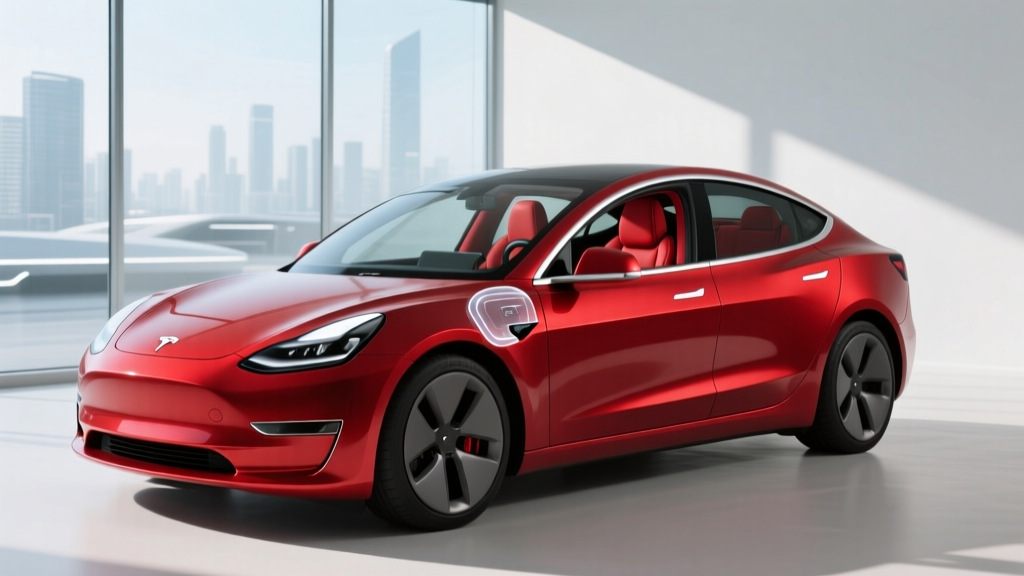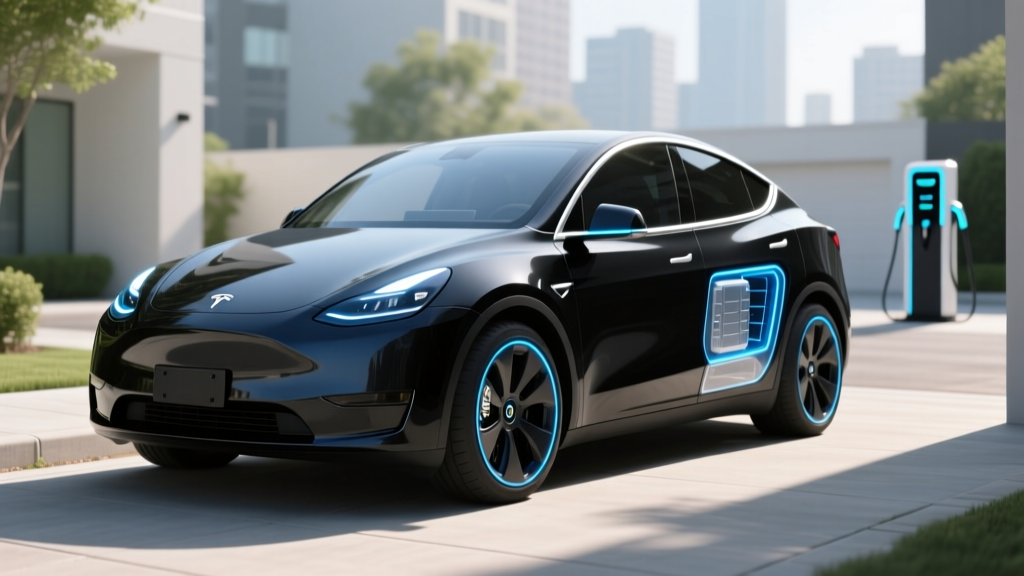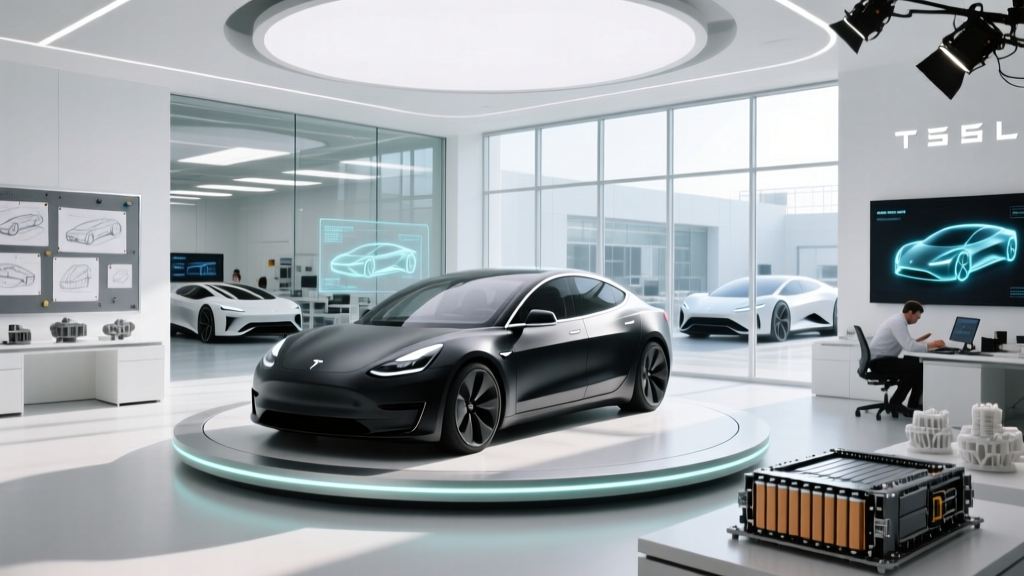
The Tesla Motors Design Center in Hawthorne, California, is where Franz von Holzhausen's team has penned every modern Tesla — from the Cybertruck's polarizing angles to the quietly refined 2026 Model 3 Highland refresh. This review examines how the design center's philosophy translates into real-world ownership: exact range figures, charging speeds you can count on, and whether the Model 3 still earns its spot against a crowded 2026 EV sedan field.
2026 Tesla Model 3: Design Center DNA Meets Real-World Engineering
The 2026 Model 3 carries forward the Highland redesign introduced for the 2024 model year, with incremental updates to battery chemistry sourcing and software. The Hawthorne design center's signature is everywhere: the slimmed headlamps, the removal of stalk-mounted turn signals (now on the steering wheel), and the ventilated front seats that finally address a long-standing cabin comfort complaint. But design intent only matters if the underlying engineering delivers. Let's look at the numbers.
| Attribute | RWD (Standard Range) | Long Range AWD | Performance |
|---|---|---|---|
| EPA Range | 272 mi | 363 mi | 315 mi |
| Battery (usable) | ~60 kWh LFP | ~79 kWh NMC | ~79 kWh NMC |
| 0–60 mph | 5.8 sec | 4.2 sec | 2.9 sec |
| Horsepower | 283 hp | 384 hp (dual motor) | 510 hp (dual motor) |
| Drivetrain | RWD | AWD | AWD |
| Top Speed | 125 mph | 125 mph | 163 mph |
| MPGe (combined) | 142 MPGe | 131 MPGe | 115 MPGe |
| kWh / 100 mi | 24 | 26 | 29 |
| Base MSRP | $38,990 | $45,240 | $52,990 |
Range, Efficiency, and What You'll Actually See
The Long Range AWD's 363-mile EPA estimate remains one of the highest in the mainstream EV sedan segment, trailing only the Lucid Air on a per-dollar basis. But EPA stickers assume a mix of city and highway driving at moderate temperatures — conditions rarely sustained for an entire road trip.
- Mixed city/suburban (55–65 mph, 70°F): ~330–350 mi achievable
- Sustained highway (75 mph, 70°F): ~280–310 mi — Tesla's efficiency shines here vs. competitors, but aero drag still bites
- Cold weather (20°F, highway): ~220–260 mi — the heat pump helps, but LFP and NMC chemistries both lose 20–30% in deep cold
- Mountain driving (high elevation, regen-heavy): range can exceed EPA on descents, but plan conservatively for climbs
The RWD's LFP (lithium iron phosphate) battery deserves special mention. LFP trades energy density for longevity and a 100% recommended daily charge — Tesla explicitly tells owners to charge to full regularly, which effectively negates the smaller pack's range disadvantage for daily commuters. The Long Range and Performance trims use NMC (nickel manganese cobalt) chemistry, which delivers higher density but prefers 80% daily limits for long-term health.
Charging Speed: DC Fast, Level 2, and the Supercharger Advantage
Tesla's Supercharger network remains the strongest public-charging ecosystem in North America, and the 2026 Model 3 takes full advantage with its NACS connector native — no adapter needed.
| Charging Level | Power / Rate | Real-World Speed |
|---|---|---|
| Level 1 (120V household) | ~1.2 kW | ~3–4 miles per hour |
| Level 2 (240V home, 48A) | 11.5 kW | ~44 miles per hour |
| DC Fast (V3 Supercharger) | Peak 250 kW | 10–80% in ~25 min (Long Range); ~22 min (RWD LFP) |
| DC Fast (V4 Supercharger) | Peak 250 kW (vehicle-limited) | Same as V3 — Model 3 architecture caps at 250 kW |
A critical detail often missed: the 250 kW peak is sustained only between roughly 10–45% State of Charge. Above 60%, the charge curve tapers significantly — by 80%, you're pulling closer to 60–80 kW. This is why Tesla (and every other manufacturer) quotes 10–80% times rather than 0–100%. Plan your road-trip stops around 15–20 minutes each for optimal throughput.
For home charging, a 48-amp Level 2 wall connector on a 60-amp circuit delivers a full overnight charge in roughly 7–8 hours for the Long Range. If your home has a 200-amp panel, installation typically runs $800–$2,000 depending on conduit length — a Tesla Wall Connector itself retails around $425.
Performance, Ride Quality, and the Design Center's Interior Choices
The Performance trim's 2.9-second 0–60 time is supercar territory, but the more interesting engineering story is how the Highland redesign transformed the Model 3's refinement. The Hawthorne design center prioritized acoustic isolation for this generation: acoustic glass all around, redesigned suspension bushings, and frequency-selective dampers. At 70 mph, cabin noise drops noticeably compared to the pre-2024 Model 3.
Interior dimensions remain midsize-sedan appropriate:
- Front legroom: 42.7 in
- Rear legroom: 35.2 in — adequate for adults on shorter trips, tight for tall passengers on long hauls
- Cargo (trunk + frunk): 23 cu ft trunk + 3.1 cu ft frunk = ~26 cu ft total
- Rear seats folded: ~43 cu ft usable
The removal of physical turn-signal stalks and the shift to capacitive steering-wheel buttons remains the Model 3's most divisive design-center decision. Most owners adapt within a week, but it's a genuine friction point for new drivers and a safety consideration in emergency maneuvers. Similarly, the lack of a traditional instrument cluster — all information funnels through the 15.4-inch center touchscreen — continues to polarize.
Pricing, Trim Levels, and Federal Tax Credit Eligibility
| Trim | MSRP (incl. destination) | Est. After §30D Credit | Credit Eligibility Notes |
|---|---|---|---|
| RWD Standard Range | $38,990 | ~$31,490 (if eligible) | Under $55k MSRP cap; LFP battery sourcing varies by build month |
| Long Range AWD | $45,240 | ~$37,740 (if eligible) | Under $55k MSRP cap; NMC critical-mineral sourcing must meet IRS thresholds |
| Performance | $52,990 | ~$45,490 (if eligible) | Under $55k MSRP cap; verify build-date sourcing compliance |
The IRS §30D clean vehicle credit provides up to $7,500, split between a $3,750 critical-minerals component and a $3,750 battery-component component. Eligibility depends on three buyer-side caps:
- MSRP cap: Sedans must be ≤$55,000 — all three Model 3 trims currently qualify
- Income cap: Modified AGI ≤$150,000 (single), ≤$225,000 (head of household), ≤$300,000 (joint)
- Battery sourcing: Critical minerals and battery components must meet escalating domestic/free-trade-agreement thresholds; Tesla's supply chain has generally complied, but build-month variations exist — always verify the specific VIN on fueleconomy.gov before purchase
As of 2026, the credit can be transferred to the dealer at point of sale, reducing your purchase price directly rather than waiting for a tax refund. This makes the effective price visible on the window sticker.
Autopilot, FSD, and Driver-Assist Technology
Tesla Autopilot and Full Self-Driving (Supervised) are SAE Level 2 driver-assistance systems. The driver must remain actively engaged, with hands on the wheel and eyes on the road, at all times. These are not autonomous or "self-driving" systems. Only Level 4 services like Waymo operate without a human driver in defined geofenced areas.
The Model 3 ships with Tesla's basic Autopilot (traffic-aware cruise control and lane-centering). FSD (Supervised) remains a $8,000 one-time purchase or $99/month add-on that enables navigate-on-autopilot, auto lane-change, traffic-light recognition, and city-street driving assist. As of early 2026, FSD has improved substantially in urban scenarios, but NHTSA continues to monitor Tesla's crash data under its standing general order for ADAS-equipped vehicles.
The 2026 Model 3's camera-only Tesla Vision system (no radar, no ultrasonic sensors) has matured since its rocky 2022 launch. Parking assist accuracy and phantom-braking incidents have both improved, though owners in heavy rain or snow still report occasional sensor degradation.
Who the 2026 Model 3 Suits Best — and Who Should Look Elsewhere
- You want access to the Supercharger network without adapters
- Your commute is under 200 miles round-trip (RWD is more than sufficient)
- You value over-the-air updates and a minimalist, tech-forward cabin
- You can install a Level 2 charger at home (the Model 3 is optimized for daily home charging)
- You need a large rear seat for car seats or tall adults (consider the Model Y or Hyundai Ioniq 6)
- You want physical buttons and a traditional instrument cluster (BMW i4, Polestar 2)
- You frequently tow — the Model 3 is not rated for towing
- You live in a remote area far from Superchargers and rely on Electrify America or third-party DC networks (still viable, but less seamless)
Pros, Cons, and the Design Center's Trade-Offs
- Class-leading efficiency: 131 MPGe (Long Range) means lower per-mile electricity cost
- Supercharger network access native — no CCS adapter needed
- LFP RWD option allows 100% daily charging without degradation anxiety
- Highland cabin refinement is a genuine leap over pre-2024 models
- Strong resale value relative to non-Tesla EV sedans
- Over-the-air updates continue to add features post-purchase
- No turn-signal stalks — capacitive wheel buttons are a learning curve and safety concern
- Rear seat is snug for adults over 6' on longer trips
- No towing capacity
- 250 kW DC peak caps charging speed below Hyundai Ioniq 5/6 (350 kW capable)
- All controls through a single center screen — zero redundancy if the display fails
- FSD cost remains high for a Level 2 system
Warranty, Ownership Costs, and Battery Longevity
Tesla's warranty structure for the 2026 Model 3:
- Basic vehicle: 4 years / 50,000 miles
- Battery & drive unit (RWD): 8 years / 100,000 miles
- Battery & drive unit (Long Range / Performance): 8 years / 120,000 miles
- Capacity retention threshold: 70% of original capacity during warranty period
Real-world degradation data from Tesla's fleet suggests NMC Long Range packs retain roughly 88–92% capacity at 100,000 miles under typical use. LFP packs in the RWD tend to degrade more slowly but can exhibit state-of-charge estimation drift if not periodically charged to 100% as recommended. Out-of-warranty battery replacement runs approximately $12,000–$16,000 depending on pack — a figure worth considering for second-ownership plans.
Frequently Asked Questions
What is the real-world range of the 2026 Tesla Model 3?
The Long Range AWD achieves 363 miles EPA. In real-world highway driving at 75 mph and 70°F, expect roughly 280–310 miles. In cold weather (below 30°F), plan for 220–260 miles. The RWD's 272-mile EPA figure translates to roughly 210–230 miles highway in fair weather, but its LFP battery can be charged to 100% daily, making the usable range closer to the EPA figure for commuters who charge nightly.
How fast does the Model 3 charge at home and on the road?
On a 48-amp Level 2 home charger (11.5 kW), the Long Range adds roughly 44 miles per hour — a full charge takes about 7–8 hours. On a V3 or V4 Supercharger, peak rate is 250 kW, achieving 10–80% in approximately 25 minutes. Note that the Model 3's 250 kW cap is below the 350 kW some competitors (Ioniq 5, Porsche Taycan) can accept, though the Supercharger network's reliability partially offsets this.
How much does the 2026 Model 3 cost after federal tax credits?
The RWD starts at $38,990 and can drop to ~$31,490 with the full $7,500 §30D credit. The Long Range at $45,240 can reach ~$37,740. Eligibility requires meeting IRS income caps ($150k single / $300k joint), the $55k sedan MSRP cap, and battery-sourcing requirements — verify your VIN on fueleconomy.gov before purchasing. The credit can now be applied at point of sale.
Is the 2026 Model 3 worth buying over the Hyundai Ioniq 6 or BMW i4?
The Model 3 wins on Supercharger access, efficiency (kWh/100mi), and software integration. The Ioniq 6 offers faster 350-kW DC charging, more rear-seat room, and physical controls. The BMW i4 delivers superior build quality and a traditional cockpit layout but at a higher price point with no §30D credit eligibility (MSRP and sourcing). If Supercharger proximity and daily efficiency are priorities, the Model 3 remains the segment benchmark.
Does the Tesla Model 3 qualify for the full $7,500 federal EV tax credit?
All three 2026 Model 3 trims fall under the $55,000 sedan MSRP cap. The full $7,500 credit depends on your income (AGI caps apply), and on the specific vehicle's battery sourcing compliance with IRS critical-mineral and component rules for the build month. Tesla's supply chain has generally met these thresholds, but always confirm the exact VIN. State and local incentives (e.g., utility rebates, HOV lane access) vary by jurisdiction — check your state's energy office for specifics.
Is Tesla's Full Self-Driving actually self-driving?
No. FSD (Supervised) is an SAE Level 2 driver-assistance system. You must remain fully engaged — hands on wheel, eyes on road — at all times. It is not autonomous driving. Only Level 4 services like Waymo (available in limited metro areas) operate without a human driver. Tesla's naming convention has drawn scrutiny from NHTSA and consumer-advocacy groups; treat FSD as an advanced cruise-and-lane-keep system, not a replacement for your attention.
The Tesla Motors Design Center's fingerprints are visible on every surface of the 2026 Model 3 — from the minimalism that some love and others find spartan, to the engineering choices that prioritize efficiency above all else. For buyers who can charge at home and live within the Supercharger ecosystem, it remains the efficiency-per-dollar benchmark in the EV sedan segment. For those who need more space, physical controls, or faster DC charging, the competition has never been stronger.