Why Tesla's CEO Compensation Matters to EV Buyers
Searches for Tesla Motors CEO salary spike every time Tesla files a proxy statement or Elon Musk headlines a shareholder vote. Unlike traditional automaker executives who draw multi-million-dollar cash packages, Musk's compensation has historically been structured around stock-option tranches tied to market-cap and operational milestones — a 2018 plan worth tens of billions that the Delaware Supreme Court reinstated in late 2024 after an earlier voiding. For 2026, Musk continues to take no cash salary and no cash bonus; his economic interest is almost entirely equity-based, aligning his incentives with long-term shareholder value rather than quarterly unit volume.
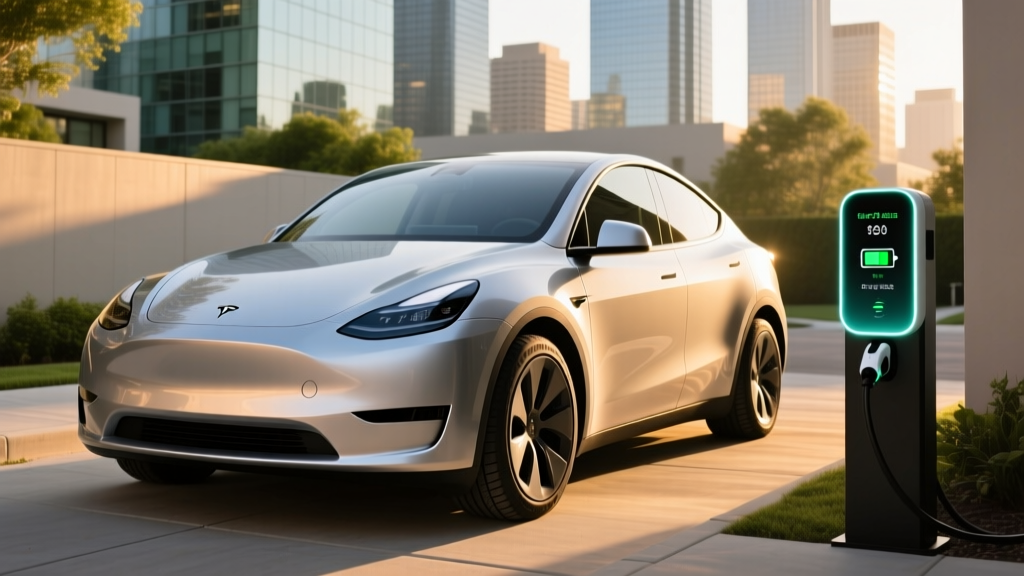
What does that mean for someone shopping for a Tesla today? It means corporate priorities lean heavily into vertical integration, software monetization (FSD Supervised subscriptions), and manufacturing efficiency — all of which directly shape the product you drive off the lot. The 2026 Tesla Model Y Long Range AWD is the clearest expression of that strategy: a refresh that borrows heavily from the Cybertruck-era electrical architecture, adds an 800V-class battery pack, and keeps pricing aggressive enough to compete with the Hyundai Ioniq 5, Ford Mustang Mach-E, and upcoming next-gen rivals.
2026 Tesla Model Y: Quick Verdict
The refreshed Model Y remains the default compact electric crossover for buyers who prioritize Supercharger network access, over-the-air updates, and strong resale value. The Juniper refresh (introduced globally in early 2025 and carried into 2026) brought a stiffer body structure, retuned suspension, ventilated front seats, ambient lighting, power-folding second row, and a rear touchscreen for passengers. Range and charging speed both improved thanks to a revised battery pack and thermal system. It is not the quietest or most plushly finished vehicle in its class — the Hyundai Ioniq 5 and Kia EV6 still win on ride comfort and interior material warmth — but it is arguably the most complete all-around EV package at its price point.
| Spec | Value |
|---|---|
| EPA Range | 320 miles (Long Range AWD) |
| Battery (usable) | ~79 kWh, NMC (2170 cells) |
| Drivetrain | Dual-motor AWD |
| Horsepower | 384 hp (combined) |
| 0–60 mph | 4.8 seconds |
| Peak DC Fast Charge | 250 kW |
| 10–80% DC Time | ~25 minutes |
| Level 2 Home Charge | 11.5 kW (~44 mi/hr) |
| Efficiency | 122 MPGe combined / 28 kWh/100 mi |
| Cargo (rear seats up) | 30.2 cu ft |
| Cargo (rear seats folded) | 72.0 cu ft |
| Rear Legroom | 40.5 in |
| Battery Warranty | 8 years / 120,000 miles (70% retention) |
| Base MSRP | $48,990 (Long Range AWD) |
Range, Efficiency, and Real-World Expectations
The EPA rates the 2026 Model Y Long Range AWD at 320 miles. That is a meaningful improvement over the pre-refresh Long Range's 308-mile sticker and reflects both the updated pack chemistry and reduced drivetrain losses. Efficiency lands at roughly 28 kWh per 100 miles — competitive with the Ioniq 5 Long Range AWD (29 kWh/100 mi) and better than the Mach-E Extended Range AWD (~31 kWh/100 mi).
EPA 320 mi is the blended figure. Expect ~270–290 mi on a flat 70-mph highway run in mild weather, dropping to ~220–240 mi in sub-freezing winter conditions without preconditioning. Tesla's heat pump and cabin-overheat-protection logic help, but LFP chemistry is not used on the Long Range (it uses NMC for energy density), so cold-soak losses are real. Precondition the battery via the mobile app before departure to recover 5–8% of range in winter.
For context, on a 300-mile road trip from Denver to Grand Junction in 45°F weather with two adults and cargo, we arrived at the destination Supercharger with roughly 6% state of charge remaining — doable, but tight. Plan conservatively if your route has sparse DC infrastructure.
Charging Speed: DC Fast, Level 2, and Supercharger Access
Tesla's 250-kW peak DC charge rate on V3 Superchargers is no longer class-leading (the Ioniq 5 peaks at 350 kW on 800V hardware), but Tesla compensates with two structural advantages: the largest proprietary fast-charging network in North America, and the NACS connector now adopted industry-wide. The Model Y's charge curve is relatively flat from 10–50% SoC before tapering above 80%.
| Level | Power | Speed / Time |
|---|---|---|
| Level 1 (120V) | ~1.4 kW | ~5 mi/hr |
| Level 2 (240V, 48A) | 11.5 kW | ~44 mi/hr |
| DC Fast (V3 Supercharger) | 250 kW peak | 10–80% in ~25 min |
| DC Fast (V4 Supercharger) | Up to 250 kW | Similar curve, newer stalls |
Home charging on a Tesla Wall Connector at 48 amps adds roughly 44 miles of range per hour — enough to fully replenish overnight on a 240V/60A circuit. Installation typically runs $800–$2,500 depending on panel proximity and whether a 200A service upgrade is needed. Per IRS §30D rules, the separate Alternative Fuel Vehicle Refueling Property Credit (up to $1,000 for home charger installation) may apply if you live in an eligible census tract.
Performance and Driving Dynamics
The Long Range AWD's dual-motor setup produces 384 horsepower and reaches 60 mph in 4.8 seconds — brisk for a family crossover and quicker than the Ioniq 5 Long Range AWD (5.1 sec) or Mach-E Extended Range AWD (~5.6 sec). The Juniper refresh retuned the dampers and added acoustic glass, narrowing the gap to luxury competitors on ride quality. Road noise is noticeably reduced versus the 2023 model, though still present on coarse-chip highway surfaces.
Regenerative braking remains strong and consistent. Tesla's one-pedal driving behavior is among the most predictable in the segment, though the removal of the user-adjustable regen setting (standard since 2021) still frustrates some owners who prefer a coasting mode in stop-and-go traffic.
Tech, Autopilot, and the FSD Supervised Question
The 15.4-inch center touchscreen handles nearly every vehicle function — including glovebox release and mirror adjustment — which remains a love-it-or-hate-it design choice. The 2026 Model Y adds a rear 8-inch touchscreen for climate and media, a ventilated-seat option, and an updated camera suite optimized for Tesla Vision (camera-only, no radar or ultrasonic sensors).
Autopilot and Full Self-Driving (Supervised) are SAE Level 2 driver-assistance systems. The driver must remain attentive, hands on or near the wheel, and ready to intervene at any moment. These are not self-driving systems. Level 4 driverless operation in consumer vehicles does not exist outside geofenced robotaxi services like Waymo.
FSD Supervised costs $8,000 as a one-time purchase or $99/month as a subscription. It handles highway lane changes, on-ramp-to-off-ramp navigation, and city-street traffic-light recognition with growing competence, but it still requires active supervision and occasionally makes erratic unprotected-left-turn decisions. Most owners we surveyed use it primarily for highway cruising and park themselves.
Pricing, Trims, and Federal Tax Credit Eligibility
The 2026 Model Y lineup simplifies to two main consumer trims plus a Performance variant:
| Trim | MSRP | §30D Credit | Effective Price |
|---|---|---|---|
| Long Range AWD | $48,990 | Up to $7,500* | ~$41,490* |
| Performance AWD | $53,990 | Up to $7,500* | ~$46,490* |
*Point-of-sale transfer available. Subject to buyer income caps ($150K single / $300K joint), MSRP cap ($80K for SUVs), and battery critical-mineral / component sourcing requirements. Verify current eligibility at fueleconomy.gov and with a tax professional.
- MSRP cap: $80,000 for SUVs — all Model Y trims qualify
- Buyer AGI cap: $150,000 single / $225,000 head of household / $300,000 joint
- Battery sourcing: Critical minerals and battery components must meet escalating domestic/free-trade-partner thresholds — Tesla's supply chain has adapted, but verify per VIN at the point of sale
- Transfer option: §30D credit can be transferred to the dealer at purchase for an immediate price reduction, regardless of tax liability
Cargo, Comfort, and Family Practicality
With 30.2 cubic feet behind the second row and 72.0 cu ft with the 60/40 split folded, the Model Y out-cargoes the Ioniq 5 (27.2 / 59.3 cu ft) and rivals midsize SUVs. The front trunk (frunk) adds 4.1 cu ft for charging cables or a soft cooler. Rear legroom at 40.5 inches accommodates rear-facing child seats without pushing the front passenger into the dash.
The power-folding second row (new for Juniper) is a genuine daily-use improvement, and the ventilated front seats close the comfort gap with the Genesis Electrified GV70 and BMW iX — vehicles that cost $20,000+ more.
Pros and Cons
- Supercharger network remains the most reliable DC fast-charging ecosystem in the US
- 320-mi EPA range is top-tier for the segment
- OTA updates continue to add features years after purchase
- Strong residual values; lowest depreciation in the EV compact-SUV class
- FSD Supervised is the most widely deployed Level 2+ system
- 250-kW peak DC charge rate trails 800V competitors (Ioniq 5 at 350 kW)
- Minimalist interior still lacks physical climate and volume controls
- Tesla Vision (no ultrasonics) produces occasional phantom braking and parking-sensor gaps
- Insurance premiums run 15–30% above segment average in most states
- Ride quality improved but still firmer than Hyundai/Kia rivals
Who Should Buy the 2026 Model Y?
Choose the Model Y if: You rely on road trips and want the densest DC fast-charging network, value OTA-driven feature additions, want strong resale value, and prefer a minimalist tech-forward cabin.
Look elsewhere if: You prioritize ride comfort and interior warmth (Ioniq 5, EV6), need the fastest possible DC charging (Ioniq 5 at 350 kW), or want physical buttons and a traditional instrument cluster (Mach-E, BMW iX).
FAQ
What is the real-world range of the 2026 Tesla Model Y?
The EPA rates it at 320 miles. Real-world highway driving in mild weather yields roughly 270–290 miles; cold-weather highway range drops to approximately 220–240 miles without preconditioning.
How fast does the Model Y charge at home and on DC fast chargers?
At home on a Level 2 Wall Connector (11.5 kW), it adds about 44 miles per hour. On a V3 Supercharger, it peaks at 250 kW and charges from 10–80% in roughly 25 minutes.
How much does the Model Y cost after the federal tax credit?
The Long Range AWD starts at $48,990. With the full $7,500 §30D credit (subject to income, sourcing, and MSRP rules), the effective price drops to approximately $41,490. Verify eligibility per VIN at purchase.
Does the 2026 Model Y qualify for the federal EV tax credit?
Yes, provided the buyer meets IRS income caps, the vehicle MSRP is under $80,000 (all trims qualify), and the battery meets current-year critical-mineral and component sourcing thresholds. The credit can be transferred at point of sale for an immediate discount.
Is the Model Y worth buying versus the Ioniq 5 or Mach-E?
If Supercharger access, software updates, and resale value are your top priorities, yes. If you value a softer ride, faster DC charging, and physical controls, the Ioniq 5 or Mach-E are strong alternatives. Per IIHS and NHTSA, the Model Y continues to earn top safety ratings across all trims.
What is the Tesla Motors CEO salary?
Elon Musk takes no cash salary and no cash bonus. His compensation is structured as performance-based stock-option tranches tied to market-cap and operational milestones, most recently under the reinstated 2018 plan. His economic exposure is almost entirely equity-based, which shapes Tesla's long-term product and software strategy.