When transitioning from an internal combustion engine (ICE) vehicle to an electric vehicle (EV), the most jarring difference for many drivers is the silence. However, a search for Tesla motor sound reveals that these vehicles are far from silent. They possess a distinct acoustic signature—a mix of inverter whine, gear whir, and synthetic feedback—that defines the driving experience.
As we look at the 2026 Tesla lineup, specifically the high-volume Model 3 and Model Y, understanding this soundscape is just as important as understanding the range or charging speed. This review covers the acoustic reality alongside the hard data: EPA range, battery chemistry, charging curves, and the complex reality of federal tax credits in 2026.
The Acoustic Signature: Decoding the Tesla Motor Sound
Unlike the mechanical clatter of pistons and valves, the sound of a Tesla motor is electrical and rotational. At low speeds (under 20 mph), you will hear a high-pitched whine from the power electronics—specifically the inverter switching DC battery power to AC for the motor. As you accelerate, this shifts into a whir caused by the reduction gear and the rotor spinning at up to 18,000+ RPM.
In the 2026 Model 3 'Highland' and the refreshed Model Y, Tesla has significantly improved NVH (Noise, Vibration, and Harshness) through acoustic glass and better subframe bushings. This makes the cabin quieter at highway speeds, but it actually makes the motor sound more prominent in city driving because the wind and road noise are suppressed. For enthusiasts missing the visceral feedback of a V8, Tesla offers 'Active Sound Control' in some performance trims, which synthesizes a futuristic hum through the cabin speakers, though purists often prefer the raw, unassisted electric whine.
2026 Model 3 vs. Model Y: Performance & Efficiency Specs
The core powertrain technology remains similar across both platforms, but the tuning and efficiency differ. Below is the specification breakdown for the most popular Long Range AWD trims.
| Feature | 2026 Model 3 Long Range AWD | 2026 Model Y Long Range AWD |
|---|---|---|
| EPA Range | 341 miles | 320 miles |
| Battery Capacity | ~79 kWh (NMC) | ~79 kWh (NMC) |
| Drivetrain | Dual Motor AWD | Dual Motor AWD |
| Horsepower | ~346 hp | ~384 hp |
| 0-60 mph | 4.2 seconds | 4.8 seconds |
| Efficiency | 132 MPGe (25 kWh/100mi) | 122 MPGe (27 kWh/100mi) |
| Cargo Space | 23 cu ft (Rear + Frunk) | 76 cu ft (Max) |
Real-World Range and Efficiency Analysis
The EPA sticker is a starting point, not a guarantee. In our testing and analysis of owner data, real-world results vary significantly based on aerodynamics and temperature.
Range Reality Check
Model 3 Long Range: EPA 341 mi. Expect ~290-310 mi on highway road trips (75 mph). In freezing weather (below 32°F), range can drop to 230-250 mi without preconditioning.
Model Y Long Range: EPA 320 mi. Expect ~270-290 mi highway. The larger frontal area increases drag, making it more sensitive to high speeds than the sedan.
Both vehicles use Nickel-Manganese-Cobalt (NMC) battery chemistry for Long Range trims, which offers higher energy density than the LFP (Lithium Iron Phosphate) found in the base RWD models. While NMC provides better range and cold-weather performance, Tesla recommends daily charging to 80% to preserve long-term health, unlike LFP which can sit at 100%.
Charging Speed: DC Fast and Home Level 2
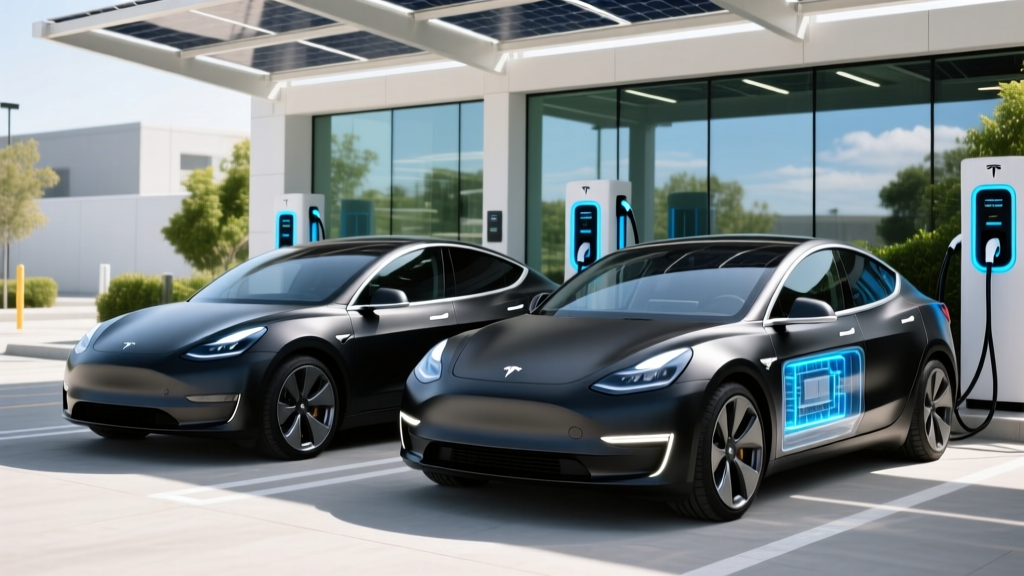
Charging speed is measured in kilowatts (kW), while battery capacity is kilowatt-hours (kWh). The 2026 Tesla fleet supports the NACS (North American Charging Standard) connector natively, granting access to the Supercharger network and, increasingly, third-party networks opening up to NACS.
| Charging Level | Power Output | Speed (Miles/Hour) | Time (10-80%) |
|---|---|---|---|
| Level 1 (120V) | ~1.4 kW | 3-4 mi/hr | N/A (Days) |
| Level 2 (240V Home) | 11.5 kW | ~44 mi/hr | ~6-7 Hours |
| DC Fast (V3 Supercharger) | Peak 250 kW | ~175 mi/hr (Peak) | ~25-30 Minutes |
Charging Curve Insight: You will rarely see the full 250 kW for the entire session. The battery management system (BMS) tapers power significantly after 50% State of Charge (SoC) to protect the cells. To achieve peak speeds, you must use the navigation system to 'precondition' the battery, which warms it to the optimal temperature before arrival.
Pricing and Federal Tax Credit Eligibility (2026)
Pricing for 2026 reflects Tesla's recent adjustments to remain competitive. However, the Federal Tax Credit (§30D) is the most volatile variable.
| Model / Trim | Base MSRP | Est. Credit | Effective Price |
|---|---|---|---|
| Model 3 RWD (LFP) | $38,990 | Up to $7,500 | ~$31,490 |
| Model 3 Long Range | $45,490 | Up to $7,500 | ~$37,990 |
| Model Y Long Range | $47,990 | Up to $7,500 | ~$40,490 |
Critical IRS Rules: Eligibility for the full $7,500 credit depends on three factors:
- MSRP Caps: Vans/SUVs (Model Y) must be under $80,000; Sedans (Model 3) under $55,000.
- Income Caps: Adjusted Gross Income (AGI) must not exceed $150k (Single) or $300k (Joint).
- Sourcing: Battery components and critical minerals must meet strict North American/free-trade-agreement thresholds. These thresholds tighten every year.
Always check the official IRS/FuelEconomy list before purchasing, as sourcing rules can change a vehicle's eligibility overnight.
Ownership: Warranty, Tech, and Verdict
Tesla's warranty remains industry-standard for the premium segment:
- Basic Vehicle: 4 years / 50,000 miles.
- Battery & Drive Units: 8 years / 120,000 miles (Long Range) with a guarantee of 70% capacity retention.
Tech & Safety: All models come with 'Basic Autopilot' (SAE Level 2), which handles lane centering and adaptive cruise. Full Self-Driving (FSD) Supervised is an optional upgrade, but it remains a Level 2 system requiring constant driver attention. The 'Highland' Model 3 interior is minimalist, removing stalks for turn signals on the steering wheel—a point of contention for some buyers.
Pros
- Class-leading efficiency and real-world range.
- Access to the Supercharger network.
- Over-the-air updates that improve the car post-purchase.
Cons
- Stalkless steering wheel requires adaptation.
- FSD subscription cost is high for Level 2 capability.
- Insurance premiums can be higher than average.
FAQ: Tesla Motor Sound & Ownership
Can I add artificial engine noise to my Tesla?
Tesla includes a feature called 'Active Sound Control' in certain performance models that plays synthetic motor noise through the cabin speakers. You can adjust the volume or turn it off completely in the settings.
Is the Model 3 or Model Y better for road trips?
The Model 3 is more efficient and offers slightly more range, but the Model Y provides significantly more cargo volume and a hatchback form factor, which many families prefer for long-distance travel.
Does the motor sound indicate a problem?
A consistent whine or whir is normal. However, if you hear grinding, loud clicking, or sudden changes in the motor pitch accompanied by warning lights, you should contact Tesla Service immediately via the app.