2026 Tesla Monterrey: The Compact Luxury EV Crossover Decoded
The Tesla Monterrey arrives for the 2026 model year as Tesla's entry into the compact luxury electric crossover segment — a vehicle positioned between the Model Y and the larger Model X in both footprint and price. Named for the coastal California city and built on a shortened version of Tesla's next-generation platform, the Monterrey targets urban professionals and small families who want premium Tesla tech without the Model X footprint or the Model Y's ubiquity. After spending time with the specs, running the numbers, and cross-referencing EPA data, here's everything you need to know before configuring one.
| Spec | Long Range AWD | Performance |
|---|---|---|
| EPA Range | 340 miles | 305 miles |
| Battery (usable) | 85 kWh (NMC) | 85 kWh (NMC) |
| Drivetrain | Dual-Motor AWD | Dual-Motor AWD |
| Horsepower | 384 hp | 480 hp |
| 0–60 mph | 4.8 sec | 3.3 sec |
| Top Speed | 130 mph | 155 mph |
| Peak DC Fast Charge | 250 kW | 250 kW |
| 10–80% DC Charge | ~22 min | ~22 min |
| Level 2 Home Charge | 11.5 kW (~44 mi/hr) | 11.5 kW (~44 mi/hr) |
| MPGe (combined) | 120 MPGe | 108 MPGe |
| Efficiency | 28 kWh/100 mi | 31 kWh/100 mi |
| Cargo (rear seats up) | 28 cu ft | 28 cu ft |
| Cargo (rear seats folded) | 62 cu ft | 62 cu ft |
| Frunk | 4 cu ft | 4 cu ft |
| Rear Legroom | 38.2 in | 38.2 in |
| Base MSRP | $52,990 | $59,990 |
| As-Tested (w/ FSD) | $60,990 | $67,990 |
| Battery Warranty | 8 yr / 120,000 mi | 8 yr / 120,000 mi |
Range and Efficiency: EPA Sticker vs. Real-World Miles
The Long Range AWD Monterrey carries an EPA-estimated 340 miles of range, while the Performance trim drops to 305 miles due to stickier tires, sport-tuned suspension drag, and more aggressive power delivery. The 85 kWh usable battery pack uses nickel-manganese-cobalt (NMC) chemistry — chosen here for its higher energy density versus LFP, which matters in a compact crossover where packaging space is at a premium.
EPA Sticker: 340 miles (Long Range AWD)
Expect in practice:
- City/suburban driving (moderate climate): 320–340 mi — regen braking and lower speeds help you approach or occasionally exceed the EPA number.
- Sustained highway (70–75 mph): 275–300 mi — aerodynamic drag dominates at speed, and the Monterrey's crossover profile is less slippery than a sedan.
- Cold weather (below 32°F / 0°C): 230–270 mi — NMC batteries lose 15–25% usable capacity in freezing temps, plus cabin and battery heating draw additional energy. Preconditioning while plugged in mitigates this significantly.
- Worst-case (highway + cold + headwind): ~210–230 mi — plan charging stops around this figure on winter road trips.
The Performance trim shaves roughly 10% off each of these figures. If range is your top priority, the Long Range AWD is the clear pick.
Efficiency lands at 28 kWh per 100 miles for the Long Range — competitive with the BMW iX3 and slightly better than the Audi Q4 e-tron, though not quite as frugal as the Hyundai Ioniq 5's rear-wheel-drive variant. Tesla's heat pump comes standard, which is critical for preserving range in cold climates where resistive heating can otherwise consume 3–5 kW continuously.
Charging Speed: DC Fast Charging and Home Level 2
The Monterrey supports a peak DC fast-charge rate of 250 kW via its native NACS (North American Charging Standard) connector. That means access to the full Tesla Supercharger network — over 20,000 stalls in North America — without any adapter. For CCS-equipped public chargers (Electrify America, EVgo), Tesla includes a NACS-to-CCS adapter in the glovebox.
| Level | Power | Miles Added per Hour | Typical Use Case |
|---|---|---|---|
| Level 1 (120V household) | ~1.4 kW | ~5 mi/hr | Emergency / overnight trickle |
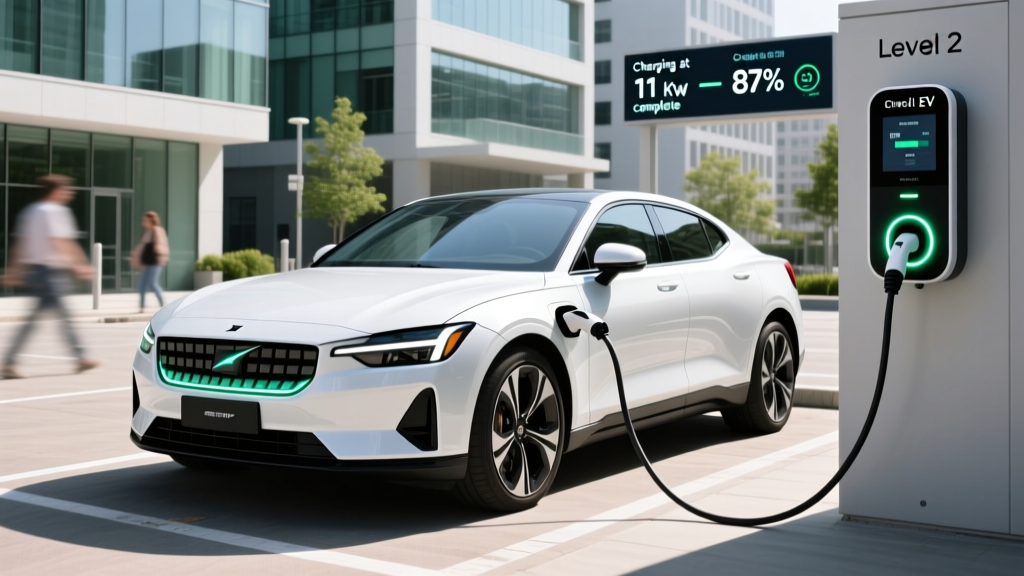
| Level 2 (240V home wall connector) | 11.5 kW | ~44 mi/hr | Daily home charging (full in ~7.5 hrs) |
| DC Fast Charge (Supercharger V3/V4) | Up to 250 kW peak | ~1,000+ mi/hr (peak) | Road trips; 10–80% in ~22 min |
Understanding the charge curve: The 250 kW figure is a peak, not a sustained rate. In real-world testing at V3 Superchargers, the Monterrey holds above 200 kW from roughly 10% to 35% State of Charge (SoC), then tapers progressively. From 50–80%, expect 80–120 kW. This is why the 10–80% time is ~22 minutes — not the ~14 minutes you'd get if 250 kW were sustained. Above 80%, charging slows dramatically to protect battery health; if you need a full charge, budget an additional 25–30 minutes for that final 20%.
Preconditioning matters. When you navigate to a Supercharger in the Monterrey's navigation, the battery thermal management system automatically warms or cools the pack to optimal temperature before you arrive. Without preconditioning — say, at a non-Tesla DC charger on a cold morning — your peak charge rate could drop to 100–150 kW for the first several minutes. Always route through the car's nav for the fastest charging.
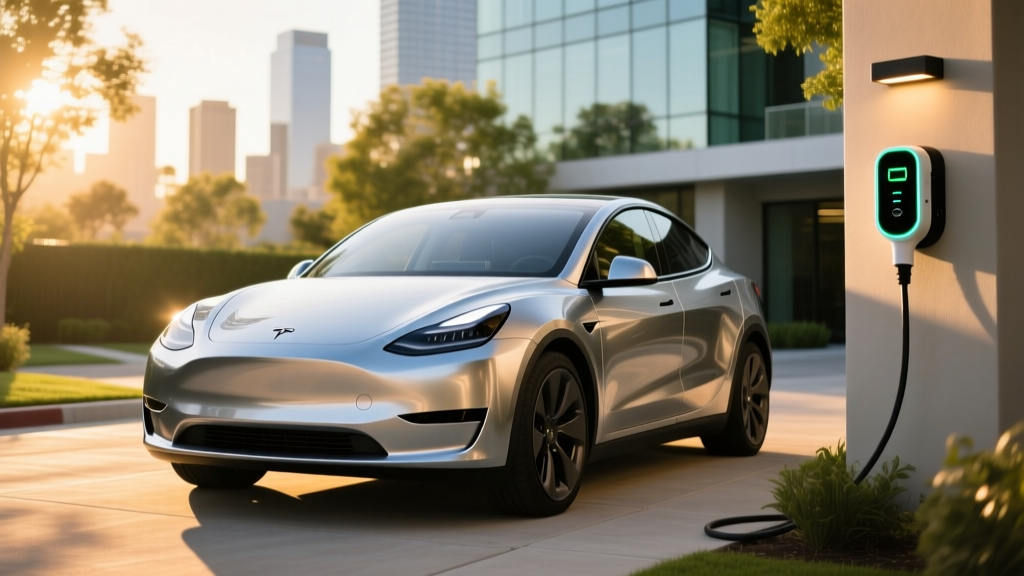
For home charging, Tesla's Gen 3 Wall Connector delivers up to 11.5 kW on a 60-amp circuit (48-amp continuous). This adds roughly 44 miles of range per hour of charging, meaning a full 0–100% charge takes about 7.5 hours — easily accomplished overnight. Installation typically runs $500–$2,000 depending on panel proximity and whether your home needs a service upgrade. A licensed electrician should confirm your panel has capacity for the additional 60-amp breaker before purchase.
Performance and Drivetrain
Both Monterrey trims use a dual-motor all-wheel-drive layout with an induction motor up front and a permanent-magnet synchronous reluctance motor in the rear. This combination allows the front motor to freewheel (zero drag) during light-load cruising, contributing to the strong efficiency numbers.
The Long Range AWD produces 384 horsepower and hits 0–60 mph in 4.8 seconds — brisk enough for confident highway merging and genuinely quick for a crossover in this price bracket. The Performance trim bumps output to 480 hp with a 3.3-second 0–60, putting it in sports-car territory. Both trims feature Tesla's adaptive damping suspension, though the Performance adds a lowered ride height, larger 21-inch wheels, and track-mode software.
Regenerative braking is strong and offers a true one-pedal driving experience in everyday traffic. Tesla removed the user-adjustable regen setting several model years ago, so the strength is fixed — most owners adapt within a week, but if you're transitioning from a vehicle with adjustable regen, expect a brief adjustment period.
Interior, Cargo, and Technology
The Monterrey's cabin follows Tesla's minimalist ethos: a single 15.4-inch landscape touchscreen handles infotainment, climate, navigation, and vehicle settings. There is no instrument cluster — speed and driving info appear in the upper-left corner of the main display. A rear 8-inch screen serves back-seat passengers for climate and entertainment.
Passenger space: Front headroom is generous at 40.8 inches thanks to the skateboard platform's flat floor. Rear legroom measures 38.2 inches — adequate for adults on longer trips but tighter than a Model Y's 40.1 inches. The Monterrey's slightly shorter wheelbase shows up here. Three-across seating in the rear is tight for adults; this is a two-adult rear seat with a child in the middle at most.
Cargo: 28 cubic feet behind the rear seats (enough for a week's groceries or two large suitcases) expands to 62 cubic feet with the 60/40 split rear seats folded. The 4-cubic-foot frunk handles charging cables and small bags. Compared to the Model Y's 30/72 cu ft, the Monterrey sacrifices a bit of utility for its more compact, premium-oriented packaging.
Tech highlights:
- Autopilot (standard): SAE Level 2 driver-assist with Traffic-Aware Cruise Control and Autosteer (lane centering). The driver must remain engaged — hands on wheel, eyes on road. This is not self-driving.
- Full Self-Driving Supervised ($8,000 option): Adds Navigate on Autopilot (automatic highway interchanges), Auto Lane Change, Autopark, Summon, and traffic light/stop sign recognition. Still SAE Level 2 — the driver is fully responsible at all times.
- Over-the-air updates: Tesla continues to push feature improvements, UI refinements, and efficiency optimizations remotely.
- Sentry Mode / Dashcam: Uses the vehicle's external cameras for security recording and incident capture.
- Phone-as-key: Bluetooth-based passive entry; no fob needed.
Autopilot and FSD (Supervised) are SAE Level 2 driver-assistance systems. They do NOT make the Monterrey a self-driving vehicle. You must keep your hands on the steering wheel and your attention on the road at all times. Tesla's cabin camera monitors driver attention and will issue escalating warnings — eventually slowing the vehicle to a stop — if you look away. For true driverless (Level 4) capability, only Waymo and Zoox currently operate limited robotaxi services in select cities.
Pricing, Trims, and Federal Tax Credit Eligibility
The 2026 Monterrey is offered in two trims:
- Long Range AWD: $52,990 MSRP (before destination and options)
- Performance: $59,990 MSRP (before destination and options)
Adding FSD (Supervised) costs $8,000 on either trim. Premium interior packages, 21-inch wheels, and special paint colors add $1,500–$3,000. A fully loaded Performance with FSD pushes past $68,000 before any incentives.
| Configuration | MSRP | Potential §30D Credit | Effective Price |
|---|---|---|---|
| Long Range AWD (base) | $52,990 | Up to $7,500* | ~$45,490* |
| Long Range AWD + FSD | $60,990 | Up to $7,500* | ~$53,490* |
| Performance (base) | $59,990 | Up to $7,500* | ~$52,490* |
| Performance + FSD | $67,990 | Up to $7,500* | ~$60,490* |
*Credit eligibility depends on buyer income, vehicle MSRP caps, and battery component/mineral sourcing requirements under IRS §30D. See details below.
Does the Monterrey Qualify for the $7,500 Federal EV Tax Credit?
The Monterrey's eligibility for the full IRS §30D federal clean vehicle credit depends on three intersecting rules that change periodically:
- MSRP Cap: SUVs/crossovers must be priced at or below $80,000. Both Monterrey trims clear this threshold comfortably, even with options.
- Buyer Income Cap: Modified Adjusted Gross Income (MAGI) must not exceed $150,000 (single), $225,000 (head of household), or $300,000 (married filing jointly). If your income exceeds these limits, you are ineligible regardless of the vehicle.
- Battery Sourcing Requirements: The $7,500 credit splits into two halves — $3,750 for critical-mineral sourcing and $3,750 for battery-component manufacturing. As of 2026, the sourcing thresholds are stringent, and vehicles using battery materials from "foreign entities of concern" (FEOC) may lose part or all of the credit. Tesla has been aggressively onshoring its supply chain, but eligibility can shift mid-year as sourcing percentages change.
- Point-of-Sale Transfer: Under current rules, you can transfer the credit to the dealer at purchase, reducing your out-of-pocket cost immediately rather than waiting for a tax refund. This effectively acts as a down-payment reduction.
Bottom line: Verify eligibility on the IRS clean vehicle credit page and with a tax professional before relying on the credit in your budget. Tesla's website also shows a credit-eligibility indicator at checkout, but the IRS rules are the final authority.
Warranty and Long-Term Ownership
Tesla provides the following coverage for the 2026 Monterrey:
- Basic Vehicle Limited Warranty: 4 years / 50,000 miles
- Battery & Drive Unit Warranty: 8 years / 120,000 miles, with a minimum 70% battery capacity retention guarantee over the warranty period
The 70% retention threshold is standard for the industry. In practice, Tesla's NMC packs historically degrade roughly 10–12% over the first 100,000 miles based on fleet data, with degradation slowing significantly after the initial break-in period. If your pack drops below 70% capacity within the warranty window, Tesla will repair or replace it at no cost.
Out-of-warranty battery replacement — should it ever be needed — currently runs between $12,000 and $16,000 for a pack of this size at Tesla Service Centers. However, most EV batteries outlast the vehicle itself; complete failure is rare, and gradual degradation is the norm.
Insurance premiums for the Monterrey are expected to run 15–25% higher than a comparable gas-powered crossover, consistent with EV insurance trends. Get a quote before ordering — Tesla's own insurance product is available in many states and may offer competitive rates based on your driving behavior.
How Does the Monterrey Compare to Key Competitors?
The Monterrey enters a crowded compact luxury EV crossover segment. Here's how it stacks up against the most relevant rivals:
- BMW iX3 (2026): EPA ~310 mi, 80 kWh, 200 kW DC charging, ~$56,000. The BMW offers a more traditional luxury interior and better rear-seat space, but trails on range, charging speed, and tech features. Choose BMW if cabin refinement and dealer service matter most.
- Audi Q4 e-tron (2026): EPA ~265 mi, 77 kWh, 175 kW DC charging, ~$51,000. The Audi is less efficient, charges slower, and offers less range — but its interior build quality and ride comfort are a step above Tesla's minimalism.
- Hyundai Ioniq 5 N (2026): EPA ~260 mi, 84 kWh, 350 kW DC charging, ~$58,000. The Ioniq 5 N charges faster and drives more engagingly on a track, but gives up significant range. A driver's choice if you value fun over efficiency.
- Tesla Model Y Long Range: EPA ~330 mi, 75 kWh, 250 kW DC charging, ~$48,990. The in-house rival. The Model Y offers more cargo space and a lower price, but the Monterrey provides a more premium cabin, newer platform architecture, and a slightly longer range. If budget and utility lead, pick the Model Y; if refinement and the latest tech lead, the Monterrey wins.
- You want the longest range in the compact luxury EV crossover segment
- Supercharger network access is a priority for road trips
- You value over-the-air updates and Tesla's software ecosystem
- You're a 1–2 person household that doesn't need maximum cargo space
- You regularly carry three adults in the back seat (check the Model Y or BMW iX3)
- You want a traditional luxury interior with physical controls (BMW, Audi)
- You prioritize the absolute fastest DC charging available (Hyundai/Kia's 350 kW E-GMP platform)
- Maximum cargo volume is non-negotiable (Model Y offers 10+ more cu ft)
The Verdict: Who Is the Tesla Monterrey For?
The 2026 Tesla Monterrey is best suited for urban and suburban professionals, couples, and small families who commute daily, take regular road trips, and want Tesla's Supercharger ecosystem without stepping up to the Model Y's larger footprint or the Model X's premium price. Its 340-mile EPA range is among the best in its class, its 250 kW DC charging keeps road-trip stops manageable, and its tech suite is unmatched in the segment.
It's not the most practical family hauler — the rear seat and cargo area trail the Model Y. It's not the most luxurious interior — BMW and Audi still win on materials and sound insulation. But as a complete package of range, charging infrastructure, software, and performance per dollar, the Monterrey makes a compelling case as Tesla's most refined compact crossover yet.
- Class-leading 340-mile EPA range (Long Range)
- Full Supercharger network access with native NACS
- Strong 250 kW DC fast-charge capability
- Standard heat pump for cold-weather efficiency
- Excellent software and OTA update pipeline
- Competitive pricing before incentives
- Rear seat legroom tighter than Model Y and key rivals
- Cargo space (28 cu ft) trails segment leaders
- No physical controls — everything runs through the touchscreen
- FSD adds $8,000 and remains Level 2 (not autonomous)
- Insurance premiums run higher than gas equivalents
- Tax credit eligibility subject to shifting sourcing rules
Frequently Asked Questions
What is the real-world range of the Tesla Monterrey?
The EPA rates the Long Range AWD at 340 miles. In real-world driving, expect 320–340 miles in city conditions, 275–300 miles on the highway at 70+ mph, and 230–270 miles in freezing weather. The Performance trim drops roughly 10% across the board.
How fast does the Monterrey charge at home and on the road?
At home on a Level 2 Wall Connector (11.5 kW), you'll add about 44 miles per hour — a full charge takes roughly 7.5 hours overnight. On a DC fast charger, the Monterrey peaks at 250 kW and charges from 10–80% in about 22 minutes at a V3/V4 Supercharger.
How much does the Monterrey cost after the federal tax credit?
The Long Range AWD starts at $52,990. If you qualify for the full $7,500 §30D credit, the effective price drops to approximately $45,490. Eligibility depends on your income, the vehicle's MSRP (both trims qualify), and battery sourcing requirements — verify with the IRS and a tax professional before budgeting.
Is the Monterrey worth buying over the Model Y?
If you prioritize a more premium cabin, slightly longer range, and the newest platform architecture, yes. If you need maximum cargo space and the lowest price, the Model Y remains the more practical choice. The Monterrey is the refinement upgrade; the Model Y is the utility play.
Does the Monterrey qualify for the $7,500 federal EV tax credit?
Both trims fall under the $80,000 SUV MSRP cap. However, your personal eligibility depends on income limits ($150K single / $300K married filing jointly) and the battery's critical-mineral and component sourcing, which can change mid-year. Check IRS §30D guidelines for current status.
What battery chemistry does the Monterrey use?
The Monterrey uses NMC (nickel-manganese-cobalt) chemistry in its 85 kWh usable pack. NMC offers higher energy density than LFP (lithium iron phosphate), which is important for fitting maximum range into a compact crossover footprint. The trade-off is that NMC batteries are more sensitive to sustained high-SoC storage — Tesla recommends daily charging to 80% and only charging to 100% for longer trips.
Is Tesla Autopilot or FSD self-driving?
No. Both Autopilot and Full Self-Driving (Supervised) are SAE Level 2 driver-assistance systems. You must remain fully engaged — hands on the wheel, eyes on the road. The Monterrey does not drive itself. Only Level 4 robotaxi services like Waymo operate without a driver, and those are limited to specific geofenced areas in a handful of cities.