The 2026 Tesla Model 3 Lease: A Quick Verdict
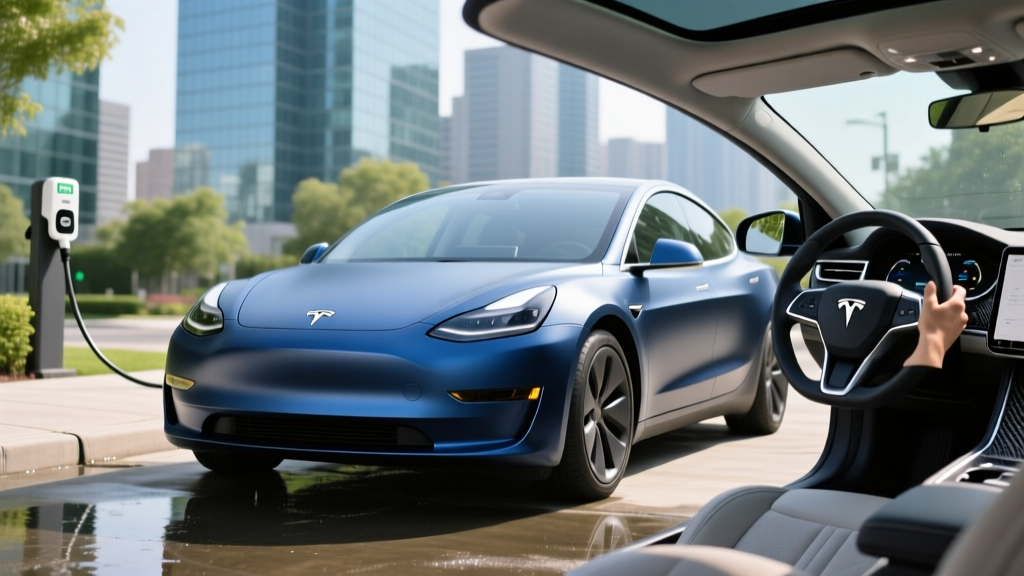
Leasing a Tesla Model 3 in 2026 remains one of the most accessible entry points into premium electric-vehicle ownership. The refreshed "Highland" Model 3, now in its second full model year after the major redesign, offers up to 341 miles of EPA-estimated range, access to the largest fast-charging network in North America, and — critically for lessees — a potential path to the full $7,500 federal EV tax credit even when purchase eligibility is restricted by battery-sourcing rules.
But a lease only makes financial sense if the numbers pencil out against buying, and if the Model 3's real-world capabilities match your daily driving needs. This guide breaks down every spec, cost, and caveat you need before signing.
Range, Efficiency, and the Real-World Reality Check
Model 3 Long Range AWD: 341 miles (EPA)
Model 3 RWD: 272 miles (EPA)
Model 3 Performance: 315 miles (EPA)
Real-world expectation: Plan for 260–290 highway miles in the Long Range at 70–75 mph. In freezing temperatures (below 32°F), expect a 20–30% reduction, bringing the Long Range down to roughly 240–270 usable miles per charge. City driving with regenerative braking recovers energy and can exceed EPA estimates in mild weather.
The Model 3 Long Range AWD carries a 79 kWh usable battery pack (82 kWh gross) using NMC (nickel manganese cobalt) chemistry, which offers higher energy density than the LFP (lithium iron phosphate) cells found in the base RWD trim. The RWD variant uses a 60 kWh usable LFP pack — heavier per kWh but with a longer cycle life and the ability to charge routinely to 100% without accelerating degradation.
Efficiency remains a Tesla stronghold. The Long Range AWD achieves an EPA-rated 132 MPGe combined (25 kWh/100 mi), while the RWD delivers 142 MPGe combined (24 kWh/100 mi). These figures, sourced from fueleconomy.gov, place the Model 3 among the most efficient EVs in its class — meaning you spend less per mile on electricity than rivals like the Hyundai Ioniq 6 or BMW i4.
Charging Speed: DC Fast Charging and Home Level 2
Charging infrastructure is where Tesla's ecosystem advantage becomes tangible. The Model 3 uses the NACS (North American Charging Standard) connector natively, granting seamless access to over 20,000 Tesla Superchargers across North America without adapters.
| Charging Level | Power | Speed (Miles Added) | Notes |
|---|---|---|---|
| Level 1 (120V household) | ~1.4 kW | 3–5 mi/hr | Emergency/top-up only |
| Level 2 (240V home) | 11.5 kW (48A) | ~44 mi/hr | Full charge in ~7–8 hrs (LR) |
| DC Fast Charge (Supercharger V3/V4) | Peak 250 kW | ~175 mi in 15 min | 10–80% in ~25 min |
| DC Fast Charge (CCS via adapter) | Peak 250 kW | Similar to Supercharger | Requires NACS-to-CCS adapter |
Charging curve reality: The 250 kW peak only sustains roughly from 5–30% state of charge. From 30–60%, expect 150–180 kW; above 80%, the rate drops sharply to under 50 kW to protect battery health. For road trips, plan Supercharger stops from 10–80% rather than chasing a full charge — the last 20% can take as long as the first 70%.
At home, the onboard 11.5 kW AC charger (48 amps) is competitive. A full Level 2 home installation (Tesla Wall Connector or equivalent) on a 60-amp circuit will replenish the Long Range overnight. Expect a professional installation cost of $800–$2,000 depending on panel proximity and local permit requirements.
Performance, Drivetrain, and Driving Dynamics
| Spec | RWD | Long Range AWD | Performance |
|---|---|---|---|
| 0–60 mph | 5.8 sec | 4.2 sec | 2.9 sec |
| Horsepower | ~271 hp | ~346 hp | ~510 hp |
| Drivetrain | Rear-Wheel Drive | Dual-Motor AWD | Dual-Motor AWD |
| Top Speed | 125 mph | 125 mph | 163 mph |
| Battery (usable) | 60 kWh (LFP) | 79 kWh (NMC) | 79 kWh (NMC) |
The Highland refresh improved ride quality substantially — revised suspension tuning and acoustic glass reduce road noise and soften impacts compared to pre-2024 models. The Performance trim adds adaptive dampers, a track mode, and staggered 19-inch wheels, but the Long Range AWD hits the sweet spot for most buyers: genuinely quick, dual-motor traction in rain and snow, and the longest range of the lineup.
Interior Space, Tech, and Driver Assistance
The Model 3's minimalist cabin centers on a 15.4-inch touchscreen handling nearly all vehicle functions — climate, navigation, media, and vehicle settings. Physical controls are limited to steering-wheel buttons and window switches. A rear 8-inch touchscreen for passengers was added with the Highland refresh, along with ventilated front seats and ambient lighting across all trims.
Dimensional specs:
- Cargo volume: 23 cu ft (trunk + frunk combined)
- Front legroom: 42.2 inches
- Rear legroom: 35.3 inches
- Seating capacity: 5 passengers
Rear seat space is tighter than the Hyundai Ioniq 6 or Chevrolet Equinox EV, making the Model 3 better suited for couples or small families than for regularly hauling adults in back.
Driver assistance: Every Model 3 includes Tesla's Basic Autopilot (adaptive cruise control, lane centering, emergency braking). Full Self-Driving (Supervised) — a $8,000 option or $99/month subscription — adds automatic lane changes, traffic-light recognition, and Navigate on Autopilot. However, FSD remains an SAE Level 2 system, meaning the driver must remain fully engaged with hands on the wheel and eyes on the road at all times. It is not autonomous driving.
Tesla Autopilot and FSD (Supervised) are SAE Level 2 driver-assist systems. They do NOT make the vehicle self-driving. The driver is legally and operationally responsible for all vehicle control. Autopilot can fail to detect stationary objects, construction zones, and faded lane markings. According to NHTSA, Tesla vehicles have been involved in multiple incidents requiring driver intervention despite active Autopilot.
Pricing, Lease Costs, and the $7,500 Tax Credit Loophole
| Trim | Base MSRP | Est. Monthly Lease* | §30D Credit (Lease) |
|---|---|---|---|
| Model 3 RWD | $38,990 | $329–$399/mo | Up to $7,500 passed through |
| Model 3 Long Range AWD | $47,740 | $449–$549/mo | Up to $7,500 passed through |
| Model 3 Performance | $54,990 | $579–$699/mo | Up to $7,500 passed through |
*Lease estimates based on 36-month/10,000-mile terms with $3,500–$4,500 due at signing, varying by region and credit tier. Actual offers vary by dealership and Tesla's current promotional programs.
The lease tax credit advantage: Under IRS §30D rules, purchased EVs must meet strict battery-sourcing and critical-mineral requirements (phased in through 2025–2026) to qualify for the full $7,500 federal tax credit. Many Tesla Model 3 vehicles built for the U.S. market now meet these requirements, but eligibility can shift with supply-chain changes. However, when a vehicle is leased, the credit flows to the leasing company (the lessor) under the separate §45W commercial clean vehicle credit, and the lessor can — but is not required to — pass the savings to the lessee as a capitalized-cost reduction. This "lease loophole" means a Tesla Model 3 lease may effectively receive $7,500 in savings even if the same vehicle purchased outright would not qualify due to sourcing rules.
Always verify current eligibility. The IRS clean vehicle credit page maintains the latest rules, and Tesla's website indicates which configurations currently qualify.
- ✓ Vehicle MSRP cap: $55,000 for sedans (all Model 3 trims qualify)
- ✓ Buyer income cap: $150,000 single / $300,000 joint (modified AGI)
- ⚠ Battery component sourcing: Must meet escalating domestic-content thresholds
- ⚠ Critical minerals: Must meet escalating U.S./FTA-sourced thresholds
- ✓ Point-of-sale transfer available (reduces purchase price at delivery)
- ✓ Lease: Credit goes to lessor under §45W — confirm pass-through with Tesla
Warranty Coverage and Long-Term Ownership
Tesla's warranty structure covers the basics but trails some competitors in bumper-to-bumper duration:
- Basic vehicle warranty: 4 years / 50,000 miles
- Battery & drive unit warranty: 8 years / 100,000 miles (RWD) or 8 years / 120,000 miles (Long Range & Performance)
- Battery retention guarantee: Minimum 70% capacity retention during the warranty period
The 70% retention threshold is industry-standard but worth noting: if your battery degrades to 69% within 8 years/120,000 miles, Tesla will repair or replace it. Real-world data from Tesla's fleet suggests most Model 3 packs retain 85–90% capacity at 100,000 miles, with LFP packs in the RWD showing particularly strong longevity due to their chemistry's inherent stability.
For lessees on a 36-month term, battery degradation is largely a non-issue — you'll return the vehicle well within the warranty window.
Model 3 vs. Key Competitors: Is It the Right Lease?
The Model 3 competes in a growing segment of mid-size electric sedans and crossovers. Here's how it stacks up against the most common cross-shopped alternatives:
- vs. Hyundai Ioniq 6: The Ioniq 6 offers comparable range (361 mi SE trim) and 800V charging (10–80% in 18 min), but its CCS connector means fewer fast-charging options. The Model 3's Supercharger access and superior software integration give it the edge for road-trippers.
- vs. BMW i4: The i4 provides a more traditional luxury interior and superior build quality, but starts ~$10,000 higher and offers less range per dollar. Lease it if brand prestige and cabin refinement matter more than efficiency.
- vs. Tesla Model Y: If cargo space and rear-seat room are priorities, the Model Y crossover (starting ~$44,990) offers 76 cu ft of cargo volume versus the Model 3's 23 cu ft. Many families find the Y a better fit despite a slight range and efficiency penalty.
- Class-leading efficiency (132–142 MPGe)
- Supercharger network access (NACS native)
- 250 kW peak DC fast charging
- Over-the-air updates continuously add features
- Lease tax-credit loophole may bypass sourcing restrictions
- Highland refresh improved ride and cabin quietness
- Rear seat is tight for adults (35.3" legroom)
- No physical climate or volume controls
- FSD subscription adds cost without Level 4 autonomy
- Insurance premiums run 15–25% above segment average
- Build-quality inconsistency still reported by some owners
- Lease-end disposition fee and mileage penalties apply
Who Should Lease the Tesla Model 3?
- You commute 30–80 miles daily and want minimal charging costs (~$0.04–$0.06/mi on home electricity)
- You want access to the most reliable DC fast-charging network without adapters
- You plan to keep the vehicle 2–3 years (lease term) without long-term battery anxiety
- You value over-the-air feature updates and a tech-forward interface
- Your household is 1–2 adults, with occasional rear-seat use
- You regularly carry 3+ passengers or need serious cargo space (consider Model Y or Ioniq 5)
- You cannot install a Level 2 home charger and rely solely on public infrastructure
- You want physical buttons and a traditional cockpit layout
- You drive over 15,000 miles/year (lease mileage penalties add up fast)
Frequently Asked Questions
What is the real-world range of the Tesla Model 3?
The Long Range AWD is EPA-rated at 341 miles, but expect 260–290 miles at sustained highway speeds of 70–75 mph. In sub-freezing temperatures, range can drop to 240–270 miles. The RWD trim delivers 272 miles EPA, with roughly 220–240 miles real-world highway. City driving with regenerative braking can match or slightly exceed EPA numbers in mild weather.
How fast does the Model 3 charge at home and on the road?
On a Level 2 home charger (11.5 kW / 48A), the Model 3 gains about 44 miles of range per hour, fully charging the Long Range in 7–8 hours. At a Tesla Supercharger (V3/V4), it peaks at 250 kW and charges from 10–80% in approximately 25 minutes, adding up to 175 miles in 15 minutes. Charging slows significantly above 80% SoC to protect the battery.
Does the Tesla Model 3 qualify for the $7,500 federal EV tax credit?
When purchased, Model 3 eligibility for the full $7,500 §30D credit depends on current battery-sourcing and critical-mineral rules, which tighten annually. Check IRS.gov and Tesla's website for the latest. When leased, the credit flows to the leasing company under §45W, and Tesla has historically passed the full $7,500 to lessees as a cap-cost reduction — effectively lowering monthly payments. Confirm pass-through in your lease agreement.
Is leasing a Tesla Model 3 worth it vs. buying?
Leasing makes sense if you want lower monthly payments, plan to drive under 12,000 miles/year, and prefer swapping for a newer model every 3 years. The lease tax-credit loophole can also unlock $7,500 in savings even if purchase eligibility is restricted. However, buying is better if you drive high mileage, want to build equity, or plan to keep the car 5+ years. Run both scenarios with your local tax rate, insurance quotes, and expected mileage before deciding.
What are the biggest drawbacks of the Model 3?
The most common complaints are the tight rear seat (35.3 inches of legroom), absence of physical controls for climate and audio, higher-than-average insurance premiums, and reliance on the touchscreen for nearly all functions. The Highland refresh addressed ride quality and cabin noise, but the fundamental minimalist approach won't suit drivers who prefer traditional layouts.