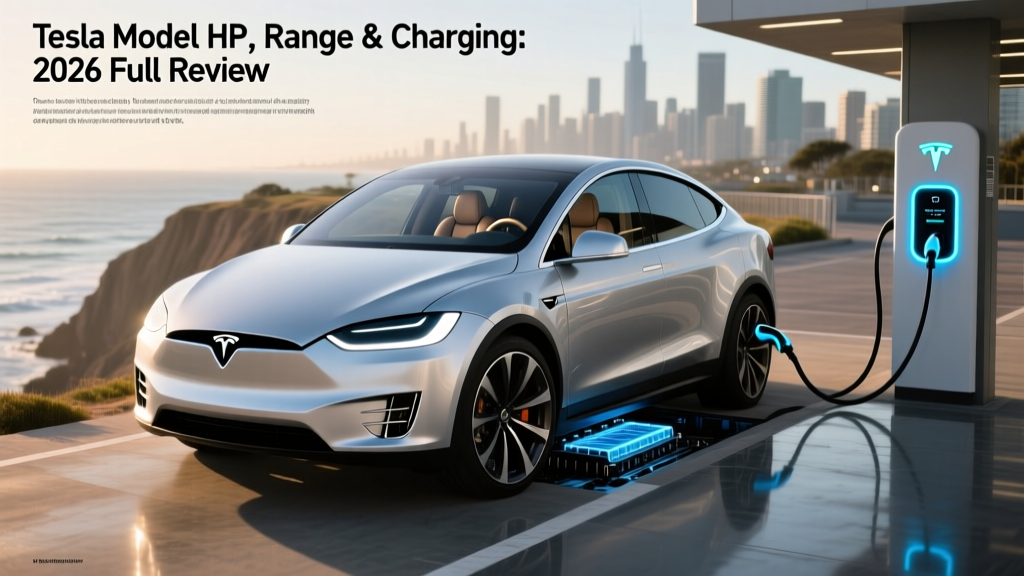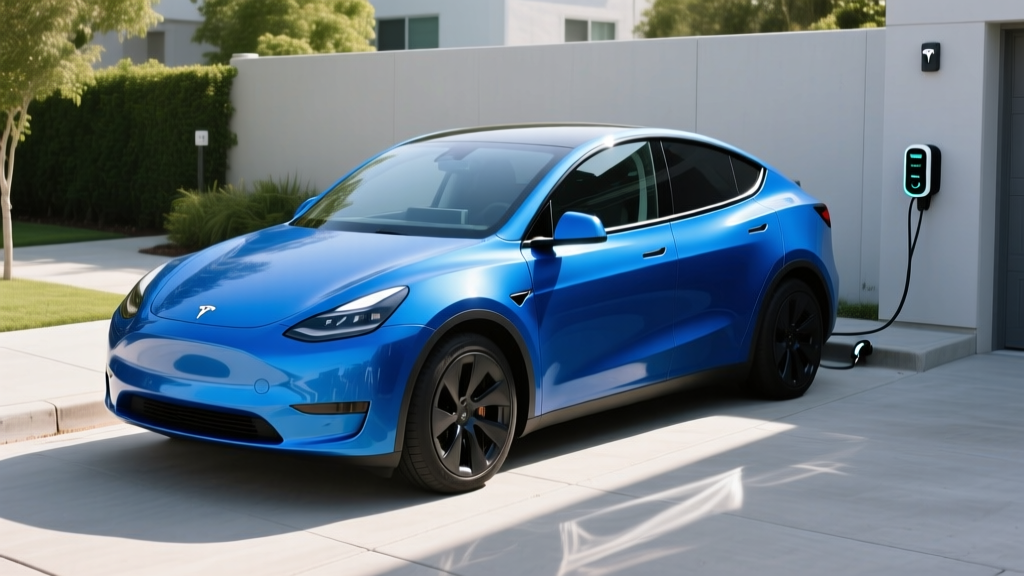
Tesla periodically rolls out promotional lease terms that catch buyer attention, and the latest headline is hard to ignore: Tesla is offering zero down payments on Model Y leases through select 2026 configurations. For EV shoppers who want the best-selling electric SUV in America without a hefty upfront check, this sounds like a no-brainer. But zero down doesn't mean zero cost — and lease math works differently than most buyers expect.
This review dissects the 2026 Tesla Model Y Long Range AWD (the trim most commonly associated with current lease promotions), covering real-world range, charging speeds, total lease economics, and how it stacks up against competitors like the Hyundai Ioniq 5 and Ford Mustang Mach-E. If you're weighing whether to pull the trigger on a zero-down lease or explore purchase with the federal tax credit, the numbers below will help you decide.
2026 Tesla Model Y: Core Specs at a Glance
| Specification | 2026 Model Y Long Range AWD |
|---|---|
| EPA Estimated Range | 320 miles |
| Battery Capacity | ~78.1 kWh usable (NMC chemistry) |
| Drivetrain | Dual-Motor AWD |
| Horsepower | 384 hp combined |
| 0–60 mph | 4.8 seconds |
| Max DC Fast Charge | 250 kW peak (Supercharger V3) |
| 10–80% DC Charge Time | ~27 minutes |
| Level 2 Home Charge Rate | 11.5 kW (~44 mi/hr) |
| MPGe (Combined) | 117 MPGe |
| Efficiency | 29 kWh/100 mi |
| Cargo Volume (rear seats up) | 30.2 cu ft |
| Cargo Volume (rear seats folded) | 72.0 cu ft |
| Rear Legroom | 36.0 inches |
| Battery & Drive Unit Warranty | 8 years / 120,000 miles |
| Base MSRP | $44,990 (before incentives) |
Real-World Range: What the EPA Sticker Doesn't Tell You
Real-World Expectation: 260–290 miles highway; 220–250 miles in cold weather (below 32°F)
The 2026 Model Y Long Range AWD carries an EPA-estimated 320 miles of range on a full charge. That figure assumes a mix of city and highway driving at moderate temperatures — conditions rarely sustained over an entire road trip.
In real-world highway testing at sustained speeds of 70–75 mph, expect closer to 260–290 miles before needing a charge stop. Cold weather compounds the loss: battery chemistry slows and cabin heating draws significant energy, reducing usable range to roughly 220–250 miles in sub-freezing conditions. Tesla's standard heat pump helps mitigate this compared to older resistance-heater EVs, but physics still wins in January.
The Model Y's NMC (nickel-manganese-cobalt) battery pack offers higher energy density than LFP alternatives, which is how Tesla achieves 320 EPA miles in a relatively compact crossover. However, NMC cells are more sensitive to sustained 100% state of charge — Tesla recommends daily charging to 80–90% for longevity, effectively giving you a practical daily range of 256–288 miles under ideal conditions.
Charging Speed: Supercharger Network Advantage
| Charging Level | Power (kW) | Speed (mi/hr added) | Typical Use Case |
|---|---|---|---|
| Level 1 (120V household) | ~1.4 kW | ~5 mi/hr | Emergency / overnight trickle |
| Level 2 (240V home Wall Connector) | 11.5 kW | ~44 mi/hr | Daily home charging |
| DC Fast (Supercharger V3) | 250 kW peak | ~180 mi/hr (peak) | Road trips |
| DC Fast (Supercharger V4 / CCS adapter) | 250 kW peak | ~180 mi/hr (peak) | Third-party networks via adapter |
Charging speed remains one of Tesla's strongest competitive advantages, and not just because of raw kW numbers. The 2026 Model Y peaks at 250 kW on V3 Superchargers, reaching 10–80% in approximately 27 minutes. However, that peak rate only holds between roughly 10–30% state of charge. Above 50%, the charge curve tapers significantly — expect sustained rates closer to 80–100 kW through the mid-range, and a crawl below 25 kW past 90%.
At home, Tesla's Wall Connector on a 60-amp circuit delivers 11.5 kW, adding about 44 miles of range per hour. A full overnight session (8 hours) replenishes roughly 350 miles — more than enough for any daily commute. Installation costs for a Level 2 home setup typically run $800–$2,000 depending on panel capacity and conduit distance, so factor that into your total ownership budget.
For non-Tesla DC fast chargers (Electrify America, EVgo), you'll need Tesla's CCS adapter (included with recent vehicles or available for ~$150). The opening of the Supercharger network to other brands hasn't degraded Tesla owner access — the app still routes you to available stalls faster than any competitor's ecosystem.
Zero-Down Lease Economics: The Real Monthly Cost
When Tesla is offering zero down payments on Model Y leases, the headline appeal is obvious: drive off the lot without writing a $5,000–$8,000 check. But lease math requires scrutiny. Here's how a typical 2026 zero-down Model Y lease breaks down:
| Cost Component | Typical Amount |
|---|---|
| Base MSRP (Long Range AWD) | $44,990 |
| Destination Fee | $1,390 |
| Zero-Down Lease Monthly Payment (36 mo, 10K mi/yr) | $549–$629/mo (est.) |
| Money Factor (lease interest equivalent) | ~0.0025–0.0032 (varies by promo) |
| Residual Value (36 months) | ~55–58% of MSRP |
| Acquisition / Disposition Fees | $695 / $395 |
| Federal §30D Tax Credit (Purchase Only) | $7,500 (if eligible — NOT available on most leases) |
Critical tax credit note: The federal §30D clean vehicle credit of up to $7,500 generally applies to purchases, not consumer leases. Under current IRS rules, the leasing company (the lessor) technically receives the commercial clean vehicle credit under §45W, and may pass savings through as a reduced monthly payment — but this is not guaranteed. Tesla has historically structured some leases to reflect this pass-through, resulting in lower monthly payments than raw math would suggest. Always confirm with Tesla's finance team whether the advertised lease rate already factors in any credit pass-through.
If you purchase the Model Y instead of leasing, the §30D credit eligibility requires meeting several conditions:
- Vehicle MSRP must not exceed $80,000 (SUVs/vans/pickups) — Model Y qualifies
- Buyer modified AGI must not exceed $150K single / $300K joint filers
- Battery components and critical minerals must meet phased sourcing thresholds (check IRS.gov for current-year compliance lists)
- Credit can now be transferred to the dealer at point of sale as an immediate price reduction
On a purchase with full $7,500 credit, the effective price drops from ~$46,380 (with destination) to roughly $38,880 — a significant advantage over leasing for buyers who plan to keep the vehicle 4+ years.
Performance, Interior, and Daily Livability
The 2026 Model Y Long Range AWD hits 60 mph in 4.8 seconds with 384 combined horsepower from its dual-motor setup. That's quick enough to merge onto any freeway with authority, though the Performance trim (3.5 seconds, 456 hp) exists for those who want sports-sedan acceleration in a crossover body.
Inside, the minimalist cabin centers on a 15.4-inch touchscreen handling virtually all vehicle controls — climate, navigation, media, and even the glovebox release. There are no physical gauges; a slim LED strip above the dash provides basic speed and range info. Rear passengers get 36.0 inches of legroom and their own 8-inch screen for climate and entertainment. Build quality has improved noticeably since the Fremont-built early models, with the Shanghai and Austin production lines delivering tighter panel gaps and better interior materials.
Cargo capacity is a standout: 30.2 cu ft behind the second row and 72.0 cu ft with seats folded — enough for a weekend camping trip for four or a Costco run for a family. The front trunk (frunk) adds another 4.1 cu ft for charging cables or a small bag.
On the tech front, Tesla's Autopilot comes standard with adaptive cruise control, lane centering, and automatic emergency braking. Full Self-Driving (Supervised) remains a $8,000 option or $99/month subscription — and it's critical to understand this is an SAE Level 2 driver-assistance system. You must keep your hands on the wheel and eyes on the road at all times. It is not autonomous driving.
Pros and Cons: Honest Assessment
Pros
- Best-in-class Supercharger network access — 60,000+ stalls globally, fastest route planning
- 320-mile EPA range covers most commutes and road trips with one charge stop
- 250 kW peak DC charging — 10–80% in ~27 min on V3 Superchargers
- Class-leading cargo volume (72.0 cu ft) for an electric compact SUV
- Over-the-air updates continuously add features and improve efficiency
- Strong resale value relative to most EV competitors
- Heat pump standard — better cold-weather range retention
Cons
- Minimalist interior not for everyone — no physical buttons, stalks, or gauges
- Ride quality firm on rough pavement; sport-tuned suspension prioritizes handling over comfort
- FSD (Supervised) remains Level 2 despite the name — $8K option can disappoint buyers expecting autonomy
- Lease terms may not include §30D tax credit pass-through — confirm before signing
- No Apple CarPlay or Android Auto — Tesla's proprietary infotainment only
- Insurance premiums run 15–25% higher than comparable gas crossovers in most states
Model Y vs. Key Competitors: Is It Still the Best Choice?
The compact electric SUV segment has matured considerably. Here's how the Model Y Long Range AWD compares to its two most direct rivals:
| Spec | 2026 Tesla Model Y LR AWD | 2026 Hyundai Ioniq 5 Limited AWD | 2026 Ford Mustang Mach-E Premium AWD |
|---|---|---|---|
| EPA Range | 320 mi | 290 mi | 290 mi |
| Battery | 78.1 kWh (NMC) | 77.4 kWh (NMC) | 72 kWh (NMC) |
| Peak DC Charge | 250 kW | 240 kW | 150 kW |
| 10–80% Time | ~27 min | ~18 min (800V arch) | ~38 min |
| 0–60 mph | 4.8 sec | 5.1 sec | 5.5 sec |
| Cargo (rear up) | 30.2 cu ft | 27.2 cu ft | 29.7 cu ft |
| Base MSRP | $44,990 | $49,900 | $43,995 |
The Ioniq 5's 800-volt architecture gives it a charging-speed edge in the 10–80% sprint (18 minutes vs. Tesla's 27), but Tesla's Supercharger network reliability and density remain unmatched for road-trip convenience. The Mach-E offers a more traditional interior with physical controls but falls behind on charging speed and range. For buyers prioritizing range and charging infrastructure, the Model Y still leads. For those wanting faster DC charging and a more conventional cabin, the Ioniq 5 is a strong alternative.
Who Should Lease the Model Y — And Who Shouldn't?
Choose the zero-down Model Y lease if:
- You drive 10,000 miles or fewer per year (standard lease terms)
- You want to drive a current EV without a large upfront payment
- You plan to upgrade to a next-gen vehicle (solid-state battery, new platform) in 3 years
- You value Supercharger network access for occasional road trips
- Your employer offers EV charging benefits that offset daily energy costs
Choose purchase (with §30D credit) instead if:
- You drive 12,000+ miles per year (lease overage fees add up fast at $0.20–$0.25/mi)
- You qualify for the full $7,500 federal credit and want to reduce effective purchase price
- You plan to keep the vehicle 5+ years and build equity
- You want to avoid lease disposition fees and wear-and-tear charges at turn-in
The zero-down lease makes the most sense for urban and suburban commuters with home charging access who want Tesla's tech and Supercharger network without long-term commitment. Families who road-trip frequently and rack up miles should run the purchase math carefully — the §30D credit and absence of mileage caps often make buying cheaper over a 5-year horizon.
Frequently Asked Questions
What is the real-world range of the 2026 Tesla Model Y?
The EPA rates it at 320 miles combined. In real-world highway driving at 70+ mph, expect 260–290 miles. In cold weather below freezing, plan for 220–250 miles due to battery resistance and cabin heating demand.
How fast does the Model Y charge at home and on road trips?
At home on a Level 2 Wall Connector (11.5 kW), it adds about 44 miles per hour — a full overnight charge covers any commute. On Tesla V3 Superchargers, it peaks at 250 kW and reaches 10–80% in roughly 27 minutes, though the charge curve tapers significantly above 50%.
Does the Model Y qualify for the $7,500 federal EV tax credit?
For purchases, the Model Y generally qualifies under IRS §30D rules, subject to buyer income caps ($150K single / $300K joint), the $80,000 SUV MSRP cap, and battery component/critical mineral sourcing requirements that update annually. For leases, the credit typically goes to the lessor under §45W and may or may not be passed through as a reduced monthly payment — always confirm with Tesla Finance.
Is a zero-down lease actually a good deal compared to buying?
It depends on your mileage, timeline, and credit eligibility. Zero-down leases eliminate upfront costs but result in higher monthly payments (you're financing the full depreciation). If you qualify for the $7,500 purchase credit and plan to keep the car 4+ years, buying typically costs less per month after the credit is applied. Leases favor those who want to upgrade every 3 years or can't meet §30D eligibility requirements.
What are the biggest drawbacks of the Model Y?
The all-screen interior lacks physical controls, which frustrates some drivers. Ride quality is firm. FSD (Supervised) costs $8,000 but remains a Level 2 system requiring full driver attention. Insurance premiums tend to be higher than gas competitors. And lease structures may not pass through the federal tax credit.
What battery warranty does Tesla offer?
Tesla covers the Model Y's battery and drive units for 8 years or 120,000 miles (whichever comes first), with a guaranteed minimum 70% capacity retention over that period. Real-world degradation data from Tesla's fleet suggests most packs retain 85–90% capacity at 100,000 miles under normal charging habits.
The bottom line: when Tesla is offering zero down payments on Model Y leases, it's a legitimate opportunity to get into America's most popular EV without draining savings. But run the full math — monthly payment, insurance, home charging installation, and the tax credit you might forgo by leasing — before signing. For many buyers, the Model Y remains the compact electric SUV benchmark in 2026, whether leased or purchased.