The Tesla Model Y remains the best-selling electric vehicle in the United States for good reason: it delivers strong range, access to the most reliable DC fast-charging network, and over-the-air updates that keep the platform current. But with the 2025 "Juniper" refresh now fully in production for 2026, buyers are asking new questions — not just about range and charging, but about customization. Searches for Tesla Model Y wrap cost have surged as owners look to protect the paint, change color without a respray, and personalize a vehicle that, until recently, came in a limited palette.
This review covers everything you need to evaluate the 2026 Model Y: EPA range versus real-world expectations, DC fast-charging speeds, battery chemistry, pricing across trims, IRS §30D tax credit eligibility, and — yes — what a professional vinyl wrap actually costs in 2026. Whether you're cross-shopping the Hyundai Ioniq 5, Ford Mustang Mach-E, or Chevy Equinox EV, the numbers below will help you decide.
2026 Tesla Model Y: Quick Spec Overview
| Spec | Value |
|---|---|
| EPA Range | 320 miles (Long Range AWD) |
| Battery Capacity | ~75 kWh usable (NMC lithium-ion) |
| Drivetrain | Dual-motor AWD |
| Horsepower | 384 hp (combined) |
| 0–60 mph | 4.8 seconds |
| Peak DC Fast Charge | 250 kW (Supercharger V3/V4) |
| 10–80% DC Charge Time | ~25 minutes |
| Level 2 Home Charge Rate | 11.5 kW (~44 mi/hr) |
| MPGe (combined) | 111 MPGe |
| Efficiency | 30 kWh/100 mi |
| Cargo Volume | 30.2 cu ft (rear seats up) / 72.1 cu ft (folded) |
| Rear Legroom | 40.5 inches |
| Battery Warranty | 8 years / 120,000 miles |
| Base MSRP (Long Range AWD) | $44,990 |
Real-World Range: What the EPA Sticker Doesn't Tell You
The Long Range AWD Model Y carries an EPA-estimated 320 miles of range. In real-world mixed driving at moderate temperatures (60–75°F), expect 280–300 miles. Sustained highway driving at 75+ mph drops that to roughly 250–270 miles. In cold weather (below 30°F), range can fall to 220–250 miles due to battery heating demands and cabin climate use. The Juniper refresh added a standard heat pump, which mitigates cold-weather loss compared to pre-2024 models, but physics still applies.
The Model Y's efficiency of 30 kWh per 100 miles (per fueleconomy.gov) is competitive but not class-leading — the Hyundai Ioniq 5 RWD achieves 114 MPGe combined, for reference. Where Tesla excels is in the consistency of its energy management: the thermal system keeps the battery in its optimal temperature window, which translates to more predictable range across seasons than some competitors.
The rear-wheel-drive (RWD) base model, equipped with an LFP (lithium iron phosphate) battery, carries a slightly lower EPA estimate of approximately 280 miles. LFP chemistry trades some energy density for longevity and the ability to charge to 100% daily without degradation concerns — a meaningful advantage for commuters who can charge at home every night.
Charging Speed: Supercharger Network and Home Setup
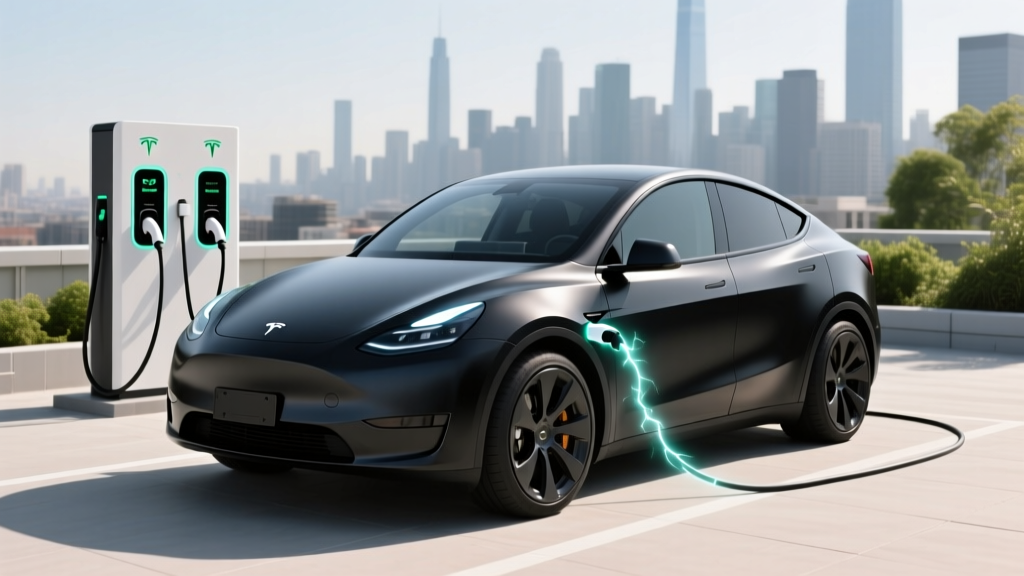
Charging is where the Model Y's ecosystem advantage becomes concrete. Tesla's Supercharger network now exceeds 6,000 stations in North America, and the Model Y (with its native NACS connector) accesses them without an adapter — a reliability edge over CCS-equipped vehicles still dependent on third-party networks.
| Charging Level | Power (kW) | Miles Added per Hour | Typical Use Case |
|---|---|---|---|
| Level 1 (120V outlet) | ~1.4 kW | ~4–5 mi/hr | Emergency / overnight trickle |
| Level 2 (240V, 48A) | 11.5 kW | ~44 mi/hr | Home daily charging |
| DC Fast (Supercharger V3) | Up to 250 kW | ~1,000+ mi/hr (peak) | Road trips, 10–80% in ~25 min |
| DC Fast (Supercharger V4) | Up to 250 kW (future 350 kW capable) | Similar to V3 currently | Next-gen stations rolling out |
Understanding the charge curve: The Model Y peaks at 250 kW only at a low state of charge (roughly 10–20%). As the battery fills, the rate tapers — you'll see ~150 kW around 50% SoC and ~75 kW above 80%. This is why the 10–80% metric matters more than peak kW alone. Plan for 25 minutes on a V3 Supercharger for that 10–80% window, but a full 0–100% session will take closer to 50–55 minutes.
For home charging, a Wall Connector on a 60-amp circuit delivers 11.5 kW (48 amps continuous). That's roughly 44 miles of range per hour of charging — enough to fully replenish the Long Range battery in about 7 hours overnight. Installation costs vary widely: expect $800–$2,000 for a straightforward install near your electrical panel, or $2,500–$5,000+ if a panel upgrade or long conduit run is required. Always get a quote from a licensed electrician before committing.
Performance and Driving Dynamics
The 2026 Model Y Long Range AWD delivers 384 combined horsepower from its dual-motor setup, reaching 60 mph in 4.8 seconds. That's brisk enough for confident highway merging and passing, though it's no longer the quickest in its class — the Ioniq 5 N and Model Y Performance (if you can find one) are substantially faster.
The Juniper suspension tuning has drawn praise for improved ride comfort over the pre-refresh Model Y, which was often criticized for a firm, crashy ride on imperfect pavement. Road noise has also been reduced thanks to acoustic glass and additional sound deadening. The steering remains quick and precise, if somewhat numb in feel — a common trait across Tesla's lineup.
Regenerative braking is strong and consistent. Tesla removed the user-adjustable regen setting several years ago, so one-pedal driving is the default and only mode. Most owners adapt quickly, but if you prefer a coasting feel, this is worth noting during a test drive.
Pricing, Trims, and Federal Tax Credit Eligibility
| Trim | MSRP | Est. After §30D Credit |
|---|---|---|
| Long Range RWD (LFP) | $39,990 | ~$32,490* |
| Long Range AWD (NMC) | $44,990 | ~$37,490* |
| Performance AWD | $49,990 | ~$42,490* |
*Estimated prices assume full $7,500 federal tax credit eligibility. Actual eligibility depends on IRS §30D requirements. See checklist below.
The federal EV tax credit under IRS §30D can reduce your effective purchase price by up to $7,500 — and since 2024, this credit can be transferred to the dealer at the point of sale, functioning as an instant discount. However, eligibility is not automatic. Here's what you need to verify:
- MSRP cap: The Model Y qualifies as an SUV under IRS rules, so the cap is $80,000. All current trims clear this easily.
- Buyer income limits: Modified adjusted gross income (MAGI) must not exceed $300,000 (joint filers), $225,000 (head of household), or $150,000 (single filers).
- Battery sourcing: The credit is split into two $3,750 halves — one for critical minerals sourcing and one for battery component manufacturing. Tesla has progressively shifted sourcing to comply, but the exact credit amount ($3,750 or $7,500) can vary by production batch and model year. Always verify the current status on fueleconomy.gov before purchasing.
- Point-of-sale transfer: You can elect to transfer the credit to Tesla at purchase, reducing your out-of-pocket cost immediately rather than waiting for a tax refund.
Consult a tax professional to confirm your personal eligibility. Rules are subject to change, and state-level incentives (such as California's CVRP or Colorado's innovative motor vehicle credit) may stack on top.
Tesla Model Y Wrap Cost: What Owners Actually Pay
A full-body vinyl wrap on a Tesla Model Y typically costs between $2,500 and $5,500 in 2026, depending on material quality, shop reputation, and geographic market. Here's a breakdown of what drives the price:
- Material grade: Budget calendared vinyl (3–5 year lifespan) starts around $2,500–$3,000. Premium cast vinyl from 3M or Avery Dennison (7–10 year lifespan, better conformability to curves) runs $3,500–$5,500.
- Color and finish: Standard gloss or matte colors are the baseline. Satin, metallic, chrome, or color-shift finishes add $500–$1,500 to the total.
- Paint protection film (PPF) vs. vinyl: Some owners opt for PPF, which protects against rock chips but costs significantly more — $5,000–$8,000 for a full Model Y. PPF is clear and preserves the factory color; vinyl changes the color.
- Partial wraps: A roof wrap (popular for the black-glass-roof look) costs $400–$800. Hood and mirror caps run $300–$600.
- Shop labor and location: Major metro areas (LA, NYC, Miami) command 20–40% higher labor rates than smaller markets. A quality wrap takes 2–4 days of shop time.
Why wrap a Model Y at all? Three reasons dominate owner surveys: paint protection (Tesla's factory paint is notoriously thin and chip-prone), color customization (the factory palette remains limited even post-Juniper), and resale preservation (a wrap keeps the original paint intact for future buyers). A well-executed wrap with premium material will not void Tesla's vehicle warranty, though any body-related claims may require wrap removal at your expense.
Interior, Tech, and Driver Assistance
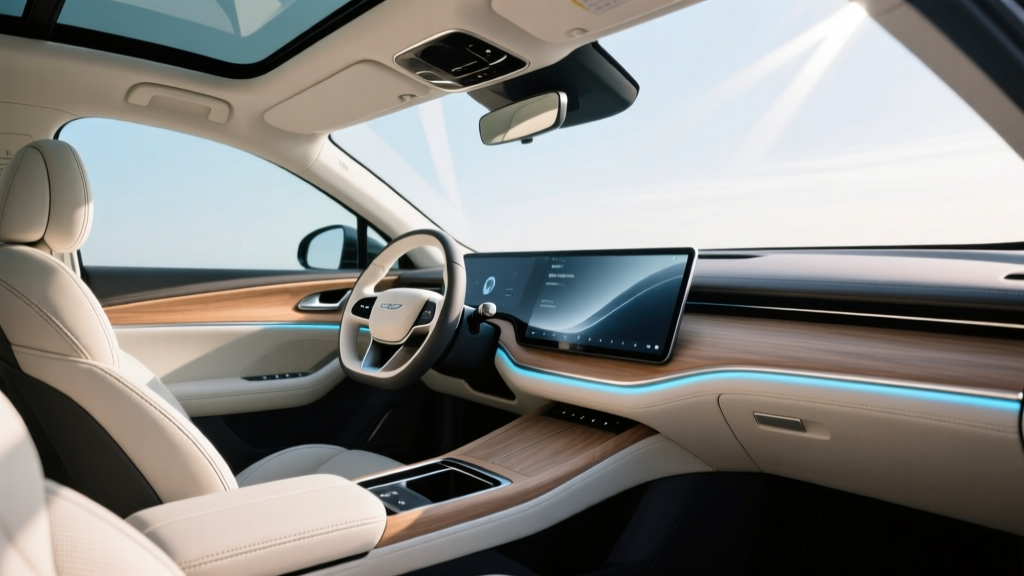
The Juniper-refreshed Model Y interior represents a meaningful step up in material quality. The minimalist dashboard now features ambient lighting, ventilated front seats (standard), a rear-seat touchscreen for passengers, and improved soft-touch materials throughout. The 15.4-inch center display remains the primary interface for virtually all vehicle controls — there are no physical buttons for climate, mirrors, or glovebox.
Autopilot and FSD (Supervised): Every Model Y ships with Basic Autopilot, which provides adaptive cruise control and lane-centering on highways. Tesla's Full Self-Driving (Supervised) capability is a $8,000 option (or $99/month subscription as of early 2026) that adds automatic lane changes, traffic light/stop sign recognition, and navigate-on-autopilot.
Both Autopilot and FSD (Supervised) are SAE Level 2 driver-assistance systems. The driver must remain fully engaged, hands on or near the wheel, and eyes on the road at all times. These are not self-driving systems. Tesla's camera-only approach (no lidar or radar on current models) means performance can degrade in heavy rain, construction zones, or faded lane markings. Always maintain situational awareness.
Other tech highlights include the Tesla mobile app (remote climate, location, Sentry Mode cameras), over-the-air software updates that regularly add features, and a built-in dashcam/Sentry Mode system that records surroundings when parked. The lack of Apple CarPlay and Android Auto remains a sticking point for some buyers — Tesla's native infotainment is capable but a closed ecosystem.
Cargo, Passenger Space, and Practicality
The Model Y's crossover form factor delivers genuine utility. With the rear seats upright, you get 30.2 cubic feet of cargo space behind the second row — competitive with compact SUVs like the Toyota RAV4. Fold the rear seats flat, and that expands to 72.1 cubic feet, enough for furniture or camping gear.
The front trunk (frunk) adds approximately 4.1 cubic feet of sealed storage — useful for charging cables, a small cooler, or groceries you want separated from the main cabin. Rear legroom at 40.5 inches is generous for adults, and the flat floor (no transmission tunnel) makes the middle seat more usable than in many ICE crossovers.
Towing capacity is rated at 3,500 pounds when properly equipped — adequate for a small utility trailer, a pair of dirt bikes, or a light camper, but not for heavy boat or horse trailers.
Warranty Coverage and Long-Term Ownership
| Component | Coverage |
|---|---|
| Basic Vehicle | 4 years / 50,000 miles |
| Battery & Drive Unit | 8 years / 120,000 miles (Long Range/Performance) |
| Battery & Drive Unit (RWD/LFP) | 8 years / 100,000 miles |
| Battery Retention Threshold | 70% capacity during warranty period |
Tesla's battery warranty guarantees that the pack will retain at least 70% of its original capacity over the warranty period. Real-world degradation data from high-mileage owners suggests NMC packs typically lose 8–12% capacity over the first 100,000 miles, with the curve flattening significantly afterward. LFP packs (in the RWD model) show even slower degradation and can be charged to 100% regularly without concern — a practical advantage for daily commuters.
Out-of-warranty battery replacement remains expensive: current estimates run $12,000–$16,000 for a Model Y pack, though prices have been trending downward as cell costs decline. For most owners, the battery will outlast the vehicle's economic life.
Pros and Cons
- Access to Tesla Supercharger network (most reliable DC fast-charging in the US)
- Strong real-world range (280–300 mi mixed) with efficient thermal management
- Spacious cargo area (72.1 cu ft max) and practical frunk
- Continuous OTA updates add features post-purchase
- LFP option (RWD) allows daily 100% charging without degradation worry
- Improved ride quality post-Juniper refresh
- No Apple CarPlay or Android Auto
- Touchscreen-only controls frustrate some drivers
- Insurance costs above average for the segment
- FSD (Supervised) is expensive and still requires full driver attention
- Thin factory paint is chip-prone (drives wrap/PPF demand)
- Service center wait times can be lengthy in some markets
Who Should Buy the 2026 Tesla Model Y?
- Choose the Model Y Long Range AWD if: You need all-weather capability, regularly take road trips over 200 miles, and value Supercharger network access above all else.
- Choose the Model Y RWD (LFP) if: You're a daily commuter with home charging, want the lowest entry price, and prefer the longevity and 100%-charge-friendly nature of LFP chemistry.
- Look elsewhere if: You require Apple CarPlay, prefer physical buttons and knobs, or want a more plush, traditional luxury interior (consider the Genesis GV60 or BMW iX).
The Model Y is best suited for tech-comfortable families and commuters who can install a Level 2 charger at home. Its combination of range, cargo space, and charging infrastructure access makes it the default EV crossover for buyers who want minimal compromise. The Juniper refresh addressed the most common complaints (ride harshness, interior quality), keeping it competitive against a growing field of rivals.
Frequently Asked Questions
What is the real-world range of the 2026 Tesla Model Y?
The EPA estimates 320 miles for the Long Range AWD. In real-world mixed driving, expect 280–300 miles at moderate temperatures. Highway driving at 75+ mph reduces this to roughly 250–270 miles, and cold weather (below 30°F) can drop it to 220–250 miles. The RWD LFP model is rated at approximately 280 miles EPA.
How fast does the Model Y charge at home and on the road?
At home on a Level 2 (240V, 48A) Wall Connector, the Model Y charges at 11.5 kW, adding about 44 miles of range per hour — a full charge takes roughly 7 hours. On a Tesla V3 Supercharger, it peaks at 250 kW and charges from 10–80% in approximately 25 minutes. Charging slows significantly above 80% due to the battery's charge curve.
How much does the Model Y cost after the federal tax credit?
The Long Range AWD starts at $44,990 MSRP. If you qualify for the full $7,500 §30D credit (subject to income caps, battery sourcing rules, and MSRP limits), the effective price drops to approximately $37,490. The RWD model starts at $39,990, potentially ~$32,490 after credit. Verify current eligibility on fueleconomy.gov and consult a tax professional.
Does the Tesla Model Y qualify for the $7,500 federal EV tax credit?
It can, but eligibility depends on your income (MAGI under $300K joint / $150K single), the vehicle's battery sourcing compliance, and the MSRP cap ($80K for SUVs — the Model Y clears this). The credit can be transferred at point of sale since 2024. Check the latest status on IRS.gov before purchasing, as sourcing rules evolve.
Is the Model Y worth buying over the Hyundai Ioniq 5 or Ford Mach-E?
The Model Y wins on Supercharger network access, cargo volume, and software ecosystem. The Ioniq 5 offers faster 800V charging (10–80% in ~18 min on a 350 kW charger), a more distinctive design, and standard CarPlay. The Mach-E provides a more traditional driving feel and BlueCruise hands-free driving on approved highways. Your priority — charging convenience vs. design vs. driving dynamics — should guide the choice.
How much does a vinyl wrap cost for the Tesla Model Y?
A full-body vinyl wrap on the Model Y costs $2,500–$5,500 in 2026. Budget calendared vinyl starts around $2,500; premium cast vinyl (3M, Avery Dennison) runs $3,500–$5,500. Specialty finishes (chrome, color-shift) add $500–$1,500. Partial wraps (roof, hood) cost $300–$800. Paint protection film (PPF) is a separate, more expensive option at $5,000–$8,000 for full coverage.
What is the battery warranty on the 2026 Model Y?
The Long Range and Performance models carry an 8-year / 120,000-mile battery and drive unit warranty. The RWD (LFP) model is covered for 8 years / 100,000 miles. Tesla guarantees the battery will retain at least 70% of its original capacity during the warranty period. Real-world data shows most packs lose only 8–12% over 100,000 miles.