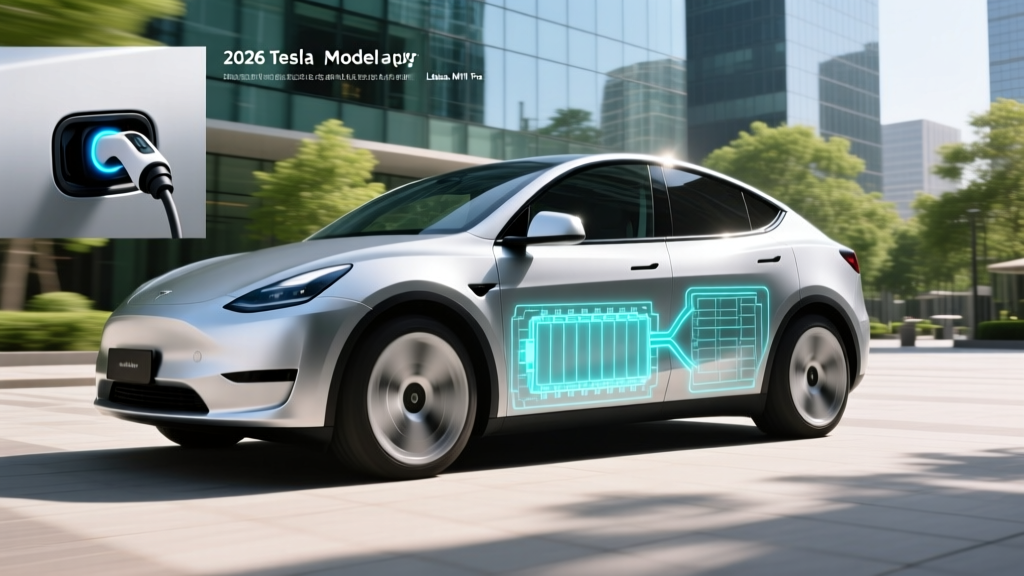
If you've been searching for a comprehensive Tesla Model Y wiki, you've likely noticed that information is scattered across forums, Reddit threads, and outdated spec sheets. The Model Y remains one of the best-selling electric vehicles in the United States, but its specs, pricing, and tax-credit eligibility have shifted enough between model years that buyers need a single, current, data-driven reference. This guide consolidates everything a 2026 buyer or owner needs — from battery chemistry and real-world range to charging curves and IRS §30D credit rules — with the exact numbers that matter.
Quick Verdict: Who the Tesla Model Y Is For
The 2026 Tesla Model Y is a compact electric crossover that seats up to five (with an optional third-row seat for seven in the Long Range trim, though it's best suited for small children). It targets daily commuters, small families, and road-trippers who value Supercharger network access, strong efficiency, and over-the-air updates. It is not a luxury vehicle in the traditional sense — the interior is minimalist and the ride is firm — but its combination of range, charging speed, and cargo versatility keeps it at the top of the EV crossover segment.
Look elsewhere if: You want a plush, quiet luxury interior (consider the Genesis GV70 Electrified or BMW iX), need serious towing capacity, or require physical buttons and a traditional instrument cluster.
2026 Tesla Model Y Specifications at a Glance
| Spec | Long Range AWD | Performance |
|---|---|---|
| EPA Range | 320 miles | 293 miles |
| Battery (usable) | ~75 kWh (NMC) | ~75 kWh (NMC) |
| Drivetrain | Dual-Motor AWD | Dual-Motor AWD |
| Horsepower | 384 hp | 456 hp |
| 0–60 mph | 4.8 sec | 3.5 sec |
| Top Speed | 125 mph | 155 mph |
| Max DC Fast Charge | 250 kW | 250 kW |
| 10–80% DCFC Time | ~27 min | ~27 min |
| Level 2 Home Charge | 11.5 kW (~44 mi/hr) | 11.5 kW (~44 mi/hr) |
| MPGe (combined) | 122 MPGe | 111 MPGe |
| kWh/100 mi | 28 kWh | 30 kWh |
| Cargo (behind 2nd row) | 30.2 cu ft | 30.2 cu ft |
| Cargo (max, seats folded) | 72.0 cu ft | 72.0 cu ft |
| Rear Legroom | 37.7 in | 37.7 in |
| Base MSRP | $44,990 | $49,990 |
| Battery Warranty | 8 yr / 120,000 mi | 8 yr / 120,000 mi |
Note: Tesla does not publish an official RWD Model Y for the US market as of the 2026 model year. The lineup centers on Long Range AWD and Performance. Specs reflect the latest EPA data available at fueleconomy.gov.
Range and Efficiency: EPA Sticker vs. Real World
Real-World Expectation: On a 70-mph highway drive in mild conditions (65–75°F), expect roughly 270–290 miles from the Long Range before needing to charge. In cold weather (below 30°F), range can drop to 220–250 miles due to cabin heating demand and reduced battery efficiency. City driving with regenerative braking can push closer to the EPA figure or slightly above.
The Model Y Long Range's 28 kWh/100 mi combined efficiency rating is among the best in its class. For context, the Hyundai Ioniq 5 AWD consumes roughly 32 kWh/100 mi, and the Ford Mustang Mach-E Extended Range AWD sits around 31 kWh/100 mi. Tesla's heat pump — standard on all current Model Y variants — helps mitigate cold-weather range loss compared to older EVs using resistive cabin heaters, but physics still applies: battery chemistry slows in the cold, and heating the cabin draws energy.
One nuance often missing from a standard Tesla Model Y wiki entry: the vehicle's navigation-based battery preconditioning. When you route to a Supercharger, the car warms the battery pack to an optimal temperature before arrival, enabling faster charge acceptance. If you arrive at a DC fast charger without preconditioning (for example, at a non-Tesla charger or without entering it as a navigation destination), your initial charge speed will be noticeably slower — sometimes 50–80 kW for the first several minutes before ramping up.
Charging Speed and Infrastructure
Charging speed is where Tesla's ecosystem advantage becomes concrete. The Model Y supports up to 250 kW on V3/V4 Superchargers and can accept up to 11.5 kW on Level 2 AC charging at home.
| Charging Level | Max Power | Speed / Time | Typical Use Case |
|---|---|---|---|
| Level 1 (120V) | ~1.4 kW | ~5 miles per hour | Emergency / overnight trickle |
| Level 2 (240V, 48A) | 11.5 kW | ~44 miles per hour | Home daily charging |
| DC Fast (Supercharger V3) | 250 kW peak | 10–80% in ~27 min | Road trips, quick top-ups |
| DC Fast (CCS adapter) | ~150–250 kW | Varies by station | Non-Tesla public chargers |
The DC fast-charging curve matters more than the peak number. The Model Y hits 250 kW only at a low state of charge (roughly 10–20% SoC) and tapers progressively: by 50% SoC, you'll see roughly 150–170 kW, and by 80%, it drops to around 60–70 kW. Charging from 80% to 100% on DC is slow and generally not recommended for battery longevity. For road trips, the practical strategy is to charge from 10% to 80% (roughly 27 minutes at a V3 Supercharger) and then drive on.
For home charging, a Tesla Wall Connector on a 60-amp circuit delivers the full 11.5 kW (48 amps continuous), adding about 44 miles of range per hour. An overnight charge from 20% to 80% takes roughly 5 hours. Installation costs vary: expect $500–$1,500 for a straightforward install near the panel, or $2,000–$4,000+ if a panel upgrade or long conduit run is needed.
Tesla now includes a NACS (North American Charging Standard) port natively on all 2026 Model Y vehicles. With Tesla opening its Supercharger network to other EVs, and with Ford, GM, Rivian, and others adopting NACS, the Model Y's native connector is increasingly the industry standard — a meaningful advantage for resale value and charging convenience.
Performance and Driving Dynamics
The Model Y Long Range AWD delivers 384 horsepower from its dual-motor setup, reaching 0–60 mph in 4.8 seconds. The Performance variant bumps output to 456 hp and cuts the sprint to 3.5 seconds. Both variants offer instant torque delivery and a low center of gravity from the under-floor battery pack, resulting in composed handling for a crossover.
The trade-off is ride quality. The Model Y's suspension tuning is firm — some owners describe it as "sporty," others as "harsh" on broken pavement. The 2025 refresh (sometimes called "Juniper") brought minor suspension refinements, improved cabin insulation, and ventilated front seats, but the fundamental ride character remains taut. If you're coming from a softly sprung SUV like the Toyota RAV4, expect a noticeable adjustment period.
Regenerative braking in the Model Y is aggressive and effectively enables one-pedal driving in most conditions. Tesla removed the user-adjustable regen setting several model years ago, so the strength is fixed — most owners adapt within a week, but it's worth noting if you prefer a coasting feel.
Pricing, Trims, and Federal Tax Credit Eligibility
| Trim | Base MSRP | Est. After §30D Credit | Destination |
|---|---|---|---|
| Long Range AWD | $44,990 | ~$37,490* | $1,390 |
| Performance | $49,990 | ~$42,490* | $1,390 |
*Estimated price assumes full $7,500 federal tax credit. Actual eligibility depends on multiple factors below.
The Model Y qualifies for the IRS §30D federal tax credit of up to $7,500, but eligibility is not automatic. As of 2026, buyers must meet all of the following criteria:
- Income caps: Modified adjusted gross income (MAGI) must not exceed $150,000 (single), $225,000 (head of household), or $300,000 (married filing jointly).
- MSRP cap: The vehicle's MSRP must not exceed $80,000 for SUVs/crossovers (the Model Y qualifies).
- Battery sourcing: A percentage of critical minerals and battery components must be sourced from the US or free-trade-agreement countries. Tesla has worked to shift supply chains, but specific eligibility can change by production batch. Always verify the VIN on the IRS qualified vehicles list before purchasing.
- Point-of-sale transfer: As of 2024, buyers can transfer the credit to the dealer at the point of sale, reducing the purchase price directly rather than waiting for a tax refund. This is available for the Model Y if all other criteria are met.
Critical caveat: Battery-sourcing requirements tighten annually. A Model Y built in January 2026 may have different component sourcing than one built in June. Always check the fueleconomy.gov tax credit lookup tool using the specific VIN before finalizing a purchase.
Interior, Cargo, and Technology
The Model Y cabin is defined by its minimalism. There is no instrument cluster — all information routes through the 15.4-inch center touchscreen. Climate controls, mirror adjustments, glovebox release, and even the windshield wiper settings live in the screen. This design polarizes buyers: some find it clean and distraction-free, others find it frustrating for quick adjustments while driving.
Cargo capacity is a genuine strength. With 30.2 cubic feet behind the second row and 72.0 cubic feet with the rear seats folded, the Model Y outpaces most competitors. The front trunk (frunk) adds 4.1 cubic feet for smaller items. The optional third-row seat (available on Long Range) is best reserved for children — adult legroom in the third row is under 28 inches, making it impractical for longer trips.
Tech highlights include:
- Autopilot (standard): SAE Level 2 driver assistance with adaptive cruise control and lane-keeping. The driver must remain engaged at all times — this is not self-driving.
- Full Self-Driving Supervised (optional, ~$8,000 or $99/month): Adds automatic lane changes, navigation-on-ramp-to-exit, traffic light/stop sign recognition, and city street steering. Still SAE Level 2 — you are the driver and must supervise continuously.
- Over-the-air updates: Tesla regularly pushes software updates that can add features, improve efficiency, or adjust UI behavior.
- Sentry Mode and Dashcam: Uses the vehicle's external cameras for security monitoring and incident recording.
- Dog Mode, Camp Mode: Climate-maintaining features for leaving pets in the car or sleeping in the vehicle.
Warranty and Long-Term Ownership
Tesla's warranty structure for the 2026 Model Y:
- Basic Vehicle Limited Warranty: 4 years / 50,000 miles
- Battery and Drive Unit Warranty: 8 years / 120,000 miles (Long Range and Performance), with a minimum 70% capacity retention guarantee during the warranty period
The battery is an NMC (nickel manganese cobalt) chemistry pack. Based on fleet data and owner reports, Tesla's NMC packs typically degrade 8–12% over the first 100,000 miles, with the rate of degradation slowing significantly after the initial break-in period. To maximize longevity, Tesla recommends daily charging to 80–90% for NMC batteries and only charging to 100% when needed for long trips.
Insurance costs for the Model Y tend to run 15–25% higher than comparable gas-powered crossovers, driven by higher repair costs after collisions (specialized body shops, sensor recalibration) and the vehicle's performance capabilities. Get insurance quotes before purchasing — in some states, Model Y premiums can exceed $2,500/year for a clean-record driver in their 30s.
Maintenance costs are low compared to ICE vehicles: no oil changes, no spark plugs, no transmission fluid. Expect to replace cabin air filters ($30–$50 DIY), wiper blades, and eventually brake fluid (every 2–4 years). Tire wear can be higher than average due to the vehicle's weight (~4,400 lbs) and instant torque — budget for a set of four tires every 25,000–35,000 miles depending on driving style.
Tesla Model Y vs. Key Competitors
The Model Y doesn't exist in a vacuum. Here's how it compares on the metrics that matter most to EV crossover buyers:
| Metric | Tesla Model Y LR | Hyundai Ioniq 5 AWD | Ford Mach-E ER AWD |
|---|---|---|---|
| EPA Range | 320 mi | 290 mi | 290 mi |
| Max DCFC | 250 kW | 240 kW (350 kW capable) | 150 kW |
| 10–80% Time | ~27 min | ~18 min | ~40 min |
| 0–60 mph | 4.8 sec | 5.1 sec | 5.1 sec |
| Cargo (rear) | 30.2 cu ft | 27.2 cu ft | 29.7 cu ft |
| Base MSRP | $44,990 | $49,500 | $48,995 |
| Charging Network | Supercharger (native) | NACS adapter needed | NACS adapter needed |
The Ioniq 5 charges faster on paper (800V architecture enables 10–80% in roughly 18 minutes at a 350 kW charger), but the Model Y's advantage is Supercharger access without adapters and proven network reliability. The Mach-E has improved with the NACS transition but still lags on DC charge speed. For pure efficiency and range-per-dollar, the Model Y Long Range holds a narrow but real lead.
Pros and Cons
- Class-leading EPA range (320 mi) and efficiency (28 kWh/100 mi)
- Native NACS / Supercharger access — the most reliable DC network in the US
- Strong cargo capacity (72 cu ft max) with versatile hatchback design
- Excellent over-the-air update cadence and software ecosystem
- Strong resale value relative to most EVs
- Firm ride quality, especially on rough pavement
- Minimalist interior lacks physical controls — not for everyone
- Insurance premiums 15–25% above segment average
- Third-row seat is impractical for adults
- FSD Supervised costs $8,000 and remains Level 2 — value proposition debated
Frequently Asked Questions
What is the real-world range of the Tesla Model Y?
The EPA rates the 2026 Model Y Long Range AWD at 320 miles. In real-world highway driving at 70 mph in moderate temperatures, expect 270–290 miles. In cold weather (below 30°F), plan for 220–250 miles. City driving with regenerative braking can approach or slightly exceed the EPA figure.
How fast does the Model Y charge at home and on the road?
At home on a Level 2 Wall Connector (11.5 kW), the Model Y adds roughly 44 miles of range per hour — a full overnight charge from 20% to 80% takes about 5 hours. On a V3 Supercharger (250 kW peak), charging from 10% to 80% takes approximately 27 minutes, though the charge curve tapers significantly above 50% SoC.
How much does the Tesla Model Y cost after the federal tax credit?
The Long Range AWD starts at $44,990. If you qualify for the full $7,500 §30D credit (meeting income, MSRP, and battery-sourcing requirements), the effective price drops to roughly $37,490 plus destination and any options. The Performance trim starts at $49,990, or approximately $42,490 after the credit. Always verify eligibility using the IRS qualified vehicle list for your specific VIN.
Does the Model Y qualify for the $7,500 federal EV tax credit?
Yes, the Model Y is on the IRS qualified vehicles list for the §30D credit, but individual eligibility depends on your MAGI (income caps apply), the vehicle's MSRP (must be under $80,000 for SUVs — the Model Y qualifies), and the battery-sourcing requirements for the specific production batch. The credit can be transferred to the dealer at point of sale, reducing your purchase price directly. Consult a tax professional or the IRS guidelines for your specific situation.
Is the Tesla Model Y worth buying over the Ioniq 5 or Mach-E?
It depends on your priorities. The Model Y wins on range (320 vs. ~290 mi), native Supercharger access, and cargo space. The Ioniq 5 wins on DC charge speed (18 min vs. 27 min, 10–80%) and has a more comfortable ride. The Mach-E offers a more traditional interior layout. If Supercharger reliability and maximum range are your top priorities, the Model Y remains the strongest choice. If ride comfort and faster charging matter more, test-drive the Ioniq 5 before deciding.
What's the biggest complaint from Model Y owners?
The most consistent owner complaints center on ride harshness on uneven roads, the lack of physical buttons for common controls (climate, mirrors), and panel-gap inconsistencies on early production batches. The 2025 Juniper refresh addressed some cabin noise and suspension concerns, but the firm ride character persists. Wind noise at highway speeds has improved but is still noticeable compared to luxury competitors.