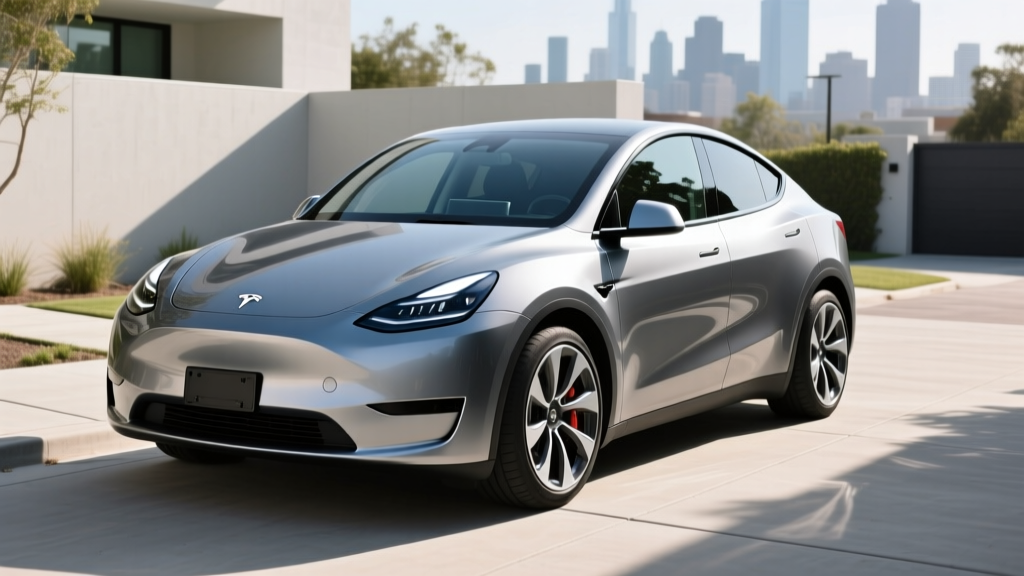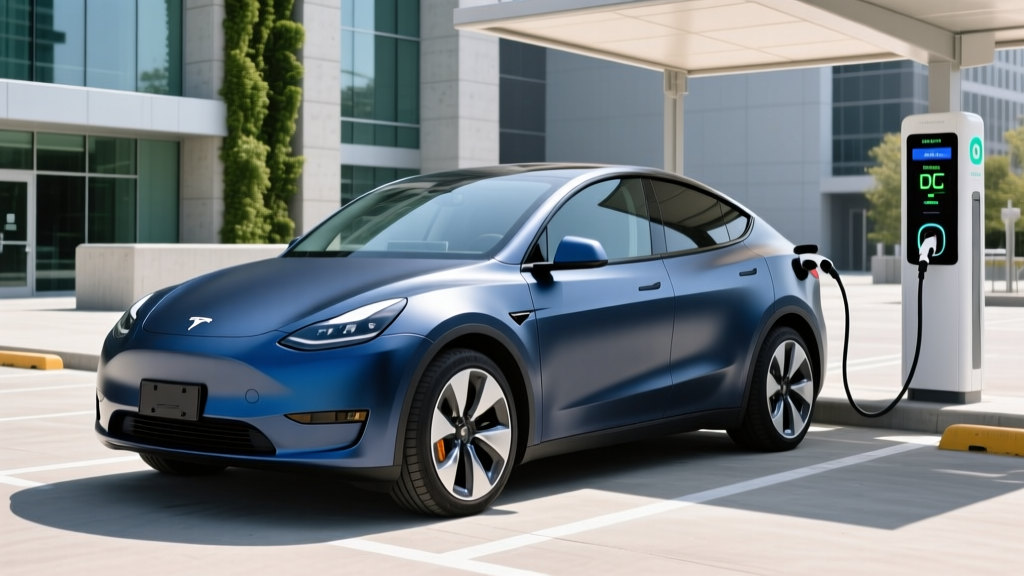
If you've been searching for a single Tesla Model Y wiki that covers every spec, real-world number, and ownership detail you need to make a purchase decision, you've found it. The Model Y remains the best-selling electric vehicle in the United States for good reason — competitive range, access to the Supercharger network, and segment-leading efficiency. But the 2026 lineup has shifted with the refreshed "Juniper" body style, updated battery chemistry across trims, and evolving federal tax credit rules that affect what you actually pay.
This guide consolidates everything an EV buyer needs: EPA range versus real-world expectations, exact charging speeds at home and on the road, trim-by-trim pricing with tax credit math, and an honest look at where the Model Y falls short against rivals like the Hyundai Ioniq 5, Ford Mustang Mach-E, and Kia EV6.
2026 Tesla Model Y Quick Specs at a Glance
| Spec | Long Range RWD | Long Range AWD | Performance AWD |
|---|---|---|---|
| EPA Range | 320 mi | 295 mi | 277 mi |
| Battery (usable) | ~75 kWh (LFP) | ~75 kWh (NMC) | ~75 kWh (NMC) |
| Drivetrain | Rear-Wheel Drive | Dual-Motor AWD | Dual-Motor AWD |
| Horsepower | 295 hp | 384 hp | 456 hp |
| 0–60 mph | 5.8 sec | 4.8 sec | 3.5 sec |
| Peak DC Charge Rate | 250 kW | 250 kW | 250 kW |
| 10–80% DCFC Time | ~25 min | ~25 min | ~25 min |
| Level 2 Home Charge | 11.5 kW (~44 mi/hr) | 11.5 kW (~44 mi/hr) | 11.5 kW (~44 mi/hr) |
| MPGe (combined) | 122 MPGe | 111 MPGe | 105 MPGe |
| Base MSRP | $44,990 | $47,990 | $53,490 |
Range and Efficiency: EPA Numbers vs. the Real World
EPA Estimate: 320 miles (Long Range RWD), 295 miles (Long Range AWD), 277 miles (Performance)
Real-World Expectation: Highway driving at 70–75 mph typically yields 260–285 miles on the Long Range RWD. In freezing temperatures (below 30°F), expect a 20–30% reduction, bringing usable range to roughly 210–250 miles depending on cabin heating use and terrain.
Efficiency: 122 MPGe combined / 28 kWh per 100 miles (Long Range RWD) per fueleconomy.gov.
Tesla's efficiency advantage is real. The Model Y Long Range RWD achieves roughly 28 kWh per 100 miles, which is among the best in the compact electric SUV segment. For comparison, the Hyundai Ioniq 5 RWD returns about 30 kWh/100 mi, and the Ford Mustang Mach-E RWD sits around 31 kWh/100 mi. That efficiency gap compounds on long trips — the Model Y simply needs fewer electrons to go the same distance.
However, the EPA sticker is a best-case blended cycle. On a pure highway run at sustained 75 mph speeds, aerodynamic drag pushes consumption higher. In our experience with the Juniper refresh, 265–280 miles is realistic on a warm day at interstate speeds. Cold weather is the bigger equalizer: LFP batteries in the RWD model lose more range in sub-freezing conditions than NMC packs, partly because LFP chemistry has higher internal resistance at low temperatures. If you live in the upper Midwest or Northeast, budget for 220 miles of usable winter range on the RWD and plan charging stops accordingly.
Charging Speed: Home, Destination, and DC Fast Charging
Charging speed is where Tesla's vertical integration shows — the Supercharger network remains the most reliable DC fast-charging ecosystem in North America, and the Model Y's thermal management system preconditions the battery effectively when a Supercharger is nav-routed.
| Charging Level | Power | Miles Added per Hour | Typical Use Case |
|---|---|---|---|
| Level 1 (120V household) | ~1.4 kW | ~5 mi/hr | Emergency / overnight trickle |
| Level 2 (240V, 48A Wall Connector) | 11.5 kW | ~44 mi/hr | Daily home charging |
| Level 2 (240V, 32A Mobile Connector) | 7.7 kW | ~30 mi/hr | Apartment / lower-amp circuits |
| DC Fast Charge (Supercharger V3/V4) | Up to 250 kW | ~180 mi in 15 min (peak) | Road trips |
The Model Y peaks at 250 kW on V3 and V4 Superchargers. In practice, that peak rate holds only between roughly 10% and 35% State of Charge. The charge curve tapers progressively: expect ~175 kW at 50% SoC, ~100 kW at 70% SoC, and under 50 kW above 85%. A 10–80% session takes approximately 25 minutes under ideal conditions (battery preconditioned, warm ambient temperature, V3 or V4 stall). That's competitive but not class-leading — the Hyundai Ioniq 5 and Kia EV6, with their 800V architectures, can hit 10–80% in roughly 18 minutes at a 350 kW charger.
For home charging, Tesla's Wall Connector at 48 amps delivers 11.5 kW, adding about 44 miles of range per hour. An overnight session from 20% to 90% takes roughly 7–8 hours, which is more than sufficient for daily use. If your home electrical panel supports only a 40-amp circuit, you'll get 32 amps / 7.7 kW — still adequate for most commuters driving under 60 miles daily.
Performance and Drivetrain Breakdown
The 2026 Model Y lineup offers three distinct personalities. The Long Range RWD is the efficiency champion — a single rear motor producing 295 horsepower and a 5.8-second 0–60 time. That's quick by any commuter standard and more than adequate for highway merging and passing.
The Long Range AWD adds a front induction motor for dual-motor all-wheel drive, bumping output to 384 hp and dropping the 0–60 to 4.8 seconds. The all-weather traction benefit matters as much as the power increase for buyers in snow-belt states. The Performance trim pushes 456 hp with a 3.5-second sprint — sports-car territory in a family crossover — and adds track-mode tuning, larger brakes, and 21-inch wheels at the cost of roughly 40 miles of EPA range versus the Long Range AWD.
All trims feature regenerative braking with one-pedal driving capability. The Juniper refresh improved ride quality with revised damper tuning and acoustic glass, addressing the most common complaint about pre-2025 Model Ys: harshness over rough pavement.
Pricing, Trims, and Federal Tax Credit Eligibility
| Trim | Base MSRP | Destination Fee | Est. After §30D Credit |
|---|---|---|---|
| Long Range RWD | $44,990 | $1,390 | ~$38,880* |
| Long Range AWD | $47,990 | $1,390 | ~$41,880* |
| Performance AWD | $53,490 | $1,390 | ~$47,380* |
*Estimated price assumes full $7,500 federal tax credit under IRS §30D. Eligibility is not guaranteed — see checklist below.
As of the 2026 tax year, the Model Y qualifies as an SUV under the §30D MSRP cap of $80,000, so all trims clear the price ceiling. However, eligibility hinges on three additional requirements that change periodically and vary by buyer:
- Buyer Income Cap: Modified AGI must not exceed $150,000 (single), $225,000 (head of household), or $300,000 (joint filers)
- MSRP Cap: Vehicle MSRP must be ≤ $80,000 for SUVs (all Model Y trims qualify)
- Battery Sourcing: Critical minerals and battery components must meet phased-in domestic/free-trade-partner thresholds — verify current compliance on fueleconomy.gov before purchasing
- Point-of-Sale Transfer: The $7,500 credit can be transferred to the dealer at purchase, reducing your out-of-pocket cost immediately rather than waiting for a tax refund
- Assembly: Vehicle must undergo final assembly in North America (Model Y is built in Fremont, CA, and Austin, TX — qualifies)
Always confirm eligibility with a tax professional and the IRS clean vehicle credit page before finalizing your purchase. Sourcing requirements tighten annually.
Interior, Cargo, and Technology
The Juniper refresh brought meaningful interior upgrades to the Model Y. The cabin now features ventilated front seats, ambient lighting, a rear-seat touchscreen for climate and media control, and significantly improved sound insulation via acoustic laminated glass on all windows.
Cargo volume: 30.2 cubic feet behind the second row, expanding to 72.1 cubic feet with the 60/40 split rear seats folded. The front trunk (frunk) adds 4.1 cubic feet — useful for charging cables, groceries, or a small carry-on. Rear legroom measures 41.6 inches, which is competitive with the Ioniq 5 (39.4 in) and more generous than the Mach-E (38.9 in).
Infotainment: All controls route through a 15.4-inch center touchscreen running Tesla's proprietary OS. There is no Apple CarPlay or Android Auto — a dealbreaker for some buyers, a non-issue for Tesla loyalists. Navigation, media (Spotify, Apple Music native apps), and vehicle settings are all integrated. The navigation system is excellent, with real-time Supercharger availability and automatic battery preconditioning when a charger is set as your destination.
Driver Assistance: Basic Autopilot (Traffic-Aware Cruise Control + Autosteer) is standard. Full Self-Driving (Supervised) is a $8,000 option or $99/month subscription. FSD adds automatic lane changes, Navigate on Autopilot, traffic light and stop sign recognition, and autosteer on city streets.
Tesla Autopilot and FSD (Supervised) are SAE Level 2 driver-assistance systems. The driver must remain fully engaged, hands on or near the wheel, and eyes on the road at all times. These are not self-driving systems. Level 4 driverless operation (no human required) is currently available only through commercial robotaxi services like Waymo in limited geofenced areas.
Warranty Coverage and Battery Longevity
Tesla's warranty structure is straightforward and competitive with the EV segment:
- New Vehicle Limited Warranty: 4 years / 50,000 miles, whichever comes first
- Battery & Drive Unit Warranty: 8 years / 120,000 miles (Long Range RWD with LFP), 8 years / 120,000 miles (Long Range AWD / Performance with NMC) — whichever comes first, with minimum 70% capacity retention
The LFP (lithium iron phosphate) battery in the Long Range RWD trades some energy density for superior cycle life. LFP packs can tolerate regular charging to 100% without the accelerated degradation concerns that apply to NMC chemistry. Tesla recommends charging LFP vehicles to 100% at least weekly for optimal battery calibration. NMC-equipped trims (Long Range AWD, Performance) benefit from a daily charge limit of 80–90%, reserving 100% charges for road trips.
Real-world degradation data from Tesla's fleet suggests most Model Y batteries retain 90%+ capacity after 100,000 miles, with the curve flattening significantly after the initial 20,000-mile break-in period. Out-of-warranty battery replacement, if needed, currently runs $12,000–$16,000 depending on pack configuration — a worst-case cost that should factor into long-term ownership math.
Model Y vs. Key Competitors: Is It Still the One to Beat?
- Best-in-class efficiency (28 kWh/100 mi)
- Supercharger network access — the most reliable DCFC ecosystem
- Strong resale value relative to EV segment average
- Spacious cargo area (72.1 cu ft max) with practical frunk
- OTA software updates continuously add features
- Competitive pricing after tax credit
- No Apple CarPlay or Android Auto
- DCFC peak of 250 kW trails 800V rivals (Ioniq 5/EV6 at ~350 kW capable)
- FSD (Supervised) remains Level 2 despite the "self-driving" branding
- Minimal physical controls — everything routes through the touchscreen
- Insurance premiums run 15–25% higher than comparable gas crossovers
- Ride quality improved but still firm on broken pavement
The Model Y's closest competitors each exploit a specific weakness. The Hyundai Ioniq 5 charges faster on 350 kW infrastructure, offers CarPlay, and has a more distinctive design — but its real-world range falls 15–25 miles short and public charging outside the Hyundai/EA network can be inconsistent. The Ford Mustang Mach-E delivers engaging driving dynamics and a more traditional crossover feel, but its efficiency lags and Ford's dealer experience varies widely. The Kia EV6 shares the Ioniq 5's 800V architecture with even sportier styling, though it sacrifices some cargo space and rear headroom.
What the Model Y still does better than any rival is the end-to-end ownership experience: buy online, charge on the most reliable network, receive OTA updates, and resell with minimal depreciation relative to the EV segment. If you value simplicity and ecosystem over peak charging speed or smartphone integration, the Model Y remains the default choice.
Who Should Buy the 2026 Tesla Model Y?
- Choose the Long Range RWD if: You commute under 80 miles daily, live in a mild climate, want the lowest cost per mile, and don't need AWD. Best value after the tax credit.
- Choose the Long Range AWD if: You face snow or rain regularly, want the security of dual-motor traction, and frequently carry passengers. The $3,000 premium over RWD is justified by all-weather capability.
- Choose the Performance if: You prioritize acceleration and handling over range, don't mind the firmer ride from 21-inch wheels, and view the Model Y as a driver's car first and family hauler second.
- Look elsewhere if: You require Apple CarPlay, want the absolute fastest DC charging available (Ioniq 5/EV6), or prefer physical buttons and a traditional dealership experience.
The Model Y Long Range AWD is the sweet spot for most American buyers — AWD security, 295 miles of EPA range, and a sub-$42,000 effective price after the federal credit. Families will appreciate the 72 cubic feet of cargo space and 41.6 inches of rear legroom. Road trippers benefit from 17,000+ Superchargers across North America with reliable plug-and-charge functionality. Towing is rated at 3,500 pounds for the AWD trims — adequate for a small utility trailer or a pair of dirt bikes, but not a camper.
Frequently Asked Questions
What is the real-world range of the Tesla Model Y?
The EPA rates the 2026 Model Y Long Range RWD at 320 miles, the Long Range AWD at 295 miles, and the Performance at 277 miles. In real-world highway driving at 70–75 mph on a warm day, expect roughly 260–285 miles from the Long Range RWD. Cold weather (below 30°F) reduces usable range by 20–30%, so winter road-trippers should plan for 210–250 miles between charges.
How fast does the Model Y charge at home and on the road?
At home on a 240V/48A Tesla Wall Connector, the Model Y charges at 11.5 kW, adding about 44 miles of range per hour — a full overnight session covers most daily needs. On a V3 or V4 Supercharger, peak rate is 250 kW with a 10–80% session taking approximately 25 minutes. Note that charge speed tapers significantly above 80% SoC, so plan to unplug at 80% on road trips for the best time efficiency.
Does the Tesla Model Y qualify for the $7,500 federal EV tax credit?
The Model Y qualifies as an SUV under the §30D MSRP cap of $80,000 and is assembled in North America. However, buyer eligibility also depends on income limits ($150K single / $300K joint), battery critical-mineral sourcing requirements that tighten annually, and the vehicle's current compliance status. Verify on fueleconomy.gov and consult a tax professional before relying on the credit. The credit can be transferred at point of sale to reduce your purchase price immediately.
Is the Model Y worth buying over the Hyundai Ioniq 5 or Kia EV6?
It depends on your priorities. The Model Y wins on efficiency (28 vs ~30 kWh/100 mi), Supercharger network reliability, cargo space, and resale value. The Ioniq 5 and EV6 win on DC fast-charge speed (18 min vs 25 min for 10–80% on capable chargers), Apple CarPlay availability, and interior design flair. If you road-trip frequently and value charging infrastructure, Tesla's ecosystem is hard to beat. If you mostly charge at home and want faster public charging when you do need it, the Korean platforms have an edge.
What is the difference between LFP and NMC batteries in the Model Y?
The Long Range RWD uses an LFP (lithium iron phosphate) battery, which offers longer cycle life, better thermal stability, and the ability to charge to 100% regularly without significant degradation — at the cost of slightly lower energy density and worse cold-weather performance. The Long Range AWD and Performance trims use NMC (nickel manganese cobalt) chemistry, which packs more energy into the same volume (enabling AWD without a massive range penalty) but benefits from daily charge limits of 80–90% for longevity.
How much does it cost to charge a Model Y at home versus buying gas?
At the US average residential electricity rate of ~$0.16/kWh, fully charging the Model Y's ~75 kWh battery costs about $12, yielding roughly 300 miles of range — or about $0.04 per mile. A comparable gas crossover averaging 28 MPG at $3.40/gallon costs about $0.12 per mile. Over 15,000 annual miles, that's roughly $1,800 in gas versus $600 in home electricity — a $1,200 annual fuel savings. Public DC fast charging is more expensive ($0.30–$0.50/kWh) and narrows the gap.