Quick Verdict: Connectivity, Range, and Real-World Value
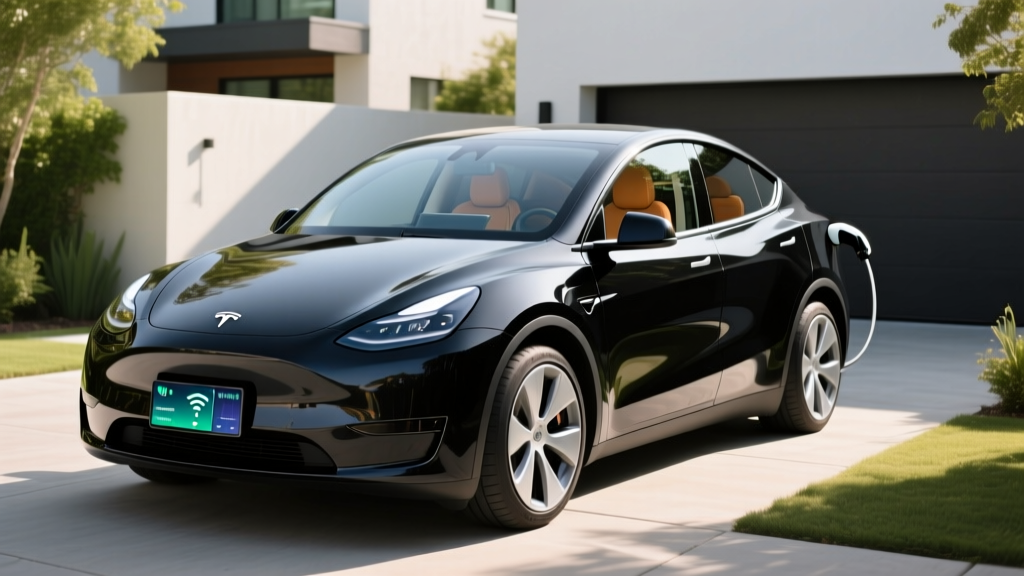
If you've ever asked "does my Tesla have Wi-Fi?" while scrolling through the 15-inch center screen, the answer is layered. Every Tesla Model Y comes with Standard Connectivity (basic maps, navigation, and Bluetooth) included at no extra cost. To unlock Wi-Fi-dependent features like live traffic visualization, satellite maps, video streaming (Netflix, YouTube), and over-the-air updates via cellular, you need Premium Connectivity at $9.99/month or $99/year. But regardless of your subscription tier, your Model Y can always connect to your home Wi-Fi network or a mobile hotspot for free software updates and media streaming.
That connectivity question is just the entry point. The 2026 Tesla Model Y Long Range AWD remains one of the most capable electric SUVs on the market, pairing a 320-mile EPA range with access to Tesla's 60,000+ Supercharger network and a starting price that undercuts many competitors after incentives. Here's the complete ownership picture.
Range and Efficiency: EPA vs. Real-World
Real-World Expectation: 270–295 miles highway at 70 mph; 240–260 miles in sub-freezing winter conditions
The 2026 Model Y Long Range AWD carries an EPA-estimated 320 miles of range, while the Rear-Wheel Drive (RWD) variant with its LFP battery is rated at 260 miles. Efficiency for the Long Range sits at approximately 28 kWh/100 mi (roughly 120 MPGe combined), according to fueleconomy.gov.
Real-world numbers tell a more nuanced story. On a flat highway loop at 65–70 mph in moderate temperatures (60–75°F), expect to extract 275–295 miles before hitting 10% State of Charge (SoC). Push speeds to 80 mph or climb mountain grades, and that drops to 245–265 miles. Cold weather (below 32°F) is the biggest range killer: the battery's internal resistance increases, cabin heating draws significant energy (the Model Y uses a heat pump, which helps but doesn't eliminate the penalty), and regenerative braking is limited until the pack warms. Plan for 20–25% range loss in sustained winter driving.
Battery, Chemistry, and Charging Specs
| Spec | Long Range AWD | Rear-Wheel Drive |
|---|---|---|
| Battery Capacity (usable) | ~75 kWh | ~60 kWh |
| Chemistry | NMC (Nickel Manganese Cobalt) | LFP (Lithium Iron Phosphate) |
| Max DC Fast Charge | 250 kW peak | 175 kW peak |
| 10–80% DC Fast Charge | ~25 minutes | ~25 minutes |
| Level 2 Home Charge Rate | 11.5 kW (44 mi/hr) | 11.5 kW (44 mi/hr) |
| Level 1 (120V) Charge | ~1 kW (3–4 mi/hr) | ~1 kW (3–4 mi/hr) |
The Long Range uses an NMC (nickel manganese cobalt) pack optimized for energy density, while the RWD variant uses LFP (lithium iron phosphate). LFP is heavier and less energy-dense but offers a longer cycle life, better thermal stability, and Tesla recommends you can charge it to 100% daily without degradation concerns — a practical advantage for commuters with predictable routes. NMC owners should set their daily charge limit to 80% and only charge to 100% before long trips.
On a V3 or V4 Supercharger, the Long Range Model Y peaks at 250 kW, but that peak only holds between roughly 10–30% SoC. The charge curve tapers progressively: by 50% SoC you're closer to 150 kW, and above 80% it drops below 75 kW. That's why the 10–80% time of ~25 minutes is the meaningful metric, not the peak kW number. For a full breakdown of how charge curves affect your road trip times, see Tesla's charging support documentation.
At home on a Level 2 Wall Connector (48-amp circuit, 60-amp breaker), you'll add approximately 44 miles of range per hour, fully replenishing a depleted Long Range in about 7–8 hours. Installation typically requires a 240V/60A circuit; budget $800–$2,000 for the electrician work depending on panel proximity, plus $475 for the Tesla Wall Connector unit.
Performance and Drivetrain
| Metric | Long Range AWD | Rear-Wheel Drive |
|---|---|---|
| 0–60 mph | 4.8 seconds | 6.6 seconds |
| Horsepower | 384 hp (dual motor) | 295 hp (single motor) |
| Drivetrain | Dual-Motor AWD | Rear-Wheel Drive |
| Top Speed | 125 mph | 135 mph |
The dual-motor Long Range delivers brisk 4.8-second sprints to 60 mph with the traction advantage of all-wheel drive — useful in rain and snow. The RWD model is less urgent at 6.6 seconds but still quicker than most gas-powered compact SUVs. Both variants feature one-pedal driving via strong regenerative braking, though LFP-equipped RWD models may have slightly reduced regen when the battery is near 100% or very cold.
Interior, Cargo, and Technology
The Model Y's minimalist interior centers on a single 15-inch touchscreen that controls virtually every vehicle function — there are no physical buttons for climate, media, or glovebox release. This creates a clean aesthetic but demands touchscreen familiarity while driving.
| Dimension | Measurement |
|---|---|
| Cargo Volume (rear seats up) | 30.2 cu ft |
| Cargo Volume (rear seats folded) | 72.1 cu ft |
| Front Headroom | 41.0 in |
| Rear Legroom | 40.5 in |
| Front Trunk (Frunk) | 4.1 cu ft |
Standout tech features include:
- Autopilot (standard): Lane centering, adaptive cruise, and automatic emergency braking — SAE Level 2 driver assistance, not self-driving
- Full Self-Driving (Supervised) ($8,000 option or $99/month): Adds automatic lane changes, navigate-on-autopilot, and traffic light recognition — still requires active driver supervision at all times
- Sentry Mode: 360° camera recording when parked, triggered by proximity threats
- Over-the-air updates: Regular feature additions and performance improvements via Wi-Fi or cellular
- Tesla app integration: Remote climate control, location tracking, charging status, and phone-as-key
Notable drawbacks: The absence of physical climate controls frustrates some drivers. The panoramic glass roof offers no shade and can make the cabin warm in summer (an aftermarket sunshade is a common accessory). Rear-seat passengers lack dedicated USB-C ports in older builds, though the 2025 refresh added a rear touchscreen and improved ventilation.
Pricing, Trims, and Federal Tax Credit
| Trim | Base MSRP | Est. After §30D Credit* |
|---|---|---|
| Rear-Wheel Drive | $44,990 | ~$37,490 |
| Long Range AWD | $48,990 | ~$41,490 |
| Long Range AWD (as tested, w/ FSD) | $56,990 | ~$49,490 |
*Federal tax credit estimates assume full eligibility. Verify your situation with a tax professional.
The Model Y qualifies for the IRS §30D Clean Vehicle Credit — up to $7,500 — but eligibility depends on three factors that change regularly:
- MSRP Cap: SUVs must be under $80,000 (all Model Y trims qualify)
- Buyer Income Cap: Modified AGI must not exceed $150,000 (single), $225,000 (head of household), or $300,000 (joint)
- Battery Sourcing: Critical minerals and battery components must meet escalating domestic-content thresholds; Tesla's US-built cells and supply chain have generally met requirements, but always verify the specific VIN on the IRS eligible vehicle list before purchase
- Point-of-Sale Transfer: As of 2024+, you can transfer the credit to the dealer at purchase for an immediate price reduction rather than waiting to claim it on your tax return
Warranty and Long-Term Ownership
Tesla covers the Model Y with a competitive warranty package:
- Basic Vehicle: 4 years / 50,000 miles
- Battery & Drive Unit: 8 years / 120,000 miles (Long Range AWD); 8 years / 100,000 miles (RWD)
- Battery Capacity Retention: Tesla warrants a minimum of 70% capacity retention during the warranty period
Real-world battery degradation data from fleet aggregators shows the Model Y's NMC pack typically loses 5–8% capacity over the first 100,000 miles, with LFP packs showing even slower degradation thanks to their superior cycle life. Out-of-warranty battery replacement remains expensive — roughly $12,000–$16,000 depending on pack size — but most owners will trade or sell before reaching that point.
Pros, Cons, and Who It Suits Best
Pros
- Access to the Supercharger network — the most reliable and extensive DC fast-charging infrastructure in North America
- 320-mile EPA range (Long Range) covers most road trips with a single brief stop
- Strong over-the-air update cadence keeps the vehicle current years after purchase
- Spacious cargo area (72 cu ft seats-down) with a usable frunk
- Competitive pricing after federal tax credit
Cons
- Touchscreen-dependent controls can distract while driving
- No Apple CarPlay or Android Auto — you're locked into Tesla's ecosystem
- Premium Connectivity ($99/yr) required for full navigation and streaming features
- Ride quality is firm, especially on larger optional wheels
- Insurance premiums run 15–25% higher than comparable gas SUVs
Who the Model Y suits best:
- Daily commuters who can charge at home and want minimal operating costs (~$0.04–$0.06/mile on residential electricity vs. $0.12–$0.18/mile for gas)
- Small families needing 30+ cu ft of cargo space and a comfortable rear seat for two children or adults on shorter trips
- Tech-forward buyers who value OTA updates, app integration, and the Supercharger network over traditional dealership service
- Road trippers willing to plan 20–25-minute Supercharger stops every 200–250 miles
Who should look elsewhere: Buyers who need Apple CarPlay/Android Auto, prefer physical buttons, want a softer ride, or lack home charging access (public-only charging erodes the cost and convenience advantage significantly).
Frequently Asked Questions
Does my Tesla have Wi-Fi built in?
Your Tesla has a built-in cellular connection, not Wi-Fi. Standard Connectivity (free) covers basic navigation and Bluetooth. For live traffic, satellite maps, video streaming, and cellular-based OTA updates, you need Premium Connectivity ($9.99/month). However, your Tesla can connect to any Wi-Fi network (home, work, mobile hotspot) for free updates and media.
What is the real-world range of the Tesla Model Y?
The Long Range AWD is EPA-rated at 320 miles. Expect 270–295 miles on highway drives at 70 mph in mild weather, and 240–260 miles in freezing conditions. The RWD variant (260 EPA miles) delivers roughly 220–240 real-world miles on the highway.
How fast does the Model Y charge at home and on the road?
On a V3/V4 Supercharger, the Long Range peaks at 250 kW and charges 10–80% in about 25 minutes. At home on a Level 2 Wall Connector (11.5 kW), you add ~44 miles per hour, fully charging overnight. On a standard 120V outlet (Level 1), expect just 3–4 miles per hour — suitable only for topping off.
Does the Tesla Model Y qualify for the federal EV tax credit?
Yes, the Model Y is eligible for up to $7,500 under IRS §30D, subject to buyer income caps ($150K single / $300K joint), the $80K SUV MSRP cap (all trims qualify), and battery-sourcing requirements. The credit can now be transferred at point of sale for an immediate price reduction. Always verify your VIN on the IRS eligible list and consult a tax professional.
Is the Model Y worth buying vs. the Hyundai Ioniq 5 or Ford Mustang Mach-E?
The Model Y wins on Supercharger network access, cargo space, and software integration. The Ioniq 5 offers faster peak charging (up to 350 kW on 800V architecture), a more comfortable ride, and physical climate buttons. The Mach-E provides a more traditional SUV feel and Apple CarPlay. If Supercharger reliability and Tesla's ecosystem matter most, the Model Y is the strongest pick. If you prioritize ride comfort and don't mind CCS charging networks (now improving with NACS adapters), the Ioniq 5 is a compelling alternative.
What does Tesla Autopilot actually do?
Standard Autopilot is an SAE Level 2 driver-assistance system: it centers the car in its lane and maintains a set following distance. It does NOT drive itself. You must keep your hands on the wheel and eyes on the road at all times. Full Self-Driving (Supervised) adds automated lane changes and intersection handling but remains Level 2 — the driver is fully responsible. True self-driving (Level 4) is only available in limited robotaxi services like Waymo.