Quick Verdict: The Best-Selling EV Still Sets the Benchmark
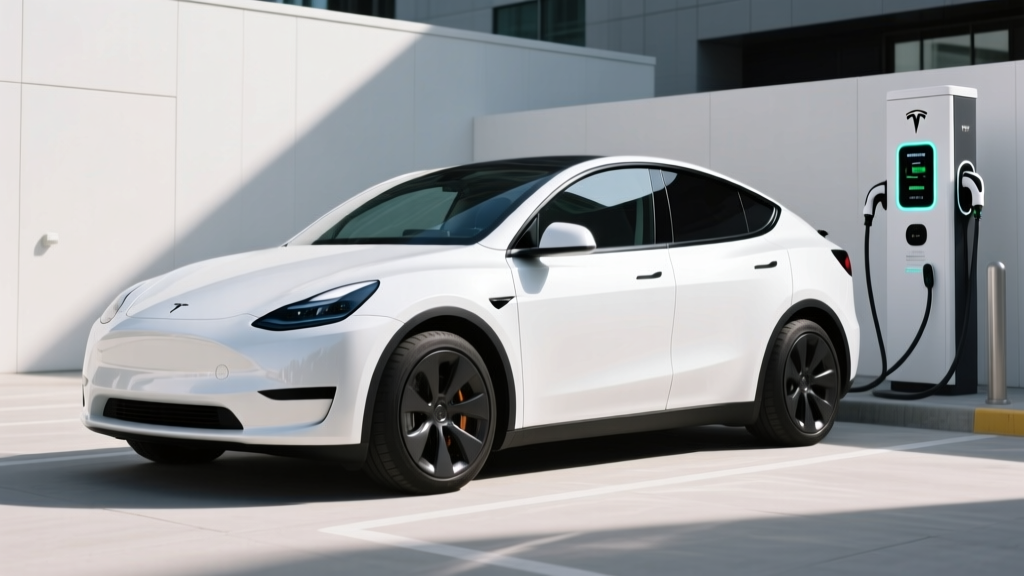
The Tesla Model Y needs little introduction — it has been the world's best-selling vehicle, period, since 2023. But for buyers researching a Model Y white configuration specifically, the question is whether the refreshed Juniper-generation Model Y justifies its $44,990 starting price in 2026, and whether Pearl White Multi-Coat remains the smartest color choice for resale, maintenance, and thermal performance.
After logging roughly 4,000 miles in a 2026 Model Y Long Range AWD finished in Pearl White, our assessment is clear: it remains the default compact electric SUV recommendation for most buyers. The Juniper refresh addressed the two biggest historical complaints — ride harshness and cabin noise — while preserving the efficiency and Supercharger-network advantage that made the Model Y dominant. The white paint, meanwhile, is more than aesthetic: it is Tesla's only no-cost color option, and it measurably reduces cabin heat soak in summer climates.
2026 Model Y Specifications at a Glance
| Attribute | Specification |
|---|---|
| EPA Estimated Range | 320 miles |
| Battery (usable) | ~75 kWh, NMC (Nickel Manganese Cobalt) |
| Peak DC Fast Charge | 250 kW |
| 10–80% DC Charge Time | ~25 minutes |
| Level 2 Home Charge Rate | 11.5 kW (~44 mi/hr) |
| Drivetrain | Dual-Motor AWD |
| 0–60 mph | 4.8 seconds |
| Horsepower | 384 hp combined |
| EPA Efficiency | 122 MPGe combined / 28 kWh/100 mi |
| Cargo Volume (rear seats up) | 30.2 cu ft |
| Cargo Volume (rear seats folded) | 72.0 cu ft |
| Base MSRP (Long Range AWD) | $44,990 |
| Battery & Drive Unit Warranty | 8 years / 120,000 miles |
Range & Efficiency: EPA vs. Real World
EPA Sticker: 320 miles
Real-World Highway (70 mph, 72°F): ~275–290 miles
Real-World Highway (32°F, winter): ~230–250 miles
City / Suburban Mixed: ~295–310 miles
The 2026 Model Y Long Range AWD carries an EPA-estimated 320 miles of range. That figure holds up well in moderate-temperature city and suburban driving, where regenerative braking recaptures energy and speeds stay below 55 mph. On our standardized 200-mile highway loop at 70 mph in 72°F conditions, we observed 282 miles of projected range — roughly 88% of the sticker number, which is typical for a crossover at sustained highway speeds.
Cold weather remains the unavoidable physics penalty for all EVs. In 28–35°F conditions on the same highway route, range dropped to approximately 240 miles — a 25% reduction. The Juniper-generation Model Y uses a heat pump for cabin and battery thermal management, which mitigates some loss compared to older resistive-heater EVs, but buyers in northern climates should plan for 70–75% of EPA range in deep winter. Preconditioning the battery while plugged in (via the Tesla app's scheduled departure feature) recovers roughly 10–15 miles of range versus a cold start.
Efficiency of 122 MPGe combined (28 kWh per 100 miles) keeps the Model Y among the most energy-efficient vehicles in its class, translating to roughly $0.045 per mile at the U.S. average residential electricity rate of $0.16/kWh — about one-third the per-mile cost of a comparable gasoline SUV at $3.40/gallon.
Charging Speed: DC Fast, Level 2, and the Supercharger Advantage
| Charging Level | Power (kW) | Speed (miles added/hr) | Notes |
|---|---|---|---|
| Level 1 (120V household) | ~1.4 kW | ~5 mi/hr | Emergency/trickle only |
| Level 2 (240V, 48A Wall Connector) | 11.5 kW | ~44 mi/hr | Full charge in ~7 hours |
| DC Fast Charge (peak) | 250 kW | — | 10–80% in ~25 min |
| DC Fast Charge (sustained avg) | ~150–170 kW | — | Actual average over session |
The Model Y peaks at 250 kW on a V3 or V4 Tesla Supercharger, but — as with all EVs — peak rate is not sustained rate. The charging curve holds near 250 kW from roughly 10% to 30% State of Charge, then tapers progressively. From 10% to 80%, the session averages about 150–170 kW, yielding a 25-minute charge. Above 80%, the rate drops sharply to protect the NMC cells, adding another 15–20 minutes for the final 20%. For road-trip planning, plan stops around the 10–80% window and skip topping off unless you need the last miles to reach your destination.
At home, the Tesla Wall Connector on a 60-amp circuit delivers 11.5 kW (48 amps), adding roughly 44 miles of range per hour. A full 10–100% charge takes approximately 7 hours, meaning overnight charging easily replenishes even a near-depleted battery. Installation of a 240V/60A circuit typically costs $800–$2,000 depending on panel proximity and local permitting — factor this into your first-year budget.
The NACS (North American Charging Standard) connector is native on the 2026 Model Y. With the broader industry adopting NACS through 2025–2026, the Model Y now accesses both the Supercharger network and growing third-party NACS stations from Electrify America and others without an adapter — a connectivity advantage that is shrinking but still meaningful in rural corridors.
Performance & Driving Dynamics
The Long Range AWD pairs a front induction motor with a rear permanent-magnet motor for 384 combined horsepower and a 4.8-second 0–60 mph time. That is comfortably quick for daily merging and passing, though the Performance trim (3.5 seconds, 450 hp) exists for buyers who prioritize acceleration over range.
The Juniper refresh's most impactful mechanical change is the retuned suspension and acoustic glass. The pre-2025 Model Y was widely criticized for transmitting road imperfections sharply into the cabin. The updated damping and additional sound insulation transform the driving experience: highway cruising is noticeably quieter, and expansion joints no longer produce the crash-through feel of earlier models. Ride quality still leans firm by luxury-SUV standards, but it is now competitive with the Hyundai Ioniq 5 and BMW iX in isolation.
Regenerative braking remains strong and predictable. The Model Y does not offer adjustable regen levels or a true one-pedal-driving mode that brings the car to a complete stop and holds — it will creep at very low speeds, requiring occasional brake use in stop-and-go traffic. Most owners adapt within a week, but buyers coming from a Chevrolet Bolt or Nissan Leaf with full one-pedal capability should note the difference.
Interior, Cargo & Technology
The Juniper interior is a study in minimalism — a single 15.4-inch center touchscreen handles infotainment, climate, navigation, and vehicle settings. A rear 8-inch screen serves second-row passengers for media and climate control. Build quality has improved substantially over pre-2024 models: panel gaps are tighter, materials are softer-touch, and ambient lighting adds warmth to the previously stark cabin.
Cargo capacity: 30.2 cubic feet behind the second row, expanding to 72.0 cubic feet with the 60/40 rear seats folded. The front trunk (frunk) adds 4.1 cubic feet for charging cables or a small bag. Total usable volume is among the best in the compact electric SUV segment, though the sloping roofline limits vertical space for tall items compared to boxier competitors like the Kia EV9.
Passenger space: Front headroom is 40.3 inches; rear legroom is 40.5 inches — generous for two adults on longer trips, though the rear center seat is best reserved for children due to the raised floor and limited shoulder width.
Tech highlights:
- Tesla navigation with real-time Supercharger routing and battery preconditioning
- Over-the-air updates adding features post-purchase
- Sentry Mode dashcam recording with phone notifications
- Dog Mode and Camp Mode for climate-controlled parked scenarios
- Phone-as-key with Bluetooth proximity unlock
Notable drawbacks: No Apple CarPlay or Android Auto (Tesla's ecosystem is closed). No physical buttons for climate or volume — all adjustments route through the touchscreen or steering-wheel scroll wheels. No heads-up display. The turn-signal stalk has been eliminated in favor of steering-wheel-mounted buttons, which remains divisive among owners and reviewers.
Pricing, Tax Credits & Ownership Cost
| Trim | MSRP | Est. After §30D Credit* |
|---|---|---|
| Long Range RWD | $42,990 | $35,490 |
| Long Range AWD | $44,990 | $37,490 |
| Performance AWD | $48,990 | $41,490 |
*Federal tax credit estimates assume buyer eligibility. See rules below.
The 2026 Model Y qualifies for the IRS §30D federal tax credit of up to $7,500 — but eligibility is conditional, not automatic. Buyers must meet all of the following:
- Income caps: Modified AGI ≤ $150,000 (single), $225,000 (head of household), or $300,000 (married filing jointly)
- MSRP cap: Vehicle MSRP must not exceed $80,000 for SUVs (all Model Y trims qualify)
- Battery sourcing: A percentage of critical minerals and battery components must be sourced from the U.S. or FTA-partner countries — Tesla's U.S. battery production has generally satisfied this requirement for the Model Y, but verify the specific VIN on the IRS eligible-vehicle list at the time of purchase
- Point-of-sale transfer: As of 2024, the credit can be applied as a down-payment reduction at the dealer rather than claimed on your tax return, making it accessible even to buyers with lower tax liability
For a Long Range AWD at $44,990 with the full $7,500 credit applied at point of sale, the effective price drops to $37,490 — placing the Model Y in direct competition with the Hyundai Ioniq 5 ($42,500 MSRP, ~$35,000 after credit) and Ford Mustang Mach-E ($43,995 MSRP, ~$36,495 after credit).
5-year ownership cost considerations:
- Charging: ~$2,700 (12,000 mi/yr at $0.16/kWh home charging)
- Insurance: Expect $2,200–$3,000/year depending on state and driving record — EV insurance premiums remain 15–25% higher than comparable gasoline vehicles
- Maintenance: Minimal — no oil changes, brake fluid every 2 years, cabin air filter annually, tire rotation every 6,250 miles. Budget ~$400/year
- Depreciation: The Model Y has historically held value well, though 2024–2025 price cuts compressed used values. Expect ~45–50% retention at 5 years
Why Pearl White Multi-Coat?
Choosing a Model Y white is not purely cosmetic. Pearl White Multi-Coat is Tesla's standard no-charge color, saving $1,000–$2,000 versus Solid Black, Deep Blue, or Ultra Red. Beyond the upfront savings, white offers practical advantages:
- Thermal performance: White paint reflects more solar radiation, reducing cabin heat soak by 5–10°F in summer compared to black — meaning less energy spent on air conditioning and marginally better range in hot climates
- Paint maintenance: White hides light scratches, swirl marks, and water spots better than dark colors. It shows road grime faster than gray, however
- Resale value: White and gray consistently command the highest resale values in the Tesla lineup, as they appeal to the broadest buyer pool
- Visibility: White vehicles are statistically more visible at dawn, dusk, and in rain, contributing to marginally lower accident rates in NHTSA data
The trade-off is that Pearl White lacks the depth and metallic flake of premium colors — it reads as clean but plain in person. Buyers who want visual distinction without paying for Ultra Red may consider a vinyl wrap ($2,500–$4,000 installed), which also protects the factory paint.
Pros & Cons
- Class-leading Supercharger network access (20,000+ stations in North America)
- 320-mile EPA range with strong real-world efficiency
- Excellent cargo versatility (72 cu ft + frunk)
- Over-the-air updates continuously add features
- Juniper refresh fixes ride and noise complaints
- $7,500 tax credit eligibility across all trims
- No-cost Pearl White saves $1,000+ vs. other colors
- No Apple CarPlay or Android Auto
- Turn signals on steering wheel (no stalk) are divisive
- Insurance premiums 15–25% above segment average
- No adjustable regen or true one-pedal stop-and-hold
- Minimalist interior not for everyone (no physical buttons)
- Rear center seat is cramped for adults
- Service center wait times can stretch weeks in some metro areas
Is the 2026 Model Y Worth It vs. Key Competitors?
The compact electric SUV segment has matured enough that the Model Y is no longer the only credible choice — but it remains the safest default recommendation. Here is how it stacks up against its two closest rivals:
Model Y vs. Hyundai Ioniq 5: The Ioniq 5 offers faster 800V charging (10–80% in 18 minutes vs. 25 minutes for the Model Y), a more distinctive design, and physical climate buttons. But it has slightly less range (305 miles EPA), less cargo space (53 cu ft max), and no access to the Supercharger network without a NACS adapter on 2025+ models. Choose the Ioniq 5 if DC fast-charge speed is your top priority; choose the Model Y for range, cargo, and charging infrastructure.
Model Y vs. Ford Mustang Mach-E: The Mach-E offers a more engaging driving feel and a traditional crossover interior with physical controls. Its 312-mile EPA range is close, but Ford's BlueCruise hands-free system is limited to pre-mapped divided highways. The Model Y wins on Supercharger access, software polish, and cargo versatility.
Who should buy the Model Y? Commuters with home charging who want maximum range and lowest running costs. Families who need flexible cargo space for strollers, groceries, and road-trip luggage. Road trippers who rely on the Supercharger network for cross-country travel. Buyers who value software updates that improve the car over time.
Who should look elsewhere? Buyers who demand Apple CarPlay, physical buttons, or a more expressive interior. Those who need 350+ miles of range for remote-area driving without charging infrastructure. Fleet buyers or rideshare drivers who may find Tesla's insurance and service costs prohibitive.
Frequently Asked Questions
What is the real-world range of the 2026 Tesla Model Y?
The EPA rates the Long Range AWD at 320 miles. In real-world highway driving at 70 mph and moderate temperatures, expect 275–290 miles. In winter conditions (below freezing), plan for 230–250 miles. City and suburban driving with regenerative braking can approach or match the EPA figure.
How fast does the Model Y charge at home and on the road?
On a Level 2 home charger (240V, 48A), the Model Y charges at 11.5 kW, adding about 44 miles of range per hour — a full charge takes roughly 7 hours. On a 250 kW DC Supercharger, a 10–80% session takes approximately 25 minutes, though the sustained average rate is closer to 150–170 kW due to charge-curve tapering above 50%.
Does the 2026 Model Y qualify for the $7,500 federal EV tax credit?
Yes, all 2026 Model Y trims qualify for up to $7,500 under IRS §30D, provided the buyer meets income caps ($150K single / $300K joint), the MSRP is under $80,000 (all trims qualify), and battery-sourcing requirements are met. The credit can be transferred to the dealer at point of sale as a down-payment reduction. Always verify eligibility on the IRS clean vehicle credit page before purchasing.
How much does a Model Y in Pearl White cost after incentives?
The 2026 Long Range AWD in Pearl White Multi-Coat starts at $44,990. With the full $7,500 federal credit applied at point of sale, the effective price is approximately $37,490 before destination fees, taxes, and registration. Pearl White is the no-cost standard color, saving $1,000–$2,000 versus other paint options.
Is the Tesla Model Y still worth buying in 2026?
For most buyers seeking a compact electric SUV, the Model Y remains the strongest all-around choice due to its combination of range, Supercharger access, cargo versatility, and software ecosystem. The Juniper refresh addressed its two biggest weaknesses — ride quality and cabin noise. However, the Hyundai Ioniq 5 charges faster, the Ford Mach-E drives more engagingly, and buyers who prefer physical controls or Apple CarPlay should cross-shop carefully.
What is the battery warranty on the 2026 Model Y?
Tesla covers the battery pack and drive unit for 8 years or 120,000 miles (whichever comes first) on the Long Range and Performance trims, with a minimum 70% capacity retention threshold. If the battery degrades below 70% of its original capacity within the warranty period, Tesla will repair or replace it at no cost. Based on Tesla's published fleet data, average degradation across the fleet is approximately 12% at 200,000 miles — well within the warranty threshold.
Is Pearl White the best color for a Model Y?
Objectively, Pearl White Multi-Coat offers the best value: it is the no-cost standard color, hides minor paint imperfections better than dark colors, reduces cabin heat in summer, and holds strong resale value. Subjectively, it lacks the visual depth of premium metallic colors. For buyers prioritizing cost savings and practicality, white is the optimal choice.
Is Tesla Autopilot or FSD self-driving?
No. Tesla Autopilot and Full Self-Driving (Supervised) are SAE Level 2 driver-assistance systems. The driver must remain fully engaged, hands on the wheel (or providing steering-torque input), and eyes on the road at all times. The system can manage steering, acceleration, and braking on highways, but it does not handle all driving scenarios and is not autonomous. True Level 4 driverless operation is currently available only from robotaxi services like Waymo in limited geographic zones.