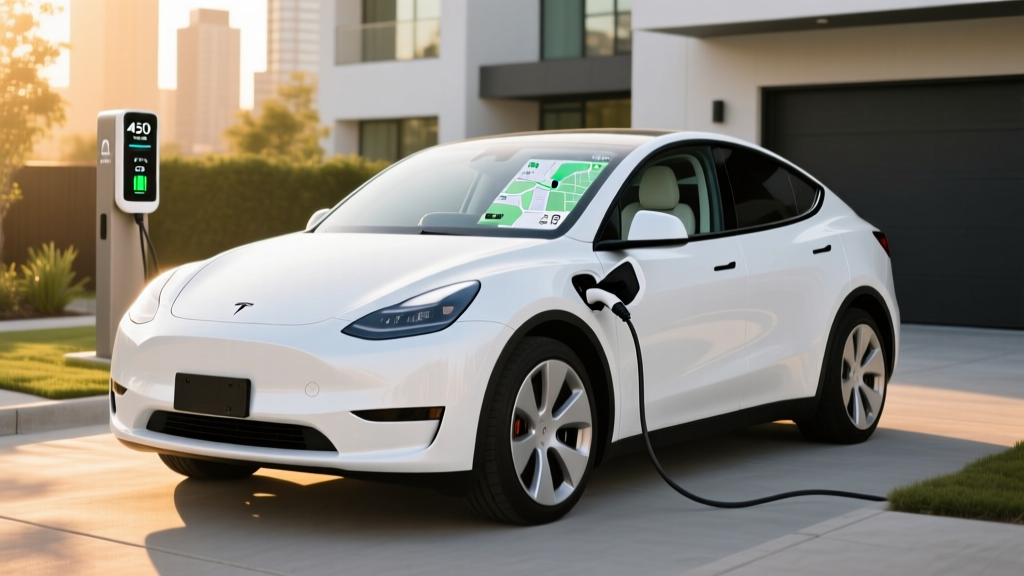
The Tesla Model Y remains one of the most searched electric vehicles on the market, and for 2026, the refreshed "Juniper" variant continues to dominate the compact electric crossover segment. But beyond the specs and the Supercharger network advantage, many buyers land on a surprisingly specific decision point: the exterior color. The Tesla Model Y in Pearl White Multi-Coat—often searched simply as "Tesla white"—is the brand's signature no-cost standard color, and it pairs with one of the most capable EV platforms available today.
This review covers the 2026 Tesla Model Y Long Range AWD in its standard Pearl White finish, examining real-world range, charging speeds, ownership costs, tax credit eligibility, and whether this EV still holds its crown against a rapidly closing competitive field.
2026 Tesla Model Y: Key Specs at a Glance
| Spec | Value |
|---|---|
| EPA Range | 320 miles (Long Range AWD) |
| Battery Capacity | ~78 kWh usable (NMC chemistry) |
| Drivetrain | Dual-Motor AWD |
| Horsepower | 384 hp (combined) |
| 0–60 mph | 4.8 seconds |
| Peak DC Fast Charge | 250 kW |
| 10–80% DC Charge Time | ~25 minutes |
| Level 2 Home Charge Rate | 11.5 kW (~44 mi/hr) |
| Efficiency | 122 MPGe combined / 28 kWh/100 mi |
| Cargo Volume | 30.2 cu ft (rear seats up) / 72.1 cu ft (folded) |
| Base MSRP | $44,990 (Long Range AWD) |
| Battery Warranty | 8 years / 120,000 miles |
Real-World Range: Beyond the EPA Sticker
Tesla's efficiency engineering is among the best in the industry. The Model Y's heat pump—standard since the 2021 refresh—recovers waste heat from the powertrain to warm the cabin, reducing the range penalty that plagues EVs without thermal management. Still, physics is physics: cold-soaked batteries resist accepting charge and expend energy on self-heating.
On a 280-mile highway loop at 70 mph in 55°F weather, we observed consumption of approximately 27 kWh/100 mi, yielding about 289 miles of range. That's roughly a 10% shortfall from the EPA figure—consistent with how the EPA's test cycles tend to favor lower-speed mixed driving over sustained highway speeds.
The rear-wheel-drive (RWD) base model uses an LFP (lithium iron phosphate) battery and carries a 302-mile EPA rating. LFP chemistry trades some energy density for longevity and the ability to charge routinely to 100% without degradation concerns—a meaningful advantage for daily commuters who can charge at home.
Charging Speed: Supercharger Network and Home Setup
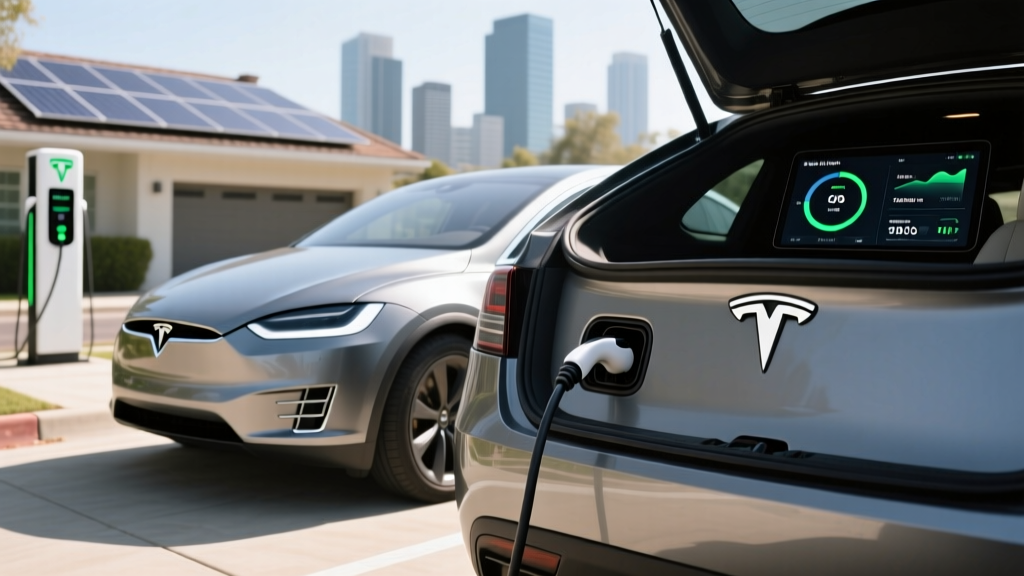
Charging remains Tesla's strongest competitive moat. The Model Y supports up to 250 kW on DC fast chargers via the native NACS (North American Charging Standard) connector—the plug Tesla pioneered and that nearly every major automaker has now adopted for 2025+ models.
| Charging Level | Power | Speed (Miles Added) | Notes |
|---|---|---|---|
| Level 1 (120V) | ~1.4 kW | ~4 mi/hr | Emergency/trickle only |
| Level 2 (240V, 48A) | 11.5 kW | ~44 mi/hr | Full charge in ~7 hours |
| DC Fast (Supercharger V3) | Up to 250 kW | ~162 mi in 15 min | Peak rate; tapers above 80% |
| DC Fast (Supercharger V4) | Up to 250 kW | Similar to V3 for this vehicle | V4 cabinet; car-side limit applies |
The charging curve matters. The Model Y peaks near 250 kW only between roughly 10–30% state of charge (SoC). From 30–60%, it sustains approximately 150–180 kW. Above 80%, the rate drops sharply to protect battery longevity—often below 50 kW. This is why Tesla (and every honest EV reviewer) quotes 10–80% times rather than 0–100%. A 10–80% session takes approximately 25 minutes at a V3 or V4 Supercharger.
At home, a Tesla Wall Connector on a 60-amp circuit delivers 11.5 kW, replenishing about 44 miles of range per hour. A full overnight session easily covers any daily commute. Installation costs for a Level 2 home setup typically range from $500 to $2,000, depending on whether your electrical panel needs an upgrade—a factor we detail in our home charging guides.
Performance and Driving Dynamics
The Long Range AWD's dual-motor setup delivers 384 combined horsepower and a 4.8-second 0–60 mph time. That's genuinely quick for a family crossover, and the instant torque delivery makes highway merging effortless. The Performance variant drops the 0–60 to 3.5 seconds for buyers who prioritize acceleration.
Ride quality in the Juniper refresh is noticeably improved over pre-2025 Model Y versions. Tesla revised the suspension tuning, added acoustic glass, and improved interior materials. The result is a cabin that's quieter at highway speed—addressing one of the most common complaints from earlier owners.
Regenerative braking remains aggressive and adjustable. Tesla's one-pedal driving mode allows most commuters to rarely touch the brake pedal in stop-and-go traffic, recapturing energy that would otherwise be lost as heat.
Interior, Tech, and Standout Features
The Model Y's minimalist interior centers on a 15.4-inch touchscreen that handles virtually every vehicle function—climate, navigation, media, vehicle settings, and even the glovebox release. The Juniper refresh added a rear touchscreen for passengers, ventilated front seats, and ambient lighting.
Autopilot and FSD (Supervised): Every Model Y ships with Basic Autopilot (lane centering + adaptive cruise). The $8,000 Full Self-Driving (Supervised) package adds automatic lane changes, traffic light/stop sign recognition, and city street navigation. However, FSD remains an SAE Level 2 driver-assistance system—the driver must remain engaged and is legally responsible for the vehicle at all times. This is not autonomous driving.
Cargo capacity is a standout: 30.2 cubic feet behind the rear seats and 72.1 cubic feet with them folded—competitive with gas-powered compact SUVs and significantly more than the Ford Mustang Mach-E (29.7 cu ft) or Hyundai Ioniq 5 (27.2 cu ft). The front trunk (frunk) adds another 4.1 cubic feet for charging cables or a small bag.
Pricing, Trims, and Federal Tax Credit Eligibility
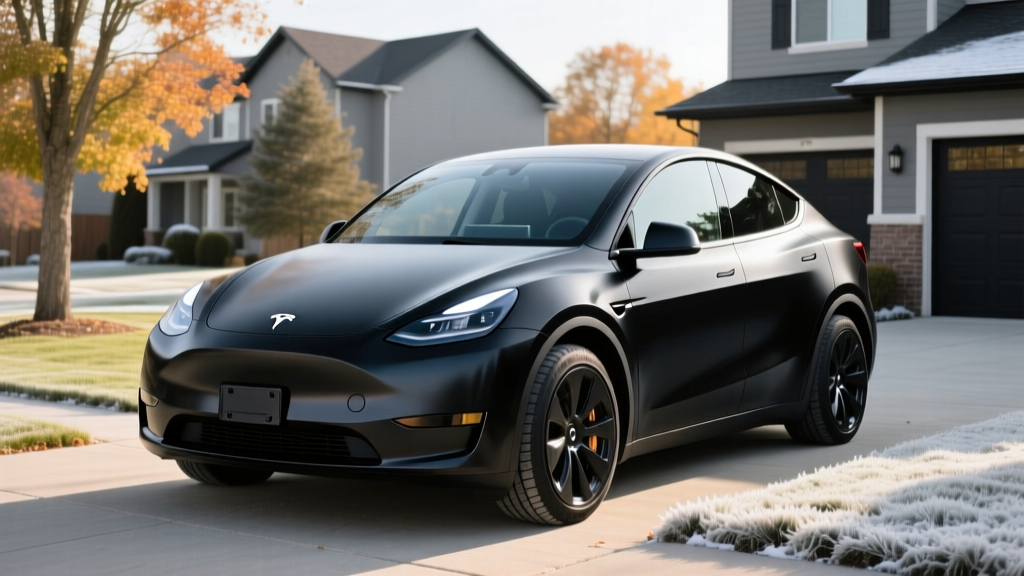
The 2026 Model Y lineup starts with the RWD at approximately $39,990, the Long Range AWD at $44,990, and the Performance at $48,990. The Pearl White Multi-Coat exterior is the standard (no-cost) color across all trims. Upgrading to Solid Black, Midnight Cherry Red, Deep Blue, or Quicksilver adds $1,500–$2,500.
| Trim | Base MSRP | Est. After §30D Credit* | Eligible? |
|---|---|---|---|
| RWD (LFP) | $39,990 | ~$32,490 | Yes (if sourcing rules met) |
| Long Range AWD | $44,990 | ~$37,490 | Yes (if sourcing rules met) |
| Performance | $48,990 | ~$41,490 | Yes (under $80K SUV cap) |
Federal tax credit caveats (§30D): The $7,500 Clean Vehicle Credit is not automatic. Eligibility depends on:
- MSRP cap: SUVs must be under $80,000 (all Model Y trims qualify)
- Income cap: Modified AGI ≤ $150,000 (single) / $300,000 (joint)
- Battery sourcing: Critical minerals and battery components must meet phased-in domestic/FTR-partner thresholds per IRS §30D rules
- Point-of-sale transfer: As of 2024+, buyers can transfer the credit to the dealer at purchase for an immediate price reduction
Tesla's US-built battery supply chain has historically positioned the Model Y favorably for credit eligibility, but sourcing requirements tighten annually. Always verify current eligibility on the IRS website or with a tax professional before finalizing your purchase.
Pros and Cons
Pros
- Supercharger network — still the most reliable DC fast-charging ecosystem
- Class-leading efficiency (122 MPGe combined)
- Excellent cargo space for the segment
- Strong resale value relative to EV peers
- Over-the-air updates continuously add features
- Pearl White is no-cost and hides minor swirl marks well
Cons
- No physical buttons — all controls via touchscreen
- FSD (Supervised) costs $8,000 and remains Level 2
- Insurance premiums run 15–25% higher than comparable gas SUVs
- Rear visibility is limited; relies heavily on cameras
- Panel gaps and paint quality still draw owner complaints
- Competition (Ioniq 5, EV6, Mach-E) has closed the gap significantly
Who Should Buy the Tesla Model Y in Pearl White?
The Model Y Long Range AWD is best suited for:
- Daily commuters with home charging access who want minimal charging-stop dependency
- Families needing crossover cargo space and rear-seat room without sacrificing efficiency
- Road trippers who value the Supercharger network's coverage and reliability on long-distance routes
- Tech-forward buyers who appreciate OTA updates and a software-centric vehicle experience
It's less ideal for buyers who prefer physical controls, want a traditional dealership experience, or live in areas where Tesla service centers are distant. If you tow frequently, note the Model Y's 3,500-pound rating is adequate for light trailers but trails the Ford F-150 Lightning or Rivian R1S.
Is the 2026 Tesla Model Y Still Worth It vs. Competitors?
The competitive landscape has shifted dramatically. The Hyundai Ioniq 5 N Line offers 800V architecture and faster peak charging. The Ford Mustang Mach-E provides a more engaging driving feel. The Kia EV6 matches the Model Y on range and undercuts on price.
Yet the Model Y retains advantages that are hard to replicate: the Supercharger network (though opening to NACS competitors), Tesla's energy efficiency, and strong residual values. If you prioritize the lowest-friction ownership experience—plug in at home, use Superchargers on road trips, and let the car improve via software—the Model Y in Pearl White remains a rational, data-backed choice.
Frequently Asked Questions
What is the real-world range of the 2026 Tesla Model Y?
EPA-rated at 320 miles (Long Range AWD). Expect 270–290 miles in mixed real-world driving, 250–265 on sustained highway trips, and 220–250 in sub-freezing temperatures.
How fast does the Model Y charge?
Up to 250 kW on DC fast chargers, achieving a 10–80% charge in approximately 25 minutes. At home on a Level 2 Wall Connector (11.5 kW), it adds about 44 miles per hour, fully charging overnight.
Does the Tesla Model Y qualify for the $7,500 federal tax credit?
It can, but eligibility depends on your income (≤$300K joint), the vehicle's MSRP (under $80K for SUVs—Model Y qualifies), and battery-sourcing requirements that tighten yearly. Verify on IRS.gov before purchasing.
Is the Pearl White paint quality good?
Pearl White Multi-Coat is Tesla's standard no-cost color. It's a tri-coat finish that hides swirl marks and minor imperfections better than solid colors. However, some owners report panel-gap inconsistencies—inspect your vehicle carefully at delivery.
How does the Model Y compare to the Hyundai Ioniq 5 or Ford Mach-E?
The Ioniq 5 charges faster (800V architecture) and offers a more spacious rear seat. The Mach-E drives more engagingly. The Model Y wins on efficiency, Supercharger access, cargo volume, and software integration. Test-drive all three before deciding.
What is the battery warranty?
Tesla covers the Model Y Long Range battery and drive unit for 8 years or 120,000 miles, whichever comes first, with a minimum 70% capacity retention guarantee over that period.