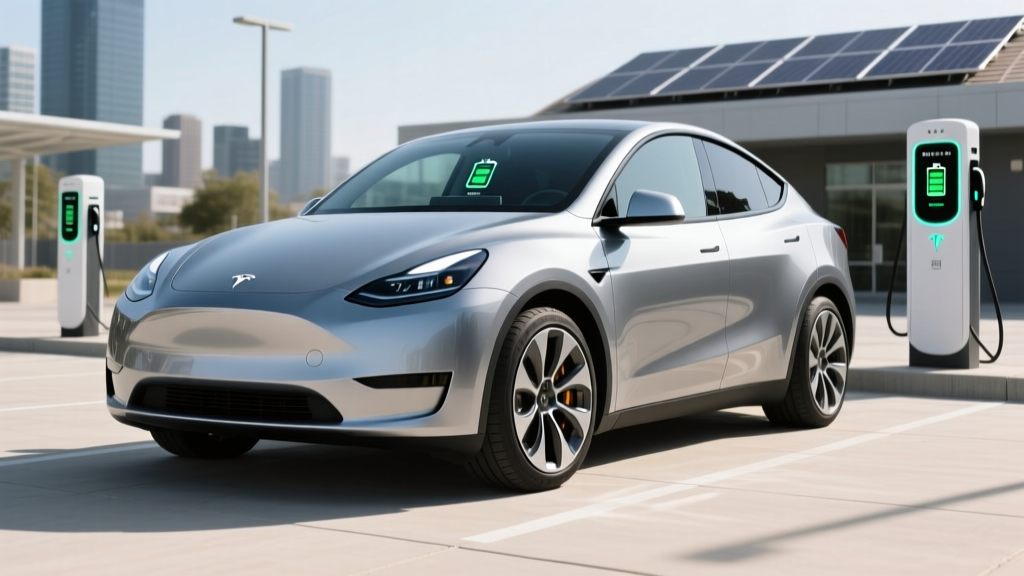
The Tesla Model Y remains one of the best-selling electric vehicles in the United States, and buyers researching this crossover often land on a surprisingly practical question: how much does a Tesla Model Y weigh? Curb weight influences everything from tire wear and braking distance to real-world efficiency and cargo payload. Below, we break down the 2026 Tesla Model Y's weight by trim, then expand into the full ownership picture — range, charging, battery chemistry, pricing, and whether it still earns its spot against a growing field of competitors.
2026 Tesla Model Y Weight by Trim Level
Tesla has streamlined the Model Y lineup for 2026 following the "Juniper" refresh that debuted in early 2025. The curb weight varies depending on drivetrain configuration and battery pack size. Heavier dual-motor AWD variants carry additional mass from the front motor, associated power electronics, and a slightly larger battery pack.
| Trim | Curb Weight (lbs) | Drivetrain | 0-60 mph | EPA Range |
|---|---|---|---|---|
| Long Range RWD | ~4,220 | Rear-Wheel Drive | 5.8 sec | 320 mi |
| Long Range AWD | ~4,398 | Dual Motor AWD | 4.8 sec | 310 mi |
| Performance AWD | ~4,460 | Dual Motor AWD | 3.5 sec | 285 mi |
For context, the Model Y's curb weight is competitive with rivals like the Ford Mustang Mach-E (4,300–4,800 lbs depending on trim) and the Hyundai Ioniq 5 (~4,400–4,700 lbs). The Model Y's relatively lower mass, combined with Tesla's efficient powertrain software, contributes to its class-leading energy consumption figures.
Battery Chemistry, Capacity, and Efficiency
The 2026 Model Y Long Range variants use a ~75 kWh usable battery pack (approximately 82 kWh gross). Tesla has shifted many Standard Range and some Long Range models to lithium iron phosphate (LFP) chemistry, while the Long Range AWD and Performance trims typically retain nickel manganese cobalt (NMC) cells for higher energy density.
| Attribute | LFP (Lithium Iron Phosphate) | NMC (Nickel Manganese Cobalt) |
|---|---|---|
| Energy Density | Lower — heavier for same kWh | Higher — lighter pack |
| Cycle Life | 3,000+ cycles typical | 1,500–2,000 cycles typical |
| Cold-Weather Performance | Greater range loss in freezing temps | Better low-temp discharge |
| Recommended SoC | Can charge to 100% daily | Best kept at 80% daily; 100% for trips |
| Cost | Lower — no cobalt/nickel | Higher — commodity-sensitive |
The Model Y Long Range AWD achieves an EPA-rated 122 MPGe combined, which translates to roughly 28 kWh per 100 miles — among the most efficient in the compact electric SUV segment. The RWD variant squeezes slightly better numbers at around 125 MPGe combined.
Real-World Range: What the EPA Sticker Doesn't Tell You
- Long Range AWD EPA: 310 miles
- Real-world highway (70–75 mph, 65°F): Expect ~260–280 miles
- Real-world city/mixed (moderate climate): Expect ~285–305 miles
- Cold-weather (below 30°F, highway): Expect ~210–240 miles (20–30% reduction)
- Performance AWD EPA: 285 miles; real-world highway ~240–260 miles
The Model Y's heat pump (standard since 2021) mitigates cold-weather cabin-heating losses, but battery chemistry still limits low-temperature efficiency. LFP-equipped trims lose proportionally more range in freezing weather than NMC trims.
Source: EPA estimates via fueleconomy.gov.
Charging Speed: DC Fast Charging and Home Level 2
Charging speed remains a top buyer concern, and the 2026 Model Y benefits from Tesla's mature Supercharger network and the Juniper refresh's improved thermal management for sustained charging rates.
| Charging Level | Power (kW) | Speed / Time | Notes |
|---|---|---|---|
| Level 1 (120V household) | ~1.4 kW | ~3–4 mi/hr | Emergency/trickle only |
| Level 2 (240V home, 48A) | 11.5 kW | ~37 mi/hr; full charge in ~8 hrs | Requires NEMA 14-50 or hardwired Wall Connector |
| DC Fast Charge (Supercharger V3/V4) | Peak 250 kW | 10–80% in ~22 min | Sustains ~170–200 kW through 50% SoC, tapers above 80% |
| DC Fast Charge (CCS adapter, non-Tesla) | Up to 250 kW | 10–80% in ~25 min | Speed depends on station output; Tesla includes CCS port on 2026 models |
A critical detail: the 250 kW peak rate is not sustained across the full session. The charge curve peaks near 250 kW at low state of charge (10–20%), holds strong through roughly 50% SoC, then tapers progressively. Charging from 80% to 100% on DC fast charge can add another 15–20 minutes — plan your road-trip stops to leave at 80% unless you need the full battery.
The 2026 Model Y now ships with the North American Charging Standard (NACS) port natively, granting access to Tesla Superchargers without an adapter. For Electrify America, EVgo, and other CCS-based networks, Tesla provides or sells a CCS adapter.
Pricing, Tax Credit Eligibility, and Total Cost
| Trim | Base MSRP | Est. After §30D Credit | Credit Eligible? |
|---|---|---|---|
| Long Range RWD | $44,990 | ~$37,490 | Yes (if sourcing & income rules met) |
| Long Range AWD | $47,990 | ~$40,490 | Yes (if sourcing & income rules met) |
| Performance AWD | $51,490 | ~$43,990 | Yes (if sourcing & income rules met) |
All 2026 Model Y trims fall under the IRS §30D SUV MSRP cap of $80,000, so price alone does not disqualify them. However, eligibility for the full $7,500 federal tax credit depends on several factors that change periodically:
- Buyer income caps: Modified AGI must not exceed $150,000 (single), $225,000 (head of household), or $300,000 (joint filers).
- Battery component sourcing: A percentage of battery components must be manufactured or assembled in North America, and critical minerals must meet sourcing thresholds — both percentages increase annually under the Inflation Reduction Act.
- Point-of-sale transfer: As of 2024, buyers can transfer the credit to the dealer at purchase, reducing the upfront price rather than waiting for a tax refund. Tesla supports this at checkout.
- Final assembly: The Model Y is assembled at the Fremont, CA factory, satisfying the North American final-assembly requirement.
Always verify current eligibility at IRS.gov or fueleconomy.gov before purchasing, as battery-sourcing rules tighten each calendar year and can shift mid-year based on supply-chain changes.
Interior, Cargo, and Technology
The Juniper-refreshed Model Y interior is noticeably improved over the pre-2025 versions, with ventilated front seats, ambient lighting, a rear-seat touchscreen, and improved sound insulation. The minimalist cabin still centers around a single 15.4-inch front touchscreen that controls virtually all vehicle functions.
| Measurement | Specification |
|---|---|
| Front Headroom | 41.0 in |
| Front Legroom | 41.8 in |
| Rear Headroom | 39.4 in |
| Rear Legroom | 37.0 in (post-refresh improvement) |
| Cargo (rear seats up) | 30.2 cu ft |
| Cargo (rear seats folded) | 72.1 cu ft |
| Front Trunk (Frunk) | 4.1 cu ft |
Tech highlights: Tesla's infotainment system remains one of the fastest and most responsive in the industry, with native navigation that integrates Supercharger routing and battery preconditioning. Over-the-air updates continue to add features post-purchase. The available Full Self-Driving (Supervised) package adds enhanced Autopilot features like automatic lane changes, traffic-light recognition, and navigate-on-autopilot — but this is a SAE Level 2 system requiring continuous driver attention, not autonomous driving.
Warranty Coverage
Tesla provides the following warranty coverage for the 2026 Model Y:
- Basic Vehicle: 4 years / 50,000 miles
- Battery & Drive Unit: 8 years / 120,000 miles (Long Range AWD and Performance, NMC)
- Battery & Drive Unit: 8 years / 100,000 miles (Long Range RWD, LFP where applicable)
- Battery retention threshold: Tesla warrants a minimum of 70% capacity retention over the warranty period.
The 70% retention floor is industry-standard but worth noting — it means a battery degrading to 69% capacity would trigger a warranty claim, but 71% would not. Real-world degradation data from Tesla's fleet suggests most Model Y packs retain 85–90% capacity after 100,000 miles, well above the warranty threshold.
Pros, Cons, and Who Should Buy the Model Y
- Class-leading efficiency (28 kWh/100 mi)
- Access to Tesla Supercharger network — the most reliable DC fast-charging ecosystem in the US
- Strong real-world range (260–280 mi highway for Long Range AWD)
- Spacious cargo area (72.1 cu ft with seats folded) and practical frunk
- Continuous OTA updates add value post-purchase
- Eligible for up to $7,500 federal tax credit (verify sourcing rules)
- Minimalist interior not for everyone — no physical buttons, no traditional instrument cluster
- FSD (Supervised) costs $8,000 extra or $99/mo and remains Level 2 only
- Ride quality firm on Performance trim with 21-inch wheels
- No Apple CarPlay or Android Auto — Tesla's native system is the only option
- Insurance premiums run 15–30% higher than comparable gas-powered SUVs
- LFP trims lose more range in freezing weather
Who it suits best: The Model Y Long Range AWD is ideal for families and commuters who need practical cargo space, reliable fast-charging access for road trips, and daily driving efficiency. The RWD variant appeals to budget-conscious buyers in mild climates who don't need all-wheel drive. The Performance trim targets enthusiasts who want sports-sedan acceleration in a crossover form factor but accept the trade-off in range and ride comfort.
How Does the Model Y Compare to Key Competitors?
The compact electric SUV segment has matured considerably. Here's how the Model Y Long Range AWD stacks up against its most direct rivals:
| Spec | Tesla Model Y LR AWD | Ford Mustang Mach-E Ext. Range AWD | Hyundai Ioniq 5 Long Range AWD |
|---|---|---|---|
| EPA Range | 310 mi | 312 mi | 290 mi |
| Battery (usable) | ~75 kWh | ~88 kWh | ~77.4 kWh |
| Peak DC Charge | 250 kW | 150 kW | 235 kW |
| 10–80% DC Time | ~22 min | ~36 min | ~18 min |
| 0–60 mph | 4.8 sec | 5.1 sec | 5.1 sec |
| Curb Weight | ~4,398 lbs | ~4,700 lbs | ~4,600 lbs |
| Base MSRP | $47,990 | $48,995 | $50,350 |
The Ioniq 5 charges faster than the Model Y thanks to its 800V architecture, but the Model Y's Supercharger network access remains a tangible daily advantage. The Mach-E offers a slightly larger battery and more traditional interior controls, but its slower DC charging rate is a drawback for road trippers. The Model Y's lower curb weight gives it an efficiency edge that translates into lower per-mile electricity costs over time.
Frequently Asked Questions
How much does a Tesla Model Y weigh?
The 2026 Tesla Model Y weighs approximately 4,220 lbs (Long Range RWD), 4,398 lbs (Long Range AWD), or 4,460 lbs (Performance AWD), depending on the trim. These figures are curb weight — the vehicle's weight with all standard equipment and a full battery but no passengers or cargo.
What is the real-world range of the Tesla Model Y?
While the Long Range AWD carries a 310-mile EPA estimate, expect roughly 260–280 miles on the highway at 70–75 mph in moderate temperatures, and 210–240 miles in freezing winter conditions. City and mixed driving typically returns closer to the EPA sticker.
How fast does the Model Y charge at home and on the road?
On a home Level 2 charger (240V, 48A), the Model Y adds approximately 37 miles of range per hour, fully charging in about 8 hours. On a Tesla Supercharger V3/V4, it peaks at 250 kW and charges from 10–80% in roughly 22 minutes, though the rate tapers significantly above 80% SoC.
Does the 2026 Tesla Model Y qualify for the $7,500 federal tax credit?
The Model Y is eligible for the federal §30D clean vehicle credit, provided the buyer meets income caps ($150K single / $300K joint), the vehicle meets battery-sourcing and critical-mineral requirements (which tighten annually), and final assembly occurs in North America (it does — Fremont, CA). Always verify current eligibility at IRS.gov before purchasing, as component-sourcing rules can change mid-year.
Is the Tesla Model Y worth buying in 2026 vs. competitors?
The Model Y remains a strong choice for buyers who prioritize charging-network reliability, efficiency, and cargo practicality. If you value faster DC charging speeds and physical interior controls, the Hyundai Ioniq 5 is a compelling alternative. If you prefer a more traditional SUV feel, the Ford Mustang Mach-E is worth a test drive. For most buyers, the Model Y's combination of Supercharger access, strong range, and competitive pricing after the tax credit keeps it at the top of the segment.
How does the Model Y's weight affect efficiency and tire wear?
At roughly 4,400 lbs for the AWD trims, the Model Y is lighter than many competitors in its class, which contributes to its strong efficiency rating of 28 kWh/100 miles. However, EV weight in general accelerates tire wear compared to lighter gas vehicles — expect tire replacement every 25,000–35,000 miles depending on driving style and rotation schedule. Tesla recommends 19-inch Gemini wheels for best range and ride comfort; the optional 20-inch and 21-inch wheels reduce range by 5–10%.