Why Tesla Model Y Weight in Lbs Matters for EV Buyers
Curb weight shapes everything about an electric vehicle: tire wear, braking distance, energy consumption, and even how quickly the battery degrades over thousands of charge cycles. The 2026 Tesla Model Y — refreshed with the "Juniper" update introduced in early 2025 — carries different weights depending on trim, drivetrain, and battery chemistry. Understanding exactly what the scale reads helps you estimate real-world efficiency, plan for home charging electrical loads, and compare the Model Y against rivals like the Hyundai Ioniq 5, Ford Mustang Mach-E, and Kia EV6.
Below, we break down every 2026 Model Y variant by weight, then layer in the range, charging, pricing, and ownership data you need to make an informed purchase decision.
2026 Tesla Model Y Weight by Trim (Curb Weight in Lbs)
| Trim | Drivetrain | Curb Weight (lbs) | Battery (kWh usable) | Chemistry | EPA Range (mi) |
|---|---|---|---|---|---|
| Long Range RWD | Rear-Wheel Drive | 4,363 lbs | ~75 kWh | NMC (2170 cells) | 320 |
| Long Range AWD | Dual-Motor AWD | 4,498 lbs | ~75 kWh | NMC (2170 cells) | 311 |
| Performance AWD | Dual-Motor AWD | 4,583 lbs | ~75 kWh | NMC (2170 cells) | 285 |
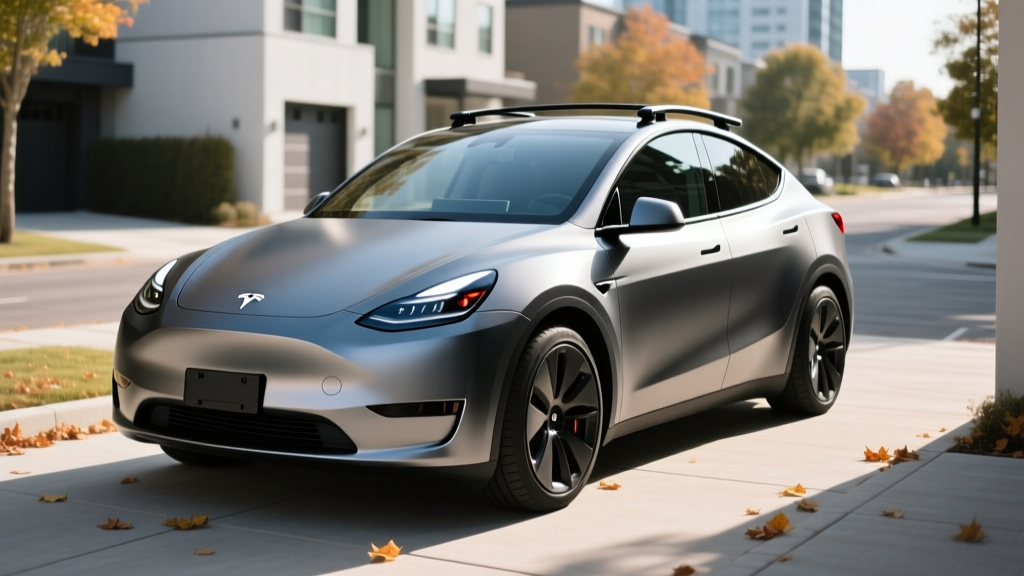
The rear-wheel-drive Long Range model is the lightest at approximately 4,363 lbs, shedding the front motor and associated power electronics. Adding the front induction motor for all-wheel drive pushes the Long Range AWD to roughly 4,498 lbs. The Performance variant adds larger 21-inch Überturbine wheels, performance brakes, and a lowered sport suspension, bringing curb weight to about 4,583 lbs.
For context, the Hyundai Ioniq 5 Long Range AWD weighs approximately 4,660 lbs, and the Ford Mustang Mach-E Premium AWD Extended Range sits near 4,800 lbs. The Model Y's structural battery pack and gigacast aluminum rear underbody help keep mass comparatively low for a crossover of its size.
Real-World Range vs. EPA Estimates
Long Range AWD: EPA 311 mi → Expect 265–285 mi on highway trips at 70–75 mph; 240–260 mi in freezing temperatures (below 32°F).
Performance AWD: EPA 285 mi → Expect 240–260 mi highway; 220–240 mi in cold weather.
Long Range RWD: EPA 320 mi → Expect 275–295 mi highway; 250–270 mi in cold weather.
The Juniper refresh brought improved thermal management and a heat pump as standard, which mitigates some cold-weather range loss compared to pre-2025 models. Still, any lithium-ion pack loses roughly 10–20% of usable energy in sub-freezing conditions due to increased internal resistance and cabin heating demands. Highway driving at sustained speeds above 70 mph also cuts range by 10–15% versus the EPA combined cycle, which blends city and highway driving at moderate speeds.
Efficiency for the Long Range AWD is rated at 122 MPGe combined (28 kWh/100 mi), per fueleconomy.gov. The Performance trim drops to approximately 111 MPGe combined due to stickier tires, larger wheels, and more aggressive powertrain mapping.
Charging Speed: DC Fast Charge and Home Level 2
| Charging Level | Max Power / Rate | Speed / Time | Notes |
|---|---|---|---|
| Level 1 (120V household) | ~1.4 kW | ~3–4 mi/hr | Emergency/trickle only |
| Level 2 (240V home, 48A) | 11.5 kW | ~44 mi/hr; full charge ~8 hr | Requires NACS wall connector or J1772 adapter |
| DC Fast Charge (V3 Supercharger) | 250 kW peak | 10–80% in ~22 min | Peak rate held to ~30% SoC, then tapers |
| DC Fast Charge (V4 Supercharger) | 250 kW (current vehicles) | 10–80% in ~22 min | V4 posts support higher rates for future architectures |
The Model Y's 250 kW peak DC charge rate is competitive but no longer class-leading — the Hyundai Ioniq 5 and Kia EV6 can peak at 350 kW on 800V architectures, achieving 10–80% in roughly 18 minutes. However, Tesla's Supercharger network remains the most reliable public charging ecosystem in the US, with plug-and-charge simplicity that eliminates the app-and-RFID friction common on Electrify America and EVgo stations.
A critical detail: the 250 kW peak is sustained only between roughly 10% and 30% state of charge. Above 50% SoC, the charge curve tapers significantly, dropping to roughly 100 kW by 70% and below 50 kW past 85%. This is normal lithium-ion behavior to protect cell longevity, but it means a 10–90% session takes closer to 38–42 minutes, not 22 minutes. Plan your road-trip stops accordingly — charging to 80% and driving is faster than waiting for the last 20%.
For home charging, Tesla's Gen 3 Wall Connector delivers up to 44 miles of range per hour at 48 amps / 11.5 kW. A full overnight charge from 20% to 100% takes about 7–8 hours on a 60-amp dedicated circuit. Installation typically costs $500–$1,500 depending on panel proximity and whether your home needs a service upgrade to 200 amps.
Performance and Driving Dynamics
| Spec | Long Range RWD | Long Range AWD | Performance AWD |
|---|---|---|---|
| 0–60 mph | 6.5 sec | 4.8 sec | 3.5 sec |
| Peak Horsepower | ~346 hp | ~384 hp | ~456 hp |
| Top Speed | 125 mph | 125 mph | 155 mph |
| Drivetrain | Rear motor (permanent magnet) | Rear PM + front induction | Rear PM + front induction (tuned) |
The Juniper update refined the Model Y's ride quality substantially. New frequency-selective dampers, additional sound deadening, and redesigned seats make the 2026 model noticeably quieter and more compliant over rough pavement than the 2020–2024 generations. The Performance trim's sport suspension is firmer but no longer punishing.
Regenerative braking remains strong and predictable, enabling one-pedal driving in most conditions. However, Tesla removed the user-adjustable regen setting several model years ago — it's always at maximum, which some drivers love and others find too aggressive in stop-and-go traffic.
Interior, Cargo, and Technology
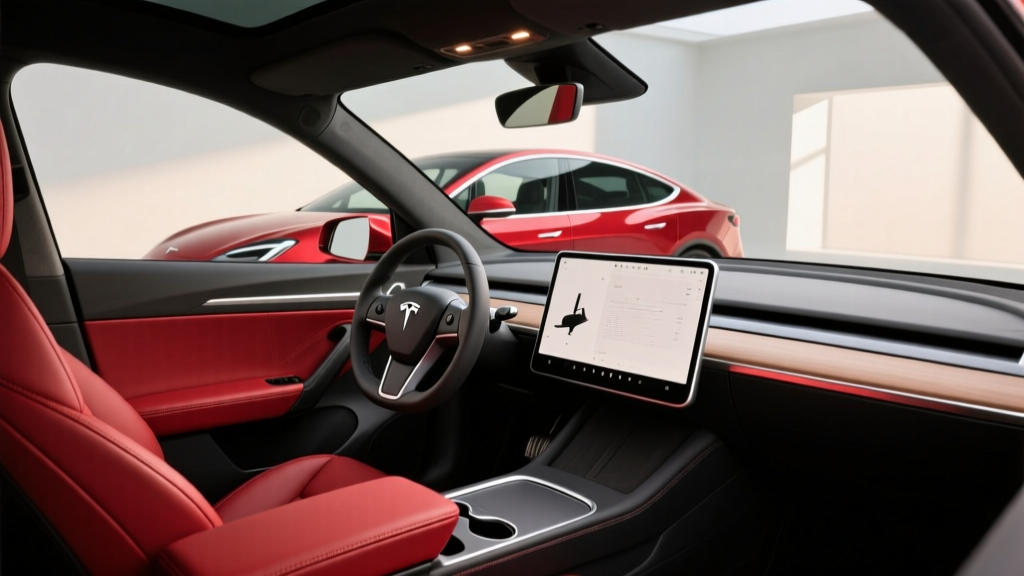
The Juniper interior is a meaningful step up in material quality. Ventilated front seats, ambient lighting, power-folding second-row seats, and a rear-seat touchscreen for climate and entertainment are now standard or widely available. The minimalist dashboard retains a single 15.4-inch center touchscreen with no physical buttons — all climate, mirror, and glovebox controls live in the UI.
Cargo volume: 26.6 cu ft behind the second row; 72.0 cu ft with the 60/40 split rear seats folded. The front trunk (frunk) adds approximately 4.1 cu ft — enough for a charging cable bag or a small cooler.
Passenger space: Front headroom is 41.0 inches; rear legroom measures 40.5 inches — competitive with the Ioniq 5 and generous for a compact crossover. The panoramic glass roof creates an airy cabin but can increase solar heat gain in summer; a power-retractable sunshade is now included.
Driver assistance: Basic Autopilot (traffic-aware cruise control + lane centering) is standard. Full Self-Driving (Supervised) is a $8,000 add-on or $99/month subscription. FSD remains an SAE Level 2 system — the driver must remain fully attentive, keep hands on the wheel, and be prepared to take over at any moment. It is not self-driving.
Pricing, Trims, and Federal Tax Credit Eligibility
| Trim | Base MSRP | Est. §30D Credit | Effective Price* |
|---|---|---|---|
| Long Range RWD | $44,990 | Up to $7,500 | ~$37,490 |
| Long Range AWD | $47,990 | Up to $7,500 | ~$40,490 |
| Performance AWD | $52,490 | Up to $7,500 | ~$44,990 |
*Effective price assumes full §30D credit eligibility. Actual credit varies based on battery sourcing, buyer income, and point-of-sale transfer rules.
- MSRP cap: SUVs/crossovers must be ≤ $80,000 — all Model Y trims qualify.
- Buyer income cap: Modified AGI ≤ $150,000 (single) / $300,000 (joint) / $225,000 (head of household).
- Battery sourcing: Critical minerals and battery components must meet escalating domestic/free-trade-partner thresholds. The Model Y's US-built battery pack (using a mix of domestic and imported cells) has historically qualified for the full $7,500, but verify current-year status on fueleconomy.gov before purchasing.
- Point-of-sale transfer: You can transfer the credit to the dealer at purchase for an immediate price reduction rather than waiting to claim it on your tax return.
- No commercial lease loophole: The $7,500 commercial-vehicle credit (§45W) for leases was tightened in recent IRS guidance — confirm with a tax professional.
Prices above exclude the $1,390 destination fee. Adding FSD (Supervised), premium paint colors ($1,000–$2,500), or 20-inch wheels ($2,000) can push an as-tested Long Range AWD past $55,000 before credits.
Battery Warranty and Longevity
Tesla provides an 8-year / 120,000-mile battery and drive unit warranty (whichever comes first) for all Model Y trims. The warranty guarantees a minimum of 70% battery capacity retention over that period. If the pack degrades below 70% State of Health (SoH) within the warranty window, Tesla will repair or replace it at no cost.
The NMC (nickel manganese cobalt) cells used across the Model Y lineup offer higher energy density than LFP chemistry, enabling the Long Range's 320-mile EPA rating. However, NMC cells are more sensitive to sustained high state-of-charge storage. Tesla recommends daily charging to 80–90% and only charging to 100% before long trips. Following this practice, real-world degradation data from fleet operators and owner surveys suggests 8–12% capacity loss over 100,000 miles — well within the warranty threshold.
Out-of-warranty battery replacement costs remain steep: approximately $12,000–$16,000 for a full pack replacement at a Tesla Service Center, though module-level repairs may be less expensive.
Who the 2026 Model Y Suits Best
- You need Supercharger network reliability for frequent road trips
- You want a compact EV crossover with strong cargo space (72 cu ft)
- Fast 0–60 performance matters (3.5 sec on Performance)
- You prefer OTA software updates that add features over time
- You value best-in-class efficiency (122 MPGe)
- You want 350 kW ultra-fast DC charging (Ioniq 5 / EV6)
- You prefer physical buttons and traditional instrument clusters
- You need a third row (consider the Kia EV9 or Rivian R1S)
- Towing is a priority — Model Y is rated for only 3,500 lbs
- You want LFP battery longevity for high-mileage daily use (consider Model 3 RWD)
Frequently Asked Questions
What is the exact curb weight of the 2026 Tesla Model Y?
The 2026 Model Y Long Range RWD weighs approximately 4,363 lbs, the Long Range AWD is about 4,498 lbs, and the Performance AWD comes in at roughly 4,583 lbs. These figures include the structural battery pack and all standard equipment with fluids topped off.
Does the 2026 Model Y qualify for the $7,500 federal tax credit?
All 2026 Model Y trims fall under the $80,000 SUV MSRP cap, and Tesla's US-built battery packs have historically met the critical-mineral and component sourcing requirements for the full $7,500 credit under IRS §30D. However, buyer income limits apply ($150K single / $300K joint), and sourcing rules evolve yearly. Always verify current eligibility on fueleconomy.gov or with a qualified tax professional before relying on the credit.
How does the Model Y's weight affect tire wear and maintenance?
At 4,400–4,600 lbs, the Model Y places more load on tires than a comparable gas-powered crossover. Expect tire replacement every 25,000–35,000 miles with OEM all-season tires — roughly 20–30% faster wear than a gas RAV4. Rotating tires every 6,000–8,000 miles and maintaining proper tire pressure (typically 42 psi cold) helps maximize tire life. Budget approximately $800–$1,200 for a set of four replacement tires.
Is the Model Y a good EV for cold climates?
The Juniper heat pump is a major improvement for cold-weather efficiency, preheating the battery and cabin without the heavy energy draw of resistive heating. Expect 10–20% range reduction in sustained sub-freezing temperatures. Preconditioning the battery while plugged in (via the Tesla app's scheduled departure feature) recovers significant range and enables faster DC charging at your first Supercharger stop.
How does the Model Y compare to the Hyundai Ioniq 5 and Ford Mach-E?
The Ioniq 5 offers faster 350 kW peak charging and a more distinctive design but has a smaller cargo area and relies on third-party charging networks. The Mach-E provides a more traditional cockpit layout and strong handling, but its EPA range and efficiency trail the Model Y. The Model Y's advantages remain the Supercharger network, over-the-air updates, and segment-leading efficiency — though its minimalist interior and lack of physical controls are deal-breakers for some buyers.