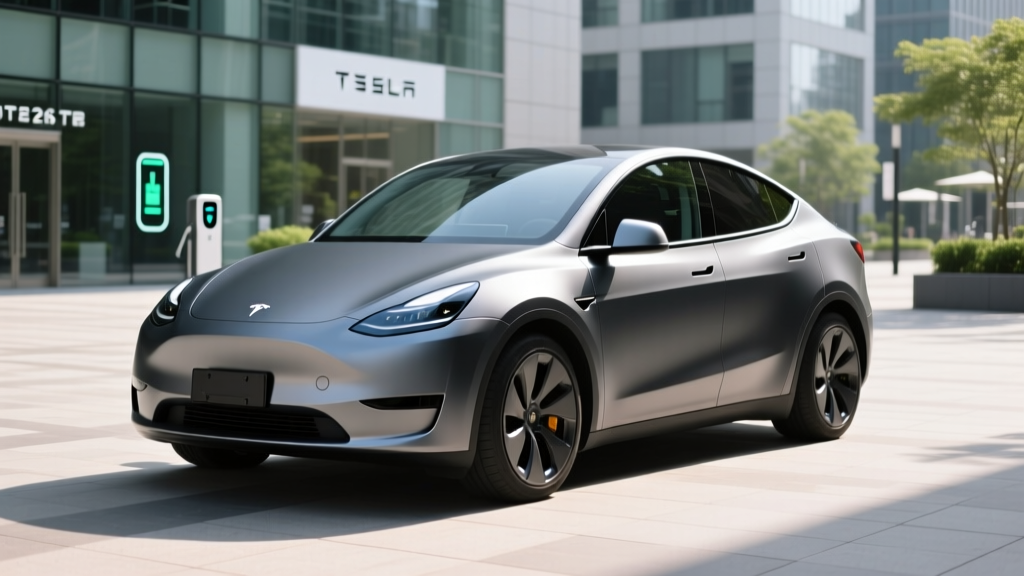
If you've searched "how much does a Tesla Y weigh," you're likely evaluating payload capacity, tire wear, efficiency, or garage-floor loading limits. The answer depends on which 2026 Tesla Model Y variant you're looking at. After Tesla's mid-cycle "Juniper" refresh landed in early 2025, the Model Y lineup shifted in both weight and specification. Here's the exact breakdown, along with the range, charging, and ownership data you need to make a real purchase decision.
2026 Tesla Model Y Curb Weight by Trim
Curb weight — the vehicle's mass with all fluids and a full battery, but no passengers or cargo — varies meaningfully across the Model Y lineup. Battery size and drivetrain layout are the primary drivers of the difference.
| Trim | Curb Weight | Battery (usable) | Drivetrain | EPA Range |
|---|---|---|---|---|
| Long Range RWD | ~4,220 lbs (1,914 kg) | ~75 kWh (NMC) | Rear-Wheel Drive | 320 mi |
| Long Range AWD | ~4,398 lbs (1,995 kg) | ~75 kWh (NMC) | Dual-Motor AWD | 304 mi |
| Performance AWD | ~4,483 lbs (2,033 kg) | ~75 kWh (NMC) | Dual-Motor AWD | 285 mi |
For context, the Model Y sits roughly 300–500 lbs lighter than the Tesla Model S but 400–600 lbs heavier than the Model 3. That weight penalty buys you approximately 30 cu ft more cargo volume and a higher seating position — the trade-off most buyers deliberately choose.
Why Weight Matters for Range, Efficiency, and Tires
A heavier EV doesn't just consume more energy — it affects several ownership costs that spec sheets rarely highlight:
- Efficiency: The Long Range RWD, at ~4,220 lbs, achieves roughly 27 kWh/100 mi (127 MPGe combined per fueleconomy.gov). The Performance AWD, carrying an extra ~263 lbs plus stickier compound tires and sport tuning, drops to roughly 30 kWh/100 mi (111 MPGe).
- Tire wear: Heavier EVs with instant torque chew through tires faster than comparable ICE vehicles. Expect 25,000–35,000 miles from a set of OEM Michelin Pilot Sport EV tires on the Performance trim — roughly 20% less than a gas crossover of similar size.
- Braking: Regenerative braking handles most deceleration, so brake pad life remains excellent (often 80,000+ miles). But the Model Y's mass means regen alone won't match the stopping feel of a lighter sedan in panic-braking scenarios.
- Payload & towing: The Model Y Long Range AWD carries a maximum towing rating of 3,500 lbs (with the factory tow package). Factor in tongue weight, passengers, and cargo, and you're working near the vehicle's GVWR on loaded road trips.
EPA Range vs. Real-World Expectations
EPA Sticker (Long Range AWD): 304 miles
Real-World Highway (70 mph, 65°F): ~255–275 miles
Real-World Cold Weather (30°F, mixed driving): ~215–245 miles
Real-World City/Commute (regenerative braking heavy): ~290–310 miles
The EPA test cycle includes low-speed and climate-controlled segments that flatter every EV. On sustained highway runs at 70–75 mph, expect to use 70–75 kWh of the battery's usable capacity to cover about 260 miles before you're hunting for a charger. In freezing temperatures, the Model Y's heat pump (standard since 2021) mitigates cabin-heating losses, but battery chemistry itself becomes sluggish — a 15–25% range reduction is normal and not a defect.
The Long Range RWD is the efficiency champion of the lineup. If your commute is under 60 miles round-trip and you rarely haul passengers, the RWD's lighter weight and lack of a front motor give it a genuine 15–20 mile real-world advantage over the AWD.
Battery Chemistry, Capacity, and Degradation
All 2026 Model Y Long Range and Performance trims use nickel-manganese-cobalt (NMC) lithium-ion cells, likely sourced from Panasonic's 4680-format production or LG Energy Solution, depending on your VIN and build week. NMC offers higher energy density than LFP (lithium iron phosphate), which is why Tesla reserves it for the Long Range and Performance lineup.
| Factor | NMC (Long Range / Performance) | LFP (Standard Range, if offered) |
|---|---|---|
| Energy Density | Higher — enables 300+ mi range | Lower — typically 250–270 mi |
| Daily Charging Recommendation | 80% for daily; 100% for trips | 100% regularly is fine |
| Cold-Weather Performance | Moderate loss (15–25%) | Higher loss (20–30%) |
| Expected Degradation (8 yr) | ~10–15% capacity loss | ~5–10% capacity loss |
| Cost to Manufacturer | Higher | Lower |
Tesla's battery and drive unit warranty covers 8 years or 120,000 miles for Long Range models (whichever comes first), with a guaranteed minimum 70% capacity retention over that period. If your battery drops below 70% State of Health within the warranty window, Tesla will replace or refurbish it at no cost. In practice, most Model Y batteries lose roughly 10–12% capacity over 100,000 miles based on owner-reported data from high-mileage fleets.
Charging Speed: DC Fast Charge and Home Level 2
The 2026 Model Y's NACS (North American Charging Standard) port gives it native access to the Tesla Supercharger network — still the most reliable public DC fast-charging ecosystem in the U.S. by a wide margin.
| Charging Level | Power / Rate | Speed | Time or Miles Added |
|---|---|---|---|
| Level 1 (120V household outlet) | ~1.4 kW | ~3–4 mi/hr | ~72 mi in 24 hrs |
| Level 2 (240V home wall connector) | 11.5 kW (48A) | ~37 mi/hr | Full charge in ~7 hrs |
| DC Fast Charge (V3 Supercharger) | Peak 250 kW | Up to 162 mi in 15 min | 10–80% in ~25 min |
| DC Fast Charge (V4 Supercharger) | Peak 250 kW (current vehicle limit) | Same as V3 for now | 10–80% in ~25 min |
A critical nuance: the 250 kW peak only holds between roughly 10% and 30% State of Charge. Above 50%, the charge curve tapers significantly — you'll see ~100 kW at 60% and ~50 kW at 80%. This is why Tesla (and all EV makers) quote 10–80% times rather than 0–100%. Charging from 80–100% at a DC fast charger is painfully slow and should be avoided unless absolutely necessary.
For home charging, the Tesla Wall Connector at 48 amps (11.5 kW) is the practical sweet spot. Expect to pay $500–$800 for the unit and $800–$2,500 for professional installation by a licensed electrician, depending on whether your electrical panel needs an upgrade from 100A to 200A service. A full overnight charge from 20% to 80% takes about 4–5 hours — more than adequate for daily use.
Performance and Drivetrain
| Trim | 0–60 mph | Horsepower | Top Speed | Drivetrain |
|---|---|---|---|---|
| Long Range RWD | 5.8 sec | ~346 hp | 135 mph | Single Motor RWD |
| Long Range AWD | 4.8 sec | ~384 hp | 135 mph | Dual Motor AWD |
| Performance AWD | 3.5 sec | ~456 hp | 155 mph | Dual Motor AWD |
The Performance trim's 3.5-second 0–60 time is legitimately sports-car territory, but the 263-lb weight penalty over the RWD means you feel that mass in tight corners. The Juniper refresh improved the Model Y's suspension tuning with frequency-selective dampers, making the ride noticeably more compliant than the pre-2025 model — a common complaint from earlier owners.
All trims feature one-pedal driving via strong regenerative braking, though Tesla now offers a "creep" mode for drivers transitioning from automatic transmissions who prefer a more traditional feel at stoplights.
Pricing, Trims, and Federal Tax Credit Eligibility
| Trim | Base MSRP | Federal Credit (§30D) | Effective Price (if eligible) |
|---|---|---|---|
| Long Range RWD | $44,990 | Up to $7,500 | ~$37,490 |
| Long Range AWD | $47,990 | Up to $7,500 | ~$40,490 |
| Performance AWD | $52,490 | Up to $7,500 | ~$44,990 |
Tax credit caveats (IRS §30D rules for 2026): The full $7,500 credit requires the vehicle to meet critical-mineral sourcing and battery-component manufacturing thresholds, which the U.S.-built Model Y has consistently satisfied. However, buyer eligibility also depends on adjusted gross income caps: $300,000 for joint filers, $225,000 for heads of household, and $150,000 for single filers (per IRS.gov). The Model Y's MSRP falls well under the $80,000 SUV cap. Since 2024, the credit can be transferred to the dealer at point of sale, reducing your out-of-pocket cost at delivery rather than waiting for a tax refund.
Always confirm current eligibility on the IRS clean vehicle credit page before ordering — battery-sourcing requirements tighten annually, and a mid-year rule change could affect qualification.
Interior, Cargo, and Technology
The Juniper refresh brought a noticeably more refined interior to the Model Y — acoustic glass, ventilated front seats, ambient lighting, and a rear-seat entertainment screen. It's a meaningful step up from the spartan pre-2025 cabin that drew consistent criticism.
- Cargo volume: 30.2 cu ft behind the second row; 72.1 cu ft with rear seats folded (EPA figures)
- Front legroom: 41.8 inches
- Rear legroom: 38.4 inches (improved slightly with Juniper's seat redesign)
- Frunk (front trunk): 4.1 cu ft — useful for charging cables and a small bag
The 15.4-inch center touchscreen runs Tesla's proprietary infotainment, which remains one of the fastest and most responsive systems in the industry. Wireless phone mirroring is absent — Tesla does not support Apple CarPlay or Android Auto. For some buyers, this is a dealbreaker; for Tesla loyalists, the native navigation, streaming, and Supercharger integration make it a non-issue.
Driver-assistance features include standard Autopilot (SAE Level 2 adaptive cruise + lane centering). Full Self-Driving (Supervised) remains a $8,000 add-on or $99/month subscription. Important: FSD Supervised is still SAE Level 2 — you must keep your hands on the wheel and eyes on the road at all times. It is not autonomous driving. Only Level 4 services like Waymo operate without a human driver.
Pros and Cons
- Access to the Supercharger network — the most reliable U.S. DC fast-charging ecosystem
- Best-in-class cargo space for an electric crossover (30.2 cu ft / 72.1 cu ft)
- Strong efficiency: 111–127 MPGe depending on trim
- Over-the-air updates continuously add features
- Excellent safety ratings (IIHS Top Safety Pick+; 5-star NHTSA)
- Juniper refresh significantly improved ride comfort and interior quality
- No Apple CarPlay or Android Auto
- FSD remains Level 2 despite the "self-driving" name — $8,000 for supervised assist
- Performance trim tire wear is expensive (~$1,200/set, replaced every 25–35k mi)
- Cold-weather range loss of 15–25% is real and unavoidable
- Insurance premiums run 15–30% higher than comparable ICE crossovers
- Minimal physical button/switch interface — everything routes through the touchscreen
Who Should Buy the 2026 Tesla Model Y?
Choose the Model Y Long Range RWD if: You commute under 60 miles daily, live in a mild climate, want maximum range (320 mi EPA), and don't need AWD. Lightest weight, best efficiency, lowest price.
Choose the Model Y Long Range AWD if: You need all-weather traction, take regular road trips, and want the balance of 304-mile range with dual-motor grip. The most popular trim for good reason.
Choose the Model Y Performance if: Acceleration thrills matter, you rarely exceed 250 miles between charges, and you accept higher tire and insurance costs for 3.5-second 0–60 times.
Look elsewhere if: You need CarPlay, prefer physical controls, want a true Level 4 autonomous experience, or your budget can't absorb ~$45,000+ after credits.
Frequently Asked Questions
How much does a Tesla Model Y weigh?
The 2026 Tesla Model Y curb weight ranges from approximately 4,220 lbs (Long Range RWD) to 4,483 lbs (Performance AWD). The Long Range AWD sits in the middle at ~4,398 lbs. These weights include a fully charged battery and all fluids but no passengers or cargo.
What is the real-world range of the Tesla Model Y?
While the Long Range AWD carries a 304-mile EPA estimate, expect roughly 255–275 miles on the highway at 70 mph, and 215–245 miles in freezing weather. City driving with heavy regenerative braking can match or slightly exceed the EPA number.
How fast does the Model Y charge at home and on the road?
At home on a 240V Level 2 Tesla Wall Connector (11.5 kW), you'll add ~37 miles of range per hour — a full overnight charge takes about 7 hours. On a V3 or V4 Supercharger, the Model Y peaks at 250 kW and charges from 10–80% in approximately 25 minutes.
Does the 2026 Tesla Model Y qualify for the $7,500 federal tax credit?
The U.S.-built Model Y has consistently met IRS §30D battery-sourcing and critical-mineral requirements. However, you must also meet income caps ($150k single / $300k joint) and the vehicle MSRP must stay under $80,000 for SUVs. Always verify current eligibility at IRS.gov before ordering.
Is the Tesla Model Y worth buying over the Hyundai Ioniq 5 or Ford Mustang Mach-E?
The Model Y wins on Supercharger network access, cargo volume (72.1 cu ft vs. ~56–60 for competitors), and software maturity. The Ioniq 5 offers 800V ultra-fast charging (10–80% in ~18 min) and CarPlay. The Mach-E provides a more traditional crossover feel. If Supercharger access and cargo space are your priorities, the Model Y remains the segment benchmark in 2026.
How long will the Model Y battery last?
Tesla warranties the battery for 8 years or 120,000 miles (Long Range) with a 70% minimum capacity retention guarantee. Real-world data from high-mileage Model Y fleets shows roughly 10–12% degradation at 100,000 miles. Many Tesla batteries are projected to last 200,000+ miles before approaching the 70% threshold.