Tesla SUV Weight: Why Mass Matters for Range and Efficiency
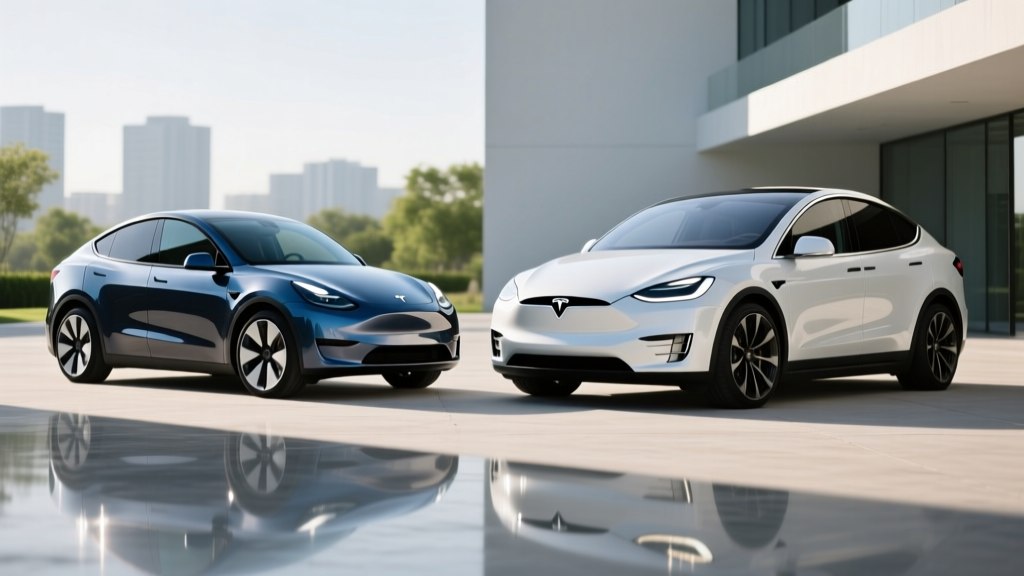
When shopping for a Tesla SUV, curb weight is more than a trivia stat — it directly impacts energy consumption, tire wear, braking distance, and real-world range. Tesla currently offers two SUVs in the U.S. market: the compact Model Y and the full-size flagship Model X. Their weight difference — roughly 1,000 pounds — cascades through every spec sheet column, from MPGe to 0-60 times to charging curves.
This review breaks down both Tesla SUVs with a focus on how mass shapes the ownership experience, using 2025–2026 model-year data from fueleconomy.gov and Tesla's official specifications.
| Spec | Model Y Long Range AWD | Model X Long Range |
|---|---|---|
| Curb Weight | 4,398 lbs | 5,185 lbs |
| EPA Range | 320 miles | 335 miles |
| Battery (usable) | ~75 kWh (NMC) | ~95 kWh (NMC) |
| Efficiency | 28 kWh/100 mi (120 MPGe) | 33 kWh/100 mi (102 MPGe) |
| Peak DC Charge | 250 kW | 250 kW |
| 10–80% DC Time | ~27 min | ~32 min |
| 0–60 mph | 4.8 sec | 3.8 sec |
| Horsepower | 384 hp | 670 hp |
| Drivetrain | Dual-Motor AWD | Dual-Motor AWD |
| Base MSRP | $48,990 | $79,990 |
Real-World Range: What the EPA Sticker Doesn't Tell You
EPA range estimates assume a mixed driving cycle. In practice, Tesla SUV weight, aerodynamics, and weather shift those numbers significantly.
Model X Long Range: EPA 335 mi. Expect ~280–300 mi highway; ~240–260 mi in deep cold. The Model X's larger frontal area and 787-lb weight penalty compound losses at speed and in cold air density.
The Model X carries a ~95 kWh NMC (nickel manganese cobalt) pack to compensate for its 5,185-lb mass, while the Model Y achieves comparable range from a smaller ~75 kWh NMC battery. The physics is straightforward: moving 5,185 lbs requires roughly 18% more energy per mile than moving 4,398 lbs, which is reflected in the efficiency gap (33 vs. 28 kWh/100 mi).
For road-trippers, the Model Y's lighter weight translates to slightly shorter charging stops on average — less energy to replenish per mile driven.
Charging Speed: DC Fast Charging and Home Level 2
Both Tesla SUVs peak at 250 kW on V3 Superchargers, but the Model X's larger battery means a longer 10–80% session.
| Charge Level | Model Y LR AWD | Model X LR |
|---|---|---|
| DC Fast Peak | 250 kW | 250 kW |
| 10–80% DC Time | ~27 min | ~32 min |
| Miles added in 15 min (DC) | ~162 mi | ~155 mi |
| Level 2 Home (11.5 kW / 48A) | ~37 mi/hr | ~33 mi/hr |
| Level 2 Full Charge Time | ~7–8 hrs | ~9–10 hrs |
| Connector | NACS (native) | NACS (native) |
Charging curve reality: Neither SUV sustains 250 kW past roughly 40% state of charge. The curve tapers to ~100 kW by 60% SoC and drops below 50 kW above 80%. This is normal lithium-ion behavior to protect the NMC cells, but it means the last 20% can take as long as the first 50%. For road trips, plan stops around the 10–80% window to minimize time at the charger.
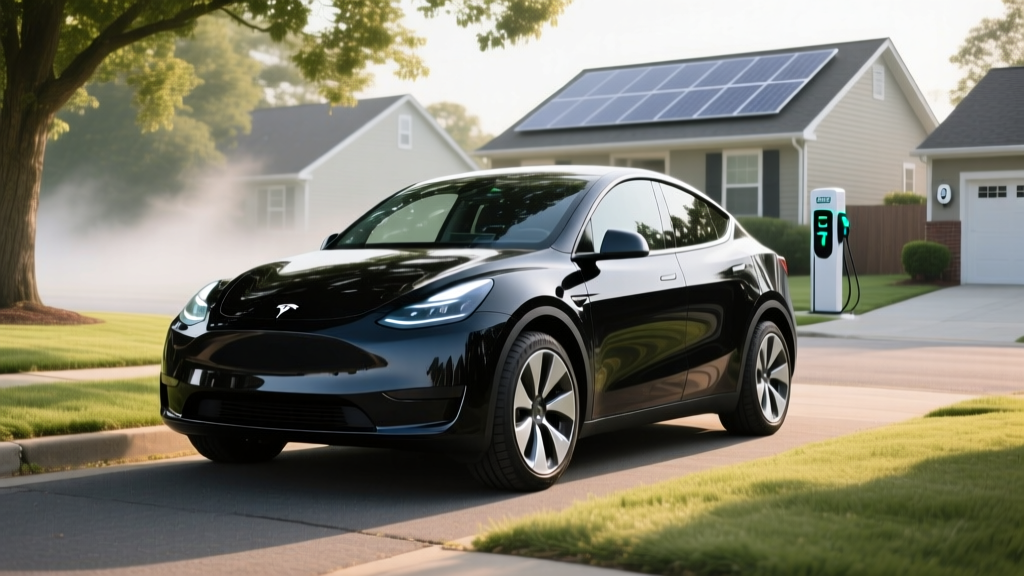
At home, both vehicles support Level 2 charging via the Tesla Wall Connector at up to 11.5 kW (48 amps on a 60-amp circuit). A typical overnight session from 20% to 80% takes 5–6 hours for the Model Y and 6–7 hours for the Model X. According to Tesla's home charging installation guide, expect $800–$2,000 for a professional Wall Connector install, depending on panel proximity and whether your home needs a service upgrade.
Performance: Horsepower, Acceleration, and Drivetrain
Despite the Model X weighing nearly 800 lbs more, it outruns the Model Y to 60 mph thanks to substantially more power.
- Model Y Long Range AWD: 384 hp, dual-motor AWD, 0–60 in 4.8 seconds. Adequate for highway merging and confident in rain or light snow.
- Model X Long Range: 670 hp, dual-motor AWD, 0–60 in 3.8 seconds. The extra 286 hp more than compensates for the additional mass, delivering sports-sedan acceleration in a three-row SUV.
- Model X Plaid (optional): 1,020 hp, tri-motor AWD, 0–60 in 2.5 seconds. A $94,990 starting MSRP halo trim for buyers who want supercar thrust with family seating.
Towing capacity diverges sharply: the Model Y is rated for 3,500 lbs (with the optional tow package), while the Model X can pull 5,000 lbs. If you're hauling a small camper or boat, the Model X's heavier frame and stronger drivetrain make it the clear choice — though towing cuts real-world range by 30–50% on either vehicle.
Cargo, Passenger Space, and Daily Practicality
The Model X's larger footprint pays dividends in interior volume, though the Model Y punches above its class for a compact crossover.
| Dimension | Model Y | Model X |
|---|---|---|
| Seating | 5 passengers | 5, 6, or 7 passengers |
| Front Legroom | 41.8 in | 41.2 in |
| Rear Legroom | 35.2 in | 35.5 in (2nd row) |
| Cargo (rear seats up) | 30.2 cu ft | 37.1 cu ft (5-seat config) |
| Cargo (rear seats folded) | 72.1 cu ft | 81.5 cu ft |
| Frunk | 4.1 cu ft | 6.6 cu ft |
The Model X offers optional third-row seating (7-passenger) or captain's chairs (6-passenger), making it a legitimate family hauler. The Model Y is strictly a two-row, five-passenger vehicle. For couples or small families who don't need three rows, the Model Y's cargo area is generous — 72.1 cu ft with seats folded rivals many midsize gasoline SUVs.
Pricing, Tax Credits, and Total Cost
Tesla's SUV pricing spans a wide range, and federal tax credit eligibility differs between the two models under current IRS §30D rules.
| Trim | MSRP | §30D Credit Eligible? | Effective Price* |
|---|---|---|---|
| Model Y Long Range AWD | $48,990 | Yes (if sourcing rules met) | ~$41,490 |
| Model Y Performance | $52,490 | Yes (if sourcing rules met) | ~$44,990 |
| Model X Long Range | $79,990 | No — exceeds $80K SUV MSRP cap | $79,990 |
| Model X Plaid | $94,990 | No — exceeds $80K SUV MSRP cap | $94,990 |
*Effective price assumes full $7,500 point-of-sale transfer. Eligibility requires buyer AGI ≤ $150K single / $300K joint, plus battery critical-mineral and component sourcing thresholds that change annually. Confirm current-year rules at irs.gov and with your tax professional.
The Model Y's eligibility for the $7,500 federal credit (transferred at point of sale under current rules) is a decisive financial advantage — it effectively drops the Long Range AWD below $42,000. The Model X, starting at $79,990, exceeds the §30D MSRP cap of $80,000 for SUVs, disqualifying it from the federal credit regardless of buyer income. Some states offer additional rebates that may apply; check your state energy office for current programs.
Tech, Driver Assistance, and Notable Drawbacks
Both Tesla SUVs share the same core technology stack: a 15.4-inch touchscreen (Model Y) or 17-inch touchscreen (Model X), over-the-air updates, Tesla's app ecosystem, and the Autopilot driver-assist suite.
Standout features:
- Over-the-air software updates that add features post-purchase
- Tesla Supercharger network — the most reliable DC fast-charging network in North America
- Native NACS connector (no adapter needed at Superchargers)
- Sentry Mode dashcam surveillance while parked
- Model X exclusive: Falcon Wing rear doors for easier third-row access in tight parking spots
- HEPA air filtration with Bioweapon Defense Mode (both models)
Notable drawbacks:
- No Apple CarPlay or Android Auto — Tesla's infotainment is proprietary
- Minimalist interior lacks physical buttons for climate, mirrors, and glovebox (all screen-controlled)
- FSD (Supervised) costs $8,000 extra or $99/month and still requires full driver engagement
- Model X Falcon Wing doors can be slow to open and have had reliability complaints in earlier model years
- Insurance premiums run 15–25% higher than comparable non-Tesla SUVs, per industry data
Battery Warranty and Longevity
Tesla provides an 8-year/120,000-mile battery and drive unit warranty for the Model Y Long Range, and 8-year/150,000-mile coverage for the Model X. The warranty guarantees at least 70% battery capacity retention over the term.
Both vehicles use NMC chemistry, which offers higher energy density than LFP (lithium iron phosphate) but is slightly more sensitive to sustained high state-of-charge. Tesla recommends daily charging to 80% for NMC packs and 100% only before long trips. Real-world degradation data from fleet studies suggests NMC packs lose roughly 8–12% capacity over the first 100,000 miles, with the curve flattening significantly afterward. Most owners will never need a battery replacement within typical ownership periods.
Pros and Cons
Model Y Pros & Cons
Pros:
- Eligible for $7,500 federal tax credit
- Best efficiency in Tesla's lineup (28 kWh/100 mi)
- Lighter weight = shorter charge stops
- Strong cargo capacity for compact SUV class
- Supercharger network access (native NACS)
Cons:
- No third-row option
- 3,500-lb tow limit
- Firm ride quality on rough pavement
- No physical controls for common functions
Model X Pros & Cons
Pros:
- 5/6/7-passenger seating configurations
- 5,000-lb towing capacity
- 670 hp standard; 1,020 hp Plaid available
- Falcon Wing doors aid tight-space access
- Premium interior materials vs. Model Y
Cons:
- No federal tax credit (MSRP above $80K cap)
- Higher energy consumption (33 kWh/100 mi)
- Longer DC fast-charge sessions
- Falcon Wing door reliability concerns
- $80K+ starting price
Who Should Buy Which Tesla SUV?
Choose the Model Y if: You're a commuter, small family, or couple prioritizing value, efficiency, and tax-credit savings. The Model Y is the better road-trip companion for budget-conscious buyers thanks to lower charging costs and shorter 10–80% times.
Choose the Model X if: You need three-row seating, tow more than 3,500 lbs, or want flagship performance and don't mind paying a premium without federal credit assistance. The Model X serves large families and buyers who want a luxury EV with supercar acceleration.
Frequently Asked Questions
What is the curb weight of Tesla's SUVs?
The 2025 Model Y Long Range AWD has a curb weight of 4,398 lbs. The Model X Long Range weighs 5,185 lbs — a 787-lb difference that impacts efficiency, tire wear, and charging times.
Does the Tesla Model Y qualify for the $7,500 federal tax credit?
Yes, the Model Y qualifies under IRS §30D rules, provided the buyer meets income caps ($150K single / $300K joint AGI) and the vehicle's battery meets critical-mineral and component sourcing requirements for the current tax year. The credit can be transferred at point of sale. The Model X does not qualify because its MSRP exceeds the $80,000 SUV cap.
How fast do Tesla SUVs charge at home?
Both the Model Y and Model X support up to 11.5 kW on a Level 2 Tesla Wall Connector (48A / 60A circuit). This adds roughly 33–37 miles of range per hour, fully replenishing either vehicle overnight.
What is the real-world highway range of the Model Y vs Model X?
On a 70-mph highway loop in moderate temperatures, expect ~275–290 miles from the Model Y (EPA 320) and ~280–300 miles from the Model X (EPA 335). In sub-freezing weather, subtract 15–25% from those figures.
Is the Model X worth the premium over the Model Y?
It depends on your needs. If you require three-row seating, 5,000-lb towing, or flagship acceleration, the Model X justifies its price. For everyone else, the Model Y delivers ~90% of the Tesla SUV experience at nearly half the cost — and with a $7,500 federal credit the Model X can't claim.
How does Tesla SUV weight affect tire wear?
Heavier EVs wear tires faster than comparable gas vehicles. The Model X's 5,185-lb curb weight puts more load on tire contact patches, particularly during regenerative braking events. Expect tire replacement every 25,000–35,000 miles on the Model X and 30,000–40,000 miles on the lighter Model Y. Tesla recommends EV-rated tires with higher load ratings.