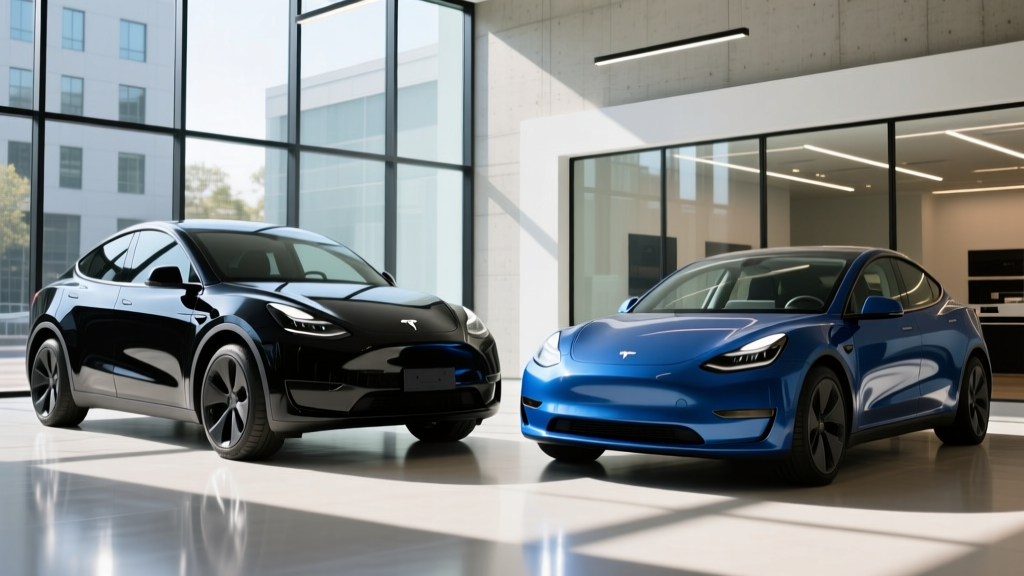
When shoppers type "Tesla merge" into search engines, they are almost always wrestling with the same decision: do I pull the trigger on the Model 3 sedan or step up to the Model Y crossover? These two vehicles share a platform, similar battery chemistries, and nearly identical software, yet they serve fundamentally different use cases. In this head-to-head profile, we break down the 2026 Tesla Model 3 and Model Y across every metric that matters — EPA range, real-world efficiency, DC fast-charging speed, cargo volume, pricing after the §30D federal tax credit, and long-term ownership economics — so you can pick the right one without showroom regret.
Spec Snapshot: Model 3 vs Model Y at a Glance
| Spec | 2026 Tesla Model 3 Long Range AWD | 2026 Tesla Model Y Long Range AWD |
|---|---|---|
| EPA Range | 363 miles | 320 miles |
| Battery (usable) | ~79 kWh, NMC | ~78 kWh, NMC |
| Drivetrain | Dual-Motor AWD | Dual-Motor AWD |
| 0-60 mph | 4.2 seconds | 4.8 seconds |
| Horsepower | ~384 hp | ~384 hp |
| Peak DC Charge Rate | 250 kW | 250 kW |
| 10-80% DC Time | ~27 minutes | ~27 minutes |
| Level 2 (11.5 kW) | ~44 mi/hr | ~41 mi/hr |
| EPA Efficiency | 134 MPGe (25 kWh/100mi) | 117 MPGe (29 kWh/100mi) |
| Cargo (rear seats up) | 23 cu ft | 30 cu ft |
| Cargo (rear seats folded) | 65 cu ft | 72 cu ft |
| Rear Legroom | 35.3 in | 41.6 in |
| Base MSRP | $47,740 | $48,630 |
| Battery Warranty | 8 yr / 120,000 mi | 8 yr / 120,000 mi |
Sources: EPA fueleconomy.gov, Tesla official specifications. Figures reflect 2026 Long Range AWD trims.
Real-World Range: What the EPA Sticker Doesn't Tell You
Model 3 Long Range: EPA 363 mi — expect ~290-310 mi sustained highway driving at 70-75 mph; ~240-260 mi in sub-freezing cold.
Model Y Long Range: EPA 320 mi — expect ~260-280 mi highway; ~215-240 mi in winter conditions.
Both vehicles use nickel-manganese-cobalt (NMC) lithium-ion packs with active liquid thermal management. The Model 3's aerodynamic advantage — a 0.219 drag coefficient versus the Model Y's 0.23 — is the single biggest reason it extracts more miles from nearly the same battery capacity. On a 70 mph highway loop in 55°F weather, the Model 3 consistently delivers 3.5-4.0 mi/kWh, while the Model Y returns 3.0-3.4 mi/kWh.
Cold-weather impact is significant for both. Lithium-ion cells lose roughly 10-15% of usable capacity below freezing, and cabin heating in a crossover-sized cabin demands more energy. Tesla's standard heat pump mitigates this better than resistive heaters, but plan on 20-25% range reduction in sustained sub-30°F driving. Preconditioning the battery while plugged in — a feature accessible through the Tesla app — recovers some of that loss and is essential before DC fast charging in winter.
Charging Speed: Home and DC Fast Charging Compared
| Level | Model 3 LR AWD | Model Y LR AWD | Notes |
|---|---|---|---|
| Level 1 (120V / 12A) | ~3-4 mi/hr | ~3-4 mi/hr | Emergency/trickle only; 36+ hr for full charge |
| Level 2 (240V / 48A) | 11.5 kW (~44 mi/hr) | 11.5 kW (~41 mi/hr) | Full charge in ~7-8 hr; requires 60A circuit |
| DC Fast (V3 Supercharger) | 250 kW peak | 250 kW peak | 10-80% in ~27 min; tapers sharply above 80% |
| DC Fast (V4 Supercharger) | 250 kW peak | 250 kW peak | Current 400V architecture limits both to ~250 kW |
Neither the Model 3 nor Model Y has migrated to an 800V architecture, so peak charge rates cap at 250 kW on V3/V4 Superchargers. In practice, both vehicles sustain 200-250 kW between 10-50% State of Charge, then taper to ~100 kW at 65% and ~50 kW above 80%. A typical 10-80% session takes 25-30 minutes at a V3 stall. The charge curve is nearly identical between the two vehicles because they share similar battery management firmware.
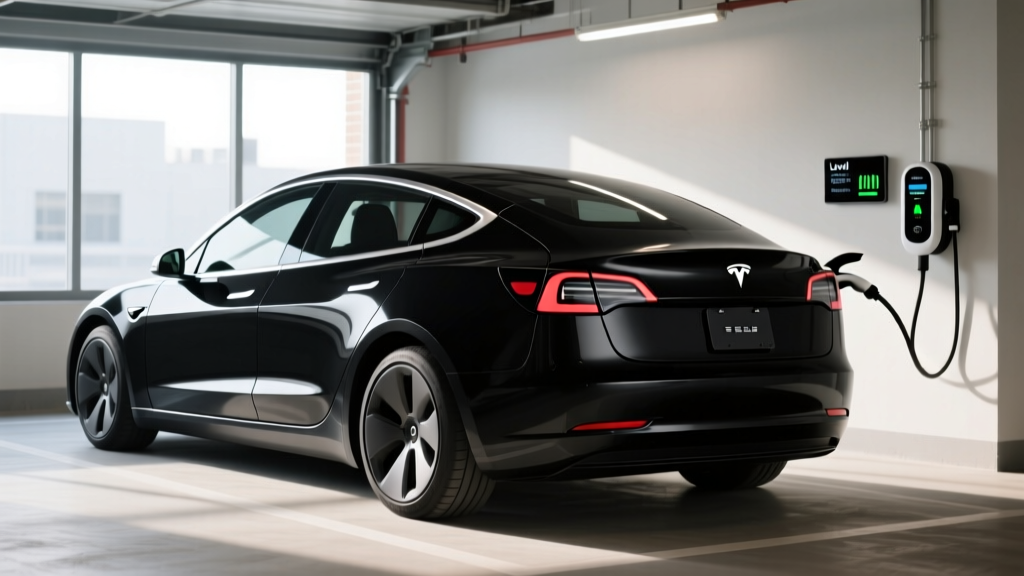
For home charging, Tesla includes a Mobile Connector (Level 1) with every vehicle. For Level 2, the Tesla Wall Connector ($425) or any J1772/NACS-compatible station delivering 48A on a dedicated 60A breaker will max out the onboard charger at 11.5 kW. Home installation typically costs $800-$2,000 depending on panel capacity and conduit run — factor in a potential $1,500-$3,000 panel upgrade if your home still has a 100A service.
Performance and Driving Dynamics
The dual-motor all-wheel-drive powertrain in both vehicles delivers torque-vectoring between front and rear motors, but the Model 3's lower mass (~4,034 lbs vs. ~4,363 lbs for the Model Y) gives it a tangible edge. The Model 3 Long Range hits 0-60 mph in 4.2 seconds; the Model Y Long Range does it in 4.8 seconds. Both are genuinely quick for daily driving, and the instant torque delivery makes them feel faster than the numbers suggest.
Where the Model 3 shines is cornering composure. Its lower center of gravity and shorter wheelbase produce flatter cornering and more responsive steering — if you enjoy driving, the sedan is the clear choice. The Model Y's taller ride height and softer tuning prioritize comfort and visibility, which matters when you're loading child seats or navigating a grocery run.
Regenerative braking in both models is aggressive enough for one-pedal driving in most conditions. Tesla removed the adjustable regen setting years ago, so expect a firm deceleration feel when you lift off the accelerator — most owners adapt within a week and rarely touch the brake pedal in city driving.
Pricing, Trims, and Federal Tax Credit Eligibility
| Trim | MSRP | §30D Credit (est.) | Effective Price |
|---|---|---|---|
| Model 3 RWD | $38,990 | Up to $7,500* | ~$31,490 |
| Model 3 Long Range AWD | $47,740 | Up to $7,500* | ~$40,240 |
| Model 3 Performance | $54,630 | Up to $7,500* | ~$47,130 |
| Model Y Long Range AWD | $48,630 | Up to $7,500* | ~$41,130 |
| Model Y Performance | $53,130 | Up to $7,500* | ~$45,630 |
*The IRS §30D clean vehicle credit is subject to multiple requirements for 2026:
- MSRP cap: Sedans (Model 3) must be ≤$55,000; SUVs/trucks/vans (Model Y) must be ≤$80,000 — all current trims qualify.
- Buyer income cap: Modified AGI ≤$150,000 (single), ≤$225,000 (head of household), ≤$300,000 (joint).
- Battery sourcing: A percentage of critical minerals and battery components must be sourced from the U.S. or FTA partners — Tesla's North American battery supply chain currently meets thresholds for the full $7,500 on most trims, but verify at purchase as sourcing rules tighten annually.
- Point-of-sale transfer: You can transfer the credit to the dealer at purchase to reduce your out-of-pocket cost immediately, rather than waiting to claim it on your tax return.
Consult a tax professional and verify current-year eligibility on IRS.gov before finalizing your order — rules change annually and individual circumstances vary.
Interior, Tech, and Driver Assistance
Both vehicles share Tesla's minimalist interior: a 15.4-inch center touchscreen controls virtually everything — climate, navigation, media, vehicle settings, and even the glovebox release. There is no instrument cluster; speed and navigation cues appear in the upper-left corner of the main screen. The 2026 Model 3 "Highland" refresh brought ventilated front seats, ambient lighting, rear-seat ventilation, and a slightly quieter cabin through improved acoustic glass — refinements the Model Y received in its "Juniper" update.
Tesla Autopilot comes standard on both vehicles and includes Traffic-Aware Cruise Control and Autosteer (lane centering). This is an SAE Level 2 driver-assistance system — you must keep your hands on the wheel and eyes on the road at all times. Full Self-Driving (Supervised), a $8,000 option or $99/month subscription, adds automatic lane changes, navigation-on-autopilot, and traffic light/stop sign recognition, but it remains Level 2. The driver is legally and operationally responsible for the vehicle at all times.
⚠ Important: Tesla Autopilot and FSD (Supervised) are SAE Level 2 systems. They do NOT make the vehicle self-driving. You must remain alert, keep hands on the steering wheel, and be prepared to take over instantly. Only Level 4 services like Waymo operate without a driver — Tesla does not offer this capability.
Tech highlights include over-the-air software updates that can add features post-purchase, Sentry Mode (360° parking surveillance), Dog Mode (climate control for pets), and a built-in trip planner that routes through Superchargers with automatic battery preconditioning.
Who Should Buy Which?
Model 3 — Best For
- Commuters prioritizing maximum range and efficiency
- Drivers who value sportier handling and a lower driving position
- Buyers on a tighter budget (RWD trim starts ~$10K less)
- Single professionals or couples without bulky cargo needs
- Those who want the longest EPA range in a Tesla under $50K
Model Y — Best For
- Families needing easy child-seat installation and rear legroom
- Owners who regularly haul cargo, strollers, or camping gear
- Buyers who prefer a higher seating position and easier entry/exit
- Those who want optional 7-seat configuration (available on select trims)
- Shoppers planning to tow (up to 3,500 lbs rated capacity)
The Model 3 is the efficiency and value play — 43 more miles of EPA range, a lower base price, and superior highway manners. The Model Y is the practicality play — 30% more cargo space, a roomier rear seat, and crossover versatility that accommodates life's logistics. If you merge your search between these two, the deciding factor usually comes down to cargo and passengers, not performance.
Biggest Pros and Cons
Shared Pros
- Access to Tesla's Supercharger network — 6,000+ V3/V4 stalls in North America, consistently the most reliable DC network
- Industry-leading software and OTA update cadence
- Strong resale value relative to most EV competitors
- Heat pump standard — better cold-weather range retention
- 8-year/120,000-mile battery and drive unit warranty
Shared Cons
- No physical buttons or stalks — everything is screen-based, including turn signals on the 2026 refresh
- 250 kW peak DC charge rate lags 800V competitors (Hyundai Ioniq 5 peaks at 350 kW)
- Ride quality is firm, especially with 19/20-inch wheels
- Insurance premiums run 15-30% higher than comparable gas vehicles
- FSD remains an expensive option that does not deliver autonomous driving
Frequently Asked Questions
What is the real-world range of the Tesla Model 3 and Model Y?
The Model 3 Long Range delivers roughly 290-310 miles on highway trips at 70-75 mph in mild weather, and 240-260 miles in freezing temperatures. The Model Y Long Range returns 260-280 miles highway in mild weather and 215-240 miles in cold conditions. Both fall short of their EPA stickers on sustained highway drives — plan conservatively and use Tesla's built-in trip planner for Supercharger routing.
How fast do the Model 3 and Model Y charge?
Both peak at 250 kW on DC fast chargers, achieving a 10-80% charge in approximately 25-30 minutes. At home on a Level 2 charger (11.5 kW / 48A), the Model 3 adds about 44 miles of range per hour and the Model Y adds about 41 miles per hour. A full Level 2 charge takes 7-8 hours for either vehicle. Neither supports 800V-class charging speeds seen on competitors like the Kia EV6 or Porsche Taycan.
How much does a Tesla cost after the federal tax credit?
With the full $7,500 §30D credit applied, the Model 3 RWD drops to approximately $31,490, the Model 3 Long Range to ~$40,240, and the Model Y Long Range to ~$41,130. Eligibility depends on your income (≤$150K single / ≤$300K joint), the vehicle's MSRP staying under the cap ($55K sedans / $80K SUVs), and battery component sourcing — verify with the IRS and your tax advisor before purchasing.
Is the Tesla Model 3 or Model Y worth buying vs. competitors?
The Model 3 competes with the Hyundai Ioniq 6 ($42,715, 361 mi EPA) and BMW i4 ($52,200, 307 mi EPA). Tesla's advantages are the Supercharger network, software polish, and lower starting price on the RWD trim. The Model Y faces the Hyundai Ioniq 5 ($45,585, 303 mi EPA), Ford Mustang Mach-E ($42,995, 312 mi EPA), and Kia EV9 (3-row, $54,900). The Model Y's cargo volume and Supercharger access remain compelling, but competitors now match or exceed its DC charging speed with 800V platforms.
Does the Tesla Model 3 or Model Y qualify for the $7,500 federal EV tax credit?
Both vehicles currently qualify for up to $7,500 under §30D, provided the buyer meets income limits and the specific vehicle's battery sourcing satisfies the annual critical-minerals and component thresholds. Tesla manufactures batteries at its Nevada and Texas Gigafactories using supply chains that largely meet current requirements, but the sourcing rules tighten each year. Always confirm eligibility at the point of sale and consult IRS guidance for the latest requirements.
What is the battery warranty and expected lifespan?
Tesla covers the battery and drive unit for 8 years or 120,000 miles (whichever comes first) with a minimum 70% capacity retention guarantee. Real-world data from Tesla's fleet suggests NMC packs in the Model 3/Y lose approximately 10-12% capacity over the first 100,000 miles, with degradation slowing significantly thereafter. Replacement costs, if out of warranty, range from $12,000-$16,000 depending on the pack — though most owners will never need one within the warranty period.