Quick Verdict: The Entry-Point Tesla That Punches Above Its Weight
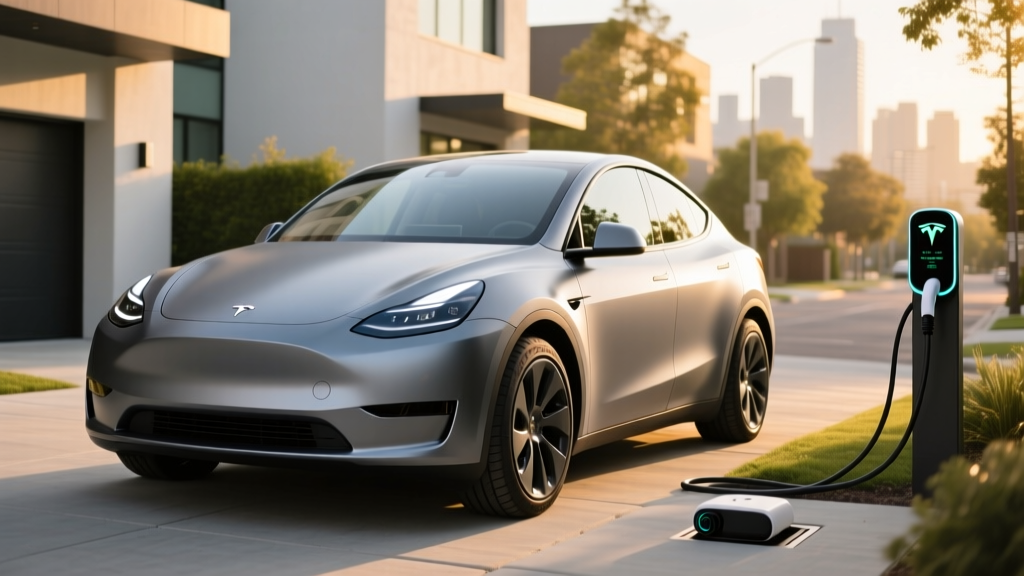
The 2026 Tesla Model Y V14 Lite is the automaker's most accessible crossover, built around a lithium iron phosphate (LFP) battery pack and a rear-wheel-drive layout that prioritizes efficiency over outright speed. With an EPA-estimated 310 miles of range, a 250 kW peak DC fast-charge rate, and a base MSRP of $39,990 before incentives, it targets buyers who want the Tesla Supercharger network and software ecosystem without stepping into dual-motor territory. It's not the fastest or longest-range Model Y, but it may be the smartest buy in the lineup for single-motor commuters and daily drivers.
| Spec | Value |
|---|---|
| EPA Range | 310 miles |
| Battery (usable) | 62 kWh, LFP chemistry |
| Drivetrain | Rear-Wheel Drive (single motor) |
| Horsepower | 295 hp |
| 0–60 mph | 6.6 seconds |
| Peak DC Fast Charge | 250 kW (10–80% in ~22 min) |
| Level 2 Home Charge | 11.5 kW (~37 mi/hr) |
| MPGe (combined) | 123 MPGe |
| Efficiency | 27 kWh/100 mi |
| Cargo (rear seats up) | 30.2 cu ft |
| Cargo (rear seats folded) | 72.1 cu ft |
| Rear Legroom | 38.4 inches |
| Battery Warranty | 8 years / 100,000 miles |
| Base MSRP | $39,990 |
Range & Efficiency: 310 EPA Miles, But Plan for 260 on the Highway
The V14 Lite's 62 kWh usable LFP pack delivers an EPA-estimated 310 miles on a full charge. That number reflects a mixed city/highway drive cycle at moderate temperatures — useful as a benchmark, but not a guarantee for every trip.
- City / suburban commuting (65°F): 295–315 miles — LFP cells are efficient at partial loads and regen-heavy driving.
- Highway cruising (70–75 mph, 65°F): ~255–270 miles — aerodynamic drag cuts into the 310-mile sticker.
- Cold weather (30°F, highway): ~210–235 miles — expect 25–30% range reduction without consistent preconditioning.
- Towing (light trailer, 1,500 lb): ~180–200 miles — the single-motor V14 Lite is rated for 2,000 lb max but efficiency drops sharply under load.
At 27 kWh per 100 miles (123 MPGe combined), the V14 Lite is one of the most efficient compact electric SUVs on the market. For comparison, the Hyundai Ioniq 5 RWD sits at 30 kWh/100 mi, and the Ford Mustang Mach-E Select RWD at 29 kWh/100 mi. Tesla's thermal management system and low rolling-resistance tires contribute to the edge.
Charging Speed: 250 kW Peak With a Predictable Curve
Tesla equips the V14 Lite with a 250 kW peak DC fast-charge capability on V3 and V4 Superchargers, as well as CCS-compatible third-party networks (the North American Charging Standard, NACS, is now the native port on all 2026 Teslas).
| Charging Level | Power | Speed / Time |
|---|---|---|
| Level 1 (120V outlet) | ~1.4 kW | ~4 miles per hour |
| Level 2 (240V, 48A Wall Connector) | 11.5 kW | ~37 miles per hour |
| DC Fast (V3 Supercharger) | Peak 250 kW | 10–80% in ~22 minutes |
| DC Fast (sustained avg, 10–80%) | ~155 kW avg | ~175 miles added in 22 min |
The critical detail for road-trippers: the 250 kW peak is not sustained across the entire session. LFP chemistry allows the V14 Lite to hold strong charging power up to roughly 55–60% state of charge (SoC), after which the curve tapers. Average power from 10–80% lands around 155 kW. That 22-minute 10–80% window is competitive with the Ioniq 5's 18-minute claim (which benefits from an 800V architecture and NMC chemistry), but the Tesla's access to 17,000+ Superchargers across North America remains a tangible infrastructure advantage.
Home charging tip: Tesla's Wall Connector at 48 amps on a 60A circuit delivers the full 11.5 kW. A typical overnight session (10 hours) adds roughly 370 miles — more than enough to refill the 62 kWh pack from empty. Installation costs range from $500 to $2,000 depending on panel proximity and local permitting, on top of the $475 Wall Connector hardware.
Performance & Drivetrain: Adequate, Not Thrilling
The single rear-mounted motor produces 295 horsepower and launches the V14 Lite from 0 to 60 mph in 6.6 seconds. That's brisk enough for confident highway merging and passing, but it's a full 1.7 seconds behind the Long Range AWD variant. There's no front motor, so traction in snow and rain relies entirely on Tesla's traction control system and your tire choice.
Ride quality benefits from Tesla's 2025 suspension refresh — the V14 Lite uses revised damper tuning that absorbs sharp impacts more gracefully than pre-2025 Model Ys. Steering remains quick and direct, though some drivers will note the lack of road feel through the steer-by-wire-adjacent calibration.
Regenerative braking: Tesla's one-pedal driving mode is standard and well-calibrated. The LFP pack accepts regen power aggressively even at higher SoC levels, meaning you'll get meaningful one-pedal deceleration down to about 95% charge — a notable advantage over NMC packs that limit regen near full charge.
Interior, Cargo & Technology
The V14 Lite shares the refreshed Model Y cabin introduced for the 2025 model year: a minimalist dashboard dominated by a 15.4-inch center touchscreen, ventilated front seats, a rear-seat entertainment screen (8.0 inches), and ambient lighting. Build quality has improved noticeably, with tighter panel gaps and softer-touch materials on the door panels and center console.
Cargo volume: 30.2 cubic feet behind the second row and 72.1 cubic feet with the 60/40 split rear seats folded. The front trunk (frunk) adds 4.1 cubic feet for charging cables or a small bag. Rear legroom measures 38.4 inches — comfortable for adults on longer trips.
Standout tech:
- Tesla Autopilot (standard): Adaptive cruise control and lane-centering. This is an SAE Level 2 driver-assist system — you must keep your hands on the wheel and eyes on the road at all times.
- Full Self-Driving (Supervised): Optional at $8,000 or $99/month. Adds automated lane changes, traffic light recognition, and city street navigation. Still Level 2 — not autonomous. The "Supervised" label is deliberate: you are the driver.
- Sentry Mode & Dashcam: Continuous recording from exterior cameras; cloud-accessible via the Tesla app.
- Over-the-air updates: Tesla pushes software improvements regularly, from efficiency tweaks to new entertainment features.
Notable drawbacks: No Apple CarPlay or Android Auto (Tesla's proprietary infotainment only); no heads-up display; rear visibility is compromised by the sloping roofline (rely on the backup camera); turn-signal stalks were removed in the 2025 refresh — signals are now on the steering wheel, which draws mixed reactions.
Pricing, Trims & Federal Tax Credit Eligibility
| Configuration | MSRP | After Est. §30D Credit |
|---|---|---|
| V14 Lite (RWD, base) | $39,990 | ~$32,490* |
| V14 Lite + FSD (Supervised) | $47,990 | ~$40,490* |
| V14 Lite + Premium Paint (Ultra Red) | $41,990 | ~$34,490* |
*Assumes full $7,500 §30D credit. Eligibility is NOT guaranteed — see checklist below.
The IRS §30D federal tax credit offers up to $7,500 for qualifying new EVs, and the V14 Lite's $39,990 base MSRP falls well under the $80,000 SUV cap. As of 2026, buyers can elect to transfer the credit to the dealer at point of sale, reducing the purchase price directly rather than waiting for a tax refund.
§30D Eligibility Checklist (2026 rules):
- MSRP cap: Vehicle must be under $80,000 for SUVs — V14 Lite qualifies ✓
- Buyer income cap: AGI must not exceed $150,000 (single), $225,000 (head of household), or $300,000 (joint) — verify your situation
- Battery sourcing: Critical minerals and battery components must meet phased-in domestic/free-trade-agreement thresholds — Tesla's LFP cells have historically faced scrutiny on this requirement; confirm current-year compliance on fueleconomy.gov before purchasing
- Final assembly: Must occur in North America — Fremont, CA assembly qualifies ✓
- Point-of-sale transfer: Available since Jan 2024 — dealer must be registered with IRS Energy Credits Online
Critical caveat: LFP battery cells are predominantly manufactured in China. Tesla has been working to shift supply chains, but the critical-minerals and battery-component sourcing requirements under §30D are strict and change annually. Always verify the specific VIN's eligibility at the time of purchase — do not assume the full $7,500 applies.
Warranty & Long-Term Ownership
Tesla covers the V14 Lite's battery and drive unit for 8 years or 100,000 miles, whichever comes first, with a guaranteed minimum 70% capacity retention over that period. The limited vehicle warranty runs 4 years or 50,000 miles.
LFP chemistry gives the V14 Lite a longevity edge: LFP cells typically endure 3,000+ full charge cycles before degrading to 80% capacity, compared to roughly 1,500–2,000 cycles for NMC. In practical terms, that means the V14 Lite's battery is more likely to outlast the vehicle's useful life under normal ownership. Tesla also recommends charging LFP packs to 100% regularly (unlike NMC, where 80% daily is preferred) — simplifying daily routine for owners who want maximum available range each morning.
Insurance costs tend to run 15–25% higher than comparable gas-powered compact SUVs, a common EV pattern driven by repair complexity and parts pricing. Shop quotes before committing.
Pros & Cons at a Glance
- 310-mile EPA range from an efficient 62 kWh LFP pack
- Supercharger network access (17,000+ stalls in North America)
- LFP longevity: 3,000+ cycle life, 100% daily charging OK
- Class-leading software, OTA updates, and app integration
- Competitive cargo space (72.1 cu ft max) and frunk
- Strong safety ratings (NHTSA 5-star, IIHS Top Safety Pick+)
- RWD only — limited traction in snow/ice without winter tires
- 6.6-second 0–60 is adequate, not exciting
- No Apple CarPlay / Android Auto
- §30D tax credit uncertain due to LFP sourcing rules
- Turn signals on steering wheel (no stalk) — divisive ergonomics
- Highway range drops to ~260 mi; cold weather cuts further
Who Should Buy the V14 Lite — And Who Shouldn't
Choose the V14 Lite if: You commute 30–60 miles daily, have reliable home charging, live in a moderate climate, and want the lowest entry price into the Tesla ecosystem with maximum battery longevity.
Look at the Long Range AWD instead if: You regularly drive in snow, take 400+ mile road trips, need sub-5-second acceleration, or want the safety net of dual-motor traction.
Consider the Hyundai Ioniq 5 or Kia EV6 if: You want 800V ultra-fast charging (10–80% in ~18 min), prefer physical controls alongside a touchscreen, or need confirmed §30D credit eligibility with NMC battery sourcing from South Korea.
Frequently Asked Questions
What is the real-world range of the Tesla Model Y V14 Lite?
The EPA rates it at 310 miles, but real-world highway driving at 70–75 mph yields approximately 255–270 miles. In cold weather (below freezing), expect 210–235 miles on the highway. City driving with regenerative braking can match or slightly exceed the EPA figure.
How fast does the V14 Lite charge at home and on the road?
On a Level 2 home charger (Tesla Wall Connector at 11.5 kW), you gain about 37 miles of range per hour — a full charge in roughly 7 hours. On a V3 Supercharger at 250 kW peak, the 10–80% session takes about 22 minutes, with an average charge rate of ~155 kW across that window.
Does the 2026 Model Y V14 Lite qualify for the $7,500 federal tax credit?
It meets the MSRP cap ($39,990 < $80,000 SUV limit), final assembly (Fremont, CA), and potentially the buyer income requirements. However, the LFP battery's critical-mineral and component sourcing is the variable factor. Check the specific VIN on fueleconomy.gov or consult a tax professional before relying on the credit.
Is the V14 Lite worth buying over the Hyundai Ioniq 5 or Ford Mach-E?
If Supercharger access and software integration are priorities, yes — Tesla's charging network remains the most reliable in the US. If you need faster peak charging (800V architecture), confirmed tax credit eligibility, or prefer a more traditional interior layout, the Ioniq 5 and Mach-E are strong alternatives within $2,000–$4,000 of the V14 Lite's price.
Can I charge to 100% every day with the LFP battery?
Yes. Tesla explicitly recommends regular 100% charging for LFP packs to maintain accurate state-of-charge calibration. This is a practical advantage over NMC packs, where daily charging to 80% is preferred to slow degradation.
What does Autopilot actually do — is it self-driving?
No. Autopilot is an SAE Level 2 driver-assist system that provides adaptive cruise control and lane-centering. You must remain attentive, keep hands on the wheel, and be prepared to take over instantly. Full Self-Driving (Supervised), even at $8,000 extra, is also Level 2. Only fully driverless robotaxi services like Waymo operate at Level 4.